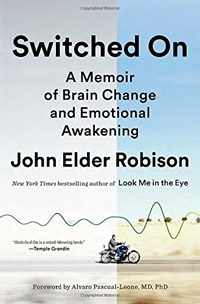
“Switched On: A Memoir of Brain Change and Emotional Awakening” by John Elder Robison

Switched On

How much of what we are, what we think and feel, and what we do is determined by the “wiring” of our brains? This question is at the heart of Switched On, a fascinating memoir of one man who was a participant in a TMS (transcranial magnetic stimulation) research study conducted at the Neurology Department of the Beth Israel Center, which is a teaching hospital of Harvard Medical School. TMS is a magnetic method used to stimulate small regions of the brain, allowing doctors to change brain activity without surgery or medication. It has been in research and development for over twenty years, which seems like a long time, but is actually quite short in the medical research field, which is why most of us have never even heard of it. I learnt of TMS during a Fresh Air broadcast featuring John Elder Robison, the author of Switched On, and the neurologist, Alvaro Pascual-Leone, who led the TMS study at Beth Israel and worked closely with Robison throughout the time he was receiving TMS. The main reason behind inviting Robison to be a participant in the study was that he has autism, and the researchers wanted to investigate whether a non-invasive technique like TMS could help in any way.

Much of the book is a methodically detailed log of the author’s day-to-day experience with the study, including how he met the researchers, how he was invited to participate, why he agreed, what he was hoping for, the buildup to every session, what happened at every session, and what were the effects that he experienced afterwards. He also shares details about his family, his work, his autism, and the impact that TMS had on different aspects of his life. These details, in and of themselves, are not especially riveting—after all, who wants to know about the mundane details of the day-to-day events in our lives?

What we do want to know, however, is—does it work? Does TMS change our brains and consequently, our emotions and our actions? And if so, are the effects temporary or long-term? And since Switched On is a first-person account of someone who has actually received TMS, we actually get to know the answers to some of these questions. Robison does a terrific job of describing both the short-term and long-terms effects that he experienced after each TMS session, including being much more open to people and experiences, the ability to “read” people a lot better and understand nuances which had earlier escaped him thanks to autism, and even the ability to be moved to tears by a sad story, even if it was just in the newspaper or told to him by someone he had just met. Fortunately, being so overcome with emotion that life becomes difficult was not a long-term effect of TMS. At the same time, having had the experience of empathy and connectedness—however short-lived—provided him with a “knowledge” of these emotions that is helping him to better understand “normal” (non-autistic) people on an ongoing basis.

Of course, Switched On is one person’s account of the effect of TMS, and it’s possible that other participants in the study experienced somewhat different reactions and effects. It would be good to know more, and I hope the TMS researchers can compile their findings not just into research papers for the academic community but also articles and books for the rest of us. It is fascinating to think that everything we think and do—including this thinking!—comes from our brain chemistry. Does this mean that at some point, we will be able to manipulate brains to create “designer thinkers,” similar to how we could potentially manipulate genes to create “designer babies?” Another interesting question, brought to the forefront by Switched On.

Switched On: A Memoir of Brain Change and Emotional Awakening
Author: John Elder Robison
Publisher: Spiegel & Grau
Publication Date: March 2016

Contributor: Lachmi Khemlani runs a technology publication in the San Francisco Bay Area.
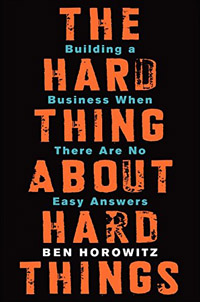
“The Hard Thing about Hard Things: Building a Business When There are No Easy Answers” by Ben Horowitz

The Hard Thing about Hard Things

This is a must-read book for entrepreneurs, especially those who have wandered the streets looking for venture capital, struggling to manage all aspects of a company while barely being able to make ends meet. The book talks about hiring, management cultures, and styles, lay-offs, selling the company, partnerships, and every possible aspect involving startups.

Most entrepreneurs, especially those who have struggled, should be able to relate to every line in this book. It is very much a “guy’s book written for guys.” The direct in-your-face style makes this book hilarious in parts.

This is the only book that I have ever purchased thrice – first on my Kindle and two hard copies – the second hard copy was intended as a gift for a friend/entrepreneur.

The author, Ben Horowitz, founded Opsware and is now a leading investor based in Silicon Valley.

The Hard Thing about Hard Thing: Building a Business When There are No Easy Answers
Author: Ben Horowitz
Publisher: Harper Business
Publication Date: March 2014

Contributor: Pran Kurup is an author and entrepreneur based in the San Francisco Bay Area.

“The Everything Store: Jeff Bezos and the Age of Amazon” by Brad Stone

The Everything Store

This is an excellent book for anyone interested in learning more about Amazon and its evolution. It is meticulously researched and gives you a good inside view of Amazon’s culture, Jeff Bezos style – his frugality and ruthlessness.

It is mind-boggling to imagine that a former investment banker (a non-techie) could have built a company with such cutting-edge products and services. It is an excellent book that captures the entrepreneurial spirit and business strategy vis-a-vis Amazon’s success story.

I read this book quite a while back but it remains very much in my memory because it is one of the better business books published in recent times. Hats off to the author, Brad Stone for this outstandoing book.

The Everything Store: Jeff Bezos and the Age of Amazon
Author: Brad Stone
Publisher: Little, Brown and Company
Publication Date: October 2013

Contributor: Pran Kurup is an author and entrepreneur based in the San Francisco Bay Area.

“Harry Potter and the Cursed Child” — Play by J. K. Rowling, Jack Thorne, and John Tiffany

Harry Potter and the Cursed Child

I love the Harry Potter books and have them all—each of the seven books in the series. I discovered them in 2000 after the first three had already been published and was so hooked that I recall pre-ordering each of the subsequent books prior to its release and devouring it right away after it was delivered—which was typically the day before it was officially released. And while I was thrilled when my kids also started to read and love the books as they grew older, I made it clear that the books were mine. In time, after frequent re-reading by my kids, whenever one of my Harry Potter books started to wear down, I would order another copy— hardcover, of course—so I would still have the complete set in near-pristine condition. In fact, I was so possessive about the books that I used to discourage my kids from lending my cherished copies to their friends, and even bought extra (paperback) copies just for this purpose!

Given my love for the books and the magical world that J.K. Rowling has so brilliantly created—so rich, so vivid, so detailed, and so much fun—I was really disappointed when the series concluded in 2007 with the publication of the seventh book, Harry Potter and the Deathly Hallows. But I could appreciate why. After all, J.K. Rowling could not continue the series endlessly—not only was she so rich and famous that she didn’t need to write any more, but to what extent can you drag a story on and on? Also, one of the charms of the Harry Potter books was that you knew they would come to an end after Harry defeats Voldemort and is finished with school. It was a good, satisfying conclusion to the saga of “the boy who lived.”

Thus, when I heard of Harry Potter and the Cursed Child, it seemed intriguing, even though it was in the form of a script for a play and was not actually written by J.K. Rowling herself, but rather by a playwright based on a story by her, supposedly the eighth in the series. While the play itself debuted last month in London and seems to be doing very well, the book itself has received mixed reviews from Harry Potter fans. Thus, I bought it with some trepidation, not wanting to cast a shadow on my experience of the original series and ruin my love for it.

It turned out that I needn’t have worried. I really enjoyed the book and finished it in one sitting. Even though the plot is set several years after the first seven books—Harry is now middle aged with three kids, all of whom are in the same Hogwarts School that he attended—the book keeps transporting you to many of the same events that happened in those years through the clever use of a time traveling device, the Time Turner, that plays such a key role in the third book, Harry Potter and the Prisoner of Azkaban. While the protagonist of the book is now Harry’s middle son, Albus, who could be the “cursed child” of the book title, the book brings back all the characters who had key roles in the earlier books, including Hermoine, Ron, Malfoy, Snape, and even Dumbledore. In an unexpected but heart-warming twist, Albus’s best friend at Hogwarts is now Scorpius, the son of Draco Malfoy, who was Harry’s archenemy throughout his own time as a student at Hogwarts. And there are many hilarious situations caused by the ripple effects of going back in time and changing certain events, including one where Ron is married to Padma (a Hogwarts student who made a very brief appearance in the earlier books) and has a son called “Panju.” As an Indian, I’m still laughing at that one!

That said, I wish the story was in the more conventional form of a book than a script for a play, which, by its very nature, is forced to be somewhat choppy. I really liked the plot of this eighth story in the series and felt it would have been so much more substantial and enjoyable as a book. I have no interest in seeing the play just as I had little interest in the movies­—although, admittedly, they did a good job of capturing the “magic” of Harry Potter’s world. Of course, the books have spawned a huge and very successful franchise with the movies, theme parks, and merchandise, and it’s a wonder to me that J.K. Rowling is even motivated to continue the series at all. I’m thankful, however, that the creative genius in her continues to create, bringing joy to the millions of Harry Potter aficionados that are out there, including adults like me who may otherwise be somewhat jaded by the “realities” of life.

Such is the power of the world of Harry Potter created by J.K. Rowling that I was fighting with my daughter about who got to read Harry Potter and the Cursed Child first. I prevailed, of course, but only because of my childish and rather pathetic excuse that I had paid for the book and so I should get to read it first. When does this ever happen?

Harry Potter and the Cursed Child
Play written by Jack Thorne, based on an original new story by J.K. Rowling, Jack Thorne and John Tiffany.
Publisher: Little Brown UK
Publication Date: July 2016

Contributor: Lachmi Khemlani runs a technology publication in the San Francisco Bay Area.

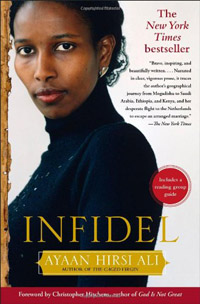
“Infidel” by Ayaan Hirsi Ali

Infidel

Everything about this book is shocking. The words are gentle, yet the message is powerful and the story spectacular. It’s an autobiographical account of a woman’s birth in Somalia, growing up in Saudi Arabia, Kenya and Ethiopia, and migrating first to the Netherlands where she is elected to Parliament and then to the United States, where she is on a mission to exorcise the ghosts of Islam.

“We froze the moral outlook of billions of people into the mindset of the Arab desert in the seventh century,” she writes. “We were not just servants of Allah, we were slaves.”

The author’s account of her early life in Somalia is hair-raising. She gives a blood-curling description of her experience of forced circumcision at the age of five, as also that of her elder brother and younger sister, all performed on the same day at the initiative of her maternal grandmother. “Female genital mutilation predates Islam. Not all Muslims do this, and a few of the peoples who do are not Islamic. But in Somalia where virtually every girl is excised, the practice is always justified in the name of Islam.” Though she squarely condemns FGM, she does not ask the question why boys need to be circumcised.

Ayaan Hirsi Ali talks of her stay in Saudi Arabia, where gender based segregation was strictly enforced and public beheadings were commonplace. “It was a normal, routine thing: after the Friday noon prayer you could go home for lunch, or you could go and watch the executions. Hands were cut off. Men were flogged. Women were stoned.” The author points out that the Prophet did say, “Wage war on the unbelievers.” She adds, “Christians can cease to believe in God. But for a Muslim, to cease believing in Allah is a lethal offence. Apostates merit death: on that the Quran and the hadith are clear.”

She prayed five times a day and wore the veil. But soon she began to question her own beliefs. Was her religious instructor Boqol Sawm translating the Quran properly? “Surely Allah could not have said that men should beat their wives when they were disobedient? Surely a woman’s statement in court should be worth the same as a man’s?” She describes her gradual loss of faith, her life in Europe where she learnt that human rights and dignity were cherished values, her outspokenness and the heavy price she had to pay for it, the murder of her friend Theo Van Gogh in the Netherlands, her persecution by religious extremists, and her eventual escape to America, the land of the free.

Today she continues to write and speak out. Fearlessly – but with bodyguards. Her speeches and debates are all over Youtube. As there is a fatwa against her anyway, she can keep writing anything and it can’t get any worse. She says in the Introduction to this book: “People ask me if I have some kind of death wish, to keep saying the things I do. The answer is no: I would like to keep on living. However, some things must be said, and there are times when silence becomes an accomplice to injustice.”

Overall Assessment: Thought provoking. Ayaan Hirsi Ali is possibly one of the most impressive voices of the 21st century.

Infidel
AUTHOR: Ayaan Hirsi Ali
PUBLISHER: The Free Press
Date of Publication: 2007

Contributor: Pushpa Kurup lives in Trivandrum, India and works in the IT sector.

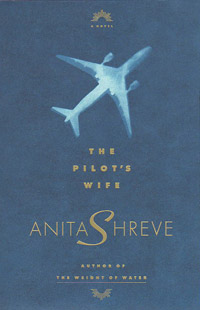
“The Pilot’s Wife” by Anita Shreve

The Pilot's Wife

I first read Anita Shreve’s popular novel, The Pilot’s Wife, shortly after it was published in 1998. While the book was no means a literary sensation or even highly acclaimed by critics, it did gain wide readership by virtue of being chosen as an “Oprah’s Book Club” selection for March 1999. (While this club does not exist anymore, it was quite an honor to be selected, in addition to dramatically boosting sales.) At the time I read The Pilot’s Wife, I also read quite a few other books by Anita Shreve that I recall enjoying, especially her most well-known book, The Weight of Water.  That said, I would not have sought out Anita Shreve to read again, except for a recent first visit to Maine, where its unique geography of multiple islands dotting the coastline reminded me of a fascinating historical fiction set in these islands that I had read a long time ago, and which I wanted to re-read now that I had actually been there. While I couldn’t remember exactly what that book was, I thought it might be an Anita Shreve novel, given that many of her books were set in Maine and along the coast.

Well, as it turned out, it wasn’t – I borrowed several possible Anita Shreve books from the library and needed only a quick perusal to determine that none of them was the one I was looking for. I did not even find myself wanting to re-read them now, even though it had been over 15 years since I had first read them — except for The Pilot’s Wife. I started reading it, and found the plot even more compelling now than when I read it all those years ago. Kathryn, whose husband, Jack, is a pilot for a commercial airliner has just been informed that her husband has died in a plane crash. As the book unfolds, the details begin to emerge – that the crash was caused by an explosion, which in turn was caused by a bomb, and that it may have been Jack himself who took the bomb on board, making him responsible not only for his own death but that of the other crew members and over a hundred passengers that were on board. This notion of “suicide-bombing” is one that we are, unfortunately, all too familiar with now, which makes the book seem eerily timely, even though it was written over 15 years ago. As always, there is some political unrest underlying these tragedies, and while the one in The Pilot’s Wife had to do with Ireland and the IRA, it is not all that different from the political turmoil and terrorism threats we constantly live with today.

Apart from this analogy that makes the book even more relatable now, The Pilot’s Wife primarily revolves around Kathryn and how she copes with not only the death of her husband and the revelation that he may be a suicide-bomber, but also with the fact that there was a side to him about which she knew nothing– that he had a whole other family, including wife and kids, in another country and that he was able to do this without giving her the faintest hint or suspicion that something might be wrong. The suspense is well built up, and the book is a compelling page-turner, keeping you hooked right up the end. Along the way, there are some touching moments highlighting the relationship Kathryn has with her teenage daughter, who is at the height of her turbulent and rebellious years. There is also the customary romance — but with just an inkling of it given the story-line — of Kathryn with the man from the pilot’s union, Robert, who brings her the news of Jack’s plane crash and guides her through its aftermath, including the frenzied publicity, media coverage, and crash investigation.

While I found The Pilot’s Wife a good read even the second time around – and an easy one – the ending was so abrupt that I was sure that there were some pages missing in the library copy of the book that I had. I spent a lot of time searching online for a free electronic copy of the book, but I couldn’t find one (which, by the way, is a testament to how popular the book is even now – its pricing is still the same, even after so many years of being published). Finally, I went to the local library of the place I was on vacation at and found a copy of the book – and discovered, much to my chagrin, that the ending of the book was exactly the same as the one in the copy that I had.

In conclusion, The Pilot’s Wife was a nice, easy, and interesting read, but with an ending that didn’t seem like an ending at all!

The Pilot’s Wife
Author: Anita Shreve
Publisher: Little, Brown
Publication date: May 1998

Contributor: Lachmi Khemlani runs a technology publication in the San Francisco Bay Area.

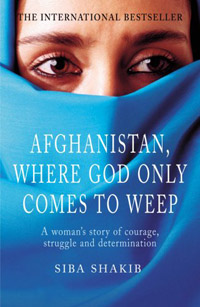
“Afghanistan, Where God Only Comes to Weep” by Siba Shakib

Afghanistan, Where God Only Comes to Weep

This book by an Iran-born author and documentary film-maker paints a grim picture of life in Afghanistan. The Russian invasion. The haphazard resistance. The growth of the Taliban. Violence, oppression, opium addiction and human helplessness are woven into the fine threads of this fascinating story. The characters are powerful and convincing. It is a sordid tale of suffering and endurance, hope and determination.

Shirin-Gol, the lead female character, is a woman of substance. Though unleterred, she taught herself to read ‘three and a half books.’ The plight of women in this war-ravaged country is deeply disturbing. Where girls cannot study, where women cannot work, where the veil is all-pervading, an Afghanistan that god and the world forgot. The reader feels a numbing pain that is beyond tears. Shock, disbelief, sorrow, and a train of inexplicable emotions.

The author has an uncanny knack of saying so much using so few words. “In all likelihood Shirin-Gol’s mother, like all mothers in the world, suffered terrible pains at the birth of her fourth daughter, her ninth child, and in all likelihood she wondered at that moment how she would feed another child with her already weakened body and her empty breasts. And she was probably glad when she pulled the child from her body and saw that it was only a girl, because if Shirin-Gol had been a boy, that boy would have needed even more milk, even more attention. His mother would have had to carry him more often in her arms, they would have had to give a party to celebrate his birth and slaughter a sheep, rustle up some money for his circumcision and send him to the mullah to learn the Koran.”

The cycle of poverty, repression and hopelessness is self-perpetuating — it moves across generations with a cold tenacity. Shirin-Gol goes through multiple deprivations in childhood, is married at a young age, has several children, and lives life at a sub-human subsistence level, yet her spirit soars high above the mundane level. She stands out without being spectacular, and her never-say-die attitude inspires respect.

The book informs, educates, enlightens. It also entertains and tugs at your heart-strings. Amidst the pathos, there is a dark humour. Don’t miss any page, not even the acknowledgments, gracefully titled, ‘Thanks’. There are gems even there. “I thank Malalai and her brother who saved my life. I thank Rahmat, who protected me from stepping on a mine.”

Overall Assessment: Mind-blowing. Siba Shakib is undoubtedly a writer of substance. BTW, ‘Samira and Samir’ is another interesting book.

Afghanistan, Where God Only Comes to Weep
AUTHOR: Siba Shakib
PUBLISHER: CENTURY
Date of Publication: 2002

Contributor: Pushpa Kurup lives in Trivandrum, India and works in the IT sector.

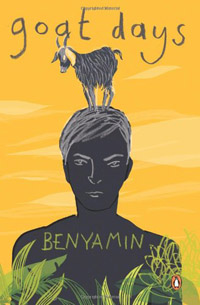
“Goat Days” by Benyamin

Goat Days

It was the common dream of an average, economically weak Malayalee that drove Najeeb to also forsake all the little that he possessed, to borrow heavily from his kith and kin and to leave for the golden desert sands of the Gulf. Yes, he dearly loved his verdant green patch of land back home, the daily dip in the clear, flowing water of the village river, his Umma’s freshly cooked homely food, his wife Sainu, his group of friends, the simple basic joys of life in the countryside. Marriage, the beginning of a new family and its added responsibilities spurred Najeeb to opt for just a few years in the Gulf and then come back to his village and his folks.

Waiting expectantly, in a milling crowd of hopeful workers like him, at the dusty Saudi airport, watching the different arbabs pick the respective workers onto their new workplaces, noting the crowd gradually dwindling, losing hope, getting despondent, Najeeb at last observes a rickety old vehicle drawing close to him in a cloud of dust, an extremely shabby person alighting, walking up and down the airport a few times, most impatiently, then examining Najeeb’s passport and finally commanding him in brusque tones in Arabic to get into the vehicle.

In that almost unending, bumpy , dusty ride, lasting several hours, across the desert, with not a sight of a single human person in the road, we watch Najeeb’s hopes gradually change to a clammy fear of the unknown. With his passport confiscated, with not a soul other than the arbab driving the vehicle to god knows where, he realizes he is trapped irrevocably.

Najeeb’s maiden journey in what he now sees as the mirage called Gulf, ends in a horribly stinking, filthy goat farm, with hundreds and teeming hundreds of goats for company, with not even the basic necessities, let alone comforts, of life. Najeeb’s simple dreams of a new life in the Gulf get shattered one by one. We watch his gradual acclimatization with the new life, his forced foregoing of the daily routine back home, the sheer, inhuman hours of hard physical labour done even while being exposed to the killing heat of the desert sun during the days and the bone chilling cold during the nights, the minimal food with minimal water, with no human soul to look at and the punishing torture meted to him by his master at every step.

Najeeb’s undying love for life and his desire to live brilliantly shines through, even as he sinks into this dismal hopeless abyss. The typical Malayalee sense of humour gives Najeeb the strength to try and make light of the hopeless trap he has gotten into and helps him in his efforts to learn the new tongue and a smattering of Arab words. Above all, his absolute, steadfast faith in the Almighty at every step after faltering step of this punishing life he lives, gives Najeeb an indefatigable strength to pull on and never admit defeat.

Benyamin’s Malayalam novel Aadu Jeevitham, translated into English as Goat Days, unfolds the story of Najeeb and his life in the goat farm, in the middle of nowhere, and is a shocking revelation of the lives of the likes of several unknown Najeebs living animal lives in similar farms. Benyamin was awarded the Kerala Sahitya Akademi Award in 2009 for this novel. Goat Days makes one ponder on the abject economic misery of a certain group of our own brethren that force them to migrate, of the absolute unscrupulous nature of the agents in our own country that lure such innocent people and throw them into immeasurable scales of suffering in some foreign land. The novel questions us and our complacence that make us turn ourselves away from the knowledge of the actual existence of such inhuman farms of labour. Should such slave farms be permitted to function? Do such similar places exist in our own country? Joseph Koyippally, who has done the translation into English, deserves a special word of mention for bringing this stark, bleak account of an astounding protagonist to a global audience.

Goat Days
Author: Benyamin, Translated by: Joseph Koyippally
Publisher: Penguin Books
Publication Date: June 2012

Reviewer: Uma Rao has a Ph.D. in English Literature with a PG Diploma in Journalism, works for the State Bank of India, and is fond of books, music, theatre, cinema and travel.