“Killing Lincoln: The Shocking Assassination that Changed America Forever” by Bill O’Reilly and Martin Dugard

Killing Lincoln

Lincoln has his premonitions. Two weeks before the assassination, he has a nightmare which he recounts to his wife and colleagues after a few days: “There seemed to be death-like stillness about me. Then I heard subdued sobs, as if a number of people were weeping. I thought I left my bed and wandered downstairs. There the silence was broken by the same pitiful sobbing, but the mourners were invisible. I went from room to room. No living person was in sight, but the same mournful sounds of distress met me as I passed along. It was light in all the rooms. Every object was familiar to me. ” Lincoln goes on to describe how he reaches the East Room and finds a corpse surrounded by soldiers and mourners. He asks one of the soldiers, “Who is dead in the White House?” Pat came the reply, “The President. He was killed by an assassin.” Thereupon the crowd burst into a loud outpouring of grief.

Bill O’Reilly is a household name in America. Together with Martin Dugard, a historian, he puts together a highly interesting account of the assassination of Abraham Lincoln on 14th April, 1865. The history books had told us the dark deed was done by an actor, John Wilkes Booth. And we knew there were unexplained coincidences and conspiracy theories. This book tells us a lot more. The authors adopt a countdown format, with the narrative beginning six weeks before the assassination. The events of each day are outlined minute by minute. These are the concluding days of the Civil War and there is violence, bitterness and hatred all around.

It wasn’t a lone wolf attack. There were co-conspirators.William Seward, Secretary of State, who was seriously ill was attacked in his bed on the same day at the same time. He was wounded but survived. Seward went on to buy Alaska for the United States.

While Booth was shot dead 12 days later, 4 others were sent to the gallows within 3 months while a few more served prison sentences. Lewis Powell, the man who attacked Seward, was among those hanged. Mary Suratt, who provided arms and lodging to the conspirators became the first and only woman to be hanged in the United States. Whispers were doing the rounds that Edwin M Stanton, Secretary of War, formerly a brilliant Ohio lawyer, was somehow in the know of things. Was he among the conspirators? No evidence could be found.

The Montreal based J J Chaffey Company had paid $15000 to Booth and a whopping $150,000 to one Lafayette Bayer, a former spy, who was hand-picked by Stanton to head the man-hunt for Booth.

A telegram was sent to Chicago from Water Street on April 2nd, 1865, stating, ” J W Booth will ship oysters until Saturday 15th.” Booth never had anything to do with oysters or shipping but he shot Lincoln on April 14th. After his death, 18 pages of his diary mysteriously disappeared. Booth could have been captured alive but he was killed.The diary was found on him, but the contents were revealed only two years later, when Stanton handed it over. Did he remove the missing pages? It is anybody’s guess. Apparently it was Lafayette Baker who had handed it over to Stanton. This was revealed in 1867 when Baker published a book. Baker feared he would be killed – and he was.

Strange coincidences were a dime a dozen. On the day of the assassination, Lincoln’s bodyguard went on a drinking binge leaving the President unguarded at Ford Theatre. And he was never punished! Earlier, Lincoln’s eldest son Robert had been pushed from a railway platform on to the path of an incoming train. And guess who hauled him to safety? It was none other than Edwin Booth, elder brother of John Wilkes Booth. Another twist in the tale: Robert Lincoln was enamoured of Lucy Hale, who had secretly agreed to marry John Wilkes Booth.

Does the book merit a read? You bet!

Killing Lincoln: The Shocking Assassination that Changed America Forever
Authors: Bill O’Reilly and Martin Dugard
Publisher: St. Martin’s Griffin
Publication Date: September 2011

Contributor: Pushpa Kurup lives in Trivandrum, India and works in the IT sector.
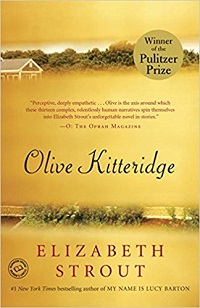
“Olive Kitteridge” by Elizabeth Strout

Olive Kitteridge

Elizabeth Strout is a well-known novelist who has written several highly acclaimed books, including last year’s My Name Is Lucy Barton and the new Anything Is Possible, However, she is most famous for her 2008 novel, Olive Kitteridge, which won the Pulitzer Prize for Fiction in 2009. I read an article about her in a recent issue of the New Yorker, which piqued my interest. I had tried reading My Name Is Lucy Barton when it came out last year, but didn’t really enjoy it. After the New Yorker article, I thought I should give her writing another try. And what better book than her Pulitzer Prize winning novel, Olive Kitteridge?

It was a good choice. While I can’t say that I loved the book – to the extent that I would go out and buy a copy of it to add to my personal collection – I found it extremely well written and can see why it won one of the highest literary honors there is for fiction. It is also very unusual in its format. Set in the small town of Cosby in Maine, the book tells the story of several different people in the town, with each of its thirteen chapters devoted to a different story. It’s almost like reading a collection of short stories, except that there is a common thread between them, an older woman called Olive Kitteridge. While some of the chapters are specifically about her and the significant events in her life – such as her husband having a stroke and eventually dying, and her son whom she doted on getting married to a somewhat obnoxious woman, moving away from home, getting divorced, getting remarried, and having a child – many of the stories center around other people in the town and she is peripheral to them. In fact, in some of them, she barely makes an appearance.

Typically, most story collections like this start off being disparate and disconnected but then bring all the threads together, with all the different characters’ lives somehow intersecting towards the end. But this is not the case with Olive Kitteridge. Only the stories that are focused on her seem to have some kind of story line, tracing her life as a young mother and school teacher—prone to impatience, somewhat insensitive, and completely unapologetic—to an old woman who has lost her husband and doesn’t quite know how to live by herself. The other stories are like snippets into the lives of different characters and their thoughts and emotions – such as a young man who is struggling with depression and lacks the will to live, a middle-aged piano player who is still haunted by a failed romance, a young girl suffering from anorexia who eventually dies, a young mother whose husband dies and she finds out that he was having an affair on the day of his funeral, a family whose young daughter runs away from home to be with her lover, and a psychologically disturbed woman who is planning to commit arson. What is common to all these stories, and to those about Olive Kitteridge as well, is how authentic and poignant they are. They seem to capture the different types of personalities people have, the range of emotions that they experience, and the different life events they are going through, all so realistically that it never seems for a moment that this is just something that someone made up. There is not the slightest hint of melodrama in any of them.

As a reader, I seemed to need the kind of continuity one expects from a novel, which is why I found the stories that were focused on Olive Kitteridge’s life the most compelling and wished there were more of them. And even though I greatly appreciated the other stories, I found myself not that caught up in their characters. I think this book should be approached more as a collection of short stories than a novel. I can see why it won the Pulitzer Prize, but I might have enjoyed it better if I knew in advance that it was not a novel in the conventional sense. It is best read, not in a stretch as I did, but as a collection of finely crafted stories, best enjoyed spaced apart rather than all at once.

Olive Kitteridge
Author: Elizabeth Strout
Publisher: Random House
Publication Date: September 2008

Contributor: Lachmi Khemlani runs a technology publication in the San Francisco Bay Area.

“My Cousin Rachel” by Daphne du Maurier

My Cousin Rachel

My Cousin Rachel is a book by Daphne du Maurier, who is most well known for her 1938 novel, Rebecca. While I have read Rebecca, years ago, I don’t remember much of it except that it was mysterious and suspenseful – and very good. I don’t think, however, that I got a chance to read any other novels by Daphne du Maurier at that time, perhaps because she never reached the kind of fame and ubiquity that novelists like Jane Austen, Charles Dickens, and Somerset Maugham enjoyed, whose books have become enduring literary classics. Lately, however, Daphne du Maurier has re-emerged in public consciousness with another one of her books, My Cousin Rachel, being made into a movie that has just been released. (Rebecca was made into a movie in 1940 by none other than Alfred Hitchcock). It provided me with the incentive to go out and get a copy of the book to read before watching the movie, as I hate it when my own visualizations of the characters in a book – usually the best part of reading – become overlaid by the actors playing those roles in the movie adaption. I found the book so good that I finished it in the course of a weekend.

My Cousin Rachel tells the story of a young man, Philip, who becomes infatuated with an older woman, Rachel, whom he was all set to detest. Philip is an orphan who has been brought up by his cousin, Ambrose, a wealthy landowner in England. Philip aspires nothing more in life than to be like Ambrose, and is very much like him in looks and in nature – shy and reserved with no social graces as such and little interest in material comforts, yet hardworking and generous to his servants and tenants. The story is set in the 19th century, at a time when there were still estates and landowners and large houses with many servants. Ambrose is a confirmed bachelor and has no interest at all in romance and marriage, until he travels to Italy one winter to escape the damp English weather that is making him unwell. (It was very common at that time for the English to go abroad every winter, typically somewhere warm and dry.) In Italy, he meets a widow, Rachel, marries her, continues to stay in her villa for several months, and is in the seventh heaven of bliss until his health rapidly deteriorates and he suddenly dies. All of this is communicated to Philip back at home through letters, which initially show how besotted Ambrose is by Rachel and subsequently, as time goes on, become darker and more paranoid. Ambrose starts to think that Rachel is a spendthrift, that she is too close to the Italian man who is her friend and financial advisor, and finally, when he has become extremely sick, that Rachel is trying to poison him. Philip rushes to Florence as soon as he gets Ambrose’s last few letters foretelling doom, but it is too late – Ambrose is already dead.

Naturally, Philip is devastated – and furious with Rachel, who is now his cousin. He is told that Ambrose might have suffered from a brain tumor similar to that which his father died from, but that doesn’t stop him from feeling almost a murderous rage towards Rachel. But that is before he meets her. She comes to visit, and Philip is soon as besotted with her as Ambrose was, to the extent that he eventually signs over all of his considerable property to her and gives her all his family jewels, which are worth a fortune. He doesn’t care – he is in love with this woman, and despite their age gap, wants to marry her. They have a one-night tryst, an occurrence which makes him think that she has agreed to marry him, when in fact, for her, it was just a “one-night stand” – as we would it now – with someone she has affection for and who has just given her a fortune in jewels. Naturally, she shoots down the idea immediately. Philip falls ill, and while Rachel continues to stay on in England to nurse him, things are different between them now – she remains affectionate, but also distant and firm. At the same time, her Italian friend comes to visit, and Philip, like Ambrose, hates him, thinking they have something going on between them. The final straw is when Philip finds some poisonous seeds in her bureau – is she trying to poison him like she did Ambrose?

While, of course, I can’t give away the ending, I would have to say that the book was so suspenseful that I couldn’t put it down until I had finished it, despite the fact that it was not a thriller or a murder mystery. I also found it beautifully written, very evocative, almost haunting. It is told from Philip’s point of view and captures all of his emotions – his diffidence, rage, jealousy, infatuation, and confusion – so authentically and in so much detail that we seem to be inside his head, actually experiencing all these feelings. I also found it such a welcome change from contemporary novels, many of which attempt to be “clever” but end up just being obscure and convoluted, not to mention pretentious. My Cousin Rachel is a wonderfully crafted story, told in a straightforward manner and without any artifice whatsoever. I wish people still wrote books like this today.

My Cousin Rachel
Author: Daphne du Maurier
Original Publisher and Date: Victor Gollancz Ltd, 1952
Reprint Publisher and Date: Sourcebooks, Inc, 2009

 Contributor: Lachmi Khemlani runs a technology publication in the San Francisco Bay Area.

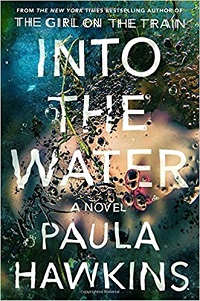
“Into the Water” by Paula Hawkins

Into the Water

Into the Water is the new book by Paula Hawkins, whose debut novel, The Girl on the Train, was such a huge success, not just commercially but also critically — it was on the New York Times Bestseller list for over four months following its release in 2015, which surely has to be a record, at least for a first book. I absolutely loved that book and wrote about it shortly after I reread it last summer and found that I enjoyed it as much as the first time I read it. Naturally, my expectations were really high from Into the Water, although I was also afraid that it wouldn’t be as brilliant as The Girl on the Train. After all, wasn’t it possible that the resounding success of her debut novel had blunted the artistic sensibilities of the author as well as her drive and motivation? Could Paula Hawkins really come up with something that would be as good as The Girl on the Train?

As it turns out, I needn’t have worried about not enjoying Into the Water as much as I did The Girl on the Train. It is as brilliantly written and as much of a taut, suspenseful thriller as The Girl on the Train – I couldn’t put it down and read it in the course of an evening, staying up till the early hours of the morning to finish it. I simply had to know what happens.

Into the Water is set in a small town in England that has a river running through it, one part of which happens to be a treacherous spot where people can drown – either by jumping into the water or by being thrown off. This spot, known to locals as “the Drowning Pool,” has a troubled history, with many women losing their lives there – hundreds of years ago, when people believed in witchcraft, women thought to be witches were thrown into the water, and more recently, it has become somewhat of a suicide spot for troubled women to end their lives. The book begins with the death of a woman, Nel, in the drowning pool. Did she jump into the water or was she pushed? Nel’s death seems to be connected to the death of Katie, a teenage girl, in the same spot about six months ago, which was believed to be a suicide. It’s also possible that the connection actually began with the death of another woman, Lauren, in that spot thirty years ago.

The story is told from the points of view of several characters: Nel’s long estranged sister, Jules, who is forced to come back to the town she and Nel grew up in; Nel’s teenage daughter, Lena, who also happened to be Katie’s best friend; Katie’s mother, Louise; the local detective to whom the case is assigned, Sean, who is also Lauren’s son; and several other characters including Katie’s brother, Sean’s wife, Sean’s father, the high school teacher with whom Katie was having an affair, and last but not least, a local psychic who everyone thinks is crazy but who actually has some important insights into what actually happened. Nel, who was a single mother, had always been obsessed with the Drowning Pool, and her research on it was not appreciated by the others in the community, particularly those whose lives had been affected by it, such as Katie’s mother, Louise. Katie’s brother was just a young boy, but he had seen his mother go out the night Nel died – had she something to do with Nel dying in the water? And why exactly had Katie committed suicide? Why was Jules estranged from her sister all these years? If Nel had indeed killed herself, maybe if Jules had responded when Nel had reached to her, she wouldn’t have been so troubled as to commute suicide? Why was Lena so difficult? Was it normal teenage rebelliousness compounded by the irrevocable loss of her mother, or was she hiding something? Why did Sean seem disturbed so often in the course of the investigation?

By the end of the book, you, of course, get the answers to these questions and things make sense. I was gratified to find the quality of the writing to be as good as The Girl on the Train, and it was just as suspenseful and thrilling, making it impossible to put the book down.

That said, while I thoroughly enjoyed reading Into the Water, I don’t see myself re-reading it with the same level of enjoyment as The Girl on the Train. For one, there are many more characters here, and not only is it initially confusing to the reader, I think it is also more difficult for the author to “get inside” the heads of so many characters, leaving us with a little more than a cursory understanding of many of them, even though they narrate their parts of the story in first person. Also, the reason behind Jules’s estranged relationship with Nel did not seem very convincing. And finally, I felt that the book does not sufficiently clarify every single question — and it could be because there were too many interconnected threads in the plot.

In short, I found Into the Water a great read, but not the kind of book I would go out and buy a copy of for my personal library, as I did for The Girl on the Train.

Into the Water
Author: Paula Hawkins
Publisher: Riverhead Books
Publication Date: May 2017

Contributor: Lachmi Khemlani runs a technology publication in the San Francisco Bay Area.