“The Metamorphosis” by Franz Kafka

The Metamorphosis

I was in Prague in the summer and Franz Kafka’s name came up somewhere somehow. The Czechs are incredibly proud of him. He is among the 20th century’s most celebrated authors and many of his quotes are mind-blowing. Consider this one: “Every revolution evaporates and leaves behind only the slime of a new bureaucracy.” One hundred years after the Russian Revolution we can clearly see what he means – but Kafka died seven years after 1917.

When I started reading The Metamorphosis, a sense of deja-vu set in almost immediately. I began to feel that I’ve read this book before. I was an avid reader in my schooldays, so perhaps I must have read it, though the memory is nebulous. The creepy feeling, however, subsists to this day, as I soon found out. The book takes you on a bizarre journey into an unfamiliar domain. Wonder how the author dreamed this up. Should I call it science fiction? But no, the story line is too well-grounded. And it does bring home some home-truths. It is fiction that touches both science and sociology.

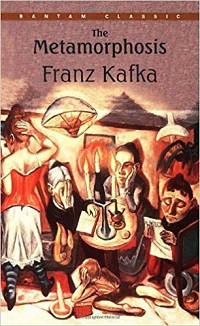
Gregor Samsa is a travelling salesman who wakes up one morning to find himself turned into an ugly beetle. Until then he had been a conscientious worker, doing the daily grind, bringing home the bread and butter, supporting his parents and sister, and living a mundane life. But everything changes in a horrific instant. As Gregor’s life changes, the people around him are compelled to readjust their lives rather abruptly. His home-bound father starts going to work. His sister Grete starts taking care of him. His mother keeps a distance.

The cast of characters is minimal. A colleague from Gregor’s office who comes in search of him on Day 1 of the horrendous transformation, and three bearded paying guests who are taken in to supplement the family’s dwindling resources are the only other players in the game.

The original novella was written in German and published in 1915. There have been innumerable translations since. The text is barely 56 pages. The rest of the compendium is comprised of the Introduction, a whole lot of critical essays (some of which I didn’t bother to read) and some key documents including a letter from Kafka to his father (with whom he had a troubled relationship).

Franz Kafka died of tuberculosis in 1924 at the age of forty. He never married, though he had several known liaisons with women. He did not attain fame during his lifetime. He was a Jew and his three sisters perished in the Holocaust. There have been speculations that Kafka suffered from a schizoid personality disorder and/or anorexia nervosa. He was believed to be a loner with suicidal tendencies.

Kafka’s friend and biographer Max Brod was responsible for turning Kafka into a celebrity. Kafka’s wish was that his works should be destroyed but Brod ensured their publication instead. The Trial was published in 1925, followed by The Castle in 1926 and Amerika in 1927. Max Brod fled to Palestine in 1939, taking Kafka’s papers with him. In 1988, two decades after Brod’s death, an original manuscript of The Trial was auctioned for $2 million.

“A belief is like a guillotine, just as heavy, just as light.” Wow, Kakfa! What a quotable!

“I can prove at any time that my education tried to make another person out of me than the one I became.” Yes, he proved it. He was trained to be a lawyer, worked for an insurance company, and look what he became!

Overall Assessment: Eerie and thought-provoking.

The Metamorphosis (Die Verwandlung)
AUTHOR: Franz Kafka (translated from the German by Stanley Corngold)
PUBLISHER: Bantam Classics
YEAR OF PUBLICATION: 1972 (first Bantam Edition) (German original published in 1915)

Contributor: Pushpa Kurup lives in Trivandrum, India and works in the IT sector.

“Where You Go Is Not Who You’ll Be” by Frank Bruni

Where You Go

New York Times best-selling author Frank Bruni shows why rejection from an Ivy League college does not spell disaster but may even be a blessing in disguise. In his book, Where You’ll Go Is Not Who You’ll Be, Bruni takes on the myth that getting an Ivy League education is not only necessary for success as an adult, but also a stepping stone to wealth and prosperity. He examines the chaos of the college admissions process in the US, looking at college rankings, SAT scores, and acceptance rates of elite colleges.

Bruni connects the mayhem of admissions to the emphasis on privilege and branding, which ends up categorizing people by their race or their family’s income. Too often, admission into a top college becomes the number one priority, while trying to go to a school where you get the best education takes a backseat. Crafting a student’s resume begins as early as in preschool, as community service, sports abilities, and other extra-curriculars all contribute to where the student ends up attending. Students can only relax when they are finally accepted somewhere.

Bruni writes, “The sale is more important than the product,” as he uses his own personal experiences to show that being rejected from Ivy League colleges may, in fact, be a blessing. Bruni uses Arizona University as an example of a great school that is not in the Ivy League. Arizona offers high quality education, with a faculty that includes two Nobel and five Pulitzer Prize winners. Getting an education from your top choice, even if it is not in the Ivy League, is still the best option, but rejection can lead you off the path, where you have to learn to be self-reliant and more flexible, increasing your chances of success.

Where You’ll Go Is Not Who You’ll Be is a must-read for students heading into colleges, as it reminds them that just because a college may be higher ranked or has more prestige does not mean it’s a better place for their education. Written in a dynamic style but containing a lot of valuable information, this is a book that families and students cannot overlook as they get into the bedlam of college admissions.

Where You Go Is Not Who You’ll Be: An Antidote to the College Admissions Mania
Author: Frank Bruni
Publisher: Grand Central Publishing
Publication Date: March 2015

Reviewer: Sahil Kurup is a high-school student at St. Francis High School in Mountain View, California.

“Mountains Beyond Mountains: The Quest of Dr. Paul Farmer, A Man Who Would Cure the World” by Tracy Kidder (Adapted for Young People by Michael French)

Mountains Beyond Mountains

This was a book I borrowed from a schoolgirl in Columbus, Ohio. She has a dream of becoming a doctor and I was curious to know what she was reading. I picked three titles from her home library and ‘Mountains Beyond Mountains’ was the first one I read. Quite predictably, it was a version adapted specially for kids. The original book was authored by Tracy Kidder and published in 2004. Michael French was responsible for the adapted version.

The book is about a medical man with a noble mission. Dr. Paul Farmer, born in America in humble circumstances, goes to Duke university on a scholarship and chooses his life’s work in disease ridden Haiti, one of America’s poorest neighbours. He works and travels 24/7, treating patients, raising funds, and convincing global opinion makers that the poor must have options too, that healthcare would be ineffective if it targeted only the wealthy.

The book traces the amazing journey of an amazing individual, an inspiring saga of energy, enthusiasm and professional excellence. It’s a MUST READ for any one who has interest in the medical profession.

Paul Farmer and some of his most committed team members go on to found Partners in Health (PIH), a non-profit organization that combats diseases such as TB, AIDS and malaria in far flung places such as Peru, Kazhakhstan, Russia, Mexico, Dominican Republic, Malawi, Lesotho and Rwanda.

The book introduces us to many interesting personalities. Tim White is the ultimate philanthropist who supports Farmer’s ventures until he is down to his last penny. Jim Yong Kim, who partnered with Farmer to found Partners in Health is now President of the World Bank. Didi Bertrand is the Haitian woman who marries Farmer and shares his vagabond lifestyle while bringing up the children. She lived in Paris for years before moving to Rwanda with her husband. Ophelia Dahl, daughter of Oscar-winning actress Patricia Neal and celebrated author Roald Dahl, meets Farmer in Haiti when she was just eighteen. She finds her calling and becomes one of the prime movers behind PIH.

Overall Assessment: Great story, great subject, but a bit laboured.

Mountains Beyond Mountains: The Quest of Dr. Paul Farmer, A Man Who Would Cure the World
AUTHOR: Tracy Kidder (Adapted for Young People by Michael French)
PUBLISHER: Random House
YEAR OF PUBLICATION: 2004

Contributor: Pushpa Kurup lives in Trivandrum, India and works in the IT sector.

“The Heart” by Maylis de Kerangal

The Heart.jpg

As a book lover, a strong recommendation for a book from someone you greatly respect is impossible to ignore, and that is how I came to read the book, The Heart – it was recommended by none other than Bill Gates (in a recent issue of Time magazine). Not that Bill Gates is a literary expert, but as the co-founder and former CEO of Microsoft, one of world’s most successful companies, and more recently, as the leader of the Gates Foundation, a philanthropic organization that he started with his wife, his book recommendations are certainly noteworthy. According to his blog – in which he has a dedicated section for books that he recommends – he mostly reads non-fiction but read The Heart, a novel, on the recommendation of his wife, who told him it was different from other books.

It certainly is. At its essence, The Heart is the story of a heart transplant. The heart in question belongs to a young man, Simon, just twenty years old, who meets with a fatal accident one day on the way back from an early morning surfing expedition with his friends. It was just a matter of chance that he was sitting in the middle and not wearing a seat belt. His friends, who were wearing seats belts, were also seriously injured in the accident, but they survive. The story of the  heart transplant is told through the lens of all the people directly involved in the process – Simon’s parents, who are utterly and completely devastated but eventually give their consent to the donation of his organs; the doctor and the nurse in charge of Simon at the ICU in the hospital where Simon is brought in after the accident; the liaison for the organ donation; the surgeon and nurse team who actually harvest the heart and transport it to the hospital where a recipient is being prepped to receive it; and finally, the recipient herself, Claire, a middle-aged woman whose own heart is failing rapidly and for whom a successful heart transplant is her only shot at survival.

The Heart is unapologetically a tragedy. There is no attempt to find any kind of silver lining in the situation—what can there be in the face of a young man dying so abruptly at the prime of his life? About the only positive thing in the story is the fact that Simon’s parents consent to his organs being harvested for donation, and we get to see firsthand the impact of the donation of one of these organs – his heart – and how it could potentially save the life of someone who would otherwise have died of heart failure. Other than this, the book is heart-breaking all the way through — it captures the shock and devastation of Simon’s parents so vividly and in so much detail that anyone who has lost a close family member will be able to identify completely with how they feel. In contrast to the grieving parents, it also shows how the doctors and nurses stoically go about their work — they have got to do what they do to keep our hospitals going, healing the people they can, and trying their best to save even those that they can’t.

Unlike most novels, The Heart is not a story that is told in a straightforward manner. The usual plot lines are simply not there. While you would expect the story to be primarily centered on Simon’s parents and on Claire, exploring their thoughts and feelings — perhaps with some profound insights on life — the book actually captures the background and personalities of each of the key people involved in the transplant. While this was interesting, I found that it seemed to detract from the overall impact and cohesiveness of the story — it was so broad that it just didn’t seem to come together. Also, some of these people got only a single chapter in the book for their story while others got several, and it wasn’t clear as to why that was the case. The Heart also goes into extensive, and sometimes excruciating, detail about the science and medical aspects of heart transplants — details that I didn’t particularly want or care to know about. Another point of departure for The Heart is the writing style, which is different and takes some getting used it. Sentences seem to go on and on, sometimes even for entire paragraphs, which, in turn, are often longer than a page.

In conclusion, I found The Heart an interesting book, with some aspects of it that were brilliant — notably in capturing the nightmare of a parent dealing with the sudden and irreversible loss of their child — but others that I could not really appreciate. Perhaps, I am too much of a traditionalist when it comes to novels to appreciate a book that is so unconventional.

Getting back to Bill Gates who strongly recommended this book, you can read his take on it at https://www.gatesnotes.com/Books/The-Heart.

The Heart
Author: Maylis de Kerangal (Translated from French by Sam Taylor)
Publisher: Farrar, Straus and Giroux (English edition)
Publication Date: 2016 (Originally published in French in 2014)

Contributor: Lachmi Khemlani runs a technology publication in the San Francisco Bay Area.

“The Immortal Life of Henrietta Lacks” by Rebecca Skloot

The Immortal Life of Henrietta Lacks

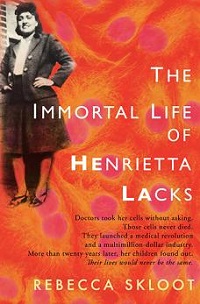
This is the amazing story of a young African – American woman who became ‘immortal’ after cervical cancer claimed her life in 1951. The cells from her cervix came to be known worldwide as HeLa cells and continued to grow and multiply ad infinitum. They were the first immortal human cells ever grown in a laboratory. They were the first living cells shipped via postal mail. They facilitated the development of the polio vaccine in 1952. They aided cancer research and virology studies, besides cloning and gene mapping. Both Russian and American scientists had managed to grow HeLa in space. But no one had ever heard of the cell donor.

Was Henrietta Lacks really a donor? Was she aware that her cells had been cultured? Poor Henrietta knew only pain and hopelessness. She didn’t know the cells that were killing her by the second were going to live forever.

The author gives us interesting details of the life and family of Henrietta Lacks and brings up interesting questions about medical ethics, informed consent, and donor rights. It was only two decades after her death that Henrietta Lacks was actually named in a publication as the source of the HeLa cells. Only then does the world realize that the cells came from a black woman. Only in 1973 do her children learn that her cells are still alive and multiplying. Only in 1975 do they understand that the cells are being bought and sold and that companies and individuals are earning profits while they themselves can barely afford medical treatment.

Henrietta Lacks, wife of David Lacks and mother of five children, died when she was just over thirty. She had been born Loretta Pleasant in Roanoke, Virginia in 1920. Her mother had died in childbirth when Loretta was only four years old. No one knows how or when Loretta became Henrietta. She was brought up by her grandfather, a poor tobacco farmer. She married her first cousin when she was twenty. By then the couple already had two children. It is a tragic tale of poverty and the acute deprivations that accompany it. Henrietta fell victim to cervical cancer, suffered acute distress, both physical and mental, and finally succumbed.

The book is as much about the life and journey of HeLa cells as it is about Henrietta Lacks and her family. You have to be greatly interested in science, anatomy, genetics and medicine to really enjoy the book. It is extensively researched, is acclaimed as a New York Times bestseller, and the subject is fascinating. Yet it is hard to sift through the scientific facts and get a grip on the story. The book unearths some unusual facts that most of us are unlikely to have heard of. “When the first humans went into orbit, Henrietta’s cells went with them so researchers could study the effects of space travel, as well as the nutritional needs of cells in space, and how cancerous and non-cancerous cells responded differently to zero gravity. What they found was disturbing: in mission after mission, noncancerous cells grew normally in orbit, but HeLa became more powerful, dividing faster with each trip.”

The sad part is that none of Henrietta’s children were able to break out of the vicious cycle of poverty and deprivation that marked their mother’s life. The paths trodden by the five children are all too predictable, given the circumstances of their birth and family history and the reader can’t help sympathizing with them. What became of Elsie, the first daughter who was committed to a mental institution while still a child, is particularly heart-rending. Deborah, the younger daughter learns of her existence decades after Elsie’s death. Neither their father nor their eldest brother, Lawrence, had ever mentioned her.

Dr. George Gey was the man who cultured the first HeLa cells. This was at John Hopkins. He gave them away to anyone who asked for them. He had no profit motive. But soon the distribution of HeLa cells became commercialized and a multi-million dollar industry was born. Samuel Reader, the owner of Microbiological Associates was first to make big money out of this. But it was John Hopkins that Henrietta’s children were wary of. The author traces the history of this world renowned institution which makes interesting reading. “John Hopkins was born on a tobacco plantation in Maryland where his father later freed his slaves nearly sixty years before Emancipation. Hopkins made millions working as a banker and grocer, and selling his won brand of whiskey, but he never married and had no children. So in 1873, not long before his death, he donated $7 million to start a medical school and charity hospital.” And the rest, as we know, is history.

The author informs us that, “A search of the US Patent and Trademark Office database turns up more than seventeen thousand patents involving HeLa cells.” The 1980 Supreme Court decision in the case of Ananda Mohan Chakrabarty, who had been denied a patent for a genetically engineered bacterium that could consume oil and help clean up oil spills was an interesting piece of information.

Overall Assessment: Interesting, though not an easy read.

Title: The Immortal Life of Henrietta Lacks
Author: Rebecca Skloot
Publisher: Crown Publishing Group
Year of Publication: 2010

Contributor: Pushpa Kurup lives in Trivandrum, India and works in the IT sector.

“My Life with Bob” by Pamela Paul

My Life with Bob

Of the thousands of podcasts that are now available, there are only two that I subscribe to, the New York Times Book Review podcast and NPR’s Fresh Air. In fact, I listen to them so regularly that the voices of their hosts – Pamela Paul of the New York Times Book Review podcast and Terry Gross of Fresh Air – seem more familiar to me than the sound of my own voice. So when I heard of the book, My Life with Bob, by Pamela Paul that was published recently, I had to, of course, read it – despite the fact that I have a marked preference for fiction and My Life with Bob is more of a memoir. (Interestingly, Pamela Paul was interviewed by Terry Gross on Fresh Air shortly after her book was published, so I had a chance to listen to both of them in the same podcast!)

Contrary to what you might expect, the “Bob” of My Life with Bob is not a guy, but a list of books that Pamela Paul has maintained for twenty-eight years, starting from the time she was in high school. This becomes obvious from the subtitle of the book, which is “Flawed Heroine Keeps Book of Books, Plot Ensues.” Thus, Bob here is an acronym for “Book of books.” It might seem strange to keep such a list – it’s not something people commonly do – and it is a testament to how much Pamela Paul loves books that she has kept a record of every book that she has read since high school. And not only that, her Bob is so precious to her that if she was forced to evacuate her home in a hurry, Bob is what she would choose to take – after her family, of course, but before critical documents such as passports and birth certificates. (Bob, is contained, so far, within a single notebook and is hand-written, and while I can see the importance of maintaining the hand-written aspect of it, I think it can at least be scanned and archived, so she does not live in mortal dread of losing it!)

For a fellow book lover, My Life with Bob provides a fascinating glimpse into the life of someone who has always been passionate about books since she was a kid. Keeping a list of books may have started out as a whim for Pamela Paul – one of those things you embark upon in your teens but soon lose interest in – but it actually became almost a necessity for her, as books were the one constant in her life that she was always passionate about. Her list starts with Franz Kafka’s The Trial on a summer-abroad trip to rural France as a high-school student and continues till the present day, following the arc of her life through college, early adulthood living in Thailand in the soul-searching “What do I want to do with my life?” phase, early career as a freelance writer in which she was able to land prestigious gigs such as a monthly column in The Economist, a first marriage ending in divorce, her second marriage, the birth of her three kids, and her professional ascent in the editorial and publishing world that has culminated in what would seem to be the pinnacle for someone who wants to work with books – becoming the editor of the New York Times Book Review.

Contrary to a personal journal or dairy which is commonly used by people to capture the events, thoughts, feelings – and very often, angst – at specific times in their lives, maintaining a list of every book that she has read is much more meaningful to Pamela Paul, as it concisely captures the trajectory of her life. Instead of reading her thoughts about what she felt at a certain time if she had captured them in a diary – most people who maintain regular journals will probably have hundreds of them – she can simply look at any book in her list and remember the event or experience associated with it, even if it was twenty years ago – similar to how a photograph can trigger long forgotten memories. In her list of books, she even indicates which ones she was not able to complete, which is also illuminating, as what a person does not like is as indicative of their personality as what they do like. While a list of books cannot always be a good filter to find like-minded people, a person’s reading list does tell you a lot about their personality, and the immediate affinity you feel towards someone who feels the same way about a specific book as you do is undeniable.

As you would expect from someone who is the editor of the New York Times Book Review, Pamela Paul is an accomplished writer, and while I have not read any of her earlier books, I found My Life with Bob very well written. It was fascinating to get an inside look at the life of someone whose world revolves around books, all the way from being a “bookish child” who always felt book-deprived, to her current position where she is surrounded by a glut of books and can only manage to read a tiny fraction of them.

My Life with Bob: Flawed Heroine Keeps Book of Books, Plot Ensues
Author: Pamela Paul
Publisher: Henry Holt and Co.
Publication Date: May 2017

Contributor: Lachmi Khemlani runs a technology publication in the San Francisco Bay Area.

“The Martian” by Andy Weir

The Martain

Mark Watney, who is an astronaut on spaceship Ares 3, is sent on a mission to Mars and left stranded following a storm. His crew thought he was dead after seeing his suit lose pressure, and they made the tough choice to abandon him. He somehow survives, but has to find a way to stay alive until he can be rescued. He has no idea how to contact NASA back on Earth. His food, water, and oxygen will only last so long, so he needs to devise a plan that will keep his alive until help arrives. There’s little room for error, though, and Watney comes dangerously close to disaster on numerous occasions, using “Sols,” or days, to recount his stunning story.

The Martian is a different kind of book, a true science thriller in which math and science play the main role in the plot. Many pages are just Watney’s thoughts, filled with dissecting complex calculations about the planet’s orbit or his calorie consumption.

That doesn’t mean the book was long-winded or boring. It was interesting to see what a person on Mars thinks, as none of us has ever experienced it. Author Andy Weir creates a hilarious character in Mark Watney, who cracks jokes at random times, which keeps the readers entertained. Watney is also easy to empathize with. While no one can relate to his Mars experience, we can all relate to his emotions, and Watney makes it easier to take in the scientific part of the book without becoming overwhelmed.

I would recommend this book to all readers, as it would appeal not only to space travel enthusiasts but also regular people looking for a gripping plot. Although there may be a lot of description, Watney’s wittiness and his Mars adventures keep readers interested and captivated.

The Martian
Author: Andy Weir
Publisher: Broadway Books
Publication Date: October 2014

Reviewer: Sahil Kurup is a high-school student at St. Francis High School in Mountain View, California.

“Ties” by Domenico Starnone (Translated from Italian by Jhumpa Lahiri)


Ties

I have to confess that the only reason I read this book – that it even appeared on my radar in the first place – was because it was associated with Jhumpa Lahiri. Last year, I had written about her memoir, In Other Words, which she wrote in Italian and which was then translated into English by another translator – despite the fact that she is, or at least was until then, an English author. It is incredible to me that someone who has achieved so much success in one language – she won the Pulitzer Prize for Fiction for The Interpreter of Maladies in 2000 – would deliberately choose to discontinue all association with that language and attempt to adopt another language, which in her case was Italian, to the extent of actually moving to Italy with her family and talking and writing only in Italian. Well, she must have accomplished some of what she set out to do since she is back on the English scene, albeit not as an author but as a translator. I don’t know anything about the Italian literary scene, but the author of Ties, Domenico Starnone, is apparently a highly regarded writer in Italy, and Jhumpa Lahiri, after reading the book in its native Italian, jumped at the opportunity to translate the book to English and make it available to the English-speaking world. She has also written an Introduction to the English translation which was very illuminating, providing not only some interesting insights about the book but also about her journey from English to Italian and back.

Getting back to the book, Ties is more of a novella rather than a novel, which means that it is a relatively quick – and easy – read. (This is not to say that all short books are an easy read, but Ties was not in the least bit dense.) It is a story told in three parts, and is, at its heart, the story of a marriage beset by trials and tribulations. The protagonists of the story are a couple, Vanda and Aldo, who have two children, a boy, Sandro, and a girl, Anna. The novel opens when Vanda and Aldo have been married for twelve years, and Aldo walks out on his family to be with a younger woman who he has fallen in love with. Infidelity in a marriage is hardly an uncommon occurrence, but what makes Ties different is that that first part of the story is told entirely in the form of a series of letters written by Vanda to Aldo, entreating him to come to his senses and return home. She does not work and is having a hard time paying the bills; also, the kids miss their father terribly and feel abandoned. These pleas, admonishments, and guilt trips do not really work, as Aldo does not return and Vanda is forced to go out and find a job and singlehandedly run the home and bring up the children. Needless to say, she ends up becoming very hard-hearted and embittered.

The second part of the book fast-forwards several decades and is narrated by Aldo. Both he and Vanda are now in their seventies, and surprisingly, they are together as a married couple. At some point, therefore, Aldo did come back after all. This part of the book has a lot of reminiscing by Aldo on why he left and the reason that he came back. But the main reason for focusing on this particular time of their lives is because of a major incident – Aldo and Vanda have just returned from a vacation to find their house completely vandalized, turned upside down, and Vanda’s beloved cat missing. It is extremely upsetting, and as they go about starting to clean up, we come to know that Aldo has some compromising photographs which have gone missing, leaving him to think it was likely blackmail. At any minute, he is expecting a call threatening to show the photographs to his wife if he doesn’t pay up.

The “mystery” – if we can call it as such – is revealed in the third part of the book, and of course, I cannot write about it without giving it away, except to say that it was totally unexpected.

So, did I like the book? I definitely found it interesting as it captured personalities and a culture that I don’t know anything about. Also, it was a short and quick read, which I really appreciated. And the ending did come as a complete surprise, but not in any kind of unbelievable way. In fact, it brought the story back to the family unit, showing that the “ties” in any relationship, once they are weakened, do not really heal, despite our best efforts. This was particularly true of the marriage between Vanda and Aldo, which had started to develop fissures and cracks, and while it may seem that it all worked out in the end – Aldo did return to his family eventually – the damage was done. The rot had started to set in, and despite being together, neither Vanda nor Aldo was really happy. The situation also took a toll on the children, with both Sandro and Anna damaged in some way as a result of the problems in their parents’ marriage.

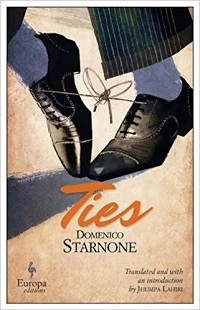
As Lahiri explains in the Introduction, the title of the book “Ties” is her interpretation of the Italian title “Lacci” which literally translates into laces. There is some reference in the book to the actual tying of shoelaces, and it seemed liked an apt metaphor for Lahiri to capture the essence of the story.

Does this signal the end of Jhumpa Lahiri’s hiatus from English? I certainly hope so, as she is a very talented writer, but we will just have to wait and see.

Ties
Author: Domenico Starnone, Jhumpa Lahiri (Translator)
Publisher: Europa Editions
Publication Date: March 2017

Contributor: Lachmi Khemlani runs a technology publication in the San Francisco Bay Area.