“Cigarette Girl” by Ratih Kumala

Cigarette Girl.jpg

The unusual title caught my attention as I was browsing in a bookshop in Bali. I picked it up. The book’s central character is a cigarette rolling, cigarette smoking girl, Dasiya or Jeng Yah, who remains an enigma right until the story reaches its climax. The tale begins when a cigarette tycoon utters her name on his deathbed to the utter amazement of his three sons and the utter disgust of his wife. Soeraja’s appeal is heeded by his sons – Tegar, Karim and Lebas – who set out on a wild goose chase to find the mystery woman, much to the anger and resentment of their poor mother.

“As if the Angel of Death was casually stopping by his room, taking a little piece of him each time it visited, and along with it pieces of his memory as well.” This is how the author describes Soeraja’s slow descent into oblivion. She says of Lebas, the youngest of the three brothers: “He had been a Bob Marley follower for eight months, until some lice decided that his dreadlocks made a nice and cosy nest.”

There is pathos and humour and suspense. But far too much about cigarette smoking and cigarette making to attract a non-smoker. Djagad Raja clove cigarettes, Lady cigarettes, Mendak medicinal cigarettes, Independence cigarettes, Proclamation cigarettes, Red Sickle cigarettes, Djojobojo klobot, and what not. Frankly, I disliked the portions where much is made of the “flavour,” “feel” and “formula” of the weed. The cost, the weight, the texture, the smell, the taste – all these were enough to drive me mad! I felt myself going up in smoke – and almost lost my grip on the story.

The family drama is interesting though – and the language simple and sweet. Rivalries, jealousies, and human struggles spanning three generations, the liberation brought by the Japanese, followed by unexpected repression, the coming of Independence, the brutal suppression of communist groups, the danger of political activity and its deep impact on the daily lives of common people – all form part of this pot-boiler. The cigarette ads are totally hilarious. Lady cigarettes: inhale just once and the lady of your dreams will appear before you. Garwo Kulo cigarettes: the cigarette for the man who loves his wife.

The tale is set in Java, Indonesia. We are reminded in rare flashes that the country once had a Hindu legacy. “But her husband had pulled her way cruelly, like Kurawa who had won Drupadi from Yudhistira in the Mahabharata.” Idroes Moeria and the scribe’s daughter, Roemaisa, Soedjagad and his desire to win the same woman, the American education of Soerja’s sons and its influence on Lebas in particular, the conformism of Tegar and the bohemian lifestyle of Lebas, Pak Djagad and his daughter Purwanti, the search for the elusive cigarette girl and the final unexpected twist to the story are all laid out in fascinating detail. How I wish it had been about some herbal product instead of cigarettes! The characters have one thing in common – they all enjoy smoking! No, I’m not joking. (And yes, I did get away before Mt. Agung erupted.)

Overall Assessment: Not bad.

Cigarette Girl
AUTHOR: Ratih Kumala
PUBLISHER: Monsoon Books
DATE OF PUBLICATION: 2017 (First published in 2012 in Bahasa Indonesia)

Contributor: Pushpa Kurup lives in Trivandrum, India and works in the IT sector.
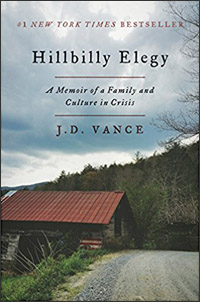
“Hillbilly Elegy: A Memoir of a Family and Culture in Crisis” by J. D. Vance

Hillbilly Elegy1

J.D. Vance’s Hillbilly Elegy was my first real insight into white working-class America – what he describes as ‘hillbillies’ from a poor Rust Belt town. The author gives a compelling explanation of why it’s so hard for someone who grew up the way he did to ‘make it.’ I picked up this book after the 2016 election to get an idea of the Republican base.

I just loved the glimpse into Vance’s chaotic family history – his grandparents, aunt, uncle, sister, and, most of all, his mother dealing with demands of their new middle-class life while struggling with the legacy of addiction, alcoholism and poverty that is so characteristic of their part of America.

Vance’s grandparents moved north from Kentucky’s Appalachia region to Ohio in the hopes of escaping the dreadful poverty around them and to raise a middle-class family. When J.D. graduates from Yale Law School, he succeeds in achieving generational upward mobility – a story interspersed with its fair share of humor and colorful characters. He was mostly raised by his grandparents along with his half-sister because his mother was an addict who went from husband to husband and Vance barely knew his father. He did poorly in school and was lucky to get out of the cyclical poverty when a cousin pushed him into joining the Marines, which was an American melting pot. From there he went to Ohio State and then to Yale Law School.

At Yale, his mentor was Amy Chua – the famous ‘tiger mom.’ But he feels the disdain from his fellow-mates who come from a different socio-economic class and cannot relate to his ‘white poverty’ or his marine background. He meets his future wife, Usha, at Yale and finds much more

Vance doesn’t pretend to be a policy expert or offer solutions – he merely opens our eyes to them. But after reading the book, it did make me think about what can be done to create opportunity in poor communities, especially in ‘middle America.’

Hillbilly Elegy: A Memoir of a Family and Culture in Crisis
Author: J. D. Vance
Publisher: Harper
Publication Date: June 2016

Contributor: Shamita Tripathy is a book enthusiast and works as a finance professional in the Bay area.

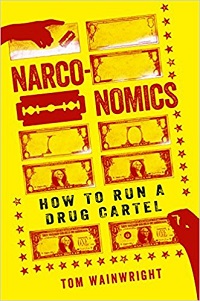
“Narconomics: How to Run a Drug Cartel” by Tom Wainwright

Narconomics

I was at the Munich airport and had time to kill. I went to the bookstore and my eyes fell on a book with an intriguing name. I went ahead and bought it. And sure, I got my money’s worth.

I was startled to learn that this is the author’s first book. He sure writes like a pro. And he’s chosen a mind-blowing topic. I’ve read many books written by journalists, but this one’s the best of all. It’s a lesson in economics, sociology, crime and the dark side of human life.

We learn that the world’s taxpayers spend $100 billion a year combating the illegal drugs trade. “There is an overwhelming focus on suppressing the supply side of the business, when basic economics suggests that addressing demand would make more sense.”

The global narcotics industry has annual revenues amounting to about $300 billion and serves a quarter of a billion consumers. It closely resembles a professionally run multinational corporation. “Colombian cocaine manufacturers have protected their profits by tightening control of their supply chains, along the same lines as Walmart. Mexican cartels have expanded on a franchise basis, with the same success as Macdonald’s.”

Monopsony means ‘single buyer.’ While a monopolist can dictate prices to its consumers as it’s the only seller, a monopsonist can dictate prices to its suppliers, because it’s the only buyer. Drug cartels keep the price of coca stable by putting pressure on the suppliers who in turn squeeze the growers. So any production loss or destruction of crop affects only the farmers – those at the very bottom of the supply chain. On the international market the price of cocaine has remained steady for over two decades. So has the number of cocaine users.

“Prison is fabulously expensive. Sending a teenager to jail costs more than it would to send hint to Eton College, the private boarding school in England that educated Princes William and Harry.” For criminal organizations, prisons pay a pivotal role in the recruitment and training of staff. The La Nuestra Familia (our family), a California based prison gang was founded in the 1960s by prison inmates looking to protect themselves from another gang, the Mexican Mafia. The Aryan Brotherhood is another American prison gang. (Gosh, there’s a whole world out there that we’re clueless about!)

“Buy cocaine in Europe or the United States and it’s an uncomfortable certainty that you have helped to pay for someone to be tortured to death…” Drug cartels often seek publicity for their gruesome murders. The author was told that the worst time to step out in Ciudad Juarez (in the Mexican state of Chihuahua) is 5-45 p.m. because that’s when the gangs carry out their executions in time to lead the 6 p.m. news broadcast.

There’s a whole lot of interesting information:

  • In the early 1970s, Stanford University students used Arpanet (a precursor of the internet) for the first time to arrange a deal with the students of MIT. The subject of the transaction was a bag of marijuana. Today, on the ‘dark web’ of the internet drugs and weapons are anonymously bought with bitcoins, and contract killings are said to be on sale. A recent Global Drug Survey revealed that in the UK 22% of illegal drugs are purchased online.
  • Many hotels in La Paz, Bolivia serve coca tea to guest on arrival.
  • The UN estimates that the average coca grower in Columbia earns $2 a day.
  • Brazil is the world’s second biggest market for cocaine after the United States.
  • Spain is the main gateway to Europe for Latin American drugs.
  • New Zealand shuts down more crystal-meth labs each year than any country in the world apart from the United States and Ukraine.
  • “For criminals looking for an offshore base in the Americas, Guatemala has a lot to offer. But it faces stiff competition from its southern neighbour, Honduras.”
  • Guatemala’s president Otto Perez Molina, stated that, “Today more people are dying in Central America through drug trafficking, and the violence it generates, than are dying in the United States through the consumption of drugs.”

The book talks of the franchising of criminal brands, the manufacture of ‘designer drugs’, the emergence of “Frankenstein drugs’, and lots more. In short, it’s one deadly cocktail.

Overall Assessment: Absolutely brilliant.

Narconomics: How to Run a Drug Cartel
AUTHOR: Tom Wainwright
PUBLISHER: Ebury Press
YEAR OF PUBLICATION: 2016

Contributor: Pushpa Kurup lives in Trivandrum, India and works in the IT sector.
“Big Little Lies” by Liane Moriarty

Big Little Lies

I had read many of Liane Moriarty books, including Big Little Lies, a few years ago at the recommendation of a friend. I found them all very enjoyable, the kind that are difficult to put down and that you don’t really have to because they are so easy to read – written in a light-hearted manner and not at all dense. You could read them quickly, be entertained, and move on. They didn’t, however, stay with me – I would be hard-pressed to remember the characters and the plot of a book, let alone how it works out, after a few months.

This is why when Big Little Lies came out earlier this year as a TV miniseries with A-list stars like Nicole Kidman and Reese Witherspoon and I started watching it, I simply could not remember the story beyond a sliver of familiarity. This turned out to be a good thing as I could enjoy the series without any “spoilers,” without knowing exactly what was going to happen and how it was going to end. The show was so well made and was so successful – winning eight Emmy Awards – that the book got a new lease of life and became an instant bestseller. I just found a copy of it in the “New Books” section of my library and decide to re-read it. I wanted to see how such an excellent TV series had been made from a book I didn’t recall as being “great” as such – it had been an enjoyable and fun end, but was definitely not literary by any stretch of imagination. Perhaps the televised version was only loosely based on the book, as many well-made “based-on-a-book” movie and TV adaptations tend to be?

I was wrong about that. After re-reading the book, I found that the TV adaptation was almost a scene-by-scene translation of the book. Some changes had been made, but the story was, by and large, very true to the original. It starts with a murder, which takes place in a school during a “parents only” costumed trivia night party. But who exactly the victim is, how the murder happens, and who did it are revealed only at the end of the story.

As in the book, there are snippets of the parents being interviewed by the detectives trying to figure out how the murder happened, and you can sense their frustration when most of the parents they are interviewing are telling them about the school politics, about the two main “camps” of parents in the school. In one camp are Madeline, the ringleader, a non-nonsense person who “tells it like it is”; Jane, a single mom who has just moved into the area, attempting to escape from a traumatic past; and Celeste, an ethereally beautiful woman, but one who is struggling with demons of her own. In the other camp are Renata, a career mother who is a high-powered executive, and some other moms who are aligned with her. All these mothers have kids who are just starting kindergarten in a local school, set in the suburb of Australia where they live.

The trouble starts when Renata’s daughter, Amabella, is bullied by another kid during the kindergarten orientation the kids attend at the school, and when pressured to name the kid who bullied her, she points to Jane’s son, Ziggy. But Ziggy maintains that he did not do anything to Amabella, and is, in general, such a sweet and honest child that Jane believes he is telling the truth. So do Madeline and Celeste, who have, by now, become good friends with Jane. However, Renata is livid that her daughter was bullied, does not believe that Ziggy is innocent, and repeatedly attempts, over the course of the school year, to ostracize him. This is how the two camps are formed, which provides the backbone of the drama that eventually results in the murder at the heart of the book. Additional intrigue comes from the thorny relationship that Madeline has with her ex-husband and his wife, Bonnie, whose daughter is also attending the kindergarten class where the drama is unfolding. Add to this domestic violence, sexual assault, teenage rebellion, and a budding romance, not to mention the murder, and you have all the elements of a cinematic “spice mix” – or “masala” as we call in Hindi, India’s national language.

It goes to show that even a “not-so-literary” book can be adapted into a high-quality movie or TV show. What is important are the individual ingredients in the story and how they come together, and Big Little Lies has all of them.

Big Little Lies
Author: Liane Moriarty
Publisher: Berkley; Reprint edition
Publication Date: August 2015
(Originally published by Penguin in July 2014)

Contributor: Lachmi Khemlani runs a technology publication in the San Francisco Bay Area.

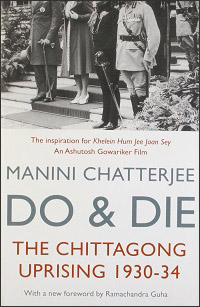
“Do and Die: The Chittagong Uprising 1930-34” by Manini Chatterjee

Do and Die

19th April 1930. “The Government regrets to have to announce that the railway and police armouries at Chittagong were attacked on the night of 18th-19th April by a body of insurgents, estimated at about 100, and were gutted. Details are not yet fully known. Telegraphic communications were interfered with but are being restored. A train was also derailed on the night of April 18th….”

This book gives a minute by minute account of what the British called the ‘Chittagong Armoury Raid.’ Surjya Sen, reverently called ‘Masterda,’ was the elusive, enigmatic mastermind behind this daring act. Ambika Chakravati and Ananta Singh were among his closest associates.

In October 1924, the Bengal government arrested many revolutionaries for “suspected terror links,” among them Subhash Chandra Bose. Surjya Sen was jailed for two years from October 1926 and released two years later along with several others from Chittagong. They forged a group, generating funds, procuring arms and preparing for combat. Officially, they were all members of the Congress party.

In February 1929, Surjya Sen was elected secretary of the Chittagong District Congress Committee. He virtually lived in the party office, recruiting and training youngsters for an armed revolt. On 15th September, there was a massive demonstration when Jatin Das died in Lahore jail after a 63 day hunger strike. On 15th October, the Chittagong revolutionaries adopted the ‘Death Program’ – to do and die. They called themselves the Indian Republican Army and vowed to re-enact the Easter Rising that had occurred three years ago in Dublin, Ireland.

On 18th April 1930, the IRA carried out their action plan with 64 revolutionaries. The youngest was only 14 years old. They got the arms but not the ammunition. Without ammunition there was no way they could hold the positions they had captured. So they retreated after setting the armoury on fire. Himangshu Sen, badly burned in the process was safely evacuated but died a few days later.

The fugitives were hunted down and on 22nd April at the Battle of Jalalabad, 10 youngsters died fighting. Harigopal Bal, the first to fall, called out to his brother Lokenath Bal, “I’m on my way, you carry on.” Later the British would throw the bodies in a heap, pour petrol over them and set them alight. Two days later, Ardhendhu Dastidar and Matilal Kanungo died of wounds sustained in the battle.

Gandhi did not speak of these martyrs. The author wryly remarks that, “Even martyrdom lies in the ideology of the bestower”.

42 survivors melted way into the surrounding villages, splitting into two groups, one led by Masterda and Nirmal Sen, the other by Lokenath Bal. The army undertook combing operations, motor launches searched the river, and aircraft made aerial surveys but the boys could not be traced. Amarendra Nandi, who had been sent on a reconnaissance mission to Chittagong town died in a police encounter on 24th April.

Masterda soon ordered his group to disperse. Those who were unknown to the police were advised to return home. Masterda told the young Subodh Roy that if he was tortured by the police he should not divulge any names. “Remember at the time the martyrs who gave you their lives in the Jalalabad Hill,” he said. Subodh remembered the leader’s words when days later he was mercilessly beaten by the police.

There were other encounters, other martyrs. On June 28th, Ananta Singh, one of the most charismatic ring-leaders, surrendered. Soon after his arrival in jail the few youngsters who had given confessional statements retracted them one by one. The government could not find a single approver. Sarat Chandra Bose, elder brother of Subhash Chandra Bose, stepped up to represent Ananta Singh at the trial.

On 25th August in Calcutta a bid to assassinate Police Commissioner, Charles Tegart, misfired. A few were injured, and Anuja Sengupta died in the blast. Four days later Bengal’s Inspector General of Police, Lowman was shot in Dacca and died of his injuries. The shooter escaped.

On 2nd September the British discovered that a few of the absconders were being sheltered at the French enclave of Chandernagore. They attacked the hideout, and Jiban Goshal (Makhan) was killed. Lokenath Bal, Ganesh Ghosh and Ananda Gupta were captured. Makhan was accorded an emotional farewell as the entire populace paid respects to the martyr. The people of the settlement passed a resolution condemning the British action on French soil.

Ramkrishna Biswas was hanged on 4th August 1931 for attempting to assassinate Lowman’s successor on 1st December 1930. Kalipada Chakravarty was awarded transportation for life.

Pritilata Wadedar led the Pahartali Raid and died a martyr on 24th September 1932. It was a classic case of a woman leading men in action. A leaflet issued after the Pahartali raid read, “….the Indian Republican Army plunges today in this bloody revenge and lets the British rulers know that however weak and helpless, India will never tolerate these sorts of wanton barbarity with equanimity and silence.” There were no arrests.

All this and more are an integral part of India’s independence struggle. The Dynamite Conspiracy case, the Dhalghat encounter that claimed the lives of Nirmal Sen and Apurba (Bhola) Sen, the Gohira encounter and a variety of other events come alive in the pages of this book.

Masterda was finally captured in February 1933, while Kalpana Dutta and others survived the encounter only to be arrested a month later in a shootout at Gohira. When the Special Tribunal announced its verdict in August 1933, it was death for Masterda and Tarakeshwar Dastidar. Kalpana was got a reduced sentence – transportation for life – in view of the fact that she was only 19 years old and a woman.

Surjya Sen and Tarakeshwar Dastidar were hanged in secret on 12th January 1934 and their bodies dumped in the Bay of Bengal. When Independence came in 1947, new generations were led to believe that the ‘transfer of power’ was the result of non-violent struggle.

Overall assessment: Must read.

Do and Die: The Chittagong Uprising 1930-34
AUTHOR: MANINI CHATTERJEE
PUBLISHER: PENGUIN
YEAR OF PUBLICATION: 1999

Contributor: Pushpa Kurup lives in Trivandrum, India and works in the IT sector.

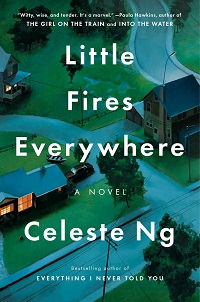
“Little Fires Everywhere” by Celeste Ng

Little Fires Everywhere

One of the surest signs that a book has been a good read is when you reach the end and are disappointed that it is over — you wish there was more of it. That is how I left after finishing Little Fires Everywhere. It’s not a traditional page-turner – not a mystery or a thriller that you can’t put down because of the suspense. Rather, the book is a family drama, and not even a highly melodramatic one at that. It is not written in scintillating prose that sweeps you off your feet but in “normal” language for regular people. It is, simply put, a very good story.

The story opens with a fire, or rather, “little fires everywhere” as described by the firemen who come to put the fire out. The fires are in a house in a wealthy suburb of Cleveland called Shaker Heights (which happens to be a real place) and have actually been set by someone living in the house – the youngest daughter, Izzy, of the Richardson family, who absconds after setting the fires. What inspires her to set the fires is a comment made by a woman, Mia, an artist whom she greatly admires and has become very close to. Mia had said: “Sometimes you need to scorch everything to the ground and start over. After the burning the soil is richer, and new things can grow. People are like that, too. They start over. They find a way.” Although Mia had said this in the context of a tragedy someone else was going through, the rebellious, tempestuous, adolescent Izzy found this idea so powerful, so deep, and so intense, that she took it literally and was so upset with her family — especially her mother, Elena, with whom she has never got along — that she methodically lit a fire in each room of her house before she left.

What makes Izzy actually set the fires is the crux of the story, along with the mystery of Mia’s background, who has come into the neighborhood with her daughter, Pearl, and is renting an apartment that belongs to Elena. No one, including Pearl herself, knows who her father is. Just as Izzy of the Richardson family is drawn to Mia and persuades Mia to take her on as an (unpaid) assistant, in the same way, Pearl is drawn to the Richardson family and constantly hangs out in Elena’s house with her son, Moody, and her two older children. (All the kids go to the same high school, but are in different grades, except for Pearl and Moody.)

In addition to this “switch” where Izzy hangs out with Mia and Pearl hangs out with the Richardsons, there is a lot of additional intrigue in the story including a surrogacy, an abortion, and a custody battle for a Chinese American baby between the baby’s mother (a coworker of Mia) — who initially abandoned her because of her circumstances but now wants her back — and the wealthy white couple (close friends of the Richardsons) — who took in the baby when she was abandoned, loved and nurtured her, and desperately want to adopt her as they have not been able to have children of their own. Above all, there is also the uneasy feeling Elena has about Mia, who makes her feel unsettled just by being who she is. She takes it upon herself to investigate Mia’s background and find out more about her and the mystery behind her fatherless daughter.

I really enjoyed reading this book and am happy to find that it has also achieved critical acclaim, especially after many unsuccessful attempts at reading award-winning books (recent examples being The Underground Railroad which won the Pulitzer Prize and Lincoln in the Bardo which won the Booker Prize). It’s good to know that even books devoid of literary calisthenics can be appreciated by literary critics in addition to being enjoyed by regular folks like me.

Little Fires Everywhere
Author: Celeste Ng
Publisher: Penguin Press
Publication Date: September 2017


Contributor: Lachmi Khemlani runs a technology publication in the San Francisco Bay Area.