“My Lovely Wife in the Psych Ward” by Mark Lukach

My Lovely Wife in the Psych Ward

This book has been selected as one of the two “Silicon Valley Reads” books for 2018, and as a result, it seems to be everywhere in the Bay Area where I live, prominently displayed on library shelves and multiple copies available for check-out. The author, Mark Lukach, is also local to the Bay Area, a high school teacher and freelance writer. As the title suggests, it is a memoir of his experience with the mental illness that afflicted the person he was closest to – his wife, Giulia.

Mark and Giulia had a fairy tale romance – they met as freshmen at Georgetown University, dated, fell in love, got married and moved to San Francisco to start their careers. They both come from loving families and had little to complain about – they were smart, good looking, ambitious (she more than him), and most importantly, they had each other.

Their idyllic life was unexpectedly shattered three years into their marriage by Giulia’s psychotic breakdown, which came literally out of nowhere. It started out with some normal stress at work which caused her some pressure, most self-imposed, and quickly ballooned into a full-blown panic attack, making her delusional and suicidal. She had to be admitted to the psych ward and was there for almost a month before she was allowed to come home. She went on to have two more psychotic episodes, one shortly after the birth of their son, and again a few years after that. The book closes with what seems to be the end of the third hospitalization. However, given the nature of this illness and its typical pattern, Giulia’s psychosis is likely to recur, so this is by no means the end of the struggle for her and Mark.

This book captures Mark’s harrowing experience as he goes from being a “normal,” carefree, happily married young man — who can scarcely believe his good fortune at being able to spend the rest of his life with the girl he fell in love with — to having his life completely upended and being thrust in the role of caregiver to the same girl who now seems to be a completely different person. Caregiving is hard enough for physical illness, but at least the person that is being looked after is the same — the illness may have devastated their bodies, but not their minds. With mental illness, however, the person can literally become someone else. In Giulia’s case, while she was eventually able to get back to the person she was after the end of each of three psychotic episodes she has had so far, Mark had to keep drawing from the memories of their earlier life together to keep going when she became ill.

And the “going” was unimaginably rough — doctor’s appointments, hospital visits, keeping up with work, worrying about rapidly draining finances, looking after their baby boy during her second episode, and continuing to be a single dad to a preschooler during her third hospitalization. Thankfully, both his and her parents were very supportive and tried to help out as much as they could, but there was only so much that they could do. It really was his “cross to bear.” In addition to being physically exhausted and having no time for himself, Mark also captures his anger, his resentment, and his feelings of helplessness candidly. Even though he knows that it’s not Giulia’s fault that she is mentally ill, he can’t help being frustrated to the point where it seems almost impossible to go on.

I found My Lovely Wife in the Psych Ward a brutally honest account of how mental illness can come from nowhere and utterly devastate lives, not just for those who are ill but for their family members, who have to continue to look after them even when they become completely different people who often have delusions, hallucinations, manic depressions, and suicidal tendencies. Kudos to Mark for not giving up on his marriage — the thought of skipping out because it was too hard did not even occur to him. In a day and age when close to half of all marriages in the US end in divorce, Mark’s commitment to Giulia is an inspiring affirmation of the “in sickness and in health” maxim that a marriage is supposed to embody.

My Lovely Wife in the Psych Ward
Author: Mark Lukach
Publisher: HarperCollins
Publication Date: May 2017

Contributor: Lachmi Khemlani runs a technology publication in the San Francisco Bay Area.
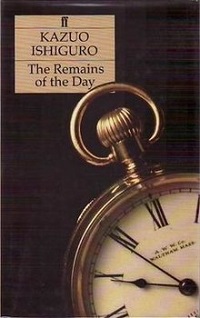
“The Remains of the Day” by Kazuo Ishiguro

Remains of the Day

The Remains of the Day is the most well known novel by Kazuo Ishiguro, who was awarded the Nobel Prize in Literature — unarguably the most prestigious literary award — a few months ago. Unlike most other writing awards, the Nobel Prize is awarded for an entire body of work rather than one particular book, and I was very gratified that it had been awarded to someone whose work I am familiar with and really like. I had read The Remains of the Day shortly after it was published in 1989 and while I couldn’t remember the specifics of the story, I remember it being a very good book. It won the Booker Prize the year it was published, which now seems remarkable to me as well — those were the days when the Booker Prize went to novels I could actually read and comprehend and admire, rather than the current trend of awarding it (along with other awards) to what seems to be post-modern fiction that does not believe in straightforward story telling. The Remains of the Day was also made into a highly acclaimed Oscar-nominated movie in 1993 starring Anthony Hopkins and Emma Thompson, further cementing its reputation as one of the best books in recent times.

Given that I didn’t remember much about the book except that it was about a butler in olden day England, I picked it up again, spurred by the awarding of the Nobel Prize to its author. It is indeed told from the viewpoint of a butler, Mr. Stevens, who has been the head butler of a grand estate in England in the early 1990s. It traces the years of his work – he prefers to call it “service” – at Darlington Hall, starting from when he was a young man in the years before the First World War to several years after the Second World War. The story is narrated in the form of his reminiscences while he is undertaking a journey to reconnect with Miss Kenton, who used to work in Darlington hall as a housekeeper for many years and who he thinks, from a recent letter from her, might be interested in returning to work there. She left when she got married and while it has been several years, he gets the feeling that she is not really happy and may want to return. So he takes a few days off to journey through the English countryside to meet her.

While several of his reminiscences are about Miss Keaton, we also get to know about his life as a butler in detail, about his employer, the politics of that time, and about how his father, who was also a butler, exemplified loyalty, professionalism, and dignity, right up to the end of his days. It is these exact same values that Mr. Stevens also lives by. He has the utmost loyalty to Lord Darlington, an essentially good man who, in the years leading up to the second World War, tries to broker peace with the Germans and ends up being branded as a Nazi sympathizer. Needless to say, in the course of these years, Darlington Hall becomes the hotbed for a lot of political activity, with lots of important visitors and lots of meetings. Throughout, Mr. Stevens prides himself on running the household smoothly and precisely, and being the perfect butler, who strives to be as unobtrusive as possible yet always on hand when something is needed.

What Mr. Stevens sets most store by, however, is “dignity” — he seems to personify the “stiff upper lip” the English are famous for having. Nothing seemed to faze him, he was never flustered. Even in his encounters with Miss Keaton – some of which were rather unsettling – he remained very stoic, practically unfeeling. It is obvious to us as readers that Miss Keaton is drawn to him, but she becomes so frustrated in his apparent lack of outward responsiveness that she ends up accepting a marriage proposal and leaving. Their encounters are beautifully captured, and you can feel the underlying tension between them, the powerful emotion of unrequited love that she must have experienced until she could bear it no longer and was forced to leave.

The title of the book refers to a revelation Mr. Stevens has at the end of the book, thanks to a chance encounter on his return journey at a seaside town after his meeting with Miss Keaton. He gets into a conversation with a stranger sitting beside him on a bench, who talks about how relaxed and happy people feel in the evening after doing their day’s work, making it the best part of the day. They can just put their feet up and enjoy the fruits of their labor. Mr. Stevens realizes that this can apply to one’s entire life as well, where we can take the time to enjoy the later years of our lives — with no regrets — after the hard work we have put in during our earlier years. These are “the remains of the day” as it were, and it’s a beautiful and uplifting idea that all older people can appreciate. There a sense of rest in the later years of our lives, with all those hectic days – focused on achievement and success – well behind us.

The Remains of the Day is so beautifully written — it makes the old world charm of early England come alive — and is so authentic in its portrayal of a butler if that time that it’s hard to believe it is written by a contemporary author. I’m always amazed when a writer can create something so real from something so far removed from their own experience. The Nobel Prize in Literature to Kazuo Ishiguro is so well deserved. I absolutely loved this book.

The Remains of the Day
Author: Kazuo Ishiguro
Publisher: Faber and Faber
Publication Date: May 1989

Contributor: Lachmi Khemlani runs a technology publication in the San Francisco Bay Area.