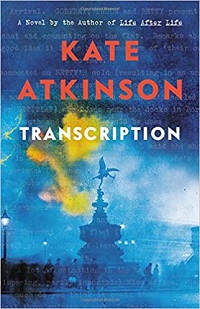
“Transcription” by Kate Atkinson

transcription

Transcription is the latest novel by Kate Atkinson, an acclaimed British novelist best known for her book, Life after Live, which was published in 2013. She is not as well-known in the US compared to the UK, and I had not read of her books until I heard her on the BBC’s “World Book Club” podcast that I recently started listening to. That piqued my interest, and when I saw a copy of Transcription in the “New Books” section of my local library, I picked it up right away. I have to admit to doing this with some trepidation, as I have, of late, found several critically acclaimed books hard to read and even harder to enjoy. Would this be one of those high-profile books I could not get beyond a few pages?

Thankfully, it was not. I wouldn’t say that it was immediately gripping, but it was eminently readable, and once I was about a quarter of the way into the book, I couldn’t put it down and read it all the way through. Transcription is the story of a woman, Juliet Armstrong, at two pivotal times of her life. The first is in 1940, towards the start of the Second World War, when Juliet is eighteen, has just completed secretarial school, and is unexpectedly recruited by the MI5 (the UK’s Security Service, similar to the FBI in the US) for a project aimed at hunting down Nazi sympathizers in Britain. Other European countries are starting to fall to the Germans and the war is closely approaching Britain. Juliet is at first required only to transcribe communications — hence the name Transcription for the book — that are being recorded between these sympathizers, but she is later drawn further and further into full-fledged espionage, and into some very frightening and dangerous events.

The second time we visit Juliet, it is ten years later, and she is working as a radio producer at the BBC. Her life at this time is, for the most part, routine and uneventful, until she runs into someone she was working with during her espionage days ten years earlier. This chance encounter triggers a chain of events, stirring memories that were dormant, and brings with it more figures from the past, along with fear and danger. Even after ten years, with the war long over, the espionage activities that Juliet had participated in are coming back to haunt her.

Thankfully, the book doesn’t keeping shifting back and forth between these two timelines after each and every chapter, but we do get some amount of alternation, so we don’t come to know exactly what horrific event Juliet was involved in towards the end of her espionage days in 1940 until much later in the book. This really is the main “mystery” of the book and it is revealed at the end, similar to most mystery books. And although Juliet ends up doing some espionage work during the war, Transcription is not really a conventional “spy thriller.” It is more of a dramatic novel focused on the character of Juliet, her life during the war, and the repercussions her work had even after the war was over. And while most novels do have some kind of romance in them, even if it very secondary, it was refreshing to read a book like Transcription that did not have any romance whatsoever. True, when Juliet is eighteen, she does wish at times that her attractive boss would make some romantic overtures towards her — she sees herself as being “ripe for the picking” — but this does not happen, and the novel is solidly focused on Juliet’s work life, both in 1940 as well as in 1950.

What I also appreciated about Transcription was its thoroughly unconventional plot. I did not have a clue as to where the story was headed and how it would end. Apparently, it was inspired by real life events — there are actual MI5 records of such transcripts of recordings from the war — and I was glad to learn about something I had no knowledge of.

While I would not put Transcription in the “must-read” category of books — the plot was not as gripping and somewhat convoluted, and there were so many characters that I had to keep turning back the pages to see who they were — it was an enjoyable read. Well-written and even funny at times — Juliet has a good sense of humor and we are privy to her inner thoughts as well as her smart wisecracks to others — I look forward reading more of Atkinson’s books and am happy to have discovered another author I like.

Transcription
Author: Kate Atkinson
Publisher: Little, Brown and Company
Publication Date: September 2018

Contributor: Lachmi Khemlani runs a technology publication in the San Francisco Bay Area.

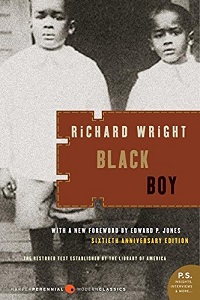
“Black Boy” by Richard Wright

Black Boy

Black Boy was an instant best-seller when it was published in 1945, and has remained one of the best-selling books by the pioneering African-American writer, Richard Wright, who lived from 1908 until 1960. It is classed as an autobiography but it reads more like a novel. Wright was already famous as a writer of stories and essays, and his first novel, Native Son, had been an immediate best seller when it was published in 1941.

Notably, the version of Black Boy that became the best-seller is not the book we read today. Wright composed the book in two parts. Part One, called “Southern Night,” covers his youth in the South, and Part Two, called “The Horror and the Glory” and only half as long, covers his young adulthood in Chicago. Wright’s major point is that life in the South did not prepare him for life in the North; he had to go through a second childhood to learn the ways of the city.

The two parts are very different. The first part strives for mythic status; Richard presents himself as a stand-in for every poor black boy in the South who wanted to be respected as an individual. The second part is increasingly specific to his own life and loses its mythic status, as Richard tries to understand and justify his actions in Chicago. Because of this, his publisher persuaded him to release the first part on its own in 1945. This is justifiable on the grounds that it is a coherent and complete work of art, but for Richard it meant that his story was brutally truncated. In the 1990s, Wright’s original work was published whole as he had intended, and that is the version people read nowadays.

The book’s full title is Black Boy (American Hunger), and in it, Wright depicts spiritual and emotional hunger as well as the constant physical hunger of his youth. One of his major points is that racial discrimination deprives African-Americans of opportunities for self-realization and self-respect. He asserts that racism limits the emotional and cultural development of black people, so they have no idea of their own worth. Fortunately there has been enough progress toward equality that Wright’s depiction of racism in the South in the first half of the 20th century seems dated now, but in its time, it was incendiary because it was shocking to see a secret aspect of American society depicted so vividly.

Racism is not the book’s only subject. The boy Richard was permanently scarred by a peculiarly nightmarish childhood that deprived him of any form of worth. He defined the problem as one of racial discrimination, but I think his warped family situation made him dwell on this issue.

As a child, Richard is almost completely deprived of love and support. His closest relationship is with his mother, who routinely slaps him for asking too many questions or bringing up forbidden subjects. After she suffers a series of paralyzing strokes, the best she can do is to nag him weakly to do his best in school. As she becomes more helpless, he loses his sense of connection with her. Richard’s father abandons the family when Richard is 6, leaving them in abject poverty. His mother’s family takes them in, but they treat Richard like a little heathen.

The most excruciating part of his situation concerns religion. Richard’s grandparents and an aunt who lives with them are ardent 7th-Day Adventists who insist on a host of forbidding rules and are determined that Richard join their sect. As a boy who had experienced little in life beyond hunger and disrespect, Richard can’t accept any religious belief. Long passages are devoted to the Adventists’ efforts to recruit him, and the thoughts he has about spiritual beliefs as a child. In fact, one of his earliest experiences of self-realization is his unwillingness to accept their beliefs, and his inability to pretend that he does in order to fit in. This condemns him to total rejection by his mother’s family. After his mother converts to Methodism, she too tries to save his soul, and resorts to emotional pressure to get him to be baptized, but he soon returns to bitter skepticism.

Richard’s family sees him as a wayward boy whose actions are always bad, and you can see their point. At the age of 4, he burns the house down. Soon after, he kills a kitten. At age 6, he becomes an alcoholic. He learns to talk dirty before he learns to read. He taunts the Jewish store owner with the same kind of prejudice he is subjected to. He is paralyzed by shyness in school. He unwittingly sells racist tracts. He refuses to be punished for things he didn’t do, and uses a knife or straight razors to protect himself from his abusive relatives. When he graduates from 8th grade, he insists on giving the Valedictorian speech that he wrote himself rather than the one the principal wrote for him. As he grows older, he wants to read novels and write stories, the work of the devil in his families’ view. He wants to work on Saturdays, a holy day for the Adventists. After he gets old enough to work full time, he finds he will never be able to save enough money to escape North, so he resorts to participating in a scam for extra money, and finally engages in theft to get a stake. Wright presents all these incidents in novelistic detail, including his thoughts and feelings at the time.

His extreme poverty forced Richard to seek work at a very young age, and this is when he begins to encounter racial prejudice. Wright catalogs every sort of racial indignity that a boy could experience in the heart of the South, and he analyzes just how these experiences affected his development. White people expect black people to be totally and smilingly subservient, like slaves. No matter how hard Richard tries to conform, he seems uppity to the whites, who frequently bully him into leaving his job.

Wright’s childhood was so deprived— emotionally, spiritually, and economically—that his pursuit of knowledge and self-realization seems miraculous, totally inexplicable. He becomes an ardent reader despite the disapproval of his family and the scarcity of reading materials. His formal education is patchy due to poverty, but he is passionate about seeking knowledge, and adventure as well, through reading. Where did he get that passion? Where did he get the massive intelligence to digest all that material? Wright shows very few positive influences on his life.

Not surprisingly, Wright’s adult life in Chicago is considerably more complicated than his childhood in the South. No longer can he encapsulate his experience into a string of deftly drawn episodes; various aspects of his life overlap and intersect, and learning takes place over longer arcs. On the plus side, there is less public racial discrimination; he can sit anywhere on public transportation, and he doesn’t have to defer to white folks. But racial prejudices remain at a deeper level. This is true for Richard as well, who notices that even when white people try to treat him respectfully, he still assumes they are the same as white people in the South. His personality is so hardened that it is hard for him to form relationships.

Career-wise, Wright does rather well, though he never acknowledges this. He starts out as an errand boy and dishwasher, but he soon passes the exam for postal clerk. Meanwhile he reads all the important novels of his day and tons of sociology and psychology. During the Depression he becomes an agent for insurance and burial societies, discouraging work that nevertheless gives him access to the lives of a wide variety of poor black people. When that job dries up, a relief organization assigns him to be an orderly in a medical research institute. Finally he gets a job with the South Side Boys’ Club that he finds deeply engrossing. Later he is assigned to do publicity for the Federal Negro Theater, which is a writing job, at least; when that fails, he is assigned to do publicity for a white experimental theatrical company.

What really muddies his narrative is his relationship with the Communist party. Richard finally meets some people with similar social and philosophical views, and through them he gets drawn into the John Reed Club, a group of artists and writers which was associated with the Communist party. At first the theory of Communism, and its version of history, enthrall Wright, but he realizes the idealistic Communist activists are deeply ignorant of the life of ordinary black people. He is suspicious of them, but he is drawn in when they offer to publish some of his stories. From this point, his memoir becomes a messy recital of political manipulation, group rivalries, and Communist tactics as he is unexpectedly propelled into a leadership position in Chicago’s Communist party and just as unexpectedly demoted and reviled, as the international party becomes more rigid. After two chapters of ups and downs in the party, his relationship is finally ended definitively, and he concludes the book in a state of deep disillusionment, though nevertheless determined to continue writing.

In addition to racism, Wright struggles with rampant anti-intellectualism. His ardent and wide-ranging self-education plays a painfully ambivalent role in his life. On the positive side, reading is his only escape from his frustrating life; on the other, it automatically makes him unusual and suspect, not only among his family, but also his friends. As an adult, he talks like a person with a college education. This is an advantage in building his career, but it makes him suspect among other Negro members of the Communist party, who are mostly unlettered new arrivals to the North, because it identifies him with their white oppressors.

The first time I read this book, I was disdainful of the long passages of explanation and analysis, considering them to be artless. But the second time, the composition sounded seamless, and I realized that the development of the author’s understanding of life is an important part of the story. Wright desperately wanted to understand himself and to make himself understood, and his voice rings with probing sincerity in every word. Many critics believe Wright helped change racial relationships in America.

Black Boy
Author: Richard Wright
Publisher: Harper Perennial Modern Classics
Publication Date: March 2007 (first published in 1945)

Contributor: Jan Looper Smith is an art educator who writes about her culture experiences for a blog called “In the Loop.”
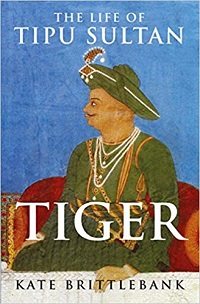
“Tiger: The Life of Tipu Sultan” by Kate Brittlebank

The Life of Tipu Sultan

This 2016 book was probably written merely to cash in on the Tipu Sultan controversy. It’s full of conjecture and merely skims through some of the facts relating to Tipu Sultan, the ‘Tiger of Mysore’, and his father Haider Ali. The author makes a feeble and unsuccessful attempt to put herself in the shoes of the father-son duo and imagine the social and political scenario in 18th century India.

On the plus side, the book is small and can be read in a maximum of two hours. On the minus side, the facts cannot be taken at face value and the writer’s imagination must be discounted. I’m amazed that she could gloss over the cruelty of these two men simply by contending that in those times every ruler was cruel. Similarly, she makes light of forced religious conversions describing them as ‘punishments’ for standing up to these invading upstarts. She even goes to the extent of placing a disproportionate share of the blame on the British for many of Tipu’s failures.

If you’ve already read other writers on the subject of Tipu Sultan, you needn’t read this one. You won’t miss anything. Unless you’re interested in knowing the number of women in Tipu’s harem, counting the number of his sons and daughters, learning the names of his grandparents and so on. However, if you can ignore the conclusions and implications and skilfully separate the wheat from the chaff, you will find interesting nuggets of information.

Referring to Haider Ali’s role in the siege of Tiruchirapally in 1751-52 Brittlebank writes, “…Mysore allied itself with British forces during the succession dispute for the Nawabship of the Carnatic, whose capital was Arcot in northern Tamil Nadu. Subsequently, Mysore switched sides to the French, as a result of British broken promises.” Now what does this reveal? Haider Ali allied first with the British and then with the French. That doesn’t seem like ‘Indian nationalist zeal’, does it?

If you read between the lines, you realize that Hyder Ali and Tipu Sultan invaded all their neighbouring kingdoms. They dislodged the Wodeyars from Mysore, the Ikkeris from Bidanur (Bednur), and repeatedly attacked Malabar, Arcot, Mangalore, Madras and even Travancore without the slightest provocation. In these circumstances, it just doesn’t make sense to blame the Marathas, the Nizam of Hyderabad and the British for ganging up against Tipu. Perhaps it was the cruelty of the father and son that made the Marathas and the Nizam realize that that their only hope was to ally with the British. This was certainly the case with the Malabar chieftains, but the book hardly mentions the Mysorean incursions into Malabar.

When the author does mention Malabar, the accounts are ridiculously off the mark. Take this example: “By February 1783, Tipu and his army had returned to Mysore (after Haider Ali died in December 1782 near Chittoor); the newly installed ruler had unfinished business to attend to in Malabar, where the East India Company’s Bombay army was continuing its aggression.” Unfinished business indeed! Similarly, Haider Ali’s attacks on his neighbours are justified on specious grounds. “Access to Malabar ports was important for trade, as was the control of Bednur.” And “the incursion into Kodagu was the result of his intervention in a succession dispute…” You see, all is fair in love and war! In this manner one can rationalize any kind of brutality and injustice.

The author refers to forced conversions thus: “This was not a religious policy but one of chastisement.” Really? I’m surprised the Sanghis missed this one. Another snide remark that really takes the cake: “One of the malcontents with whom they (the British) aligned themselves was the Raja of Travancore, Rama Varma…” And what had the poor Travancore ruler done to deserve this rude epithet? In the author’s own words, “Rama Varma had harboured resentments against Mysore since he had fallen out with Haider in the 1760s. The defensive lines he had constructed in 1764 ran from east to west to protect from invasion an exposed part of Travancore’s northern border.” So protecting his border from an invader was the one crime committed by Rama Varma. Did Travancore invade Mysore? No questions, please! This is a story – and stories are written to entertain.

The entire book seems like an attempt to whitewash the sins of Tipu Sultan. The publisher Juggernaut Books ought to have been more discerning. At least the proof readers could have corrected the errors. Ever heard of a Tadri port on the Malabar coast? North Kanara, my dear Juggernaut!

Tiger: The Life of Tipu Sultan
Author: Kate Brittlebank
Publisher: Juggernaut Books
Year of Publication: 2016

Contributor: Pushpa Kurup lives in Trivandrum, India and works in the IT sector.

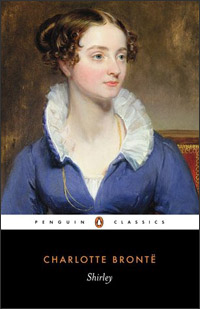
“Shirley” by Charlotte Brontë

Shirley.jpg

I decided to pick up Shirley soon after finishing Villette, also by Charlotte Brontë. When I first started reading it, I was intrigued by two things: one, the initial conflict we are opened to, and two, that it was written in the third person.

The initial conflict reminded me of the issue dealt with in North and South by Elizabeth Gaskell. It had to do with industrialization and how this advancement was affecting some of the people of this town. The workers were indignant because they were losing their jobs to new machinery causing them to be in a state of poverty. This gave me the impression that it would be very similar to North and South, and since I loved North and South I wanted to continue.

I was also intrigued by Charlotte’s use of the third person. This would be the first novel I’d read by her written in this way. I was unsure that I’d like it, since one of the best things I love about Jane Eyre and Villette is the ability for us to be inside the mind of the main character and learn of their most intimate thoughts. But I thought I’d give it a try.

As I continued with this book, it quickly became something different than what I was expecting. The conflict between the workers and Robert Moore, the factory owner, was  present throughout the novel, because we got to see how it affected the people within this town and how this issue was dealt with. But it wasn’t at the forefront like I had thought it would be.

What did become at the forefront of this novel was one of the main characters, Caroline Helstone. Caroline is a young woman who lives with her uncle, Mr. Helstone. She lives a very lonely life but one of her greatest joys is to spend time with her cousin Robert Moore, whom she also is in love with. We get to know their relationship a little in the beginning — they both love to read and unlike her uncle, Mr. Helstone, Robert encourages her conversation and listens to her opinions. I think that him considering her opinions played a a very important in the resolution of the issue between the workers and Robert Moore’s stern position. Later on, upon disagreements between Mr. Helstone and Mr. Moore, her uncle decides that she can no longer visit her cousin. This sets the stage for her to fall into a more lonely place as she no longer has the company of one of the few people she enjoys.

During this interval of Caroline’s prohibition to visit her cousin, Robert Moore, she becomes acquainted with the recent property owner of Fieldhead, Shirley, a young woman who inherits her parents’ property, being the only child. This puts Shirley in a position of financial independence. Mr.Helstone, who becomes aware of Caroline’s depressed spirits, believes that Shirley’s company might do Caroline some good so they begin to spend more time together. I believe this is where the story began to take a little more shape as we follow their relationship from then on.

It was very lovely and enjoyable for me to learn about how their relationship develops as they do have certain similarities but stark differences in personalities. However, these differences in personalities enable them to complement one another very well. I also think that because the novel is centered around these two women, the issues that affected most women during this time do come up very strongly through each of these characters’ opinions. One issue that stood out to me was how Shirley, although financially independent, was still heckled by her uncle into marrying someone that he would approve of. But she manages to maintain her independence in choosing whom or if she would even marry at all.

A few other things that I enjoyed about this novel were the descriptions of this place in Yorkshire. I always really enjoy how Charlotte Brontë describes setting. I think it was important to describe the setting here and how blooming with flowers this place was, because it’s a story that takes place at the start of industrialization which means that it no longer looks the same. I also enjoyed how engaging the narrator was. Charlotte Brontë addresses her readers very much like in her other novels, Jane Eyre and Villette, and also offers commentary on different characters that I thought was funny.

Overall, I’m glad to have read another one of her novels. I don’t think I can choose which one is my favorite. They each have something that captivates me. For this one it was the  character Shirley, the friendship developed between Shirley and Caroline, and her writing. However, as the narrator warns the reader in the beginning, “If you think, from this prelude, that anything like a romance is preparing for you, reader, you never were more mistaken.” It is quite the placid read, but it was still enjoyable for me to follow these characters.

Shirley
Author: Charlotte Brontë
Publisher: Penguin Classics
Publication Date: June 2006  (first published in 1849)

Contributor: Nathalie Dorado-Fields is a stay at home mother who lives in Mount Vernon, Ohio.

“Bad Blood: Secrets and Lies in a Silicon Valley Startup” by John Carreyrou

Bad Blood.jpg

I remember listening to a Commonwealth Club radio program a few years ago in which Salman Khan of Khan Academy was interviewing Elizabeth Holmes of Theranos. (It was technically a “conversation,” but from what I remember, it was Salman Khan asking most of the questions.) By this time, Khan Academy was a universal name, but Elizabeth Holmes was just getting started — a promising young entrepreneur in the mold of Steve Jobs. Her startup, Theranos, was poised to revolutionize the healthcare industry by making blood testing very quick and affordable. Anyone could go into a wellness center, get a small draw of their blood by simply pricking their finger, and get their results back within a few minutes.

It seemed almost too good to be true! But the confidence with which Holmes spoke, her sincerity, and her passion won everyone over. I remember being totally awed by what I heard. She described how she had waited for hours outside the office of a Stanford professor to beg him to be allowed to do research in his lab, and had eventually dropped out of Stanford to start Theranos. She could not believe at how inefficient blood testing was, how you had to draw so much blood for a test, and how it took days to get the results back. She wanted to make this process much faster, more efficient, and less painful, and seemed to have found a way to do so. Who were we to question this? After all, this is what innovators do—they are geniuses in their fields and come up with breakthrough solutions to problems. So many of our best innovations have come from revolutionary thinkers, and Holmes certainly seemed to be one of them. She had the conviction that Theranos was going to change the world.

Or so we thought. Not just we, but everyone. Theranos was heralded as the next success story in Silicon Valley where it was based. Millions of dollars of investment poured in from the leading VC (venture capital) firms in the valley—no one wanted to miss out on the potential of investing early in a startup that was guaranteed to succeed in a big way. Not only was the idea so brilliant, but the company had a “dream team” of highly respected advisors, including the Stanford professor Holmes had worked with, high-regarded investors and senior government officials, as well as partnerships with companies like Walgreens and Safeway to establish “wellness centers” in their stores equipped with Theranos technology for customers to come in and quickly get blood tests done. It had also attracted the attention of drug companies like Pfizer who saw the technology as a way to potentially reduce their costs and bring drugs to market sooner.

As it turns out, it was indeed too good to be true. The technology did not really work, and thanks to a string of whistleblowers, many of whom had worked for the company, Theranos was exposed as a fraud and has been forced to close, with Holmes and her business partner facing several lawsuits. Most of the credit for uncovering the truth goes to John Carreyrou, an investigative reporter from the Wall Street Journal who doggedly pursued the story after being contacted by a credible lead in late 2015 who raised doubts about it. He has documented this story in Bad Blood, chronicling the rise and fall of Theranos. Based on interviews with former employees and many others who had been associated with the company in various ways, Bad Blood is essential reading for anyone interested in learning about how such a massive fraud could have been perpetrated and strikes a cautionary note for aspiring entrepreneurs hoping to make it big. While a technology startup can be a hit or a miss, and those who fail can just move on to other things, the stakes are much higher in a field such as healthcare where lives are at stake. It is to Carreyrou’s credit that he realized the enormous implications of the possibility that Thernanos’s blood-testing technology did not work properly and continued to investigate it until the truth emerged. From that respect, he deserves all the awards and accolades he can get for almost single-handedly exposing a fraud that could have had life-threatening consequences if it was not uncovered.

At the same time, from a literary point of view, the book itself lacks merit. To start with, it is written like a book of fiction with a plot, characters, and events, rather than the non-fiction book it is. The trouble with this is that Carreyrou does not have the talent to write fiction — his writing is very trite and uninspiring, with a plodding narrative, unnecessary descriptions of people, and pedestrian language. It was very hard to read through it. Also, there were so many characters throughout the book that I had to keep turning back the pages to see who they were and in what context they had been first mentioned. It seems that every person who was interviewed makes an appearance in the book. And of course, there are many more. Did I really need to know what this person or that person looks like, where they met for coffee, where they live, where the office party was, and so on? Was that really meaningful to how the Theranos saga unfolded? It seems to me that Carreyrou wanted to make this a full-length book rather than an article, so he had to put in a lot of detail to fill the pages, most of which is not even interesting.

Over and above that, the book seemed really one-sided. I appreciate that Holmes and her partner, an Indian man called Sunny Balwani, committed serious fraud by not disclosing the truth about the problems with the technology, but don’t they have a single good quality? Going by Bad Blood, it would seem not. Holmes is always scowling and Balwani is always supercilious. And of course, both are extremely paranoid and blatantly lie to investors and potential partners. Holmes at least has some charm that she can “deviously” turn on when she needs to, with her “piercing blue eyes” that can hold the intended target in thrall. Balwani does not even have that — he is not good-looking and is always “barking” orders. The same bias extends to the other characters as well. All those against Holmes are portrayed in a good light — they are smart, have integrity, and have doubts about the technology — while those who are on her side are portrayed in a negative light — they are unquestioning “yes men” who are always sucking up to her.

It is obvious that the book was based on interviews solely of people who hated Holmes and Balwani. It does not ask why they stayed in Theranos for so long. Like it or not, they were all complicit in the fraud. What about the long string of people who were fired when they disagreed with Holmes, some quite early on when the company was started (in 2003)? How come they didn’t tell anyone about this? Were they only saving their own skins? That doesn’t seem like an ethical thing to do.

Also, what about leading Silicon Valley figures like Tom Draper and Larry Ellison who were early investors in Theranos? Were all these exceedingly smart people also taken in, and having done so, how did they go along with the company for so long without, as the saying goes, “smelling a rat”?  What about Holmes’ professor from Stanford, a highly respected academic? And going back to that interview of Holmes with Salman Khan of Khan Academy that I had heard, was he so gullible as well? Given his focus on volunteer work rather than on the typical “money and fame” success factors that most entrepreneurs crave, would he not be able to tell if someone was sincere or just faking it?

Bad Blood does not shed light of any of these questions. While I have the greatest admiration for the author for his breakthrough reporting on the Theranos fraud, the inability to provide a nuanced portrayal of Elizabeth Holmes and explain how so many smart people got hoodwinked for so long made me question his version of events and the veracity of the interviews he had conducted. By branding Holmes as someone who was out just to make money and achieve glory by any means necessary, he has failed to acknowledge that human beings are fallible — someone can start out with a very sincere desire to improve on something and continue to pursue it even when it is not working in the hope that it will eventually work. The story of Theranos is appalling and serves as a crucial wake-up call, but by categorically painting Holmes as evil rather than someone who could have just been badly misguided, Bad Blood was way too one-sided to be at all insightful.

Bad Blood: Secrets and Lies in a Silicon Valley Startup
Author: John Carreyrou
Publisher: Knopf
Publication Date: May 2018

Contributor: Lachmi Khemlani runs a technology publication in the San Francisco Bay Area.