“A History of Warfare” by John Keegan

This one’s undoubtedly a masterpiece. Written by a British military historian it traces the origin and progress of warfare from ancient to modern times, exploring the military cultures of the Pacific Islanders, the Japanese samurai, the Zulus of southern Africa, the Cossacks of Europe, the Turkish Mamelukes and a host of other militant groups in an effort to understand the motivations, models and methods of warfare.

War pre-dates the state by many millennia. “All civilizations owe their origins to the warrior.” Our states, our institutions, even our laws have come to us through violence and conflict. Along with war, the institution of human slavery was created at the dawn of the human race. Yet it was abolished worldwide. Duelling, infanticide and human sacrifice are no longer in vogue.

Is war still fashionable or is it losing its sheen? In the 1960s the blunt refusal of the US conscripts and their families to imbibe warrior values caused the Vietnam War to be abandoned. Today cultural and material changes are impacting man’s proclivity for violence, and no one (apart from the political and military class) would venture to suggest that war is a justifiable activity. Can we now dream of a world without war?

“Half of human nature – the female half- is in any case highly ambivalent about war-making.” War is an entirely masculine activity. Does the differentiation of social roles between male and female have anything to do with the origin of warfare? The author discusses serotonin and testosterone levels, mention the XYY chromosome combination which is found in one in a thousand males, and wonders why science cannot explain why groups of men combine to fight other groups.

Many interesting examples are presented. For instance, the Aztecs of Mexico, obtained sacrificial victims by waging war. Human sacrifice being a religious necessity, the act of individual captive-taking was central to Aztec warfare. “…for a man to give a captive to a comrade who had not made a capture, as a favour to promote him in rank, carried the death penalty for both.”

Tool-making and home-making we owe to our remote ancestors such as Australopithecus, Homo Erectus and Neanderthals. Homo sapiens sapiens is roughly 40,000 years old. He did not invent hunting parties – he inherited the practice. His own innovations include farming, irrigation and animal husbandry. Towns and cities, and pottery making, metallurgy and religion are pretty ancient too. Jericho in Palestine had an 8 acre town by 7000 B.C. Catal Hyuk in Turkey, Crete and the Aegean coast of Greece all had massive human settlements by 6000 B.C. Interestingly, “None of the thirteen cities known to have existed at the beginning of the third millennium (B.C.), including Ur, Uruk and Kish, then had walls.”

Uruk appears to have acquired walls in the time of Gilgamesh (around 2700 B.C.) The Standard of Ur of the third millennium B.C. shows a four wheeled cart drawn by four onagers on a battlefield. Egypt was unified under a single ruler around 3200 B.C. and for nearly 14 centuries it seems to have spared the vagaries of warfare.

The chariot first appeared around 1700 B.C. and revolutionised war-making. Now horse-breeders gained the advantage. “After the end of the second millennium B.C. such predatory charioteers disrupted the course of civilization in Mesopotamia, Egypt, the Indus Valley…”

Somewhere along the way the concept of chivalry emerged. Warfare developed a set of rules. With the coming of Islam the creed of war obtained an ideology. Jihad became a religious and moral obligation. The prophet Mohammed preached as well as practised war. He decreed that all Muslims were brothers and should not fight each other. But all ‘infidels’ must be fought ‘until they proclaim that there is no god but Allah’.

The institution of military slaves or Mamelukes was an early Muslim innovation. A slave could rise to be a military commander or even king. (India’s Slave Dynasty is a case in point, though the author does not mention it.)

The Chinese were the first to devise a philosophy of war. Confucius then put forth the idea that ‘the superior man should be able to attain his ends without violence.” But in the 20th century, Mao’s principal contribution to military theory was the idea of ‘protracted war.’ On Mao’s Long March from south to north China in 1934-35, only some 8000 of the 80000 or so who set out survived. About 1 million ‘landlords’ were killed in the year after the communists came to power in China in 1948.

Over the course of 4000 years of experimentation and repetition, war-making became a human habit. But there were strong advocates of peace too. Jesus Christ advocated pacifism. Before Christ, Buddhism and Jainism advocated non-violence.

Does war have a future? The book does not have all the answers, but it certainly provides food for thought.

Overall Assessment: MUST read!

A History of Warfare
Author: John Keegan
Publisher: Vintage
Publication Date: November 1994


Contributor: Pushpa Kurup lives in Trivandrum, India and works in the IT sector.
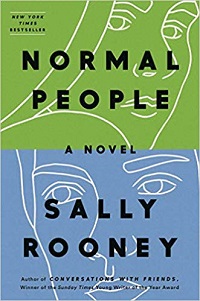
“Normal People” by Sally Rooney

I read this book twice. It is a book that has made quite the splash—it was long-listed for the 2018 Booker Prize and is on every critical “ten best books” list that I have come across lately. It is the second book by the author, Sally Rooney, whose debut novel, Conversations with Friends, was also highly acclaimed. While I have not read that book, Normal People came my way recently, and I was curious to see what all the fuss was about. Unlike many books acclaimed by critics, Normal People was very easy to get into and I no trouble reading it all the way through to the end. However, I felt that I had missed something—the thing that everyone was raving about—which prompted me to go back and re-read it, more slowly this time. I am glad I did, as I was able to appreciate the book a lot better and picked up on all the subtle nuances that I had missed in the first reading.

Normal People is completely focused—to the exclusion of everything else—on the relationship between a boy and a girl. It is a love story of sorts, but not the traditional kind where the two people meet, fall in love, and eventually get together (the happy ending), or are doomed to be apart (the sad ending). Rather than looking at the external circumstances that bring the lovers together or apart, the novel looks mostly inward at their feelings, which are—to put it mildly—very complicated.

The boy is Connell, the son of a single mother who earns her living as a cleaner, and the girl is Marianne, who goes to the same high school as Connell. While they see each other in passing at school, they get a chance to become better acquainted when Connell’s mother starts working in Marianne’s house and he comes by to pick her up after she is done. Connell and Marianne are attracted to each other and become lovers, but they keep their relationship a secret because Marianne is somewhat of a pariah at school—she is aloof, almost supercilious, keeps to herself and has no friends—while Connell is one of the popular kids. The secrecy eventually takes a toll on the relationship, which ends with Marianne dropping out of school and Connell trying to date other girls.

They meet again in college—Marianne had encouraged Connell, when they were still together in school, to apply to the same college that she was going to apply to—and despite trying to be with other people, they, more often than not, end up with each other. However, it is not an easy relationship by any means, as each of them has their own internal demons which torment them. Connell is always aware of his working-class background and he has a deep-seated inferiority complex because of that, and this is not something that his relationship with Marianne can heal. At one point, his condition degenerates to the point where he can’t even care whether he is alive or dead, and he has to start seeing a counselor.

On her part, Marianne is masochistic and gravitates towards relationships in which she is submissive and is beaten, which likely comes from being brought up in an abusive family with an elder brother who bullied and hit her. Connell is not a violent person and can never imagine hitting Marianne or harming her in any way. Thus, every though they realize that they love each other and will likely never find anyone else who is such a good fit, it is not enough for them to be together. The novel ends with Connell’s acceptance to a prestigious writing program in the US, a whole continent away from Ireland (where the book is set), and while he is not keen to leave Marianne, they both know that he will most likely go, because, as Marianne puts it, “I’ll always be here.”

While there is no “plot” in the story as such, what I really appreciated about the book was how well it captured the messiness of life and of human nature. Human beings are complicated creatures, with complex feelings and emotions, and even “true love”—for those lucky to find it—is not really a panacea. We still have to wrestle with our own internal demons. There are no pat answers, no magic cure-all for mental anguish or existential angst. People have to, first and foremost, find some measure of peace and equanimity within themselves before they can find happiness in a relationship. Even if it is the most perfect one for them.

Bottom line, you can’t live life by love alone. And this is what, ultimately, Normal People is about.

Normal People
Author: Sally Rooney
Publisher: Hogarth
Publication Date: April 2019

Contributor: Lachmi Khemlani runs a technology publication in the San Francisco Bay Area.

“The Women Who Ruled India” by Archana Garodia Gupta

This is a book I was actually waiting for. I was pretty sure there were many women rulers in India whose names are virtually unknown. I’ve been doing my own share of research but this book made me realize the depth of my ignorance.

Yes, I know the Begums of Bhopal had ruled for a 100 years albeit with the help of the British. Yes, I had heard of the Dhenkanal copper plates, but the 100 year rule of the Bhaumakara queens of Odisha was a revelation to me. The dynasty had lasted 200 years. Of the 18 rulers, 6 were female, and they had ruled long and well. Tribhuvana Mahadevi, the first of the queens had ascended the throne in 846 CE. And not a single queen had adopted a son to bolster her own legitimacy.

I had hitherto believed that Abbakka Rani of Ullal was a single heroic woman who had valiantly fought off the Portuguese for decades. Now I learn there were two Abbakka Ranis.

There are tales of well known women like Razia Sultan, Rani Lakshmibai of Jhansi, Chand Bibi who defended the two sultanates of Bijapur and Ahmednagar, Kittur Rani Chennamma, Ahilyabai Holkar of Indore, and Nur Jahan, who was the de facto Mughal as her husband Jahangir lapsed into an alcoholic stupor and left the reins of the empire in her hands.

The surprises came in the shape of the Attingal Ranis of Kerala, and Rani Karnavati of Garhwal who acquired the epithet ‘naak-katti rani’ after she cut off the noses of Emperor Shah Jahan’s forces whom she defeated and captured. Garhwal went on to defy Aurangzeb, and still managed to survive.

I had never heard of Didda, Queen of Kashmir, who ruled ably for half a century from 958 to 1003 CE. And the author tells us that Kashmir had many women rulers before and after Didda. Before Didda another queen, Sugandhadevi, had wielded power for 50 years, first as regent and later as independent ruler. When Didda’s husband died she cleverly avoided committing sati by staging a superb drama. In fact the book mentions several women who committed sati and several others who refused to do so. I found this part most interesting.

In the 13th century Rudrama Devi of Orugallu (now Warangal) was groomed by her father Ganapati Deva of the Kakatiya dynasty to take over the reins of the kingdom after him. She was made co-ruler in 1259 CE and later in 1262 CE she ruled independently, although she sat on the throne only after the death of the king in 1269. Only a few decades earlier in 1231 CE the Delhi Sultan Itutmish of the Slave dynasty had declared his daughter Razia Sultan as his heir, overriding the claims of his three sons. Razia refused to be called Sultana because the word meant ‘sultan’s wife’. She was the only woman to adorn the throne of Delhi and her reign was short-lived. Rudrama Devi, however, lived to be 80 years old and died around 1289 CE.

A chapter titled “The Heroines of Chittor” makes interesting reading. The author points out that “Karmavati, Jawahirbai and Mirabai were all women who flouted the norm in choosing not to commit sati and came into prominence only after being widowed.” Rani Karmavati did not choose to die when her husband Rana Sanga died in 1528 of wounds sustained in battle, having been defeated by Babur. Bhojraj, Rana Sanga’s heir apparent and husband of the poet-saint Mirabai had already fallen in battle the previous year.

Several years later, in March 1535, Chittor was besieged by Bahadur Shah of Gujarat. When the walls were breached with Portuguese cannons, Rani Karmavati led 13000 Rajput women to commit jauhar, while the men fought to the last man. Earlier the queen mother Jawahirbai had led a cavalry charge to defend the breach and died a glorious death along with several other women dressed in male attire. Fortunately for Mirabai she had left Chittor for Merta in 1534, and thus she survived. She lived on until 1547 extolling the divinity of Lord Krishna.

Tarabai, the warrior wife of Prithviraj, often joined her husband on the battlefield. She was acclaimed for driving off a war elephant with her sword. The couple lived in Kumbhalgarh, where Prithviraj was poisoned by his brother in law. Tarabai chose to die on his funeral pyre. Looks like sati was fashionable, but the women did have a choice.

Down south in Madurai in 1682 CE, Rani Mangammal refused to commit sati when her husband Chokkanath Nayak died. Instead she ably guided her young son Virappa Naik, who died seven years later of small pox. When his pregnant wife tried to commit sati, Mangammal forcibly restrained her. The lady Muthuammal later gave birth to a son Vijaya Ranga and subsequently committed suicide. Mangammal continued to rule as regent until 1705, when she died in mysterious circumstances.

I didn’t read the book – I devoured it.

Overall Assessment: If you’re a history buff, you’ll simply love this book

The Women Who Ruled India
Author: Archana Garodia Gupta
Publisher: Hachette India
Publication Date: December 2017

Contributor: Pushpa Kurup lives in Trivandrum, India and works in the IT sector.