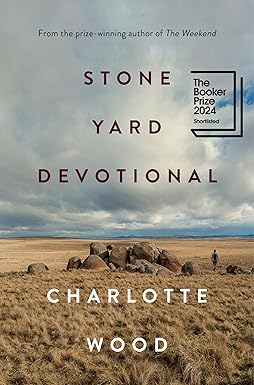
Shortlisted for the 2024 Booker Prize, I thought this would be one of those critically acclaimed books that are lauded by literary critics but not really enjoyed by ordinary readers. I am happy to be proven wrong with Stone Yard Devotional. While it is not really the type of book that is “enjoyable” to read as such – in the sense of being “fun” or “difficult to put down” – it is deeply emotional, poignant, and beautifully written. I finished it with a sense of awe, almost of reverence. It was that good.
The feeling of reverence I felt is actually quite reflective of the plot of the book, which is set in a small religious community of women in a remote part of Australia. The protagonist – who remains unnamed throughout the book – is a middle-aged woman who leaves her regular life in Sydney and joins the convent, despite not being particularly religious. Just like her name, the exact reasons why she chooses to do this are never told to us in any kind of big, dramatic reveal. Instead, they are alluded to at various times throughout the course of the book, the biggest one being the death of her parents, especially the very painful death of her mother from cancer, and the gradual falling apart of her relationship with her husband. The convent she has retreated to is close to where she grew up and where her parents are buried, so it is almost as if she has come back home to her roots.
The book is told entirely from the point of view of the protagonist, almost in the form of diary entries that alternate between what is happening at the present moment, over the span of a few months, and her memories of the past. Most of the current time narration revolves around a terrifying mouse plague that happens in the region of Australia where the convent is located, requiring the sisters in the convent to work day and night to combat the infestation and prevent the mice from eating everything, not just their food but also storage bins, furniture, clothes, even parts of the building structure. The other key events that happen during this time – while the mouse plague is raging – are the return of the skeletal remains of a beloved sister who had left for Thailand decades ago and whose body has now been discovered, as well the unexpected visit to the convent of a woman from the narrator’s past – they were briefly in school together — whom she had wronged and feels very guilty about.
Just as there is no dramatic reveal in the beginning which tells us why the narrator has chosen to retreat to this reclusive community, there is similarly no dramatic ending to the story. Instead, Stone Yard Devotional gently closes with the abatement of the mouse plague, the burial of the sister’s remains after finally crossing through all the bureaucratic hurdles it entailed, and the unstated understanding between the narrator and the unexpected visitor that made the narrator feel forgiven and lessens her burden of guilt. And over the course of her reminiscences of her past, amidst the stillness and starkness of the community that she now calls home, the narrator also starts to feel some healing from the deep-seated grief she has been carrying within her.
While the writing of the book is incandescent throughout, it is beautifully captured in these ending paragraphs, which also point to the sense of equanimity that the narrator is now able to feel when she thinks of her mother:
My mother said that anything that had once been alive should go back into the soil. Food scraps went into the compost, of course, including meat and bones, despite the general advice against this. Paper, torn into strips to allow air and microbes to move freely through. She would cut old pure cotton or silk or woollen clothes into small shreds and compost them too. Fish bones and flesh. Linen tea towels. She reluctantly left out larger pieces of wood, but longed for a woodchipper. She left cane furniture to rot and then buried it. She quoted a Buckingham Palace gardener she had once seen on television, who added leather boots to his compost bin. All that was needed was time, and nature. Anything that had lived could make itself useful, become nourishment in death, my mother said.
I never knew anyone else who had her reverence for the earth itself.
Stone Yard Devotional
Author: Charlotte Wood
Publisher: Riverhead Books
Publication Date: February 2025
Contributor: Lachmi Khemlani is a fan of the written word.
 Books We've Read