“Reminiscences of the Cuban Revolutionary War” by Ernesto ‘Che’ Guevara

Reminiscences_of_the_Cuban_Revolutionary_War

This is a book about the Cuban Revolution by one of its legendary heroes. It was compiled in 1963, four years after the triumph of the guerrilla war that brought Fidel Castro to power on 1st January 1959. Argentine doctor-turned-guerrilla fighter Ernesto Guevara de la Serna had fought shoulder to shoulder with his Cuban comrades to overthrow the US-backed dictatorship of Fulgencio Batista. A universal symbol of resistance to oppression and injustice, Che believed that revolutionary uprising was the only path to liberation of oppressed peoples.

Talking of his harrowing experiences in the first few days after the small band of warriors landed in Cuba on 2nd December 1956, and all but 20 of the 82 men died in combat, Che writes, “I immediately began to think of the best way to die, since in that minute all seemed lost. I remembered an old Jack London story in which the hero, aware that he is about to freeze to death in Alaskan ice, leans against a tree and prepares to die with dignity. That was the only thing that came to my mind.”

The innocence of youth is striking. “As a trophy from the Battle of La Plata, I had taken a helmet from one of Batista’s corporals, and I wore it with great pride.” The helplessness of the invalid is apparent. “My asthma was somewhat aggravated and the lack of medicine meant I was almost as immobile as the wounded.”

The mind of the quintessential revolutionary is evident. “The people in the Sierra Maestra grow like wild flowers, untended and without care, and they wear themselves out rapidly, working without reward. We began to feel in our bones the need for a definitive change in the life of the people.”

The sensitive humanist also surfaces from time to time. “Blind and unrewarded sacrifices also made the revolution. Those of us who today see its achievements have the responsibility to remember those who fell along the way, and to work for a future where there will be fewer stragglers.”

Che describes his efforts at dentistry with characteristic humour. “Besides the meagerness of my skill, we had no anaesthetic, so I frequently used ‘psychological anaesthesia’ – a few harsh epithets when my patients complained too much about the work going on in their mouths.” When Batista’s forces leave behind a trail of destruction after failing to find the guerrillas, Che observes: “In the midst of the smoking ruins we found nothing but some cats and a pig; they had escaped the destructive fury of the invaders only to fall into our gullets.”

Che recounts his meeting with Fidel Castro in Mexico City in 1955, tells us how they both landed in jail, how they bribed their way out and how they made the dangerous sea crossing to land on Cuban shores after running out of food, water and fuel. “It was a shipwreck rather than a landing,” he writes. He describes how they ate raw crabs, horse meat and anything they could lay their hands on, how they drew water from holes in the rocks using hollowed out sticks, and how they dealt ruthlessly with traitors and informers.

There is deep pathos in his references to fallen comrades. “We must make time to weep for our fallen companeros while we sharpen our machetes.”

If Che Guevara hadn’t become a guerrilla commander he could have been a best-selling author. He was such a prolific writer – and he had so much to say.

Overall Assessment: Must read.

REMINISCENCES OF THE CUBAN REVOLUTIONARY WAR
AUTHOR: ERNESTO ‘CHE’ GUEVARA
PUBLISHER: OCEAN PRESS
YEAR OF PUBLICATION: 2006 (first published in Spanish in 1963)

Contributor: Pushpa Kurup lives in Trivandrum, India and works in the IT sector.

“Misery” by Stephen King

Misery1

This was one of the few “page turners” that I’ve read. I got pulled into Misery the moment I read the plot summary. Technically, it is something that could happen to anyone, any unlucky celebrity to be precise.

It starts with a back-breaking accident to a famous novelist and thankfully he gets rescued by his number one fan. Hold on. It’s a Stephen King novel. The man who is famous for his thrillers and killers. I’ll have to take that “thankfully” back… I won’t spoil anything here, but I guarantee you that it’s not a horror story (but a scary one).

There are books that can give us surprises, good scares, heart breaks, adrenaline rush and so forth. For this book, courtesy the title, I was expecting a miserable time for our lead character and was prepared to sympathize with him even before I started reading. But I got a surprise right away when I learned that “Misery” was, in fact, a character’s name in the book (Misery Chastain is a beautiful name). And our lead did not have a miserable time. He had something worse!

Here’s some more leverage to get you start reading. The book was adapted into a movie in 1990 and Anne Wilkes (the female lead character) was portrayed by Kathy Bates. Ms. Bates won the Best Actress Oscar and the Golden Globe for the role.

Then again, if you have already read the book then you might be a tad disappointed with the way the film turned out. I can’t say it was totally bad but it could have been much better. I’m not sure how to put it. Let’s just say that there’s a big difference in using an axe to hack someone versus using a hammer for the same thing.

Ouch. Gruesome! I know. But it’s Stephen King. Not me. So the example demands gruesomeness… 🙂

You can expect some heart-thumping moments in the book. And it beautifully (or should I say, rather casually) portrays a writer’s agony and thought process in creating something new.

With Halloween around the corner, you could get your share of thrills by reading Misery or by watching the movie. I won’t suggest both.

Misery
Author: Stephen King
Publisher: Viking Press
Publication Date: June 1987

Contributor: Anoop Mukundan is a casual reader and a cyber wanderer.

“Rules of Civility” by Amor Towles

Rules of Civility

I picked up this book at the recommendation of my daughter, who told me she read it in one day. While I didn’t find it so gripping that it was impossible to put down, I did find it engaging enough to hold my interest and keep reading — which was remarkable to me given the number of books I started recently that I couldn’t read beyond the first chapter. Going through somewhat of a dry spell with regard to reading fiction, I was happy to get out of the doldrums and be reassured that books could still give me the enjoyment they always have.

Rules of Civility is set in New York in the late 1930s, a time period that is so reminiscent of The Great Gatsby by F. Scott Fitzgerald that it is impossible not to be reminded of it. Rules of Civility fares quite well in the comparison, and while it comes nowhere to achieving the classic status of The Great Gatsby, it is far from being a cheesy rip-off. It is extremely well written and strongly evocative, bringing vividly to life all the details of the Big Apple in the 30s — the people, the culture, the parties, the music, the smoking, the clothes — the overall milieu.

The story is told from the point of view of a 25 year old single girl, Katey Kontent, and of the most eventful year in her life, 1938. What sets it off is a chance meeting that she and her best friend and roommate, Eve, have with a wealthy, handsome banker, Tinker Grey, at a jazz bar on the last night of 1937. Both fall for him, but instead of a someway predictable storyline in which the “heroine” eventually gets the “hero,” the plot takes several twists and turns, including a car crash, a move to Los Angeles, a relationship between a wealthy older woman and a younger man, a friend who enlists in the war and is killed, and dropping out of high society to become a blue-color worker. In the course of that one year, Katey goes from becoming a secretary to the editor’s assistant of a high-profile magazine, and further leaves behind her working class roots by moving and socializing in the upper echelons of New York society.

I found Rules of Civility less of a story with a definite plot and more of an experience, an indepth look at what life in New York must have been like in the 1930s. The details are so rich and seem as authentic that it really makes the city and the characters come alive. Even more so than The Great Gatsby, I found that this book is inextricably tried to its setting, so for those who can’t get enough of reading about New York, this book is a must-read.

PS: And by the way, the title of the book comes from “Rules of Civility and Decent Behaviour In Company and Conversation,” a list of 110 rules compiled by George Washington as part of a school exercise when he was sixteen. They are used in Towles’ Rules of Civility as a reference by one of the key characters to appear refined in high society. To name the character would be giving too much away!

Rules of Civility
Author: Amor Towles
Publisher: Penguin Books
Publication Date: June 2012

Contributor: Lachmi Khemlani runs a technology publication in the San Francisco Bay Area.

“Heretic: Why Islam Needs a Reformation Now” by Ayaan Hirsi Ali

Heretic

Somalian born Ayaan Hirsi Ali is undoubtedly one of the most powerful liberal voices of the present century. She puts forth powerful arguments in order to prove that Islamic extremism is rooted in Islam itself. As the Muslim world struggles to come to terms with the challenges of modernity, believers have no option but to reconsider their stance on crucial concepts such as jihad, polygamy, talaq, inheritance rights, and a host of other issues. The attempt to adapt 7th century teachings to 21st century aspirations is causing much heartburn. The Arab Spring and Islamic State are manifestations of the soul-searching that is happening within the Muslim world.

“The UN estimated in November 2014 that some 15000 foreign fighters from at least eighty nations have travelled to Syria to join the radical jihadists,” she points out. The threat posed by terrorist groups is very real and the need to tackle the root causes is urgent.

“The call to violence and the justification for it are explicitly stated in the sacred texts of Islam,” the author opines. Her reasoning is not unsound. Demonstrating the power of indoctrination, she writes of her own intolerant past self, “When Ayatollah Khomeini in Iran called for the writer Salman Rushdie to die after he published The Satanic Verses, I didn’t ask if this was right…….Everyone in my community believed that Rushdie had to die; after all he has insulted the Prophet. My friends said it, my religious teachers said it, the Qur’an said it, and I said it and believed it, too.”

Ayaan focuses on five areas that need re-thinking: (1) Muhammad’s infallible status (2) the Sharia (3) the glorification of the afterlife (4) the call to wage holy war (5) the practice of empowering individuals to enforce Islamic law. “I bear witness that there is no God but Allah; and Muhammad is His messenger.” The author notes that today the Shahada is not merely the Muslim profession of faith but the banner of IS, Al Qaeda, and Boko Haram. She says, “We must reject the notion that only Muslims can speak about Islam, and that any critical examination of Islam is inherently ‘racist’”.

The author expresses the hope that the movement for reform is already under way. She recounts certain events that give room for hope. On New Year’s Day 2015, the President of Egypt, Abdel Fattah el-Sisi, gave an astonishing speech at Al-Azhar University. He asked, “Is it possible that 1.6 billion people (Muslims) should want to kill the rest of the world’s inhabitants – that is 7 billion – so that they themselves may live? Impossible!” He went on to say: “I say and repeat again that we are in need of a religious revolution. You, imams, are responsible before Allah. The entire world, I say it again, the entire world is waiting for your next move…..because this umma is being torn, it is being destroyed, it is being lost – and it is being lost by our own hands.”

Yusuf Al-Qaradawi, a prominent leader of the Muslim Brotherhood once said: “If they had gotten rid of the apostasy punishment, Islam would not exist today. Islam would have ended with the death of the Prophet, peace be upon him.”

I can’t help thinking Ayaan ought to have visited India, especially Kerala, where peace-loving Muslims are in a massive majority. Or Indonesia. Or Malaysia. Perhaps she might modify some of the harsher postulates based on her own experience of militant Islam in Africa and Arabia. Moreover, she would realize that Hindus comprise only 15% of the world population, and they too indulge in honour killings and inhuman punishments.

Overall Assessment: To describe this book as thought-provoking and path-breaking would be an understatement. But I suggest you read “Infidel” first.

TITLE: HERETIC: WHY ISLAM NEEDS A REFORMATION NOW
AUTHOR: AYAAN HIRSI ALI
PUBLISHER: HARPER COLLINS
PUBLICATION DATE: 2015

Contributor: Pushpa Kurup lives in Trivandrum, India and works in the IT sector.

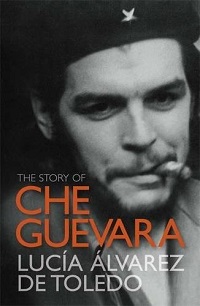
“The Story of Che Guevara” by Lucia Álvarez de Toledo

The Story of Che Guevara

Among the innumerable authorized and unauthorized biographies of the legendary Che, this one – by an Argentine author – surely stands out.

Che Guevara is the ultimate symbol of rebellion and idealism. He rejected the trappings of power and embraced the hard life of the guerrilla fighter. He was born in Argentina and had Cuban citizenship conferred on him, but his outlook was global and his spirit truly Latin American. He condemned the United States at the UN General Assembly in 1964. The following year he criticized the Soviet Union at an international conference in Algeria. He was not one to toe anybody’s line. Even Fidel Castro let him do as he pleased.

Ernesto Guevara de la Serna, a chronic asthmatic, decided early in life that he would overcome. He practised swimming, sports, riding, and shooting and enjoyed the outdoors. In 1947 he evaded military service by having a cold shower before turning up at the barracks for his medical examination, knowing full well that it would trigger a severe asthmatic attack. As a consequence, he was declared medically unfit. He qualified as a doctor in 1953.

Ernesto’s paternal grandmother Ana Lynch was born in San Francisco and came to Argentina at the age of 12. His parents were unconventional people.

In 1950 Ernesto’s 4700 km bicycle trip was featured on the cover of a sports magazine. Besides, he met Chinchina Ferreyra and fell in love. In 1951 he worked as a male nurse on a merchant ship that took him to Brazil, Trinidad, Curacao, British Guyana and Venezuela. En route he wrote a short story titled ‘Anguish – the only Certainty’ wherein he interspersed his own philosophical musings with quotes from Sartre, Nehru and others. Realizing that sailing was not his destiny, he returned home and sought out Chinchina. The immensely rich Ferreyra family did not favour Ernesto’s marriage-plus-travel proposal.

Then began the famed motorcycle trip with Alberto Granada in December 1951. In July 1952, their paths diverged, Alberto landing a job in Venezuela and Ernesto ending up in Miami with one dollar in his pocket. A month later Ernesto returned home in a cargo plane, and in July 1953 set off again, this time with Calica (Carlos Ferrer). They meant to go to Venezuela but ended up in Bolivia. One day, while having coffee at a cafe in La Paz, they noticed a family seated alongside them and eating sandwiches. Their Indian maid was sitting on the floor beside them and the children were throwing crumbs to her as if she were a dog. Calica’s diary recounts how this incident shocked them to the core.

Ernesto then made his way to Panama, Costa Rica, Nicaragua, Honduras and El Salvador and eventually Guatemala, where he meet Hilda Gadea, a Peruvian revolutionary who would later become his wife. Guatemala had plenty of left-wing exiles from right-wing Latin American dictatorships. Che met some Cuban exiles who had been part of the Moncada Barracks attack in July 1953 and were biding their time until Fidel Castro would be freed from prison. Nico Lopez became his first Cuban friend- and nicknamed him Che.

Che was in Guatemala when the government of Jacobo Arbenz was overthrown in a US-backed coup. He took refuge in the Argentine embassy and obtained safe passage to Mexico. In mid 1955 in Mexico City Che and Hilda became a couple. Che met Raul Castro in June and Fidel Castro in July. The bonding was instantaneous. Soon they established a guerrilla training hideout and ended up spending two months in jail when it was discovered. In a letter to his mother in September Che expressed his thoughts about the fall of the Peron government and informed her of his marriage to Hilda. In February 1956 his daughter Hilda Beatriz was born. In November he sailed to Cuba to fight a long drawn out guerrilla war to oust Fulgencio Batista. In the Sierra Maestra during the long campaign Che picked up the habit of smoking Havana cigars, which soon became his trademark.

In a 1958 radio interview to Jorge Ricardo Masetti, Che was asked why he was fighting for Cuba. He replied, “In the first place I consider my country not only Argentina, but the whole of America. When asked whether Castro was a communist, he said, “Fidel is not a communist. Politically one can call him a revolutionary nationalist.”

When the Revolution triumphed Che became head of the National Bank of Cuba. There is an amusing story relating to his appointment. During a core group meeting Castro enquired whether any of the attendees were economists. Che raised his hand. Castro remarked, “I didn’t know were an economist.” Che replied, “Oh, I thought you said ‘communist.’” And that’s how he landed the job. Later he became Minister for Industry.

Aleida March had joined Che’s group towards the end of 1958. On 2nd June 1959 he divorced his first wife and married Aleida on the same day. They had four children together.

Che did a lot of diplomatic networking, leading Cuban delegations to Europe, Africa and Asia. He visited the Taj Mahal and Hiroshima. In 1965 Che went on a secret mission to the Congo with 150 black Cuban volunteers to foment revolution. Seven months later he had to beat a retreat. When Che wrote about his Congo campaign he began with the words, “This is the story of a failure…”

Che’s Bolivian mission in 1966-67 was doomed from the start. The Bolivian communists failed to support and the peasants did not enlist, so the rag-tag band of outsiders didn’t stand a chance. Che was wounded and captured on 8th October 1967 and executed the following day, presumably under orders from Washington.

Che Guevara had all the qualities of a true revolutionary – fearlessness, intelligence, ideology, passion and ruthlessness. To say that the story of his life is fascinating would be a gross understatement.

Overall assessment: Meticulously researched. Must read.

The Story of Che Guevara
AUTHOR: Lucia Alvarez de Toledo
PUBLISHER: Quercus
YEAR OF PUBLICATION: 2010

Contributor: Pushpa Kurup lives in Trivandrum, India and works in the IT sector.

“My Italian Bulldozer” by Alexander McCall Smith

My Italian Bulldozer

This is a recent “one-off” novel by Alexander McCall Smith, by which I mean that it is not part of a series. He is best known for his No. 1 Ladies’ Detective Agency series, which I absolutely love – I own all of those books. He also writes many other serialized books including the 44 Scotland Street series, The Sunday Philosophy Club series, and the Corduroy Mansions series. While he is continuing, fortunately, to write books in these series (such as Precious and Grace, which I wrote about earlier this year), he does occasionally write stand-alone books such as My Italian Bulldozer. Although I haven’t become addicted to any of his other series as I have to his No. 1 Ladies’ Detective Agency series, he is such a good writer, and such a prolific one, that you can be assured of a good read whenever you pick up one of his books.

This is exactly how I would describe My Italian Bulldozer. It tells the story of Paul Stuart, a successful food writer in Scotland, who is heartbroken after his girlfriend, Becky, dumps him for another man (that too, her personal trainer, which seems to add insult to injury!), and goes to stay in Italy for a few weeks. He is ostensibly going to wrap up his cookbook on Tuscan food and wine at the suggestion of his editor, Gloria, who is secretly in love with him and thinks it would do him good to get away and have a change of scene. Once he lands in Italy, some unexpected snafus cause him to first be arrested and spend some time in a jail, and once he is released, to have a bulldozer as the only rental option available to him. And that is how he comes to be driving around on a bulldozer on Italy.

That, in itself, is funny when you visualize it – driving around the Italian countryside in a bulldozer! During the course of his trip, a lot happens in a similar humorous vein – he knows a smattering of Italian and is able to have some really interesting conversations with the people he meets; Becky unexpectedly visits to say she is sorry for leaving him, but he realizes he doesn’t really want to get together with her and encourages her to go back home; he develops a crush on an attractive, intelligent American woman he happens to help out when her car breaks down, but she is already with another guy and can’t reciprocate; and finally, he comes to realize that his deep friendship with Gloria is the solid foundation of a meaningful and loving relationship. Also, he is able to finish his book, so at least “mission accomplished” on that front.

I found My Italian Bulldozer to be a delightful and entertaining read, in the author’s trademark witty style with lots of tongue-in-cheek humor. And as with all his other writing, his humor never degenerates to becoming outlandish or slapstick in the least. Another typical characteristic of McCall Smith’s fiction is that it is always lighthearted, never dark or depressing. Even the “villains” – which in this book would be the rental car agent who duped Paul and made him go to jail – are bad in a funny way. In McCall Smith’s world, there is some humor in every situation. It’s a world that I, for one, would very much like to live in.

My Italian Bulldozer
Author: Alexander McCall Smith
Publisher: Pantheon
Publication Date: April 2017

Contributor: Lachmi Khemlani runs a technology publication in the San Francisco Bay Area.


“Canada” by Richard Ford

Canada

Richard Ford’s “Canada” is the first of his books that I have read, but it will not be the last. An author in the grand tradition of Franzen in his description of family dysfunction, he writes a slow moving and subtle book, emphasizing the inner workings of his character’s mind and his difficult coming of age story rather than the intricacies of plotting.

Dell Parsons is the teenage son of Neeva and Bev Parsons and twin brother of Berner Parsons whose life story is grandly dramatic and worthy of a fast-moving pulp fiction thriller. Dell’s life falls apart one summer in Montana as his parents make a giant foolish leap into criminality and fail spectacularly. He is cast from the proverbial frying pan into the fire in his “escape” to Canada. Within the broad and grand sweep of this story, the author details his protagonist in small steady brush strokes. The first couple of hundred pages are very slow as Dell prepares for high school in his little town and talks about his family, his surroundings and small day to day events and descriptions. Taken at the pace the author sets, it’s like watching a train wreck in super-slow motion. Richard Ford sets this up cleverly, telling us the most important dramatic details right up front in the first few sentences.

This book falls short on a few counts and succeeds in others. It needed some self-discipline to plod through the first couple of hundred pages which are slow and meandering. For the more impatient modern reader, 200+ pages of slow moving storyline could be a deal-breaker. However, the second half of the book had me completely hooked, so the discipline of working my way through the slow first half paid off amply in the end.

The book’s great success is in describing a “regular” adolescent faced with “irregular” life experiences and painting a clear, believable picture of the protagonist that resonated with me as the reader. The poignant contrast of the melodramatic events in the plot and the protagonist’s calm and matter of fact narration are masterful.

Canada
Author: Richard Ford
Publisher: Ecco Press
Publication Date: June 2012

Contributor: Seema Varma is an avid reader – mystery, fantasy, literary fiction.

“The Lake of Dreams” by Kim Edwards

The Lake of Dreams

This book is from the author of a brilliant book that I read several years ago — The Memory Keeper’s Daughter by Kim Edwards. It wasn’t just me who loved it — that book became a runaway hit and spent 122 weeks on the New York Times bestseller list. Kim Edwards hasn’t written a whole lot of other books, so when I did find another one by her, The Lake of Dreams, I picked it up immediately to read.

If I was hoping for an encore performance, for something as brilliant as The Memory Keeper’s Daughter, I was disappointed. The Lake of Dreams is definitely not as good, or even as successful, as her earlier book, which I remember being everywhere when it was published (in 2006). However, the writing quality is just as good, not at all pedestrian, and as it so often happens, perhaps my expectations from this book were way too high for it to live up to them.

The Lake of Dreams is the story of a young woman, Lucy, struggling to find her place in the world and never able to really come to terms with the death of her father in a freak boating accident when she was a teenager. If only she had accompanied him for a ride on the boat that night when he had asked her to join him, perhaps the accident wouldn’t have happened. She leaves the town they lived in – called “The Lake of Dreams” – soon after to go to college and thereafter becomes a  nomad of sorts – traveling to different countries for projects as part of her job as a hydrologist. When the book opens, she is living in Japan with her boyfriend of Japanese descent and is temporarily out of a job, and she takes a trip home to The Lake of Dreams to visit her family – her mother and her brother. Once there, she is caught up in the familiar emotions brought on after the death of her father – restlessness, guilt, the feeling of being unmoored – until the chance discovery of a letter and a piece of fabric in her home – which dates back to several generations – leads her to a search for an ancestor who seems to have been expunged from the family history. Who is this Rose and what happened to her? And what about her daughter Iris? Why was she forced to leave her? And was Rose the woman modeled in the stained glass windows in the local church that were created by a famous artist? If so, what was the connection between them?

While Lucy is researching the mystery of Rose, Iris, and the stained glass windows, she is, at the same time, dealing with the attraction she still feels for her high school boyfriend, who is settled in The Lake of Dreams, and runs a successful artisanal glass factory. At the same time, she is still in love with her boyfriend in Japan. In addition to this inner conflict, family issues with her brother and her uncle come up, compounding her feelings of guilt about her father’s death.

Eventually, everything is resolved, and there is a surprise twist regarding the circumstances of her father’s death, reinforcing the fact that his accident was not her fault in any way and she did not need to blame herself for it. This was the only somewhat dramatic part of the book, which was otherwise not melodramatic in the least. While I appreciated this aspect of the book – the story was so believable – it did make it a little slow, plodding almost. A little drama could have spiced it up a bit, I think.

But I guess that is not the author’s style, which is subtle, almost understated. It worked beautifully for The Memory Keeper’s Daughter, and while I’m glad I read The Lake of Dreams, it reinforced the fact that great art owes a lot to serendipity, to a flash of inspiration. It cannot be manufactured at will, it cannot be commanded, which is why there is no guarantee of loving someone’s second book or movie or painting just because you have loved the first.

The Lake of Dreams
Author: Kim Edwards
Publisher: Viking
Publication Date: January 2011

Contributor: Lachmi Khemlani runs a technology publication in the San Francisco Bay Area.

“Zealot: The Life and Times of Jesus of Nazareth” by Reza Aslan

Zealot.jpg

“If you do not have a sword,” Jesus instructed his disciples, “go sell your cloak and buy one.” Was this the same man who said, “Turn the other cheek” and “Love thy neighbour as thyself”?

Iranian born American author Reza Aslan makes a valiant attempt to unveil the real Jesus – and in the process unearths some curious facts. The gospels were recorded by Greek speaking diaspora Jews. The gospel of Luke was written in Antioch and that of John in Ephesus. Almost every story written about Jesus was composed after the Jewish rebellion against Rome in 66 C.E. (In 70 C.E., the Romans razed Jerusalem to the ground.) The Kingdom of God never came. But Jesus, the messiah, was gradually transformed from a revolutionary nationalist into a spiritual leader espousing a message of peace and brotherhood.

Belief in the resurrection of Jesus seems to have pre-dated the gospels and other written sources. But only two facts about Jesus are absolutely certain: Firstly, that he was a charismatic preacher who led a Jewish movement in Palestine at the beginning of the first century. Secondly, that Rome crucified him for this crime. The plaque they placed above his head on the cross read, “Jesus of Nazareth, King of the Jews”. (However, Mathew and Luke claim that Jesus was born in Bethlehem.) There’s no evidence for the ‘born in the manger’ story or the ‘immaculate conception’ theory.

Jesus performed faith cure and exorcism – and never exacted a fee. There’s more historical material confirming his miracles than either his birth or his death.

Jerusalem had a history of conflict long before the birth of the saviour. The story of Moses and the great exodus is well known. But the Jews did not live happily ever after in the Promised Land. The Babylonians obliterated King Solomon’s temple in 586 B.C.E. Later they were defeated by the Persians who allowed the enslaved Jews to return to Jerusalem and rebuild the Temple. Then Jerusalem fell to Alexander the Great and was subsequently ruled by the Ptolemaic dynasty. In 164 B.C.E. the Jews regained power and held it for the next 100 years. Roman dominion began in 63 B.C.E., and when Herod died in 4 B.C.E. a period of violent uprisings followed. Jesus was born sometime between 4 B.C.E. and the takeover of Jerusalem by Roman troops in 6 C.E.

In 28 C.E. an ascetic preacher, John the Baptist, began baptizing people in the River Jordan. Jesus was baptised by him – and probably began his ministry as John’s disciple. Sometime between 28 and 30 C.E. John the Baptist was put to death by Herod Antipas, one of Pontius Pilate’s lieutenants.

After his baptism Jesus went out into the wilderness of Judea – and returned home only after the arrest of his mentor. By then he had metamorphosed into a preacher. He called himself ‘Son of Man’. He had both male and female disciples who followed him from place to place. Women disciples named in the New Testament include Joanna, Mary, Salome, Susanna and Mary of Magdala.

The matter of Jesus’ bachelorhood also remains unresolved. Celibacy was extremely rare in Jewish society, being restricted to monastic orders such as the Essenes (custodians of the Dead Sea Scrolls).

The prophet Isaiah had foretold that Israel would be redeemed, that God’s Kingdom would be established on earth. Jesus merely said the Kingdom of God is at hand. But it amounted to saying the end of the Roman Empire was imminent. His “blessed are the poor….” statement implied a reversal of the prevailing social order. It was a call to rebellion. Consider this quote from Matthew and Luke, “Do not think that I have come to bring peace on earth. I have not come to bring peace, but the sword.”

After Jesus’ death his brother James became leader of the early Christians. The Lord did have brothers and sisters – which goes to disprove his mother’s perpetual virginity. Joseph, the father, disappears after the infancy narratives. He is mentioned only by Matthew and Luke, as is the story of the virgin birth. According to the gospel of Mark, when Jesus first begins preaching in Nazareth, the villagers ask, “Is this not Mary’s son?” Males in Palestine were never called by their mothers’ names. Burial after crucifixion was not normal practice either. It was customary to leave the corpses on the cross to be devoured by dogs and birds of prey. So why and how did Jesus get a burial?

Saul of Tarsus (who became Paul after his conversion) rejected Jewish law and began teaching believers not to circumcise their children. He had serious conflicts with James and the apostles. In the early sixties Paul was arrested and extradited to Rome, where Peter, the first of the 12 apostles was already living. In 66 C.E. as Jerusalem erupted in revolt, the emperor Nero had Peter and Paul executed. Their martyrdom made them the most important figures of Christiandom. There had been messiahs and martyrs before and after Jesus, but today he alone is God.

Though James headed the first Christian community and eventually died a martyr, he was overlooked in later chronicles, and almost wholly excised from the New Testament.

The book throws light on some ancient Jewish traditions. I was struck by the uncanny resemblance of the daily rites of the Temple of Jerusalem to that of our Hindu temples. The burning of incense, the lighting of lamps, the sounding of trumpets, and the animal sacrifices (which are now unlawful), the purification rituals and the shaving of heads would be all too familiar to any practising Hindu. Menstruating women were not allowed to enter the Temple.

Overall Assessment: Great read, though it does appear that the author has a bee in his bonnet.

Zealot: The Life and Times of Jesus of Nazareth
AUTHOR: Reza Aslan
PUBLISHER: The Westbourne Press
YEAR OF PUBLICATION: 2013

Contributor: Pushpa Kurup lives in Trivandrum, India and works in the IT sector.
“The Boss of Bosses: The Life of the Infamous Toto Riina, Dreaded Head of the Sicilian Mafia” by Attilio Bolzoni and Giuseppe D’Avanzo

The Boss of Bosses

‘The best forgiveness is revenge.’

This book about the Sicilian Mafia boss, Salvatore Riina (nicknamed Toto Riiia or U Curtu) was published 15 years after his arrest and imprisonment in 1993. He is now 86 years old, ill with terminal cancer and about to be released from prison on compassionate grounds. His son Guiseppe Salvatore recently came out of prison and published his autobiography.

I picked up The Boss of Bosses at the Muscat airport while waiting for a flight to Milan. The book was meant to relieve boredom in transit but it actually made me lose my sleep, literally and figuratively. After having read The Godfather by Mario Puzo in my schooldays, this was the first time in decades that I was reading about the Mafia. (I must confess at this juncture that I really enjoy the party game ‘Mafia’ which can be adapted to management training in skilful ways.)

“Cosa Nostra was ruled by terror. You could die over nothing. Over a word, a look. All you needed to do was dither over an order to kill a crony, give one question too many or one answer too few to be squashed like a fly on a window pane.” The authors give a brilliant portrayal of the life and times of the man who rises from a humble peasant background to become the supreme head of the Sicilian mafia in the early eighties.

“One day the Corleonese confided in a cellmate: ‘When I get out of here I want to walk on a carpet of 100,000 lira notes.’ This was a simple peasant from Corleone speaking in 1963. His father and brother had died in a blast when he was thirteen. Toto Riina knew only one kind of life – he had only one option, only one goal, the Cosa Nostra.”
Prison life is described thus: “It was commonly said that ‘you were almost better off inside than out’, and the Ucciardone (prison) was compared to the Grand Hotel. Lobster and champagne came in everyday via the register office, and ended up in the cells of the big guns.”

Riina’s constant companions in the early days were Calogero Bagarella and Bernardo Provenzano. In 1969 he went underground after being arrested and later acquitted in a case of triple homicide. Toto married Antonina Bagarella, the sister of Calo, on 16th April 1974 after a 19 year engagement. They were blessed by a team of three priests at a secret hideout. Their four children were delivered in secret. They lived incognito and were constantly on the move. Toto Riina drove a white Mercedes with his wife seated in front and children at the back all the time remaining undetected. His unexpected arrest in 1993 stunned the nation and the world.

When Toto Riina wrested control of the mafia after a bitterly fought ‘mafia war’ the changes were dramatic. “Cosa Nostra, which was, in its own way of course, a democratic state, became a dictatorship in only two years. The Corleonesi weren’t just a family, they had become a current, an alignment, a party. The affairs of Cosa Nostra effectively changed from one day to the next. The Sicilian mafia had altered its structure, its DNA.”

The book tell us a lot about the mafia – how they lived, what they did, their bizarre norms and values, their code of silence, the businesses they ran, and the bloodshed, vendetta and violence that marked their lives. Here are some interesting descriptions:

• You earned more and risked less with cigarettes. Chesterfield, Camel, Pall Mall. In 1959 a case cost 28,000 lire in Tangier and was sold in Rome for 210,000. Cigarettes were a goldmine. Cigarettes had kept Cosa Nostra alive for a quarter of a century.

• During the early 1980s Palermo was a refinery operating at full steam. DEA experts maintained that the Sicilians covered a third of the North Atlantic market, something like four tons of heroin a year. According to FBI figures it was more than that: six tons a year.

• Piccioli, piccioli, piccioli -money, money, money…No one in Palermo was talking about anything else. Some had mother-of-pearl floors, some had gold taps. They would buy a Jaguar one day and a Ferrari the day after, or build villas with silver swimming pools.

• Giovanni (son of Toto Riina) supplies the proof that his uncle was looking for. At his first murder he doesn’t look away when his victim is dying. He shows character and determination. He doesn’t give in. He doesn’t feel pity. A ‘brave’ son, a man of honour, worthy of his father, his uncle, the whole Corleone ‘family’.

Tommaso Buscetta became the first Mafia boss to spill the beans and his testimony sealed the fate of Toto Riina and several others. In 1987, Riina and several other received life sentences from the court. But he was nabbed only after six years.

In May 1992 anti-Mafia judge Giovanni Falcone was killed in a bomb blast. Soon thereafter another judge Paolo Borsellino was killed. No one had any doubts about who was behind the killings. Buscetta had given valuable information to these judges to enable the conviction of the mafia bosses. After their assassination Buscetta came out with the names of the politicians who were aiding the mafia.

Overall assessment: Brilliant book.

The Boss of Bosses: The Life of the Infamous Toto Riina, Dreaded Head of the Sicilian Mafia
AUTHORS: Attilio Bolzoni and GuiseppeD’Avanzano
TRANSLATOR: Shaun Whiteside
PUBLISHER: Orion Books Ltd.
Year of Publication: 2015

Contributor: Pushpa Kurup lives in Trivandrum, India and works in the IT sector.

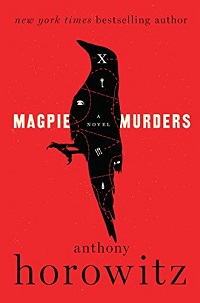
“Magpie Murders” by Anthony Horowitz

Magpie Murders

For those who love mysteries—and I very much belong in this category— Magpie Murders is a double treat. It is a mystery within a mystery, a classic whodunit (short for “Who [has] done it?”) within a whodunit. Agatha Christie was the undisputed queen of this genre, and I find her books absolutely riveting and impossible to put down until the end, when the detective finally reveals the murderer. I have always wished she was still alive and writing, so I wouldn’t have to make do by re-reading her books over and over again.

This is why I was delighted to come across Magpie Murders. Not only did it provide twice the thrill by being a book within a book, it had also one of the most innovative plot lines I have come across so far. A book editor of a publishing company, Susan Ryeland, is given the manuscript of the latest book by their most successful author, Alan Conway. The name of the book is Magpie Murders, and it is the ninth book in his widely popular crime series that is modeled almost entirely on Agatha Christie books—they also feature a Poirot-like detective and are set in small English villages in the 1950s. While Susan dislikes Alan Conway as a person, she loves his books and starts reading the manuscript. It is reproduced in full, and we are reading it with her. This is the “inside” book, and it is every bit as riveting as any Agatha Christie mystery, just as well-written, just as suspenseful, just as impossible to put down.

Therefore imagine her agony, as well as ours, when she comes to the end of the manuscript and finds that it is not complete! This is just before the big reveal when the detective gathers all the suspects and presents the solution to the mystery with a flourish. Needless to say, she can’t wait to get hold of Alan Conway to find out what happens. But then it turns out that he has died, ostensibly from suicide, going by the letter he sent to her boss, the head of the publishing company. In a quest to find the missing chapters of the manuscript, not just for her company but also to get the solution to the mystery in the book, Susan dig deeper and becomes increasingly convinced that Alan may have been died of murder rather than suicide.

This is the “outer” mystery, and while it is set in contemporary times and therefore easier to relate to, I have to admit that I didn’t find as gripping as the inner Agatha Christie-like mystery in the fictional book that Alan Conway wrote. Thankfully, Susan finds the missing end chapters of the inside book, so we find the answer to that mystery. And of course, by the end of the book, we get to know the mystery behind Alan Conway’s death as well.

The fictional Alan Convoy’s fictional book was so good, and such a terrific stand-in for Agatha Christie fans, that I wish Anthony Horowitz would keep writing these books in addition to the other books he writes.

Magpie Murders
Author: Anthony Horowitz
Publisher: Harper
Publication Date: June 2017

 Contributor: Lachmi Khemlani runs a technology publication in the San Francisco Bay Area.

“Wonder” by R. J. Palacio

Wonder

I came upon this book pretty much by chance. I was traveling and therefore looking for some eBooks that I could borrow from the library, since I don’t like to carry physical books with me when I am on a flight. That’s how I came upon Wonder. It had a very intriguing cover, and the fact that it was soon going to be made into a movie sealed the deal. I thought it would at least be a decent read.

I am happy to say that I greatly underestimated how good it was. Wonder is the story of a boy, August, who has a very rare facial deformity that makes him look literally like a zombie. He was born this way, and while he wasn’t conscious of his appearance and the reaction it elicits when he was small, he gradually becomes increasingly conscious of it as he grows older. Anyone who sees him for the first time, even if they have heard about him, are taken aback and cannot help staring. Smaller kids are downright scared. While August, or Auggie as he is called, has very loving and supportive parents and a fiercely protective older sister, he understandably does not like to go out in public and is homeschooled by his mother. Apart from the facial deformation, he has no other abnormality and is a bright kid who does well in academics and especially likes science. He is also just like any other boy who likes to play video games and loves Star Wars.

The book starts with Auggie attending school for the first time. This is a private middle school in which he did well enough on the entrance test to be admitted, and while he initially doesn’t want to go and be stared at by the other kids – even he acknowledges that he would stare if he was in their shoes – he does end up going, partly at the tentative urging of his parents who think it would be good for him, and partly because of the principal, who is extremely supportive and understanding. Wonder is the story of Auggie’s first year in school as a fifth grader, and of how the other kids in his grade and the school react to him, initially and over the course of the year. It starts being told from Auggie’s perspective – which is as you would expect – but then switches to being told from the perspective of several key people in his life including the two closest friends he makes at school, his sister, his sister’s best friend who has known him since he was a baby, and even his sister’s boyfriend. (His sister is just starting high school, and there’s another story there, but it is not central to the main plot.)

It would be easy to dismiss Wonder as just another kid’s book – it is, after all, written mostly from the perspective of a ten year old. However, while all kids should definitely read this book for the values of courage, acceptance, empathy, and kindness that it espouses, even I, as an adult, found it very heartwarming and uplifting. As one of the characters in the book ponders about what Auggie ever did to deserve the “sentence” of his one-in-four-million facial defect and whether this made the universe just a giant lottery where “it’s all just random whether you get a good ticket or a bad ticket,” he also sees how the universe takes care of its most fragile creatures like Auggie by giving him a wealth of good things in his life – parents who love him unconditionally for what he is and are unwavering in their support, a sister who adores him, a father who has a great sense of humor is always making him laugh, a small but equally loving extended family, great teachers at school, a principal he really likes and respects, and eventually good friends who, in time, can see beyond his face to the person beneath. Of course, we, as adults, know that this kind of balance does not happen for everyone who is the victim of a tragedy, it does highlight the fact that even the most down-and-out person has some blessings that they can count.

In addition, I found the exhortation from the principal in his commencement address to the fifth graders at the end of the school year to be “kinder than is necessary” very inspiring, and not just for kids. It’s something we could all remember and do more of throughout our lives; it would definitely make the world a better place to live. Apparently, this quote comes from the author, J. M. Barrie (best known for Peter Pan), in a book called The Little White Bird: “Shall we make a new rule of life … always to try to be a little kinder than is necessary?”

In addition to being very well written, Wonder was also very contemporary and relatable, such as in its references to Star Wars and PlayStations. In one scenario, Auggie’s sister, Via, storms into his room to confront him about something and despite slamming the door, Auggie does not even look up from the PlayStation he is on. Via says, “I hated how zombified his video games made him.” This is so identical to what happens in my own house that I really had to laugh.

I liked this book so much that I actually went out and bought a physical copy of it after finishing it. It is definitely a keeper.

Wonder
Author: R. J. Palacio
Publisher: Alfred A. Knopf
Publication Date: February 2012

Contributor: Lachmi Khemlani runs a technology publication in the San Francisco Bay Area.

“Without Fear: The Life and Trial of Bhagat Singh” by Kuldip Nayar

Without Fear

A mother who advises her young son to shout ‘Inquilab Zindabad!’ when he stands at the gallows. Vidyavati Kaur, mother of Bhagat Singh. We ought to remember her name. It’s the least we can do.

23rd March, 1931. Lahore Central Jail. 3 young revolutionaries are hanged – Bhagat Singh, Shivram Rajguru and Sukhdev Thapar. That’s when the countdown begins. The beginning of the collapse of the mighty British Empire.

Bhagat Singh once said to Congress leader Bhimsen Sachar, “Revolutionaries have to die because the cause they represent is strengthened by sacrifice – not by an appeal in court.” When asked by his lawyer Pran Nath Mehta just two hours before his execution whether he had any message for the nation, Bhagat Singh said, “Just the two messages : ‘Down with Imperialism!’ and ‘Long live Revolution!’”

In an article titled ‘Why I am an Atheist’, Bhagat Singh wrote, “I am going to sacrifice my life for a cause. What more consolation can there be? A God-believing Hindu may expect to be reborn a king; a Muslim or a Christian may dream of the luxuries he hopes to enjoy in paradise as a reward for his sufferings and sacrifices. What hopes should I entertain? I know that it will be the end when the rope is tightened around my neck and the rafters removed from under my feet.”

When Bhagat Singh and the other defendants entered the court singing, “Sarfaroshi ki tamanna ab hamare dil mein hai, dekhna hai zor kitna bazua-i-katil mein hai, Waqt ane de bata deinge tujheeh asman, ham abhi se kya batain, kya hamare dil emin hai,” the British judge summoned the public prosecutor and demanded a translation. It was the 5th of May 1930. The poem is believed to have been composed by Ram Prasad Bismil, another HSRA member, who had been executed on 19th December 1927 for the Kakori train robbery.

Bhagat Singh wrote 4 books in jail. All of them disappeared without a trace. The titles were: The History of the Revolutionary Movement in India, The Ideal of Socialism, At the Door of Death, and Autobiography. Mathura Das Thapar, brother of Sukhdev brought a copy of the ‘Proceedings Book of the Lahore Conspiracy Case’ from Pakistan to India and deposited it with the National Archives in New Delhi. Sukhdev had scribbled comments in the margins before his execution.

The average age of the 28 accused in the Lahore Conspiracy case was 22. Jatindra Nath Das died after 63 days of fasting in jail. The British made the cryptic announcement: “J. N. Das died yesterday at about 1-10 p.m. His brother K. C. Das received Rs. 600 from Subhash Chandra Bose from Calcutta to pay for the carriage of the body by car.”

Bhagat Singh surpassed the 97-day world record for hunger strikes, set by an Irish revolutionary. He fasted for 116 days in 1929 along with several other revolutionaries. A daring plan was hatched to rescue Bhagat Singh and others from jail. It ended in a fiasco when a bomb exploded in Bhagwati Charan’s hand killing him on the spot. Nine months later Chandrasekhar Azad died fighting the police at Allahabad.

Inspector W J C fern, a British officer who was at the scene of Saunders’ killing failed to recognize Bhagat Singh at the identification parade. It was the testimony of the five approvers that sealed his fate.

Bhagat Singh once wrote to his mother Vidyavati Kaur, “I have no doubt that my country will one day be free. But I am afraid that the brown sahibs are going to sit in the chairs the white sahibs will vacate.”

Udham Singh and Bhagat Singh met in Lahore Central Jail. The former told the latter that one day he would go to England and kill Michael O’Dwyer who had been Lieutenant Governor of Punjab when the Jallianwala Bagh massacre had been committed. Nine years after Bhagat Singh was hanged, Udham Singh managed to fulfil his promise. On 13th March 1940 he shot dead O’Dwyer in London, a full 21 years after the gory event in Amritsar.

The book throws light on many crucial historical facts – and highlights refreshingly different perspectives. The good the bad and the ugly appear in different shades of black, white and grey. All men and women born in India, Pakistan, Bangladesh and the United Kingdom should read this book.

Overall assessment: A brilliant book about an immortal subject. Do read more than once.

Without Fear: The Life and Trial of Bhagat Singh
Author: Kuldip Nayar
Publisher : Harper Collins (First published in 2000 by Har-Anand Publications)
Year of Publication: 2007

Contributor: Pushpa Kurup lives in Trivandrum, India and works in the IT sector.

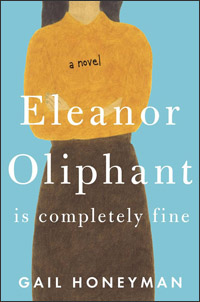
“Eleanor Oliphant Is Completely Fine” by Gail Honeyman

Eleanor Oliphant Is Completely Fine.jpg

I picked up this book from the library on the basis of its title alone — I had never heard of the name “Oliphant” before. Not only was it intriguing, it also sounded kind of funny, leading me to think that perhaps this would be a comedy. It was fiction, of course, and for some reason, fictional comedies are not very common — in fact, most fiction is extremely serious, faithfully mirroring life itself, which, by and large, is rarely funny for most people.

It turns out that I was partly, but not completely, right. The book is a comedy of sorts but at the basis of it is a tragic story. The title character, Eleanor Oliphant, is a thirty year old woman who has been so deeply traumatized by an event in her childhood that she has completely blocked it out and lives like an automaton — she has had the same job (an accountant in a graphics design firm) since she graduated from university; she goes to work every weekday at the same time; has lunch in the break room while solving the daily crossword puzzle in the newspaper; returns home in the evening at the same time after work; reads, listens to the radio, or watches TV before going to bed; drinks vodka on Friday evenings; and spends the weekends doing errands and waiting for Mondays. She doesn’t socialize and has no friends. Her footprint on the earth is so light, the ties that bind her to it are so tenuous, that, as she puts it: “It often feels as if I’m not here, that I’m a figment of my own imagination.”

Things change for Eleanor, when she has a chance encounter with Raymond, the IT guy in her firm, who she had to summon to fix her computer after it was infected by a virus. They gradually become friends, especially after they happen to rescue — one day after work when they are leaving their office building together by chance — an elderly man who passes out on the street. After summoning medical help, they continuing to visit him in the hospital, often together, and also get close to the members of his family who are extremely grateful to them for their help. Raymond and Eleanor start meeting for lunch occasionally at work. Raymond also invites Eleanor to one of his weekly visits to his mother, who is a sweet old lady and helps to give Eleanor a sense of warmth and caring that she never got from her own mother.

The big reveal at the end of the book is what exactly happened to Eleanor as a child to make her what she is, and how she comes to terms with it. She starts getting therapy, gets promoted at her job, and starts interacting with her co-workers, which she didn’t at all before. There is no definite romantic conclusion for Eleanor and Raymond by the end of the book — they just are very good friends — but the door is certainly open to the possibility.

Eleanor Oliphant Is Completely Fine was a sweet, heart-warming story, which was very easy to read. As I said earlier, it was also comic in parts, with the humor coming from Eleanor’s unusual, almost OCD-like thinking and behavior. I also appreciated that Raymond was far from the traditional hero who steps in to rescue the “damsel in distress” — he is not at all handsome, has a pot-belly and a receding hairline, and has several annoying habits that are off-putting to Eleanor, such as eating with his mouth open and constantly smoking. Yet, he is a really nice, good-hearted man, whose friendship is what ultimately helps Eleanor to confront and overcome her demons.

Still, the overall story seems a little “too good to be true,” with Eleanor’s many years of isolation, friendless existence, and automated living, all “healed” within a span of a few months after meeting Raymond. It is hard to believe that no one has, until now, reached out to her, given that she is a nice person at heart, despite the seemingly wacky exterior. The book is a bit of a fairy tale in that respect, which is why it will not be taken too seriously in literary circles — it is simply not realistic or sophisticated enough to win critical acclaim. But it is very well written, nice, and sweet, and we all could all do with reading fairy tales with “happily ever after” endings sometimes, even when we are all grown up.

Eleanor Oliphant Is Completely Fine
Author: Gail Honeyman
Publisher: Pamela Dorman Books
Publication Date: May 2017

Contributor: Lachmi Khemlani runs a technology publication in the San Francisco Bay Area.

“Born a Crime” by Trevor Noah

Born a Crime

I am addicted to three late-night comedy shows — The Daily Show with Trevor Noah, The Late Show with Stephen Colbert, and Late Night with Seth Meyers — all of which I record daily on my DVR and watch religiously the next day. They are essential for me to get my daily quota of laughs. While I heartily enjoy all three shows, the one that I invariably watch first is The Daily Show with Trevor Noah. He took it over from Jon Stewart barely a couple of years ago, and Jon Stewart was so good that it was hard to imagine anyone being able to fill in his shoes. But Trevor Noah has taken the show and made it his own, imbuing it with his unique sensibility — he is from South Africa and is biracial, and is therefore able to look at events in the US as well as the world with a perspective that is very different from the traditional American talk show host. He also has such a natural fair for comedy, which, combined with an innate charm, makes him immediately likable.

Born a Crime is a memoir Noah has written recently that is primarily focused on his childhood growing up in South Africa, against the ugly backdrop of apartheid. While this inhumane system of institutionalized racial segregation and discrimination was ending as he was growing up — thanks to activists like Nelson Mandela — Noah was born at a time when it was still illegal for black and white people to have sexual relations, let alone procreate. Thus, as the child of a white man and a black woman, he was “born a crime,” which explains the title of the book. However, Born a Crime is far from being a dark and depressing read that is focused on the many horrors of apartheid and the fight to end it; instead, it is an account of Noah’s childhood growing up as a “colored” person in South Africa. He was raised primarily by his mother and had more or less a black upbringing, although the tone of his skin did set him apart and made him learn to be like a “chameleon” to fit in with different groups of people. At the same time, it robbed him of the sense of belonging that comes from fitting in squarely in one group.

We see both these seemingly contradictory aspects manifested in so many ways in the anecdotes that Noah shares in this book about his life, from the time he was a little boy being brought up by his mother — with frequent visits to her family where he got a chance to experience the full gamut of relationships including cousins, aunts, uncles, grandmother, and even a great-grandmother — to his adolescent years — by which time his mother had remarried and had two more boys. By the time he was a young adult, he was well on his way to moving out of the house to a place of his own. He had his share of romantic crushes in school, just like any other adolescent, and also had several brushes with the law — mostly involving petty crime — which stopped when he actually ended up spending a few days in jail. Eventually, his natural flair for entertaining people and making them laugh is what led him to doing comedy for a living.

What I enjoyed most about Born a Crime are the stories of Noah’s early childhood, many of which would have been really sad and depressing but for his outlook and the manner in which he narrates them, which makes them funny rather than tragic. For example, the book starts with his mother throwing him out of a moving bus when he was nine years old and then jumping out of the bus herself with his infant step-brother. With an opening like that, how can you not be hooked? There is another story that is laugh-out hilarious, and that is to do with toilets, or rather, the lack of them. In Soweto, the place where Noah grew up, there were only communal toilets, and even those were little more than unceremonious holes into the ground, with flies a constant present. Noah describes how he always had “an all-consuming fear that they were going to fly up and into [Noah’s] bum.” There’s a lot more to this story which I cannot repeat here — it’s worthwhile reading the book for that story alone! — except this priceless observation, “I don’t care who you are, we all shit the same. Beyoncé shits. The pope shits. The Queen of England shits. When we shit we forget our airs and our graces, we forgot how famous or how rich we are. All of that goes away.”

While few people would refer to our bodily functions so crudely, at least in writing, it is so characteristic of Noah to share his observations so bluntly, without any attempt to sugar-coat them. The other stories he narrates are in a similar vein, and I could literally hear his “voice” as I was reading them, with the same tone and manner of speaking that he has on his show — it comes through loud and clear.

What also comes across is his love for his mother, a truly remarkable woman who was extremely tough as well as fiercely independent, who had him when she wanted to have a child but without the traditional marriage to a man in her community and the subservience that goes with it. She left home at a young age, found a secretarial job at a time when this was impossible for black women, found a decent man — who happened to be white — to father a child, and then raised the child on her own. This is how Noah came to be — a biracial kid brought up by his black mother, who couldn’t even be seen with him in public when he was small because it was illegal. His mother did eventually get married to a black man, who turned out to be abusive, but she never stopped being tough and independent, the rock that supported him. Quite simply, he was lucky to be her son.

I enjoyed reading Born a Crime and getting a chance to learn about the back story of someone whose comedy I thoroughly enjoy and who has made it so big in the US. It was also illuminating to hear a first-hand account of someone who has lived though the waning years of apartheid. Over and above all, it’s always fascinating to get a chance to see how people end up doing what they do.

Born a Crime
Author: Trevor Noah
Publisher: Spiegel & Grau
Publication Date: November 2016

Contributor: Lachmi Khemlani runs a technology publication in the San Francisco Bay Area.