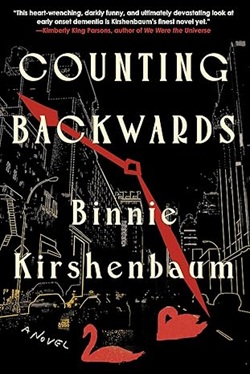
I found this book less of a novel – as in that it is fictional – and more of a memoir of a woman whose life has been brutally upended by her husband developing early onset dementia and how she copes with it. (Spoiler alert – she doesn’t cope well.)
Addie and Leo are a happily married middle-aged couple settled in New York City living full lives, both personally and professionally. Leo is a research scientist, and his intellectual disposition nicely balances out Addie’s artistic bent – she is a successful collage artist who often has her work exhibited and sold in galleries. They do not have children, but they have a cat they love, a nice apartment, and a sufficient level of financial security to be able to travel, eat out, go to the theatre and other events, etc. Above all, they have each other. And Addie has no reason to think that this will change anytime soon – after all, they are only in their early 50s.
But in a cruel twist of fate, Leo starts showing signs of mental instability and is eventually diagnosed with Lewy body disease, a type of early onset dementia. Counting Backwards is a detailed account of the progression of the disease, starting with some sporadic instances of hallucinations and forgetfulness that Addie is able to cope with as Leo is still Leo, to the point where he is no longer himself and has to be fed, clothed, and looked after just like a baby. It is somewhere between these two points in time that Addie gives up and hands off Leo’s day-to-day care to others, first to Leo’s sister who is happy to look after him until he gets too difficult for her to handle, then to care homes but which don’t work out for too long, and finally to a full-time caregiver Addie hires to live with Leo in a separate apartment since Addie cannot bear to have him living at home as his condition deteriorates.
Needless to say, all of this – in addition to Leo slowly disappearing to the point where there is nothing of him left in his body – completely erodes all aspects of Addie’s life, including her work, her relationships with her friends, her finances, and most of all, her sense of herself as a good and kind person and a loving and devoted wife. With her life in disarray, Addie has a hard time creating art, leading to lackluster pieces that are rejected from galleries and exhibitions that had earlier clamored for her work. This also means that there is no income coming in, and with the astronomical costs of Leo’s care, she is incurring a huge credit card debt. Her hitherto close friends don’t really understand what she is going through and are therefore not supportive, leading her to distance herself from them. She has no family she is close to. Except for her cat, she is all alone.
But even that loneliness would be easier to bear if she was not consumed by guilt, guilt not just for not wanting to care for Leo herself, but for actually thinking he would be better off dead and actually wanting him to die.
It might sound shocking, but this is the reality that most people who have a close family member with dementia have to live with. It’s not just the physical caregiving which can go on for years – since many dementia patients are physically healthy and can live for many years after their diagnosis – but also the draining of finances, the mental exhaustion, and the wanting it to “be over.”
The ability to capture this so authentically and so heart-renderingly in a novel is not something I would have thought possible.
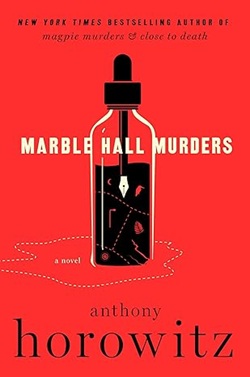
This is the third in a series of “a mystery book within a mystery book” by the prolific Anthony Horowitz. I had written about the first book in the series, Magpie Murders, in 2017 shortly after it was published. I love Agatha Christie-style murder mysteries, and Anthony Horowitz being a very good writer, I loved Magpie Murders. (Here is the link to my write-up: https://bookswehaveread.com/2017/09/02/magpie-murders/.) Needless to say, I was hardly alone in finding that book a terrific read. It was a tremendous success and went on to become an extremely well-made and critically acclaimed TV adaptation on the BBC (UK) and PBS (US) in 2022, which I also watched and thoroughly enjoyed.
I had concluded my write-up of Magpie Murders by saying that “I wish Anthony Horowitz would keep writing these books in addition to the other books he writes.” Well, my wish did come true as the series continued with a second book, Moonflower Murders, where the protagonist, Susan Ryeland, is once again called on to assist with a murder whose clues might be within a murder mystery book she had worked on in her job as a book editor. I enjoyed that book as well, as well as its excellent TV adaptation which was released last year.
In the new book, Marble Hall Murders, which was published last month, Susan Ryeland is back and again working on a new book as the editor, except that this time, the book is still in progress, and she is tasked with not just editing it, but also guiding and motivating the author to complete the manuscript. This “book within the book” features the same Poirot-like detective, Atticus Pünd, as the first two books in the series, and because this “inner” book is not yet complete, we experience the same frustration as Susan does in getting caught up in the mystery only to be left hanging. Also, the complication in the “outer” book — the one featuring Susan in the present — this time around is that the author, Eliot Crace, who has been commissioned to write the book is not only young and inexperienced, but he is also using it to reveal a murder that happened in his family a long time ago and to “out” the murderer, as it were.
Needless to say, it does not go well for Eliot. Susan too, gets caught up in the imbroglio, and so badly that not only does she become a suspect for murder herself but almost gets killed by the real murderer. She is only able to get out of the situation by solving the original murder in Eliot’s family that he was basing his fictional murder mystery on, and Susan does it in a very Poirot-like way, where all the suspects are assembled in a library and she does the “big reveal.”
Of course, the plot is extremely far-fetched and cannot be taken at all seriously, but it is extremely entertaining. And the book is so well written, it is a lot of fun to read. Most murder mysteries like the ones Agatha Christie wrote are escapist fiction, and it takes a special talent to write them so well that readers read and enjoy them with the full knowledge that they are reading them purely for entertainment rather than for any literary merit. As the British would say, they are “jolly good fun.”
Marble Hall Murders Author: Anthony Horowitz Publisher: Harper Publication Date: May 2025
Contributor: Lachmi Khemlani is a fan of the written word.
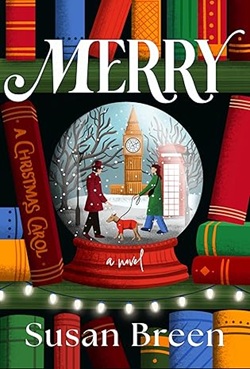
I received an Advance Reader’s Edition of this book from the publisher, and I appreciated being able to read it in advance of its publication later this year. Merry is a Christmas story, and the word “merry” here is not just synonymous with Christmas (as in the greeting, “Merry Christmas”) but is also the first name of the protagonist. Merry Bingham loves Christmas passionately, a love which is in no small part fueled by a signed early edition of the book, A Christmas Carol by Charles Dickens, which has been in her family for five generations. Family legend has it that it came to her ancestor, a 10-year-old girl, who actually sought Charles Dickens out in the same train to New York City she happened to be traveling on and persuaded him to give her a signed copy of his book. It now belongs to Merry, and it is one of her most cherished possessions.
Now in her mid-fifties, Merry decides, in the spirit of the upcoming Christmas season, that it is time to pass on the book to the next generation. But to her dismay, neither of her three children – who are all adults now — want it. The profound hurt and sadness she feels by this rejection of a beloved family heirloom is compounded by a serious health crisis – a routine physical exam that she did for an injury resulting from a fall (while hanging up Christmas decorations!) turned out to indicate that she might have cancer. This double whammy throws her into a tailspin, leading her to impulsively sell her cherished copy of A Christmas Carol – which is very valuable – and use the money to take her entire family to London for a holiday to spend the week of Christmas in Dickens’ own country.
Needless to say, the holiday doesn’t turn out quite as she had planned — the fancy Airbnb she had rented turned out to be not so fancy after all, her children can’t stop bickering with each other despite being fully -grown adults, the possible prognosis of cancer continues to haunt her, and most of the things she had planned on seeing and doing with her family during the trip never happen. Also, in the spirit of the magical season of Christmas, she keeps seeing and talking with the ghost of Charles Dickens throughout her stay in London, including in the Apple Store, which her family visits to fix a broken phone that got accidentally dropped in a bowl of soup!
Of course, it all works out — more or less — at the end, which is what you would expect in a book centered on Christmas. Her treasured book – the heirloom edition of A Christmas Carol – is returned to her, her children come to a reconciliation of sorts with each other, her cancer diagnosis is confirmed but it is an early stage and can be treated, she is back on good terms with her husband, and on their last day in London, they are finally able to “do Christmas” the way she had planned, surrounded by close friends and family who all happen to converge on their vacation rental to celebrate the season.
I found Merry an endearing book that poignantly captures the angst of a middle-aged woman whose life is suddenly upended by the possibility of a fatal diagnosis and her last-ditch effort at bringing her family together to celebrate the holiday that means the most to her. There are plenty of hilarious moments as well, particularly in how the adult children revert to juvenile behavior when they come together, a scenario that is all too believable. While the “ghost of Charles Dickens” was too much of a stretch for me, I can see how it might appeal to diehard fans of Christmas and Charles Dickens, and especially of his book, A Christmas Carol.
Merry Author: Susan Breen Publisher: Alcove Press Publication Date: September 2025
Contributor: Lachmi Khemlani is a fan of the written word.
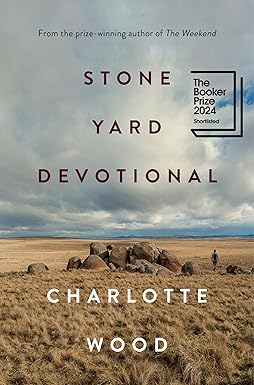
Shortlisted for the 2024 Booker Prize, I thought this would be one of those critically acclaimed books that are lauded by literary critics but not really enjoyed by ordinary readers. I am happy to be proven wrong with Stone Yard Devotional. While it is not really the type of book that is “enjoyable” to read as such – in the sense of being “fun” or “difficult to put down” – it is deeply emotional, poignant, and beautifully written. I finished it with a sense of awe, almost of reverence. It was that good.
The feeling of reverence I felt is actually quite reflective of the plot of the book, which is set in a small religious community of women in a remote part of Australia. The protagonist – who remains unnamed throughout the book – is a middle-aged woman who leaves her regular life in Sydney and joins the convent, despite not being particularly religious. Just like her name, the exact reasons why she chooses to do this are never told to us in any kind of big, dramatic reveal. Instead, they are alluded to at various times throughout the course of the book, the biggest one being the death of her parents, especially the very painful death of her mother from cancer, and the gradual falling apart of her relationship with her husband. The convent she has retreated to is close to where she grew up and where her parents are buried, so it is almost as if she has come back home to her roots.
The book is told entirely from the point of view of the protagonist, almost in the form of diary entries that alternate between what is happening at the present moment, over the span of a few months, and her memories of the past. Most of the current time narration revolves around a terrifying mouse plague that happens in the region of Australia where the convent is located, requiring the sisters in the convent to work day and night to combat the infestation and prevent the mice from eating everything, not just their food but also storage bins, furniture, clothes, even parts of the building structure. The other key events that happen during this time – while the mouse plague is raging – are the return of the skeletal remains of a beloved sister who had left for Thailand decades ago and whose body has now been discovered, as well the unexpected visit to the convent of a woman from the narrator’s past – they were briefly in school together — whom she had wronged and feels very guilty about.
Just as there is no dramatic reveal in the beginning which tells us why the narrator has chosen to retreat to this reclusive community, there is similarly no dramatic ending to the story. Instead, Stone Yard Devotional gently closes with the abatement of the mouse plague, the burial of the sister’s remains after finally crossing through all the bureaucratic hurdles it entailed, and the unstated understanding between the narrator and the unexpected visitor that made the narrator feel forgiven and lessens her burden of guilt. And over the course of her reminiscences of her past, amidst the stillness and starkness of the community that she now calls home, the narrator also starts to feel some healing from the deep-seated grief she has been carrying within her.
While the writing of the book is incandescent throughout, it is beautifully captured in these ending paragraphs, which also point to the sense of equanimity that the narrator is now able to feel when she thinks of her mother:
My mother said that anything that had once been alive should go back into the soil. Food scraps went into the compost, of course, including meat and bones, despite the general advice against this. Paper, torn into strips to allow air and microbes to move freely through. She would cut old pure cotton or silk or woollen clothes into small shreds and compost them too. Fish bones and flesh. Linen tea towels. She reluctantly left out larger pieces of wood, but longed for a woodchipper. She left cane furniture to rot and then buried it. She quoted a Buckingham Palace gardener she had once seen on television, who added leather boots to his compost bin. All that was needed was time, and nature. Anything that had lived could make itself useful, become nourishment in death, my mother said.
I never knew anyone else who had her reverence for the earth itself.
Stone Yard Devotional Author: Charlotte Wood Publisher: Riverhead Books Publication Date: February 2025
Contributor: Lachmi Khemlani is a fan of the written word.
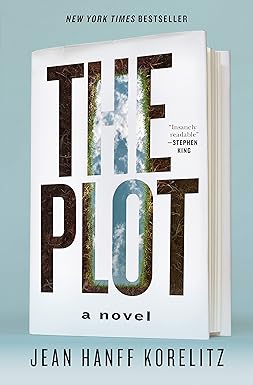
I really enjoyed the “plot” of this book – it is about a writer who writes a best-seller based on a “plot” that is not his. It was also well written, and while I wouldn’t call it great literature, it was a very entertaining page-turner. I kept reading it right up to the end of the big reveal, even though I had already guessed the identity of the “bad guy” soon after that person made an appearance in the book.
The protagonist of The Plot is Jake Bonner, whose single-minded focus in life is to become a successful writer. He has some talent, is extremely hard-working, and has no vices such as excessive drinking or drugs that are the downfall of many creative people. Despite this, the kind of success that he dreams of eludes him. His first book did reasonably well and got decent reviews, but his second book was an abject failure, and he is down in the dumps when it comes to inspiration or motivation.
To make ends meet while he continues to pursue his writing career, Jake does some teaching in writing programs, and during one of these sessions, he encounters an arrogant student, Evan, who claims to have a plot for a book that will be a guaranteed bestseller. While Evan keeps his cards close to his chest, he does, in the one and only meeting he has with Jake, tell him what this plot is. And Jake is forced to acknowledge that it is indeed amazing and would make for a book that is a runaway success. Also, despite his arrogance, Evan is a decent writer, and Jake has every expectation that Evan will finish and publish his book to widespread critical acclaim and commercial success.
Except that this does not happen. Jake never hears of Evan or his book, and after a few years – the time it might take for the book to be written and published – Jake looks up Evan and finds that he has died, just a few months after they had crossed paths at that writing program that Jake taught. Presumably, Evan’s brilliant plot idea has died with him as there has been no book published with that plot that Jake is aware of.
While Jake is fundamentally a good human being and believes in an ethical code of conduct as a writer – so, for instance, he would never plagiarize actual content from other writers – he is torn about what to do with Evan’s plot idea. He could, of course, just let it die like Evan, but it is so brilliant, he feels that it deserves to see the light of day. It can’t not be brought to life. And since Evan is no longer there to give it a form, maybe he can? How would it be any different from getting an idea for a novel from a newspaper article, a chance remark, an overheard conversation, or any of the other myriad ways in which writers get inspiration? Maybe, this is the muse that has found its way to him to resuscitate his career.
So Jake writes a book using Evan’s plot idea, and it is a smash hit. It climbs and stays on top of all the bestseller lists, it is picked up by Oprah, and it is being sought for movie adaptations from top directors like Steven Spielberg. Jake becomes rich, famous, and successful beyond his wildest dreams, with book signings, invited talks, and TV interviews. He should have been on top of the world, but he always plagued by a sense of uneasiness, of guilt, of the fear of being exposed about the fact that the plot of his book was not really his. Even though the writing is fully his own and he is the one who gave form to the idea, he does not feel the satisfaction of owning it.
And his worst fears are realized when he gets an anonymous email out of the blue saying, “You are a thief.” The campaign from this unknown person to expose him slowly escalates to other social media platforms as well, and while this kind of smear campaign has become a fairly common occurrence with successful writers with the rise of social media — many publishers now have legal counsel on their payroll to handle accusations of plagiarism – it terrifies Jake, because, in his case, it is actually true. While he has written the entire book himself, he did, indeed, steal the plot.
But who is this anonymous person making the accusation and how do they even know about it, given that Evan is dead? The bulk of The Plot is focused on Jake’s increasingly desperate search to find the answer to this question and try and track down this person. And even though I had guessed the “whodunit” early on – it wasn’t that hard — I still found the book compelling enough to want to keep reading it all the way through. The quality of the writing is very good, and it makes you empathize strongly with Jake even though he has done something that is morally reprehensible. You are rooting for him to be able to get out of the hole that he has dug himself into. Whether he is able to do this or not is ultimately what makes for the suspenseful ending of The Plot.
While I greatly appreciated the writing quality and overall readability of the book, I would have enjoyed it a lot more if it had not been so easy to guess the identity of the anonymous accuser well before the big reveal!
The Plot Author: Jean Hanff Korelitz Publisher: Celadon Books Publication Date: May 2021
Contributor: Lachmi Khemlani is a fan of the written word.
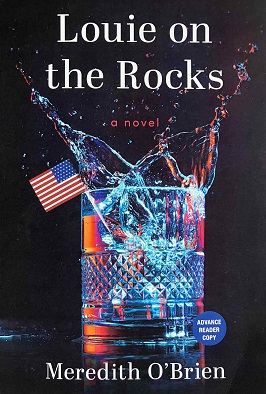
I was provided an advance copy of this book to read by SparkPoint Studio, which will be publishing it in February 2025 under its imprint, SparkPress. I hadn’t read any books by the author, Meredith O’Brien, before, and therefore came to the book with a blank slate, with no idea of what to expect. I was happy to find that I thoroughly enjoyed reading Louie on the Rocks, to the extent I couldn’t stop reading once I had gotten into it, and I finished it in close to one sitting. I also found it a very easy read, with the story told in a simple, conversational style the way people in real life actually talk to each other. It is also the first book I have read that directly takes on divisive Trump-era politics, and it was so interesting to read a fictionalized version of what so many families went through in the aftermath of Trump’s shocking defeat of Hillary Clinton in the 2016 US presidential election.
Set in 2019 in a small town in Massachusetts, close to two years after Trump’s upset victory, Louie on the Rocks is primarily the story of the feud between Louie Francis, a white man in his late sixties who is an ardent Trump supporter, and his adult daughter, Lulu Francis, who is gay, liberal, and fervently opposed to Trump and his MAGA-style politics. While they were always at odds with each other given their opposing world views and even their temperaments – Louie is brash, arrogant, and aggressive, while Lulu is sensitive, lacking in self-confidence, and easily intimated – they were somewhat kept together as a family unit by Helen Francis, Louie’s wife and Lulu’s mother, who served as the glue that held them together. While her political leanings were on Lulu’s side and she loved her daughter more than anything else in the world, she was also able to keep Louie in check for the most part by being a good and genuinely loving wife.
But after she dies suddenly – stricken by a particularly aggressive form of pancreatic cancer – the fragile peace she brokered between Louie and Lulu evaporates. Louie can’t stand Lulu, her lifestyle, her LGBTQ-ness, and her liberal politics. On her part, Lulu doesn’t want anything to do with her father after Helen’s funeral, beyond the perfunctory phone call to wish him during the holidays.
However, this “not wanting to do anything with each other” state of affairs – which both Louie and Lulu are perfectly happy with – does not last. Barely six months after Helen’s death, Louie becomes besotted with a beautiful young woman, Christall, who has started working in the bar he frequents. He gives her the job of walking his dog, and is soon wining and dining with her, buying her expensive gifts, and giving her large amounts of money to get treatment for her opioid addition. His reasoning is that he loves being with her, she makes him happy, and there is no reason why he cannot spend his own money to help her if that’s what he wants. Even when she steals some of his checks, forges his signature on them to withdraw money, and steals his credit cards and uses them to make large purchases, he declines to go to the police and press charges. Additionally, he also starts drinking more heavily and is drunk most of the time, getting into brawls at the bar he goes to, neglecting the upkeep of his house, as well as not looking after his dog who had to be hospitalized because of poisoning.
Lulu, who would like nothing better than to stay out of her father’s life and get on with hers, is forced to step in once the bank has alerted her of the check forgeries and large withdrawals, the police have notified her of the fights in the bar, and the neighbors have sounded the alarm on Louie’s drinking and neglect of the house and the dog. She is advised to file to become a court-appointed “temporary conservator” for his finances before he loses all his money to Christall. This, of course, is anathema to Louie, and he is furious. The battle lines are drawn, and both Louie and Lulu go about seeking affidavits to submit to the court from the people they know who are sympathetic to their respective points of view.
Much of the novel is told in the form of these affidavits that have been submitted, interspersed with first-person accounts of Louie and Lulu throughout the year, capturing their thoughts and actions. There are even some chapters told posthumously by Helen, who seems to be stuck in some kind of limbo after her death and can see what is going on with both Louis and Lulu. There are plenty of wry observations, astute insights, and several laugh-out moments. It is not easy to pull off a narrative by a ghost, but after the initial weirdness, it fits right in and allows key plot points in the story to be captured.
The only criticism I have of the book is its lack of surprises. There are no plot twists of any kind such as, for example, Louie suddenly having a change of heart, or Lulu developing some fondness for her father, or even Christall slipping up and being exposed as a gold-digger to Louie. The book hums along steadily towards its foregone conclusion where there is no doubt that Louie is being scammed by Christall and is assigned a temporary conservator for his finances. There is no defense here of Trump or of his MAGA-style politics, and all of those, like Louie, who support him are mostly portrayed as deranged and obnoxious.
While I am fully on board with where the book’s sympathies lie, I cannot help but wonder what the response to it will be given that Trump has just been decisively re-elected for a second term.
Louie on the Rocks Author: Meredith O’Brien Publisher: SparkPress Publication Date: February 2025
Contributor: Lachmi Khemlani is a fan of the written word.
This book hooked me in right from the very first paragraph. A dying father tells his daughter to “put him in the trash” after he dies as he “won’t know any better” since he will be dead. He was joking, of course, but she took him at his word and did exactly that. The daughter is Sally Diamond, and after her father dies, she puts his body in a large garbage bag and feeds it to the incinerator on their property, just like they have been doing with all their garbage in the remote location in which she has been living with her father. It soon becomes obvious that she is autistic, which is why no criminal charges are brought against her when it is discovered that he is dead and that she had tried to cremate his remains. (The incineration did not work very well, and his body was eventually recovered.)
It turns out that there is a reason for Sally being “weird” or “strange,” which is what the folks around her — in the small town in Ireland where she lives — call her. She was born and raised under such extreme trauma that her brain has essentially “shut down,” leaving her with no memories of her childhood and severely limited social skills. Her mother was abducted by a pedophile when she was eleven and held captive for over 14 years, during which she was repeatedly abused and raped. Sally was born during this time and spent the first five years of her life locked up in a room with her mother. It was only through sheer luck — a botched burglary attempt — that she and her mother were discovered and rescued, and while her mother died soon after by suicide, Sally ended up being adopted by the psychiatrist couple who were in charge of treating her and her mother. They were very loving and did their best to give her a normal childhood — especially her adoptive mother — but the damage to her psyche had already been done. Also, the heavy doses of medication she received as part of the treatment for her trauma had the effect of suppressing the memory of it entirely, so she never ever had a chance to confront who she was or what had happened to her.
The death of her adoptive father — whose body she tries to unsuccessfully incinerate — changes that. Her adoptive mother died some years ago, so Sally is left all alone without any emotional support. The book is the story of how she copes, of how she gradually opens up to other people who want to help and support her. She also comes to know of the horrific trauma that her mother was subjected to and the circumstances under which she was born.
Unbeknownst to Sally, her mother had another child earlier on in her captivity, a boy called Peter who was separated from their mother by the kidnapper and raised in isolation without any knowledge of who he was or how he was born. So he had no knowledge of Sally either, and only learned of her once the news broke of her unsuccessful attempt at incinerating her adoptive father’s remains, which captured national and international attention. In addition to Sally’s story in the current timeline, we also go back in the past to when Peter was a boy and learn about how he was kept in the dark by his father — the kidnapper – and knew nothing about his mother and baby sister. He is taken to New Zealand by his father, who flees Ireland once the kidnapping is discovered, where he is once again forced to live in isolation as his father has told him that he has an extreme medical condition that will cause him to die if he is touched by anyone. This eventually causes him to let the only friend he makes – a Māori boy in the house next door – drown when they go for a swim, as he believes that he cannot touch him to save him. He eventually realizes how his father has deceived him, and he is so upset that he crashes the car he is driving and does not save his father, who was in the car with him, even though he could have.
Once Peter learns of Sally’s existence, he starts to tentatively reach out to her, and they do eventually connect. But contrary to our hope and anticipation that the long-lost siblings will now support each other and provide the family connection that each has been missing, the story ends in a way I could not have predicted. It is not the proverbial happy ending, but it was still deeply satisfying and very touching.
And the hook that drew me in at the start of the book – it did not let up and was sustained throughout the book. All in all, Strange Sally Diamond, was a very unique story, masterfully told. I was so happy to have found this book. (Courtesy: Bookmarks Magazine, July/Aug 2024, Issue 131)
Real Americans is one of those critically acclaimed books that has been recently published, reviewed and recommended by all major media outlets such as the New York Times and NPR, as well as selected to be on the highly regarded “Read with Jenna” book list. It is a follow-up to the author’s debut novel, Goodbye, Vitamin, which also received widespread acclaim when it was published in 2017. While Goodbye, Vitamin did not come to my attention for some reason, Real Americans did and I put it on my reading list, as the story seemed very interesting, spanning three generations of a Chinese family in the US. The author has an Asian background, so it also promised to be authentic. I definitely wanted to give it a try.
When I finally got the book from my local library and started reading it, I was amazed at the quality of the writing. It had been a few months since I had read anything that was worth writing about, and I was happy to finally have found something good. However, after about seven or eight chapters — far beyond the point I normally abandon a book if it is not gripping me — I almost gave up on it as it seemed to be rehashing a familiar romantic trope — that of a regular, financially-struggling young girl being swept off her feet by a Greek-God-looking, fabulously wealthy guy who, for some reason, falls deeply in love with her and marries her. I would have expected this from a cheesy romance novel but not from such a highly rated book.
It is entirely to the book’s credit that I continued to read it despite wanting to abandon it. And I am glad I did. But once I got over that part (although I don’t know why the guy couldn’t have been less of a hunk and more ordinary-looking), I found that there was a lot more to the story. The young girl being swept off her feet is Lily Chen, born in the US to Chinese parents who emigrated to the US to escape from Mao’s Communist resolution, and the young man she falls in love with and marries is Matthew, who, with his blond hair and blue eyes, is as white as they come. They have a baby boy, Nick, and then, all of a sudden, Lily leaves Matthew from their home in New York City and disappears, taking Nick with her.
It turns out that Lily has discovered that her mother, a scientist doing DNA research, colluded with Matthew’s father, whose pharmaceutical company had been funding her research, to change Lily’s genetic makeup in a specific way — suppressing the genetic traits of one parent so that the child inherits the genetic traits only of the other parent. In addition to Lucy, they also did this experiment on her baby in-utero, suppressing Lily’s traits, so that Nick looks completely like the blond-haired, blue-eyed Matthew and does not have any of Lily’s Asian features at all. While Matthew had no knowledge of this experiment, he refuses to leave his family once he learns about it from Lily, so she leaves without him.
The story then fast-forwards to 20 years to focus on Nick and his life as a young adult, first in high school where he goes through the usual dating experiences and the stress of college applications, and then in college, with dorms, classes, roommates, parties, and more dating. After Lily leaves her home in New York, she takes Nick to live in an island town close to Seattle, where he grows up with no father. He eventually finds Matthew through a DNA test his best friend urges him to take, and he goes on to maintain a relationship with his father for some years, also taking advantage of his offer to pay for his college education in Yale, where he gets in despite having less-than-stellar credentials but because he uses his father’s family’s well-known last name. I found this part of the novel especially compelling as it seemed to me to capture the confusions, the upheavals, the intense emotions, and the angst of young adulthood to a tee.
The last part of the book goes back in time to tell the story of Lily’s mother, May, of her childhood and youth growing up in China, her interest in science and in genetics, in particular, which she is able to study at Peking University, her escape from China to the US with her mentor who she ends up marrying and having Lily with, her early days in the US with her attempts to fit in and learn the language, and how she gradually establishes herself as a scientist in a research lab where she eventually develops the genetic experiment that she first performs on Lily and then on Nick before he was born. She eventually reconnects with Nick once he graduates and is working in San Francisco (in a biotech startup), and through him, she finally also reconciles with Lily by the end of the book.
We are now in the age of gene-editing with CRISPR technology, so the genetic experimentation that is the main plot point of Real Americans is not that far-fetched, and I thought it made for an interesting story. However, to me, it was really the quality of the writing that made the book stand out, compelling me to keep reading it even after being put off by the initial faux pas. The critical acclaim it has received is very well deserved.
Real Americans Author: Rachel Khong Publisher: Knopf Publication Date: April 2024
Contributor: Lachmi Khemlani is a fan of the written word.
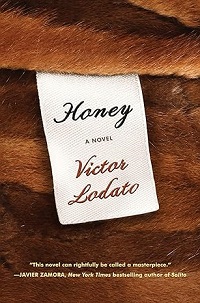
I picked up this book on a recommendation and was amazed by how good it was. It takes a special kind of skill to write a novel whose protagonist is an 82-year-old woman and make such riveting reading of what’s going on in her life and her thoughts and reactions to them, almost on a day-to-day basis. The woman is Honey Fasinga, the feisty daughter of a notorious mafia don, who has returned to her hometown in New Jersey decades after she left her mobster family and reinvented herself in the world of high-end art.
The story is primarily focused on the first year of her return, just before her eighty-third birthday, and on her gradually getting acquainted with and then warming up to the few people who come into her orbit. These include her neighbor, Jocelyn, a young woman who suffers from low self-esteem and has let herself get caught up in a very abusive relationship; a young man, Nathan, who comes to her aide when she is car-jacked and who is strongly attracted to her and she to him despite their significant age difference; and an older woman, Teena, who helps and supports Honey’s grand-nephew, Michael, when he is ostracized by the rest of his family because is he is trans. Despite not wanting to get close to anyone in the twilight years of her life, Honey (whose real name is “Ilaria”) is forced to let her guard down and let these people into her life.
She also gradually comes to terms with her family’s violent past and her own role in it, and she is able to eventually develop, over the course of the next few years, a cordial relationship with the only family members she has left, which is her nephew, his wife, and his son and daughter-in-law. Much to her surprise, she almost instantly falls in love with the new baby boy, Vittorio, that her grand-nephew and his wife have, despite her strong desire to stay away from the family and her traumatic past. The book ends with Honey breathing her last in the hospital while being visited by all the people she has become close to, two of which are especially meaningful to her, the first by Vittorio, now almost six years old, and the second by Michael, who now goes by Mica. Honey has been wanting to reconnect with Michael for years ever since he abruptly dropped by her house shortly after she had moved in, and when he finally comes to visit her, she is able to die peacefully, by “bleeding her entire life into him” when he bends down to kiss her.
What make this book especially poignant is that it is told entirely from Honey’s point of view and captures all of her thoughts, including those that are idiosyncratic as well as those that can only come from the wisdom of old age. Of the latter, while there were so many quote-worthy nuggets throughout the book, here is one that I found especially profound:
She found herself thinking of God. His mean trick of separating us into various forms, so we’d forget that we were all the same—a single piece of fabric stitched into different costumes. It was this persistent delusion that lay at the root of all human strife.
Thoughts like these, and many more, from Honey’s “stream of consciousness” made reading each chapter of this book an amazing read in and of itself. I did not find myself racing through the book eager to see how it would end, as I do with most books I read. Given that Honey is already eighty-two when the book starts, the story was entirely about the journey rather than any possible “outcome.”
It was an experience I treasured and wish I could get more of.
Honey Author: Victor Lodato Publisher: Harper Publication Date: April 2024
Contributor: Lachmi Khemlani is a fan of the written word.
I feel like I have hit some kind of jackpot, as after months of trying to find a book to read that I found interesting enough to finish, I found two back-to-back. I just finished and wrote about Small Pleasures a few days ago, so when I picked up The Second Mrs. Hockaday by an author I had never heard of, I was more than prepared to give up on it after a couple of chapters. After all, what were the chances of me liking it so soon after finding a book I enjoyed, given that I had become so hard to please lately as far as reading was concerned? Also, the book is set during the American Civil War in the 1860s, a time period that — as I was not born in the US — feels quite remote, and, dare I say at the risk of sounding parochial, not particularly interesting to me.
In short, I was fully prepared to pass on the book after a couple of chapters. But much to my surprise, I was hooked and read it all the way through to the end in two days.
The story centers on a 17-year-old girl, Placidia, who falls in love with and marries a man and comes to back with him to his 300-acre farm in South Carolina, all within the course of a couple of days. It is a testament to the immediate attraction that she feels for the man, a Major Hockaday, and he for her. But they have barely a day to enjoy being newly-weds before he is called off to fight in the Civil War, leaving Placidia on her own to manage the farm as well as his infant son from his deceased first wife.
When Major Hockaday returns after two years, he learns that Placidia has borne a child in his absence and that this child is now dead. He feels so betrayed — the baby could not have been his — that he brings criminal charges against her. She is accused of murdering the baby she bore and is jailed. Placidia does not deny that she had a child and that it is now dead. However, she claims that she did not kill the child but that it died of illness. Also, she refuses to say who the father of the child was or how it happened. Did she have an affair or was she raped?
It is, of course, this mystery at the heart of the book that makes it so compelling and such a propulsive read. However, it was not just the suspense, it also how beautifully it was written. The story is told entirely in the form of letters, diary entries, and inquest reports, all of them capturing the details, the mood, the dialogue, the social norms, and the etiquette of that time period. The horrors of the Civil War, as experienced with full force by Placidia in the form of looting, intimidation, and violence, are also vividly portrayed. And then, of course, there was slavery, which at that time was in full force, especially in the South where the book is set. Not surprisingly, it forms one of the key plot points of the book.
The Second Mrs. Hockaday is Susan Rivers’ debut novel, which may be why I had never heard of her. But I am so glad to have found this book and its amazingly talented author.
The Second Mrs. Hockaday Author: Susan Rivers Publisher: Algonquin Books Publication Date: November 2017
Contributor: Lachmi Khemlani is a fan of the written word.
I was surprised that I had not come across any books by Clare Chambers before, given how much I ended up liking this book. The blurb at the back of the book said that its style was reminiscent of Ann Patchett and Kazuo Ishiguro – both of whom are authors I greatly admire – and while book blurbs are often exaggerated, this one wasn’t. Not only did I find myself completely engrossed in the story, I was also able to enjoy the actual telling of it, to savor the quality of the writing rather than racing through it to get to the end. This is despite the fact that it is a mystery – of sorts.
Small Pleasures is set in England in 1957, and it takes two real-life events and blends them together into a story that is so compelling that it is almost hard to believe. The main event was the search for a “virgin mother” that a popular British tabloid undertook in 1955, based on the recent discussion of a scientific concept called “parthenogenesis.” This is a form of asexual reproduction that occurs naturally in some plants and animals. Could it also be possible in humans? That was the idea behind the search, and in the fictional world of Small Pleasures, there is actually a woman who seems to have had a baby while she was still a virgin, with the baby being conceived at a time and place — bedridden in a hospital with severe rheumatoid arthritis — where she could not have had sex with a man.
Of course, for those of us who have seen the TV show, Jane the Virgin, we saw how Jane got pregnant by being accidentally artificially inseminated with a man’s sperm, but the book, Small Pleasures, is set in the 1950s, long before such a technology existed. And yet, there is Gretchen Tilbury, who claims that her daughter, Margaret — now ten years old – was born without the involvement of a man.
It is a claim that falls to Jean Swinney — who works at the newspaper that raised the question of whether parthenogenesis is possible in humans — to investigate. While the mystery of the “virgin birth” is, of course, very intriguing and keeps us riveted, the focus of the book is really on Jean and on her growing friendship and emotional attachment to Gretchen, Margaret, and Gretchen’s husband, Howard, whom Gretchen married after she found out that she was pregnant. Jean herself is close to forty, unmarried, and is a dutiful caretaker to her cantankerous widowed mother, so her life is far from joyful. This is why her deepening friendship with the Tilburys becomes a source of great personal happiness for her – making for the “small pleasures” of the book’s title. However, it also eventually brings her into conflict with her professional obligations of investigating Gretchen’s claim.
The second real-life event that the author skillfully weaves into the story is a horrendous rail accident — one of the worst in Britain’s history — that happened in the 1950s, in which two trains crashed in dense fog in south-east London, causing the deaths of 90 people and injuring many more. Although the train crash was briefly mentioned in the beginning of the book, we forget all about it as we get caught up in the lives of Jane, the Tilburys, and the mystery of the virgin birth. But then, suddenly, the tragedy befalls one of the key characters in the book, and it comes as a complete shock.
It is so devastating that, by then, we don’t even care any more about the mystery of the virgin birth that the book started with — even though it does get solved by the end.
Small Pleasures Author: Clare Chambers Publisher: Mariner Books Publication Date: October 2021
Contributor: Lachmi Khemlani is a fan of the written word.
What drew me to pick up The House of Doors to read was that one of the main characters in the book was the novelist, Somerset Maugham, who is one of my all-time favorite authors. (I wrote about one of his books, The Razor’s Edge, on this blog after re-reading it a few years ago.) It’s been decades since Maugham died so there are no more books by him that I can enjoy, which is why it was intriguing to me to be reading a novel — rather than a biography or a non-fiction book — in which he has a starring role. As himself.
In addition to Maugham, the other main character in The House of Doors is Lesley Hamlyn, an Englishwoman married to a close friend of Maugham’s who he visits for two weeks in 1921 in Penang, Malaya (currently Malaysia). Maugham was legendary for his travels all over the world, especially in the Far East, and many of his novels and stories are set there. He actually did visit Malaya in 1921 for six months, so that part is not fictionalized. However, it is not part of historical records as to exactly who he lived with while he was there, and this is where fiction in The House of Doors comes in.
The book imagines a two-week time period in which Maugham, accompanied by his secretary (who was also his secret lover — Maugham’s closeted homosexuality was real and not made up), stays in the house of his close friend, Robert Hamlyn, and his wife, Lesley. Maugham has just lost most of his savings in a bad investment and is desperate for a good story that he can use to write a bestselling book and recoup his losses. Lesley is cordial but aloof with her famous guest at first, but she soon warms to him, becomes more open, and eventually tells him not about a shocking real-life scandal but also more about herself, about Robert, and about their extra-marital relationships.
The scandal she tells Maugham about is one that actually happened in real life: an Englishwoman in Kuala Lumpur (in what was still called Malaya at that time) murdered an acquaintance, and while she was arrested and tried, it was widely expected that the trial was only a formality and that she would be freed — she claimed that the man had tried to rape her and she shot him only in self-defense. However, this didn’t happen: she was found guilty as there were inconsistences in her story and evidence pointing to the fact that the man had actually been her lover — she had killed him in a fit of jealous rage because he had started a relationship with a native woman and broken off with her. She was eventually pardoned after an appeal to the Sultan (the ruler of Malaya at that time) and forced to return to England.
Maugham made the story of this real-life scandal, narrated to him by the fictional Lesley in The House of Doors, as the basis for the story “The Letter,” in his book, The Casuarina Tree. This is an actual book by Maugham that was published in 1962, and it is a collection of six short stories, all set in Malaya in the 1920s. The fictional The House of Doors makes it seem like the title of Maugham’s book came from an actual casuarina tree in Lesley’s house where he and Lesley had their many conversations that resulted in the book. Also, the fictional Lesley in The House of Doors is a close friend of the real-life woman who was tried and found guilty; Lesley had attended the trial which is why she knows so much about it. (I did find it somewhat confusing to separate fact from fiction in The House of Doors and had to resort to some online research to understand what was real and what was not.)
The trial, however, was not the only thing that (the fictional) Lesley tells (the real-life) Maugham about in The House of Doors. She also tells him about the affair she had with a Chinese man, Arthur, whom she met while connecting with an exiled Chinese revolutionary living in Malaya, Sun Yat-Sen. (This again, is a real person — he overthrew the dynasty ruling China at that time and became the first president of the Republic of China.) Lesley and her husband, Robert, are married in name only, as it turns out that Robert is also a closeted homosexual, which leaves Lesley emotionally free to fall in love with Arthur. Their secret meeting place is Arthur’s house, which Lesley refers to as the “House of Doors” — this is where the title of the book comes from — as it has a large number of doors that Arthur likes to collect as artifacts. Their relationship, which happens in 1910 (the same year as the trial scandal that Lesley has told Maugham about), is cut short when Arthur is forced to go back to China for the revolution following Sun Yat-Sen’s arrest in Malaya. Also, Arthur is married as well, so there wasn’t a future in their relationship anyway without resorting to divorce, which was considered very scandalous at that time.
It is only towards the last few pages of the book, when Lesley is her in her sixties, living in South Africa where she and Robert had moved on account of his health, and with Robert having died several years ago, that she gets a cryptic message — through one of Maugham’s books in fact, specifically The Casuarina Tree — to return to the House of Doors. It was presumably sent by Arthur who has returned to Penang and is waiting for her at the House of Doors. I found it such a heart-warming finale to the story of Lesley and Arthur. Because that is ultimately what The House of Doors was about, even though it did not feel like that for most of the book.
In addition to the love story that is so understatedly romantic, I found it fascinating — and utterly unique — how artfully The House of Doors combined fact and fiction: I had a hard time figuring out what was real and what was not until I looked it up. It also led me to re-read Maugham’s The Casuarina Tree — I had not read it for years and hardly remembered it — and focus on the story, “The Letter,” based on the real-life trial described in The House of Doors. I actually found Maugham’s story a lot better than the actual event, and it once again recalled for me his brilliance as an author, at how he could masterfully take an idea and craft an amazing story from it. It’s no wonder that he is one of my favorite authors. And with regard to The House of Doors, in addition to it being so unique and bringing me back to Somerset Maugham, I found it to be a beautifully written book. The quality of the prose was exceptional, and it captured the time period and the place – early 1900s in Malaya – so evocatively, it made me feel like I was there. I am so happy to have discovered another author whose work I can wholeheartedly enjoy.
The House of Doors Author: Tan Twan Eng Publisher: Bloomsbury Publishing Publication Date: October 2023
Contributor: Lachmi Khemlani is a fan of the written word.
Holly is Stephen King’s latest novel, and it is as masterfully written as you would expect from such a prolific storyteller. I was drawn in right away, and it was difficult to put the book down until it had ended. And this was despite it not being a “mystery” as such, which you typically cannot stop reading because you simply have to know the “resolution” to the mystery.
The Holly of the book’s title is Holly Gibney, who has appeared in some of King’s earlier books as an investigator, including The Outsider which was published in 2018. Set in the summer of 2021 when COVID is still raging, the plot of Holly is Gibney’s investigation into the disappearance of a young woman, who seems to have literally vanished off the face of the earth. As readers, we know exactly what has happened to her – she has been abducted by an old couple, Robert and Emily Harris, who believe that consuming parts of the human body will prolong their longevity and reduce their aging-related aches and pains. They do these cannibalistic killings at regular intervals, of approximately three years, targeting young people who would seem to have a good reason for suddenly “taking off.” They are both respected professors — now retired but still active in their fields — at a local college (in an unnamed midwestern town), and not only can they do their abductions without suspicion, they are also in a good position to scout the college town where they live for the “best” victims for the human flesh they want to consume.
Although Gibney is called on to investigate the disappearance of the latest victim, she ends up uncovering the earlier disappearances as well and tying them together to ultimately lead to the Harrises. While she does have a partner in the detective agency, he is down with a bad bout of COVID, and even though she does get some investigative help from a couple of youngsters (whom the agency sometimes uses) to crack the case, she is pretty much on her own when it comes to the actual confrontation with the Harrises. There is the clichéd “shootout” at the end of the book where the hero/heroine vanquishes the villains, and even though you know it is coming, it still makes for compelling reading.
I also greatly appreciated the fact that while the crime in Holly is horribly gruesome, there is at least no supernatural element to it as there was in The Outsider. Yes, the world is full of horror and terror, but I find it way too easy — almost a copout — to ascribe this to otherworldly forces than to human evil, which is sadly all too real.
Holly Author: Stephen King Publisher: Scribner Publication Date: September 2023
Contributor: Lachmi Khemlani is a fan of the written word.
I absolutely love the “Cormoran Strike” detective series by J.K. Rowling, who is writing these books under the pseudonym, Robert Galbraith. I own all of them and ever so often, I re-read them starting from the very first book in the series, The Cuckoo’s Calling, immersing myself completely in the Strike-Robin universe that Rowling has created. There were six books up until the publication of the latest one, and with a length of over 600 pages on average, that’s a whole lot of immersion. It has especially been a godsend when I am feeling down — I am able to lose myself so completely in these books that I can forget about myself and my problems for a while.
While I am also a big fan of Rowling’s “Harry Potter” books and own them all, I have not found re-reading them to be as completely riveting as the “Cormoran Strike” series. In this, I am likely in the minority, as “Cormoran Strike” is hardly a household name. In fact, the real-life setting of these books — Strike’s detective agency is located in Denmark Street in London — is hardly visited let alone deluged by throngs of fans. On a recent trip to London, I actually made it a point to visit the exact address — 6 Denmark St — and had the opportunity to chat with the owner of the guitar shop on the ground floor. (In the book, the agency is on the second floor of the building.) He told me that he gets only a few visitors who are fans — and even these are fans of the TV series that the books are being made into rather than of the books themselves. He was surprised to learn that I had never watched the TV series and emphatically did not want to do so. I have such a vivid picture of Strike and Robin in my head that I don’t want them to be overwritten by actors playing their parts.
(For those who don’t know about these books at all, Cormoran Strike is an ex-military man with an prosthetic leg — his leg was injured in a blast and had to be amputated, forcing him to leave the army — who has started a detective agency. Robin Ellacott comes to the agency in the first book as a temp but soon proves to be indispensable, works her way up solving the cases with Strike, and eventually becomes a partner in the agency. The books are as much about the cases that the agency tackles as it is about their mutual relationship. I have written about this in more detail in my write-up of the fourth book, Lethal White.)
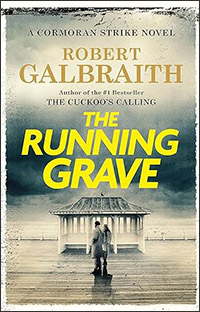
Which brings me to the new book in the series, The Running Grave. Surprisingly, I was not even aware that it had been published this time, in contrast to previous years where it garnered at least some press from publications like the New York Times and Goodreads. (I know J.K. Rowling has been in some hot water in the last few years because of some controversial remarks/tweets, but still?) Anyway, it was only when I was in London a few weeks ago and thought of visiting 6 Denmark Street, the real-life location of Strike’s detective agency, that I looked up the series and found, to my delight, that the seventh book had already been published. I ordered it as soon as I was back home from my travels and once it had arrived, I waited with great anticipation till the weekend, which I had cleared of all commitments, to read it. I even re-read the 6th book, The Ink Black Heart, as prep, which is something I typically do before reading a new book in the series, so I can just pick up from where the previous book left off. (While the cases in each book are always resolved by the end, the relationship between Strike and Robin remains open-ended, continuing to evolve with each book but without the romantic resolution that would seem to be where it is headed.)
The main case in The Running Grave is the investigation into a religious/spiritual cult called UHC (Universal Humanitarian Church). The agency is hired by a retired civil servant whose son, Will, was lured into joining the UHC and has all but disappeared — he no longer responds to any letters and did not even acknowledge the death of his mother, who died broken-hearted that he had disappeared from their lives. The case requires Robin to go undercover and join the cult, and it ends up being not just a case to find and rescue Will from the clutches of the UHC but an investigation into the entire organization, which turns out to be not just corrupt but also criminal. It is a familiar story in relation to any cult — helmed by a very charismatic leader, the organization attracts a lot of followers who willingly sign over all their money to the organization and subject themselves to terrible abuse and trauma in the name of “spiritual cleansing.” The misdeeds of the UHC in The Running Grave also include sexual assault, unreported deaths, and child trafficking, as are uncovered by Strike and Robin by the end of the book. In addition to exposing and bringing down the UHC, they are also able to save Will from its clutches and restore him to his family.
It pains me so much to acknowledge this, given what a huge fan I am of this series, but I was so disappointed by this book. Even ignoring the clichéd storyline about a cult and how bad it actually was when exposed, a lot of the considerable length of this book — it is over 900 pages — was devoted to Robin being undercover at the cult and the abuse she was subjected to. Not only was it very painful to read, but it also meant that she and Strike were not working together for much of the book. Therefore, most of the charm of these books — which, to me, comes from Strike’s and Robin’s interaction with each other in light of their undeniable chemistry and mutual attraction, which both of them are fighting very hard to resist — is simply lost. No doubt, now that I know the storyline, I can go back and selectively re-read only those parts that are interesting to me, but it means that for this book, I will be skipping over more than half of it.
The owner of the guitar shop at 9 Denmark St that I visited told me that there were nine books in all. (He is in the know as the TV series is being filmed there.) I do hope that the last two books have more of Strike and Robin together and that the cases are more interesting and less clichéd. The seventh book ends with Strike finally admitting to Robin that he is in love with her, so there is at least the promise of some progress in their relationship in the next book. Notwithstanding my disappointment in this latest book in the “Cormoran Strike” series, I am so appreciative of the talent of J.K. Rowling who has created a world that has provided me with so much of delight. As I concluded in my writeup of The Ink Black Heart, the sixth book in the series, I am so lucky that she is still writing these books and that I enjoy them as much as I do.
The Running Grave Author: Robert Galbraith Publisher: Mulholland Books Publication Date: September 2023
Contributor: Lachmi Khemlani is a fan of the written word.
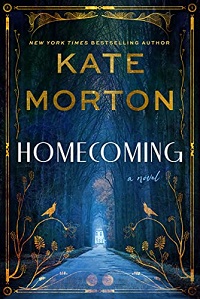
This was such a good book that I couldn’t stop reading it once I had started until I reached the end — despite getting a terrible headache from the non-stop reading. (Believe it or not, there is actually such a thing as “too much” reading, just as there can be “too much” TV — both can make your head hurt.) I can’t remember the last time I compulsively read a book all the way through that was not a run-of-the-mill mystery or thriller.
While Homecoming does actually involve a mystery, it is anything but run-of-the-mill — in fact, it is so well-written that after I read it non-stop the first time, I went back right away to re-read it. And since I now knew the answer to the mystery, I was able to read the book much more slowly the second time around and savor the brilliance of its writing.
The mystery itself is highly unusual, one that I have not come across before. An entire family — a mother and three of her four kids — are found dead near the creek on the grounds of their house – more of an estate, really, in a town near Adelaide in South Australia — where they had come to enjoy a picnic on a sweltering hot day. There was no sign of a struggle or an intruder or any kind of violence — in fact, they looked as if they were sleeping. That is what the man who found them thought — that they had just fallen asleep after their swim. It was only when he came closer to check on them did he find that they were not breathing. After he raised the alarm and the police arrived on the scene, they found something else that was confounding — the newborn baby girl of the family, who had also been at the picnic site in a basket hanging from a tree, was not there. She wasn’t found dead at least, so there was some hope that she was still alive, but she has disappeared.
Was it murder? But there are no suspects, no sign of violence. The most likely explanation is poisoning, but how, why, and by whom? Was it a murder-suicide? Was the mother depressed and killed herself and her children? And what about the baby? Has someone taken her? Or has she fallen prey to the wild dogs — dingoes — common in Australia?
Compounding the mystery is the fact that it happened all the way back in 1959, and while it has long since disappeared from public consciousness, it resurfaces in the year 2018 for the protagonist, Jess, who turns out to be related to the family that was found dead. Born and raised in Australia, Jess is a journalist who now lives in London, and she is summoned back to Sydney after her beloved ninety-year-old grandmother, Nora, suffers a serious fall and is hospitalized. It turns out that Nora is the sister-in-law of the woman who was found dead with her family in 1959. Not only that, Nora was actually visiting the family at that time and was there when it happened – she didn’t, however, go to the picnic with them, as she was heavily pregnant and due to give birth soon.
Jess had no knowledge of this tragedy at all prior to her return to Australia. But based on a few words that Nora happens to say while she is in a semi-conscious state at the hospital, Jess digs deeper and deeper and ultimately manages to find out not only what happened to the family who died but also to the baby girl who disappeared. It is a heartbreaking story involving three generations of her family, including her own mother, Polly, from whom she has been estranged for several years. The end of the book not only resolves the mystery of the deaths – and in a way that makes complete sense rather than requiring the reader to suspend their disbelief – but also bridges the distance between Jess and Polly in a very natural, heartwarming way.
Despite having a suspenseful murder mystery at its core, Homecoming is very much a novel that can be classified as “literary fiction,” with an evocative writing style that delves deeply into the thoughts and feelings of its characters and vividly describes many of the little details that make up the fabric of life – both in the past in 1959 as well as in the more contemporary time period of 2018. The pace of the book is leisurely, the focus being on the “here and now” rather than on “getting on with it.” The writing is not only beautiful but also full of philosophical musings and keen insights, and as I was reading it, I kept wanting to highlight so many passages from it that I eventually just bought my own copy of the book in order to do this and returned the one I had borrowed from the library.
Here are just a few examples.
This is when Jess is at Heathrow airport waiting to board the flight to Sydney:
She eventually joined the line at the final passport check for her flight, and then made her way into the glass-walled waiting room. She preferred it here. Unlike the departure hall, which was no-man’s-land masquerading as your local shopping mall … the boarding gate didn’t pretend to be anything other than what it was: a holding room for human beings who were only going in one direction from here.
This is after she has landed in Sydney and has just arrived at Nora’s home:
Tea and toast were the rule after long-haul flying. It was one of the greatest mysteries of the universe, that a person could be fed continuously over the course of a twenty-four-hour transit only to arrive at her destination ravenous. Science was also yet to explain the unique humanizing properties of strawberry jam and butter on warm toast.
This is when she arrives at the hospital to see Nora:
The doctor might think Nora wasn’t ready to leave the hospital, but Jess knew otherwise. Nora needed to be back in her Pimpernel-papered room with its bed beneath the window. She liked to say that the view from her bedroom was all the religion she needed. “I cannot tell you the satisfaction one gets from having planted and loved a garden,” she’d declare. “To be able to leave even a small patch of this earth more beautiful and bountiful than it was when one arrived.”
Here is a passage from 1959 at the picnic site where the family has died but has yet to be discovered:
Not far from the picnic blanket, a colony of ants continued to build their mound: diligent, resourceful, ever busy. They would realize, at some point, that a great boon of crumbs awaited them nearby, and set out to retreat them. They were at once a vital part, and yet separate from, the human story unfolding on the blanket beside them, their quest for survival no more or less important in nature ‘s eyes than that of any other creature on that blistering afternoon.
And finally, here are a couple from Polly’s point of view:
Beneath the painting was a Victorian high chair she’d bought when Jess was small and never been able to bring herself to give away. Polly liked the way old things looked. She found their small signs of damage reassuring: the scratches, the imprints from long-ago pens, the flaking paint. They understood that everybody had their bruised edges and private pasts.
A little further down, in reference to Polly’s estrangement from Jess:
Beer in hand, she wandered the narrow paths within the dense garden. She had planted it herself. There’d been nothing but long grass and a rusted car body when she moved into the house 30 odd years ago. It surprised Polly sometimes how willing things were to grow. The roses in the old claw-footed bathtub were doing very well this year. They shouldn’t be doing well, not in this climate, but Polly had always had luck with roses. It seemed she was better at raising plants than people.
I could go on and on, but I need to stop writing this post. I would just like to say, in conclusion, that a book like Homecoming shows how magnificent a good book can be and reaffirms why I fell in love with reading in the first place. Kate Morton is an amazing talent, and I am so happy to have discovered her writing.
Homecoming Author: Kate Morton Publisher: Mariner Books Publication Date: April 2023
Contributor: Lachmi Khemlani is a fan of the written word.




 Books We've Read