“JFK’s Forgotten Crisis: Tibet, the CIA, and The Sino-Indian War” by Bruce Riedel

JFK's Forgotten Crisis

In 1950, Mao claimed he had ‘liberated’ Tibet. The monks at Lhasa were powerless, the Dalai Lama was 15 years old, and the world ignored the event. Nehru, at the time, had friendly relations with China. The US was understandably nervous about China. Moreover, a subtle power struggle had commenced between Russia and China leaving everyone confused.

The CIA sprang into action, setting up a surveillance operation near Dhaka (in the erstwhile East Pakistan) and flying U2 spy planes over Tibet in the late fifties. They had been doing this from Lahore and Peshawar earlier – until one of their planes was shot down by the Russians. Soon they discovered the Lop Nor nuclear testing facility – and Mao found out about the spy planes. Perhaps he suspected Nehru of complicity as the planes had to cross Indian air space.

The Dalai Lama’s escape in 1959 and the Tibetan resistance were masterminded by the CIA. India gave him asylum and accommodated him at Dharamsala. Meanwhile in Pakistan Ayub Khan came to power in a military coup. India soon discovered that China had built a major highway across the Aksai Chin region which was a part of Kashmir. Nehru demanded China’s withdrawal but Mao stood his ground. From then on, relations between the two countries deteriorated. Nehru’s Forward Policy of pushing forward military outposts in disputed territories in Aksai Chin and the northeast sparked off violent incidents.

In January 1961, John F Kennedy assumed office as President of the United States. He chose John Kenneth Galbraith as Ambassador to India. In time, both men would prove themselves to be true friends of India in her hour of need.

On 17th August 1962, the USSR and India signed a treaty of Peace, Friendship and Cooperation. China invaded India on 20th October 1962. At that precise moment, JFK was grappling with the Cuban missile crisis as the world came to the brink of nuclear war. Khrushchev was too busy to worry about India. Mao reportedly told him about his plans to attack India and the Russian didn’t bother to warn Nehru. (The treaty and his personal rapport with Nehru mattered little.) Khrushchev played a game with Fidel Castro as well, assuring Kennedy he would withdraw the nuclear warheads from Cuba, without consulting or informing Castro. It’s almost certain that Khrushchev had not told Mao about the nuclear missiles he had positioned in Cuba. Looks like he managed to fool everyone – except Kennedy.

Well, China grabbed Aksai Chin. And on 27th October, the hostilities ceased. The following day Khrushchev made a deal with Kennedy agreeing to remove the missiles from Cuba. The world breathed a sigh of relief. Nehru, however, had to eat humble pie, abandon his policy of nonalignment and send an SOS to Kennedy.

Washington’s response was swift and decisive. Besides Galbraith, the British and Canadian ambassadors in New Delhi appealed to their respective governments to join the effort to defend India. On 1st November, the USAF and RAF began airlifting arms and ammunition. Kennedy dispatched a high-level delegation to India. Ayub Khan demanded a slice of Kashmir as an inducement for staying out of the conflict. Kennedy, egged on by Galbraith, told him ‘don’t you dare’.

China attacked again on 16th November. The Indian army was completely routed on the north-eastern front and the narrow Siliguri corridor linking Assam, Nagaland Manipur and Tripura with the rest of India was on the verge of capture. India suffered heavy casualties. Thousands were taken prisoner, including Brigadier J P Dalvi who later wrote “Himalayan Blunder” castigating Nehru, Defence Minister Krishna Menon and Army Chief B M Kaul for their multiple follies. Indian politicians stayed away from the war zone. Indira Gandhi visited Tezpur near the Chinese frontline on 19th and 20th November. On 1st December China unilaterally withdrew from the occupied territories in India’s north-eastern sector. However, the Chinese held on to Aksai Chin. The war ended as abruptly as it had started.

Did Kennedy call up Mao and issue an ultimatum? Or was Mao dissuaded by the American response? It was revealed later had Mao had been making preparations for this assault for several years, building roads, infrastructure, and even POW camps along the border. Kennedy’s intervention undoubtedly saved India from dismemberment. His statesmanship during the Cuban missile crisis saved the world from Armageddon.

The following year the young president was assassinated in Dallas. Six months later Nehru died. In 1965 Pakistan attacked India and after 23 days of intense fighting, agreed to a ceasefire. Mao did not help Ayub Khan and his Defence Minister Zulfikar Ali Bhutto who made several visits to China to seek help. During the 1971 Indo–Pak war that culminated in the liberation of Bangladesh, China remained aloof, despite some prodding by Nixon and Kissinger. Senator Edward Kennedy on the other hand visited India in August 1971, toured the refugee camps in Bengal and deplored that American weapons had facilitated the massacre in East Pakistan. By the time the Kargil conflict erupted in 1999, India’s nuclear capability was no secret – and naturally China refused to get involved.

Bruce Reidel has done a decent job of analyzing data from various sources and drawing plausible conclusions. The book leaves us wondering if the fate of Asia would have been different if Kennedy had lived just a while longer.

Overall Assessment: Eminently readable – and historically valuable.

JFK’s Forgotten Crisis: Tibet, the CIA, and The Sino-Indian War
AUTHOR: BRUCE RIEDEL
PUBLISHER: Bookings Institution Press.  (HarperCollins India in 2016)
PUBLICATION DATE: November 2015

Reviewer: Pushpa Kurup lives in Trivandrum, India and works in the IT sector.
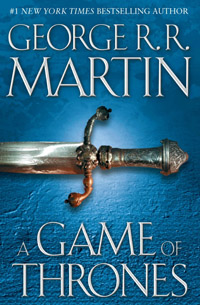
“A Game of Thrones (A Song of Ice and Fire, Book 1)” by George R. R. Martin

A Game of Thrones

As time progresses, and the literary cannon grows and grows, every new writer born in some ways gets the short end of the stick. Why? Because so many ideas have been taken, some so worn out that they get labeled as “tropes” or “clichés.” Thus, modern writers often have the burden of having to find something original in a world in which so many things have been done before. Some make entire careers out of finding ways of subverting tropes, being antithetical, and therefore exciting. This is certainly the case with George R. R. Martin’s epic fantasy series, A Song of Ice and Fire. Martin takes the well-worn genre that grew out of the Middle Ages and peaked with Tolkien, and turns it on its head, making for a thrilling read.

One of the unwritten rules of fantasy, at last before Martin came along, was that the hero prevails. He beats the odds. It can be tough, but he makes it out alright in the end. Perhaps he experiences loss, the death of a sidekick or a horse or a friend, but he does not perish. This is not so in A Game of Thrones. Here, much like in real life, no one is safe. In that sense, this high fantasy novel reads a lot more like the turbulence of reality than many other, less inventive books. The novel ends with the beheading of a character who is set up, in every preceding page, as the hero. Martin impresses upon his reader that everyone has flaws, even the hero, and he does not get any special treatment in the randomness of fate.

A Game of Thrones further subverts the fantasy genre with its treatment of characters. The book refuses to vilify or venerate any one character. Instead, Martin allows you to understand the motivations of each character in turn, so that even if you don’t agree with their actions, you cannot blatantly hate them. By the end of the novel, the reader is left sympathizing with a man who closes the first chapter by pushing a seven-year-old boy out of a window. Only someone as adept as Martin can paint two sides of a person that well.

Finally, the novel’s female characters serve as a potent way to subvert traditional fantasy tropes. In most high fantasy, the women do not have their own agendas. They are tools, playthings, and trophies for the men who ride horses and fight wars and move them conveniently around the chess board of their own lives. This is not so in Martin’s book. While the novel is set in medieval times and thus realistically portrays appropriate historical subjugation of women, Martin balances this with determined female characters who not only have goals, but also the ruthless will to make those goals a reality. Like all his male characters, these women are nuanced, not just good or bad. One of the most popular characters in the sprawling cast is the young Daenerys Targaryan, who, sold into marriage by the brother, becomes empowered to gather an army in preparation to reconquer the Seven Kingdoms, which she views as her birthright. Another, incredibly three-dimensional character is Cersei Lannister, who, as wife of the king, is unhappy with her secondary status in the kingdom, and whose thirst for power and militant protection of her children often paint her hands red with blood. We are horrified by her, but we reluctantly admire her, and in hard times, we sympathize with her.

The book is split into differing perspectives, mostly of the main, clashing families of Stark and Lannister. It is also long, perhaps longer than it needs to be, but the world it builds is so colorful and riveting that you probably won’t find yourself complaining. Martin will not coddle his reader, which makes the book somewhat of a rollercoaster, with nail-biting climaxes and brutal deaths, but in the end, entirely worth it. Make sure the sequel is close at hand!

A Game of Thrones (A Song of Ice and Fire, Book 1)
Author: George R. R. Martin
Publisher: Bantam Books
Publication Date: August 1996

Reviewer: Sarisha Kurup is a senior at The Harker School in San Jose, CA.


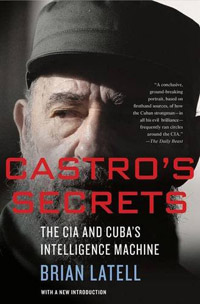
“Castro’s Secrets- Cuban Intelligence, the CIA and the Assassination of John F Kennedy” by Brian Latell

Castro's Secrets

Did Fidel Castro mastermind the assassination of John F Kennedy? This book by a CIA veteran throws new light on the mystery. The author gives details about the assassin Lee Harvey Oswald, his adoration of Castro, his failed attempt to migrate to Cuba, his brief sojourn in the Soviet Union, and a host of other clues that serve to deepen the mystery rather than provide open-and-shut answers.

In June 1987 when Florentino Aspillaga Lombard sought asylum at the American embassy in Vienna, his spectacular revelations about Cuba’s clandestine operations sent shock waves through American intelligence circles. How terribly the CIA had underestimated this impoverished Caribbean island! Lombard was no ordinary spy. He had in July 1979 played a crucial role in ensuring of the victory of the Sandinistas in Nicaragua. He had been in Angola where Castro had engineered a Marxist revolutionary takeover. He provided the CIA with a goldmine of information. Cuban intelligence had knowledge about the Bay of Pigs invasion in 1961. No wonder it turned out to be such a disaster! It comes as no surprise that the head of Cuban intelligence was Fidel himself.

Through the book, we get a rare glimpse of Castro’s spectacular intelligence network. We also glean interesting details of the now well-known Armageddon Letter of 1963 where Castro urged Nikita Khrushchev to launch a nuclear attack on the USA, the role played by Cubans in fomenting revolution elsewhere in the Americas, and the impressive scale of training and indoctrination provided to wannabe revolutionaries. Latell opines that Che Guevara’s Bolivian venture was a suicidal mission. As he puts it, “Fidel always thought strategically, many moves ahead, like a grand master moving pieces on a giant chess board. Venezuela was an opponent’s queen, Bolivia a pawn. …..If by some fluke, Guevara were to win, he, Fidel, could take credit for sponsoring and masterminding the victory. And if the roving Argentine incendiary were to die in the quest, that would reverberate even more enduringly. Cuba would have a martyred patron saint.”

Latell also suggests the possibility that Hugo Chavez or his elder brother, Adan, could have been spotted and recruited by Cuban intelligence long before the former won power in Venezuela. How else could a career military officer become an adoring disciple of the leader of another country?

Overall Assessment: Must read! History, politics and intrigue make a deadly cocktail!

TITLE: Castro’s Secrets- Cuban Intelligence, the CIA and the Assassination of John F Kennedy
AUTHOR: Brian Latell
PUBLISHER: PALGRAVE MACMILLAN
DATE OF PUBLICATION: 2012

Reviewer: Pushpa Kurup lives in Trivandrum, India and works in the IT sector.
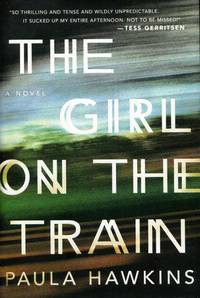
“The Girl on the Train” by Paula Hawkins

The Girl on the Train

The Girl on the Train has had one of longest runs as a New York Times bestseller. Released last year, it topped the list for 16 weeks in 2015, has been on it for 78 weeks so far, and is still on the list at #6. That is a remarkable achievement for any book, let alone a debut novel. It literally came out of nowhere and became an instant success, drawing comparisons with the 2014 crime thriller, Gone Girl, which was also a runaway hit. However, unlike Gone Girl, whose author, Gillian Flynn had published books before which you could read to get a better idea of her earlier work and her path to literary success, the author, Paula Hawkins, of The Girl on the Train was a totally unknown entity in the publishing world, so you can’t go back to read any of her other books, as most of us would do for authors whose books we love. And while I don’t always find New York Times bestsellers terrific reads (such as the book, The Girls, that I wrote about recently), The Girl on the Train was one book that I unequivocally loved.

Set in London in contemporary times, The Girl on the Train is a psychological thriller and murder mystery rolled in one. The mystery at its core is the disappearance of a woman, and the story is told entirely in the form of the narrations of three different characters: Rachel, the main protagonist, who is “the girl on the train” who sees something suspicious related to the missing woman from the train one morning, and whose life, by the way, is falling apart, making her a very unreliable witness; Anna, Rachel’s ex-husband’s current wife, thanks to whom Rachel’s psychological problems and drunkenness are compounded; and finally, Megan, the woman who goes missing. We learn how their lives intersect early on in the book, but not the whole truth. Unlike books like Gone Girl in which a large part of the narration was deliberately misleading to throw readers off the track, the “twist” in The Girl on the Train comes not from an unreliable narration, but from holding something back instead and not divulging the whole truth. The book keeps you on tenterhooks throughout and rather than feeling cheated at the end, it has a very satisfying conclusion that does not make you feel stupid for not having “guessed” the mystery.

Crime thrillers are generally not known for their writing quality, but I found The Girl on the Train not only very clever but also extremely well written. Not only was it thrilling and entertaining the first time I read it last year, I re-read it again recently and I found it just as engaging as the first time—impossible to put down, and having finished it, needing to read it again right away to better understand the clues leading to the resolution of the mystery. For me, the impetus to read it again came from hearing that it was being made into a movie. While I think that The Girl on the Train has an excellent plot and would make for a terrific movie, there is a certain enjoyment of a good book that comes from your own images of the characters before they are overwritten by the images of the actors playing those parts in a movie, and I wanted to experience this again before the movie comes out.

In conclusion, I would say that The Girl on the Train is a terrific book that deserves every bit of its success, and I find it very gratifying that books like this even find a place in—let alone rule—the New York Times bestseller list, where you typically find more “serious” literary fare. The only question now is whether Paula Hawkins will be a one-book wonder, or we will continue to see more from this prodigiously talented author? While it would be hard to match the success of The Girl on the Train, I, for one, am eagerly awaiting her next book.

The Girl on the Train
Author: Paula Hawkins
Publisher: Penguin Group
Publication Date: January 2015

Reviewer: Lachmi Khemlani runs a technology publication in the San Francisco Bay Area.

“Seating Arrangements” by Maggie Shipstead

Seating Arrangements

In a country where the wealth gap becomes more and more apparent every day, where the American Dream seems more and more a thing of the past, Maggie Shipstead invites her readers to take a look at the crumbling aristocracy of New England. Her characters seem like Fitzgerald-era castaways, with their biggest concerns being about premiere colleges and entry into exclusive social clubs and maintaining rather antiquated notions of propriety. And in some ways, Shipstead has written the Gatsby for the modern day, a novel that draws the reader in with its sense of escapism, allowing them to inhabit the life of the ridiculously wealthy for a time, but ultimately closes with a powerful refutation to the idealism with which we treat the life of the rich. No one ends up floating dead in a pool with a bullet in their side, but Shipstead infuses in her story an understated permutation of gloom that is equally powerful.

The story has a simply premise—two families descends on a coastal New England island to witness the marriage of Daphne Van Meter to Greyson Duff. The Van Meters make up most of the main characters, with the focus on Winn, the patriarch, and his younger daughter Livia. The strength of Shipstead’s work has always come from her ability to understand and bring to life on the page so many different kinds of people, and this talent is expertly displayed as she allows her readers into the minds of her diverse cast of characters. She breaks this novel into sections, with each section inhabiting the mind of a different person than the last, although Winn and Livia are the most represented. She jumps expertly from the self-absorbed Winn, who is livid about not getting into a local club while also thirsting after one of his daughter’s bridesmaid’s, to Livia, who is struggling with a breakup and recent abortion while attempting to support her pregnant sister through her wedding weekend, to Biddy, Winn’s dejected and lonesome wife, to Mopsy, the aging Duff grandmother, to Sam Snead, the hyper-active wedding planner.

The reader gets to see the difference between generations—Winn seems more obsessed with the way he is perceived than his daughters, more obsessed with his own wealth and legacy—providing for a fascinating meditation on the way that the changing social dynamic in America has affected the people raised here. Furthermore, the most gratifying part of the novel is that Shipstead does not attempt to make any one character particularly likable. Instead she lays them all bare, their flaws apparent, and asks the reader to begrudgingly love them due to their humanity, their inescapable flaws. This forces the reader to understand that there is no good way to have wealth in America, no way to wear it well without being selfish or obsessed. In creating no apparent hero or winner, Shipstead provides a grippingly real portrayal of a dying aristocracy.

All of this is filled in with beautiful details and thoughtful symbolism. The world of Seating Arrangements is a vivid one, down to the colors of the character’s coats and flavors of their wine. It’s not hard to get lost in a story this rich.

Seating Arrangements
Author: Maggie Shipstead
Publisher: Knopf
Publication Date: June 2012

Reviewer: Sarisha Kurup is a senior at The Harker School in San Jose, CA.

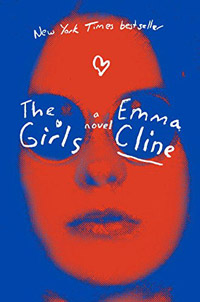
“The Girls” by Emma Cline

The Girls

This debut novel by Emma Cline is the latest “kid” on the bestseller “block.” In what seems to be a phenomenally short span of time, it seems to be everywhere—on the radio and in magazines—and has even made it to the New York Times Bestseller list, where it is currently ranked as #3 in the “Hardcover Fiction” category and #5 in the “Combined Print & E-Book Fiction” category. Does the actual book live up to this sudden fame and hype? Fortunately, I got a chance to find out without having to wait too long and without having to buy the book—a copy was on display in the “New Books” section at my local library and I snatched it up right away to check out.

The Girls tells the story of a teenage girl, Evie Boyd, in the late 60s and how she gets into a cult led by a man, Russell, whose hippie-like, counter-culture, “let’s be free” philosophy seems like a magnet, attracting followers—mostly young and female—who will do anything for him. It is very much like the infamous cult that Charles Manson had in California in the 60s which ended in a series of murders committed by him and his followers, as a result of which he is now serving life in prison. Russell’s cult in The Girls also ends just as badly, with his followers committing four ghastly murders and eventually meeting the same fate. Evie herself was not part of the group that carried out the murders (but only by chance), so she emerges from her experience with the cult physically unscathed but mentally scarred for life. Also, in her case, it was not Russell’s magnetism that drew her to the cult but that of one of Russell’s key female followers, Suzanne, whom she is strongly attracted to.

Despite the lesbian undertone, The Girls however, is far from being a love story, gay or otherwise. Instead, it is an exploration of the mental make-up of someone who can be seduced into giving up everything—home, family, friends, ambitions, creature comforts, in short, a normal life—to go live in a commune where everything is shared, including space (mostly cramped), clothes (mostly bedraggled), food (always scarce, and frequently needing to be scavenged or stolen), chores (cooking, cleaning, farming, etc.), parenting (with no birth control, free sex, and so many girls, there are naturally many pregnancies), and pretty much any other aspect of life. If it sounds awful, it really is, and Cline does a good job of illuminating how someone can be lured to such a life, particularly someone as young and impressionable as Evie. Of course, the fact that she comes from a dysfunctional family with her parents getting divorced seems almost a given—would anyone from a normal, happy family be so susceptible to being brainwashed and exploited?

While I greatly admired the book—it was very well written and especially remarkable coming from someone so young (as the photo of Emma Cline on the jacket cover and her brief bio seem to suggest)—I have to say that I did not find it particularly enjoyable or entertaining. It wasn’t a book I “couldn’t put down,” and it was my curiosity about why it was such a hit that compelled me to stick with it till the end rather than give up on it sooner. Of course, books that are entertaining often do not have a highly evolved writing style and are universally panned by critics, and The Girls seemed more of the reverse kind of book—one which would greatly appeal to critics but not that much to readers.

Books that are beautifully written and impossible to put down are a rarity, but they do exist—unfortunately, I did not find The Girls to be one of them.

The Girls
Author: Emma Cline
Publisher: Random House
Publication Date: June 2016

Reviewer: Lachmi Khemlani runs a technology publication in the San Francisco Bay Area.

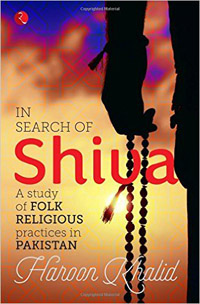
“In Search of Shiva- a Study of Folk Religious Practices in Pakistan” by Haroon Khalid

In Search of Shiva

“Dama dam mast Qalander……” The peppy tune echoed in my mind as I breezed through Haroon Khalid’s book. Whether sung by Bangladeshi singer Runa Laila or Pakistani Abida Parveen or the Wadali brothers, the song has a universal appeal. Hazrat Lal Shahbaz Qalandar, the 12th century Sufi saint is not the subject of this book though. The author, an Islamabad-based journalist and educationist takes us on an unusual journey through little known villages in Pakistan, where religious shrines cling to relics and rituals of a long-forgotten pre-Islamic past, virtually presenting an alternative and liberal version of Islam. Khalid expresses concerns about the rising tide of extremism and intolerance in Pakistan and suggests that many of these quaint practices may soon be wiped out or driven underground.

“But nothing had prepared me for this, a Muslim shrine dedicated to the fertility cult, where women offer phallic-shaped offerings to the patron saint while praying for a child, ideally a boy.” Here, the author recounts his visit to the shrine of Aban Shah Shirazi. Glass bangles and white turbans were among the offerings. No sign of any shivling! Khalid and his fellow travellers finally discovered that an elderly woman had removed all the phallic symbols to hide them from prying eyes. It appears that concerns for modesty played a part rather than Islamic beliefs, or the other items would have been hidden too. When asked about the offerings, the woman said, “These are presented to the shrine by women praying for children. Some of them also bring toys for children and tie them around the trees outside…..Women sometimes come to pray for their cows to give birth to calves.” This in an Islamic country where Hindus comprise less than 2% of the population!

A 25-year old woman confessed that when she remained childless after five years of marriage and her mom-in-law threatened her with divorce, a simple phallic offering to the saint did the trick and she was soon blessed with two sons and a daughter. Wonder what the Prophet Muhammad, PBUH, would say to that!

The shrine of Baba Mast where thousands of eunuchs congregate, that of Peer Abbas, where dogs abound, the shrine at Kallar Kahar where peacocks are venerated (Babur camped here on his way to conquer India), the shrine of Ghore Shah where toy horses are offered, a shrine for the master of crows, what more do you need? A 75-year old dervish tells the author, “All langar provided to the devotees at the shrine is offered to the crows before anybody else. Children who stutter or have other speaking problems drink water from the same vessel as the crows and are cured.” He continues, picking up a little ash from under a pot, “This ash here is also sacred. Devotees eat it and all their problems are solved.”

In the city of Jhang, where the legendary lovers Heer and Ranjha lie buried in a single grave, the site has become a place of pilgrimage. The story is part of the oral tradition of South Asia, supposedly written by Damodardas Arora during the reign of Akbar and rewritten by Waris Shah in the 18th century. And young people come here in droves to seek the blessings of the long-gone lovebirds.

The book offers many glimpses of life in Pakistan. Here are some interesting examples: ‘Jihad is an obligation, now or never,’ said an advertisement sponsored by the Jamaat ud dawa organization, on the back of a rickshaw. “The (Friday) prayer would be preceded by a sermon from the local maulvi, who while stoking his oiled beard would pray for the demise of the United States, Israel and India, our own local version of the axis of evil…” The author notes the disappearance of kittens from the Billiyonwala Mazaar at Lahore and its rapid transition from a Sufi shrine to a regular mosque. He observes that the Eid Milad un Nabi celebrations are modeled on the Hindu festival of Ram Navami, and while the fervor with which Eid is celebrated has increased, its opposition from puritanical Muslims has also increased. Qawwali singing at Sufi shrines also irks the orthodox maulvis who believe that music is un-Islamic.

“I have often been told that there are certain topics pertaining to religion one should avoid writing about because of the negative backlash they are likely to invite. I, on the other hand, argue that one can get away with writing anything in Pakistan as no one reads,” Khalid explains. I hope his luck holds. We don’t want the young man to attract a fatwa or anything. We need sane voices from every country to keep speaking out, to keep writing, to move the dialogue forward.

The publishers could have could have done a better job of editing — I found several blatant errors in the text. But my overall assessment is still: Eminently readable.

‘IN SEARCH OF SHIVA- A STUDY OF FOLK RELIGIOUS PRACTICES IN PAKISTAN’
AUTHOR: HAROON KHALID
PUBLISHER: RUPA PUBLICATIONS PVT. LTD.
DATE OF PUBLICATION: 2015

Reviewer: Pushpa Kurup lives in Trivandrum, India and works in the IT sector.
“The South African Gandhi – Stretcher Bearer of Empire” by Ashwin Desai and Goolam Vahed

The South African Gandhi

Gandhi spent 21 years in South Africa practicing law. They called him the ‘coolie barrister.’ And he called the indigenous people ‘kaffirs.’ The scantily clad man Indians recognize as the ‘father of the nation’ had an image makeover on the eve of his departure from South Africa in 1914. Gone was the coat-suit ensemble. In came the oh-so-humble dhoti. This meticulously researched book by Ashwin Desai and Goolam Vahed (South African professors of Indian origin) unravels many facets of the saint-in-the-making. Quoting extensively from ‘The Collected Works of Mahatma Gandhi’ as well as newspaper publications including ‘Indian Opinion’ of which Gandhi himself was co-founder, they paint an unfamiliar portrait of a familiar global icon, leaving the reader shocked and saddened.

Here’s a sample of Gandhi’s pronouncements during his South African sojourn:

  • We believe also that the white race in South Africa should be the predominating race. (1903)
  • We have never asked for political equality. We do not hope to get that…I have never asked for the vote. (1914)
  • About this mixing of the Kaffirs with the Indians, I must confess I feel most strongly. I think it is very unfair to the Indian population….(In a 1904 letter to the Medical Health Officer of Johannesburg, he demanded that Kaffirs be withdrawn from a residential area peopled predominantly by Indians.)
  • Should they (Indians) be assigned a permanent part in the Militia, there will remain no ground for the European complaint that Europeans alone have to bear the brunt of Colonial defence. (1906)

The saddest part is that Gandhi failed to acknowledge African suffering. During the Boer war, he served the Empire as stretcher bearer. In 1906 when the Zulus in Natal revolted he seized the opportunity to demonstrate his loyalty to the British Crown. He wrote in Indian Opinion on 14th April 1906, “It is not for me to say whether the revolt is justified or not. We are in Natal by virtue of British power. Our very existence depends upon it. It is therefore our duty to render help….” In stark contrast, the ‘arch-imperialist’ Winston Churchill condemned the ‘disgusting butchery’ and referred to ‘this wretched colony’ as ‘the hooligan of the British Empire.”

Gandhi’s associates from outside the Indian community were all whites. He remained aloof from the blacks. The authors suggest that “Gandhi’s Anglophilia possibly played a role in developing his theory of satyagraha.” They point out that he conveniently forgot the principles of non-violence and satyagraha whenever the Empire was at risk. His strategy was one of whining, petitioning, lobbying, negotiating, compromising and surrendering. At the same time he was a great publicity agent. He had Joseph J Doke write his biography in 1909. It was published with the assistance of N M Cooper in England. Gandhi purchased all 600 copies and had them distributed in Britain, Rangoon, Madras and South Africa. Ironically, the Introduction to the book was written by Lord Ampthill who sat in the House of Lords from 1909 to 1935 and opposed every move in the direction of Indian self-governance.

In 1906, Gandhi announced his vow of celibacy. Authors such as Kathryn Tidrick have suggested that it was possibly in South Africa that Gandhi commenced the practice of sleeping with nubile nymphs ostensibly to ‘test’ his self control. Gandhi hailed as his ‘soul-mate’ a German Jew, Hermann Kallenbach. They met in 1903, shared a house from 1907/1908 to 1910 and wrote inexplicably intimate letters to each other ever after. (The letters were purchased for $1.3million by the Government of India in 2012 and the contents remain under wraps.) In May 1910 Kallenbach purchased an 1100 acre farm near Johannesburg for Gandhi’s use. It was named Tolstoy Farm. Residents were compelled to practice celibacy and vegetarianism.

Gandhi’s Indian benefactors financed his activities in South Africa. Among them were the Maharajas of Bikaner and Mysore and the Nizam of Hyderabad. Gopal Krishna Gokhale, Gandhi’s mentor, visited South Africa in 1912 and helped revive his sagging political fortunes. In October 1913, Gandhi failed to get majority support within the Natal Indian Congress and he formed another outfit called Natal Indian Association. The 1913 strike by Indians workers across the mining and plantation sectors underlined the futility of passive resistance. In a letter to Marshall Campbell on 23rd December 1913, the future Mahatma wrote: “We were endeavouring to confine the strike area to the collieries only. Whilst I was in Newcastle I was asked by my co-workers in Durban what answer to give the coastal Indians who wanted to join the movement, and I emphatically told them that the time was not ripe for them to do so….(but) after my arrest….the movement became not only spontaneous but it assumed gigantic proportions.”

On 20th December 1913, following his release from prison, Gandhi appeared at a public meeting at Durban wearing dhoti and kurta. He no longer had a moustache. In July 1914, he announced he was returning to India for good.

Historians and history buffs are wondering what to make of the book. It is too compelling to be wished away.

Overall Assessment: Deeply disturbing. A must read for every Indian.

THE SOUTH AFRICAN GANDHI – STRETCHER BEARER OF EMPIRE
AUTHORS: ASHWIN DESAI AND GOOLAM VAHED
PUBLISHER: NAVAYANA PUBLISHING & STANFORD UNIVERSITY PRESS
PUBLICATION DATE: 2015


Reviewer: Pushpa Kurup lives in Trivandrum, India and works in the IT sector.
 

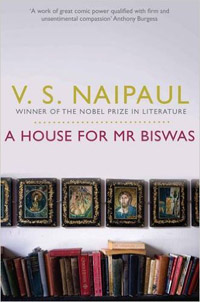
“A House for Mr. Biswas” by V S Naipaul

A House for Mr Biswas

This is a rather ancient book by 21st century standards, penned in the late fifties and published in 1961, by Trinidad born, Indian origin, Oxford educated, UK citizen, Vidiadhar Surajprasad Naipaul. Then why read it at all? Well, for one thing, this guy is no ordinary writer. All his life he did nothing but write, write and write. Many of his books are extraordinary. He won the Booker prize in 1971 and the Nobel Prize for Literature in 2001. He was knighted in 1990.

This book is a magnum opus spanning over 600 pages. The master storyteller brings to life each of the characters and locations in such explicit detail that everything becomes familiar to the reader as if the persons and places were all in his own backyard. Those who love fast paced action thrillers, murders and mysteries may not be fascinated by this one. It is a down to earth account of the daily lives of down to earth people, sons and daughters of a little British colony where many mixed races live together in harsh if not pathetic circumstances. The author manages to paint a perfect portrait without exaggeration or unnecessary recourse to sentiment. The reader is often left wondering whether to feel sorry for the central character or laugh at him.

The humour is typical of an English gentleman – subtle, tongue-in-cheek and greatly amusing. Take this for instance: “The house was alive but subdued when he got back. He found four children on his bed. They were not his. Thereafter he occupied his room early in the evening, bolted the door and refused to answer knocks, calls, scratches and cries.”

Naipaul offers some friendly advice for aspiring journalists: “Even people with outstanding writing ability say they cannot find subjects. But in reality nothing is easier. You are sitting at your desk. You look through your window. But wait. There is an article in that window. The various types of window, the history of the window, windows famous in history, houses without windows. And the story of glass itself can be fascinating. Already, then, you have subjects for two articles.”

Every now and then Naipaul makes a dig at Hindu rituals but the implied criticism is not unfounded. Nearly one fourth of the population of this tiny nation is Hindu (even half a century after Naipaul wrote the book.) They went to the colony as indentured labourers in the mid 19th century and their descendants have remained there ever since. Having little or no contact with India, they are left to practice Hinduism in their own unique ways. The author notes every religious ritual with amusement. Consider this: “In his thin voice, Hari whined out the prayers. Whining, he sprinkled water into the hole with a mango leaf and dropped a penny and some other things wrapped in another mango leaf.”

Naipaul does not hesitate to make cheeky remarks about well-know personalities, particularly Indians. And of course, he makes his characters do all the talking. Here’s an example: “Scathing was one of his favourite words and the person he had handled most scathingly was Krishna Menon.” Naipaul must have had a well-developed sixth sense or perhaps he bumped into Menon in London. This was before China invaded India and inflicted a humiliating defeat and Menon as Defence Minister drew a lot of flak.

How Trinidad-born Indians perceive India-born Indians is interesting too. “Owad disliked all Indians from India,” the author observes. “They were a disgrace to Trinidad Indians; they were arrogant, sly and lecherous; they pronounced English in a peculiar way…..” He goes on and on, making the reader double up with laughter (or red with indignation if his national pride is invoked). Incidentally the book is replete with umpteen examples of Trinidadian English which could give Indian English a run for its money. It is also peppered with politically incorrect words like ‘negro’ but we need to concede that in those days nobody called the blacks ‘blacks’ – and Naipaul was perhaps using common parlance.

If you have an interest in the Indian diaspora, do read this book. It takes patience, but it’s worth the effort.

A HOUSE FOR MR. BISWAS
AUTHOR: V S NAIPAUL
PUBLISHER: PICADOR
PUBLICATION DATE: 1961

Reviewer: Pushpa Kurup lives in Trivandrum, India and works in the IT sector.