“The Outsider” by Stephen King

The Outsider

Stephen King has written so many bestsellers, of which so many have been made into very successful movies, that he is practically a household name. Yet, I had not read any of his books before I picked up The Outsider. It was a revelation — he writes so well! I was sucked into Outsider right away and it was impossible to put the book down until I had finished it. Also, its considerable length — which may be off-putting in some other books — only served to enhance my enjoyment of this one, as it meant more of the book that I could sink my teeth into.

The Outsider starts with the heinous murder of an eleven year old boy, who has not just been sexually violated but also gruesomely mutilated. All eyewitness accounts, as well as fingerprints and DNA, point to a popular school teacher and baseball coach who has been the pillar of the local community, and he is arrested. But it turns out that he was actually in a different city many miles away with a group of his fellow school teachers attending a literature convention, and there is actual video footage of him attending a book reading at the time when the boy was killed. So how could he be in two places at once? This is the fundamental mystery in The Outsider, and it is explored though a varied cast of characters, police interviews, investigations, and unexpected twists and turns. The fast pace of the book is maintained throughout and it is like a thrill ride up to the very end.

Had I been a little more familiar with Stephen King’s other books, I would have seen the   supernatural angle coming. After all, he is not known as the “master of horror” for nothing. Like all his other books, The Outsider also eventually relies on an otherworldly phenomenon to explain the mystery. For me, this came as somewhat of a let-down, as it seems that you can seemingly get away with anything if you put a supernatural angle to it. Even something bizarre can be explained, and you end up feeling cheated with the explanation rather than satisfied.

But the supernatural is undoubtedly Stephen King’s mojo, and it does not detract from how well written and riveting The Outsider is. I read it over the course of a long flight with a layover of several hours, and it was a godsend, providing me with not just much-needed distraction from the discomfort of travel but also unadulterated enjoyment for the entire duration of the book, from the beginning right up to the end.

The Outsider
Author: Stephen King
Publisher: Scribner
Publication Date: May 2018

Contributor: Lachmi Khemlani runs a technology publication in the San Francisco Bay Area.
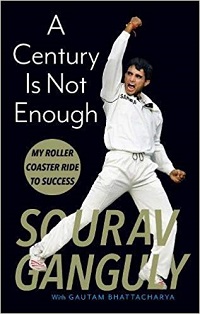
“A Century Is Not Enough: Inside the Mind of a Cricketing Legend” by Sourav Ganguly

A Century is not Enough

If you “understand” Sourav Ganguly as a Captain, then you should read this book. If you loved the Indian Cricket Team of 2000s, then also you should read this book.

When I say understand his captaincy – it is that feeling that you get as a fan, about what he is going to do next on field and why he is doing that.

Even if you have no clue about either of those things, then also you can have a go at this book because it’s not just about Cricket. It gives you some insights about life and how to succeed in life, along with the the signature Ganguly advice – to never back down!

The book is a collection of memories narrated through the mind of one of the most successful captains of Indian Cricket Team. He seems to recall every single successful innings that he played (including the stats) and sheds light on some of the tactical decisions that were made during that period when India emerged from a polite average team with a lot of individual talents to one of the major aggressive units in the world. As avid Cricket fans know – Sourav planted the seeds, the fruits of which are still being enjoyed by the present Indian team.

It might seem like he’s doing a self promotion at some places but to be fair, it is a necessity. For instance, most of his critics doesn’t know the fact that he has the most number of “Man of the Match” awards to his name second only to Tendulkar (even though Kohli is quickly catching up). Things like these that the management did not notice during his infamous exit during the Greg Chappel era has been brought into light through this book.

The story of a “Comeback King”. A must read for Indian Cricket fans.

A Century Is Not Enough: Inside the Mind of a Cricketing Legend
Author: Sourav Ganguly
Publisher: Juggernaut Books
Publication Date: February 2018

Contributor: Anoop Mukundan is a casual reader and a cyber wanderer.

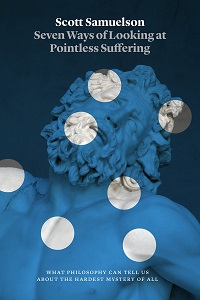
“Seven Ways of Looking at Pointless Suffering” by Scott Samuelson

Seven Ways of Looking at Pointless Suffering

Life is tough. There is no getting around that fact. Even if you are not personally experiencing a crisis or a tragedy at the moment, you only have to look around you to see how much misery is there in the world. And this is not a new phenomenon — it has been like this since the dawn of civilization. The kinds of crises that we face may differ from generation to generation, but suffering seems to be very much a part of the human condition. Not only are we vulnerable to natural disasters such as earthquakes, volcanoes, hurricanes, and tsunamis just like any other species on earth, we also have to contend with wars, epidemics, poverty, starvation, injustice, crime, illness, and of course, death — not just of our own, but more painfully, of those we love.

What, then, are we to do? How can we cope with suffering? How do human beings, as a whole, deal with what seems to be an inevitable fact of life? The book, Seven Ways of Looking at Pointless Suffering, attempts to show us how. The author, Scott Samuelson, draws from his extensive knowledge and study of philosophy to highlight seven different approaches to suffering, ranging from the Book of Job in the Bible, to the teachings of Confucius, to philosophers such as Nietzsche, and surprisingly, even the Blues music genre that has slavery at its roots. While each of these has a distinct approach to suffering, they can, by and large, be divided into two main camps: fix-it, where you seek to eliminate it; and face-it, where you come to terms with it.

Interestingly however, these two camps are not as far apart as they may seem — we have to accept suffering as it is inevitable, but at the same time, we are hard-wired to oppose it. The drive to ameliorate suffering is responsible for all human advancements — witness the enormous strides we have made in medicine, agriculture, weather forecasting, technology, and so in, in every field of human endeavor. At the same time, we have to accept that just as you cannot have a right without a left, or an up without a down — the yin/yang principle — you cannot have joy without sorrow, happiness without sadness, and goodness without evil. In short, humans will continue doing what we can to “fix” suffering while reconciling to the fact that some of it is inevitable and we have no choice but to “face” it. In fact, suffering seems to be integral to human growth — most of our art, music, and literature has been created in response to it. This understanding is pivotal to our acceptance of suffering and learning to live with it gracefully.

While Seven Ways of Looking at Pointless Suffering seeks to provide insights into suffering for anyone seeking to understand it better, it is also unequivocally a philosophy book. This makes it essential reading for anyone who would like to delve into how different philosophers throughout the ages have thought about the question of suffering and its centrality to human existence. However, for those who are not particularly interested in philosophy as a subject to be studied, or in learning about different philosophers and their lives, this is not a book that they will likely read cover to cover. I found myself skimming though many sections of the book that seemed more like a history lesson on different philosophers, since I was more interested in learning about how people cope with suffering rather than what different philosophers have had to say about it. Few people now have the luxury of not having to work for a living, of having the time and the resources to ponder about life and its mysteries as they were able to do in the past. It’s one thing to arrive at an intellectual understanding of something, but another thing to actually feel it. This is why philosophy as a discipline has a limited appeal for me, and I didn’t appreciate Seven Ways of Looking at Pointless Suffering as someone who was into philosophy would have.

To me, the best parts of the book were when the author talked about his own personal experiences with suffering as well as the many discussions he had in the course of his volunteer work in a prison where he was teaching philosophy to prisoners. There is an entire thread in the book on the problem of evil — which is at the root of so much suffering — and the related issue of incarceration as a punishment for crime. I would have been interested in reading a lot more about that.

That said, I found Seven Ways of Looking at Pointless Suffering an invaluable read for its extended discussion of something that is a fundamental part of our existence and for its holistic look at suffering, not just as something to be accepted, but also as something it is in our nature to work to avoid. That goes a long way with learning to make peace with it.

Seven Ways of Looking at Pointless Suffering
Author: Scott Samuelson
Publisher: University of Chicago Press
Publication Date: May 2018

Contributor: Lachmi Khemlani runs a technology publication in the San Francisco Bay Area.