“The Theft of India” by Roy Moxham

thetheftofindia

What the Europeans did in India is what this book is all about. The progress of colonization and the cruelty of the colonists are elucidated using quotes and anecdotes from the colonizers themselves. The book is small, handy, and easily readable.

Vasco da Gama and his men on landing at Calicut in 1498 knelt to pray in a temple thinking it was a church. One of them later wrote about the sacred threads worn by the priests across their upper bodies. The men also took home “some white earth which the Christians of this country are wont to sprinkle on the forehead…”

In 1500 Pedro Alvares Cabral arrived with six ships and bombarded Calicut. Then he left for Cochin, where the king allowed him to establish a factory. But the Zamorin’s fleet pursued him and he slunk away in the dead of night leaving behind 30 of his men. Ending up at Cannannore, he befriended the Raja. By then the Franciscan missionaries accompanying him had realized the difference between Hindus and Christians.

In 1502 Vasco da Gama returned. En route to Calicut the Portuguese encountered the Miri, a ship carrying pilgrims returning from Mecca. A Portuguese eyewitness described the chain of events: “We took a ship from Mecca in which were 380 men and many women and children, and we took from it fully 12,000 ducats, with goods worth at least another 10,000. And we burned the ship and all the people on board with gunpowder.” Another eyewitness recounted how the women offered their jewellery and held up their babies “that we may have pity on their innocence.” These are Portuguese accounts of Portuguese barbarity in a land where they came as traders looking for spices.

The Arab traders of Malabar resisted the Portuguese from the very beginning. The Zamorin ignored the Portuguese demand to expel them. (The Moplahs are said to be descended from 13 Arab merchants who settled on the River Beypore in the 9th century.) The Zamorin’s 32 ship fleet was destroyed by Portuguese guns. The ships were either sunk or set on fire and floated into Calicut harbour.

Next to arrive was Francisco de Almeida. His son was killed in a naval battle off the coast of Diu where the Zamorin’s ships teamed with an Egyptian fleet and successfully fought the Portuguese. But the betrayal of the Diu Governor precipitated the withdrawal of the Egyptians and the subsequent defeat of the Zamorin’s navy. Thereafter the Portuguese dominated the Arabian Sea coast. Alfonso de Albuquerque arrived next.

Goa derives its name from Govapuri at the mouth of the Mandovi River. In 1510 it was ruled by the Bijapur Sultan, Yusuf Adil Shah. Albuquerque easily captured it but fled when the Sultan’s army approached. The Portuguese massacred the Muslims before retreating to their ships. The fury of the monsoon prevented them from sailing. They ran out of food and were reduced to eating rats but did not surrender. Eventually they sailed away but returned on 25 November 1510, to capture Goa and put to death 6000 Muslims.

Albuquerque wrote to the King of Portugal, “I have decided that all the horses of Persia and Arabia should be in your hands, for two reasons: one being the heavy duties that they pay, and secondly, that the King of Vijayanagar and those of the Deccan may recognize that victory depends on you, for he who has the horses will defeat the other.”
Albuquerque, for all his cruelty, forbade the practice of sati in Goa.

In 1538 the first Bishop arrived in Goa. In 1540 the destruction of temples began. Francis Xavier arrived in 1542 and started mass conversions. He died off the coast of China in 1552, was first buried in Malacca and later shipped to Goa in 1554 to be finally interred at the Basilica of Bom Jesus. The author notes that “…parts of a shoulder blade are in Cochin, Malacca and Macao, the upper arm is in Japan, the internal organs have been distributed as relics…”

At Bassein in 1564, the Portuguese smashed the idols in a temple, killed a cow and sprinkled its blood in the sacred lake. The first Inquisition happened in 1560 in Goa. It was Francis Xavier who had recommended this horrendous practice to the Pope. 16,172 cases were investigated, thousands imprisoned, tortured and burnt at the stake before the practice was banned in 1774. The Inquisition was revived in 1778 and finally banned in 1812.

The book gives us many interesting anecdotes about the Kunjali Marakkars, commanders of the Zamorin’s fleet, who put up the fiercest resistance against Portuguese intrusion into Malabar. If the Zamorin hadn’t fallen out with them in the last decade of the 16th century and sided with the Portuguese, the history of Malabar may perhaps have taken a different turn. Marakkar’s surrender on 16th March 1600 was followed by treachery and tragedy. The Portuguese carted him off to Goa where he was publicly beheaded and his body dismembered and exhibited on the beaches. Then “his head was salted and conveyed to Cannanore, there to be stuck on a standard for a terror to the Moors.” The Zamorin had effectively dug his own grave. A century of resistance to colonization was over.

“Goa relied on a huge population of slaves……Women slaves were sold semi-naked at auctions and fetched more if they were virgins.” All the European powers exported slaves, mostly to the East Indies. “Slaves were commonplace in Madras. …The accounts show that in the month of September 1687 no fewer than 665 slaves were exported.” Edward Barlow, an English sailor noted in his journal in 1670 when his ship docked at the Company’s newly formed base at Valapattinam that the local people would not sell them cows but that for a small sum “you may buy their children”.

Bombay was ceded to Portugal in 1534 by the ruler of Gujarat. The Portuguese did nothing except destroy a few temples and build a few churches. In 1662 when Catherine of Braganza married Charles II of England, Bombay became part of her dowry. Six years later Charles II leased it to the East India Company. And the rest is history.

The author opines that the Mughal rulers, excepting Akbar, did little to improve the economy or the lives of the people. Thomas Roe stayed at Agra for three years and supplied alcohol to Emperor Jahangir. Shah Jahan ordered the destruction of Hindu temples. Aurangzeb converted Surat’s Jain temple into a mosque. His 50 year rule left a legacy of religious conflict that persists to this day.

Overall Assessment: Recommended for whites, blacks and browns alike.

The Theft of India
Author: Roy Moxham
Publisher: Harper Collins India
Year of Publication: 2016

Contributor: Pushpa Kurup lives in Trivandrum, India and works in the IT sector.

“Nine Perfect Strangers” by Liane Moriarty

nine perfect strangers

Nine Perfect Strangers is the new book by Liane Moriarty, who has written several novels including the smash hit, Big Little Lies, which was adapted to a highly successful and critically acclaimed TV miniseries in 2017. The TV adaptation was so well done that I went back and re-read Big Little Lies to find out how a book that was enjoyable but not great had been made into such a terrific show. Nine Perfect Strangers is the first book by Moriarty since the Big Little Lies TV series, and needless to say, it has been highly anticipated, as there has been talk of it being similarly adapted for TV by Nicole Kidman, one of the main stars of Big Little Lies. I have always enjoyed Moriarty’s books — they’re very entertaining, with interesting plot lines, and easy to read — and naturally, I read Nine Perfect Strangers as soon as I could get a copy of it from the library. I was curious to find out if the success of Big Little Lies had impacted Moriarty’s craft.

Nine Perfect Strangers is the story of nine people who check into a wellness retreat for ten days and what happens to each one of them in the course of those ten days. While some of them are single or divorced and have come to the retreat by themselves, there is also a young couple as well as a family of three. Each of the nine people have different issues of their own they are hoping the retreat will help them with, and we learn about each of them as the story unfolds, which is told progressively from each of their individual points of view. The singles include a romance novelist whose career seem to be coming to an end, an ex-football player who has become not just out-of-shape physically but also apathetic mentally, a gay lawyer whose relationship is in crisis because his partner would like to have a child and he is strongly against it, and a stay-at-home mother of four whose husband has left her for a younger woman making her deeply insecure. The young couple is primarily at the retreat for couples counseling — they are having issues with their marriage after they won several million dollars in the lottery a few years ago, and it has completely messed them up. And finally, the family comprising the husband, wife, and young adult daughter has gone through the trauma of losing the son — the daughter’s twin brother — to suicide three years ago and they are each consumed not just by grief by also by guilt as they each blame themselves for his death.

In addition to these nine protagonists, the other main characters in the story are those who work at the resort — the owner, Masha, who was a high-powered executive several years ago but quit the corporate world after a cardiac arrest that almost killed her; and two of the employees, one of whom, Yao, was one of the paramedics who had attended to Masha during her cardiac arrest and now hero-worships her.

Given the cast of characters and the plot, there are plenty of opportunities for both drama and comedy that are Moriarty’s trademark and make her books so entertaining. The back stories of each the nine “guests” at the resort as well as of Masha and Yao are interesting, and despite being mostly light-hearted, the narrative has occasional flashes of real insight that are brilliant. Unfortunately, these are not built on, and about halfway into the book, the plot also goes off-course. The retreat is working very well until about Day 5, with lots of meditation, digital detoxification, healthy food, smoothies, massages, counseling sessions, and long periods of silence — just what you would expect in a retreat of this kind. Also, as expected, it is incredibly hard for the guests to adjust to this at first, but they all feeling physically and emotionally better as the days go by.

So far, so good. But then, both the retreat and the plot rapidly degenerate into a mess where the guests are drugged and locked up together, all for the ostensible purpose of forcing them to undergo a dramatic transformation. Masha turns out to be a crazy megalomaniac, and Yao goes along with her as best as he can until he finally comes to his senses. Of course, as with all of Moriarty’s books, it all ends well — and for most of them, including Masha as well as Yao.

Despite this, I still found Nine Perfect Strangers a fun read, and I had no trouble finishing it. As light and breezy as Moriarty’s other books, it is not meant to be taken seriously, so the ridiculousness of the plot halfway into the book did not turn me off it as it may have done for a more heavy-duty book.

Nine Perfect Strangers
Author: Liane Moriarty
Publisher: Flatiron Books
Publication Date: November 2018

Contributor: Lachmi Khemlani runs a technology publication in the San Francisco Bay Area.

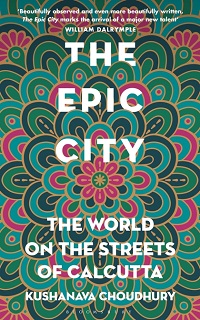
“The Epic City: The World on the Streets of Calcutta” by Kushanava Choudhury

the epic city

I picked up this book on the streets of Calcutta (now called Kolkata) during my recent visit to the city. I was looking for something local to read and couldn’t seem to choose from among the scores of books by Indian authors at “regular” bookstores like Crosswords. Walking down Park Street, one of the most famous streets of Calcutta, I stopped at one of the streetside book stalls to browse through its collection. I had discovered some excellent books from streetside stalls like this when I was growing up in India, and history seemed to repeat itself. The bookseller handed me a copy of The Epic City and told me it was very good. I read the blurb, which was intriguing; I was also very impressed with the credentials of the author. But what really clinched the deal for me was this quote from the back cover:

 “Stop and ask for directions in Delhi and no one knows, because no one is truly of the city. Ask for directions on any Calcutta street corner and a half-dozen mustachioed men will appear out of nowhere. They may offer radically divergent views on the matter, a street fight may break out as a result, rival political camps may emerge, and traffic may be barricaded for the rest of the afternoon. But it is their city, their streets, their neighbourhoods.”

Not only was this so well-written, it described Calcutta to a tee!

However, The Epic City is not just an ode to Calcutta, glorifying all the wonderful things about it such as its history, culture, character, vibrancy, and the passion of its people. It is also an unvarnished look at the city, warts and all, including the dirt and grime, the poverty, the chaos, the overwhelming number of people, the crumbling infrastructure, and the sheer difficulty of getting anything done. While all of this can be said of any major metropolis in India, Calcutta, in particular, seems to be caught in a time warp, according to Kushanava Choudhury, the author of The Epic City. And yet, it hasn’t seemed to have kept him away. He was born in Calcutta and moved to the US when he was 12, but the lure of the city was so strong that he returned to Calcutta after graduating from Princeton to work as a journalist, went back to the US to do a Ph.D. at Yale, and returned again to write The Epic City. His first return was born from idealism, of wanting to make a difference; the second time, he returned simply to capture the essence of the city he loved.

As a result, we get to experience Calcutta through Choudhury’s eyes at three different stages of his life: growing up in an ancestral home as part of a large, close-knit family with grandparents, uncles, aunts, and cousins; working as a journalist fresh out of college in The Statesman, a leading Calcutta newspaper; and finally, as a married young man attempting to be a writer. Needless to say, he has a wealth of stories to share about the myriad aspects of life in the city, all of which stem from his own personal experiences. Some that stood out for me include the attempted renovation of his ancestral home by his uncle, an architect trained in the US, who finally gave up because of the labor problems and red tape, and returned to the US; his grandmother’s death, which brought the entire extended family back together in the ancestral home for her cremation; his search for an apartment to rent with his wife, the news of which spread like wildfire and resulted in many people voluntarily coming forward with prospective apartments that were not remotely what they were looking for; chasing news stories as a journalist that involved trying time and again to have meetings that kept getting postponed; and participating in the omnipresent “addas” of people hanging out having fervent discussions about politics, books, sports, philosophy,  or literally, anything under the sun.

I found The Epic City a perfect companion for my visit to Calcutta, as I could relate first-hand to many of the experiences so eloquently captured by Choudhury and became familiar with several of the places in the city that he described in the book. But even for those not living in or visiting the city, it shows how it is possible for someone to love a place despite all the many inconveniences of life they encounter there, so much so that they would actually choose to live there instead of a much easier, comfortable, and less stressful life in their home country.

The Epic City may not entice you to move to Calcutta, but it certainly allows you to understand and appreciate those who do.

The Epic City: The World on the Streets of Calcutta
Author: Kushanava Choudhury
Publisher: Bloomsbury
Publication Date: October 2017

Contributor: Lachmi Khemlani runs a technology publication in the San Francisco Bay Area.

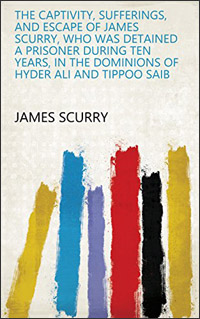
“The Captivity, Sufferings, and Escape, of James Scurry, who was detained a prisoner during ten years, in the Dominions of Hyder Ali and Tippoo Saib” by James Scurry

jamesscurry

This memoir was first published in London in 1824, two years after the death of the author. Born in Devonshire, James Scurry had gone to sea at a very young age, probably accompanying his father. His Indian ordeal began at the age of 15 when he was captured by the French off the Coromandel Coast and handed over to Hyder Ali. After a decade in captivity he made a daring escape and managed to return to England where he built a chequered career, and died at the age of age of 57, leaving behind a widow and son.

Scurry begins his amateurish narrative by telling us he set sail from Plymouth Sound in the ship Hannibal and ended up near Ceylon where they ran into trouble with the French. He dived into the shark-infested waters and tried to swim to safety. “I had nothing about me but a silk handkerchief with two rupees, all my treasure, tied up in the corner.” He mentions Trincomalee, Batticaloa (which he called Bloody Bay), Tranquebar and finally Cuddalore where he was taken along with others after his capture. The year was 1781.

After two months of imprisonment in Hyder Ali’s fort of ‘Chillembroom’ where a famine was raging, the prisoners were marched off to Bangalore. “No butcher ever drove oxen with more cruelty than we were driven.”

Eventually, a group of 52 boys aged 12 to 17 were assembled and told they were now the ‘sons’ of Hyder Ali. They were marched off to Seringapatam, and their heads shaved. Months passed and Hyder Ali ‘Cawn’ died. “…towards the close of his life, when the ulcer was rapidly spreading, he, by advice, ordered several criminals at different times to be killed, in order to apply their livers to his sore.”

Scurry makes an intriguing observation that, “Hyat Saib was the rightful successor, but Tipoo proved the more powerful.” (Hyat (Ayaz Khan), was a Nambiar boy from Chirakkal who had been captured in 1766, converted and re-named before growing to be a prime favourite of Hyder Ali. Hyder is said to have publicly proclaimed that he wished Ayaz was his son and successor.) Did Hyder actually nominate Ayaz to succeed him? Or was Scurry referring to palace whispers?

Tipu’s accession aggravated the misery of the English captives, as they were incorporated into slave battalions. “Our ears were bored and a slave’s mark was put in each of them.”

Scurry describes the fate of Brahmin prisoners and English officers in Tipu’s custody. “…Colonel Bailey, who was in leg irons, with Captian Rumney, and Lieutenant Fraser and Sampson. The three latter had their throats cut at Mysore. Colonel Bailey appeared much emaciated; I rather think grief was the cause of destroying his constitution.”

Of the Malabar (Mangalore) Christians, Scurry records that 30,000 of them were driven to Seringapatam, “where all who were fit to carry arms were circumcised, and formed into four battalions.” Tipu wanted their daughters for his harem and when they refused, they were all imprisoned. “The chumbars, or sandal-makers were then sent for, and their noses, ears and upper lips were cut off; they were then mounted on asses, their faces towards the tail and led through Patam…”

“The principal street in Seringapatam, on each side, was ornamented with paintings, such as, elephants whirling Europeans in the air – tigers seizing whole battalions of English sepoys – five or six English officers supplicating for mercy…” Later when Tipu feared the English would get to Seringapatam, these paintings were removed.

Scurry asserts that Tipu was a coward and a tyrant, and probably mentally deranged. Tipu kept nine large tiger cages in front of his treasury. Three of his principal officers were thrown to the tigers and devoured in an instant. The tigers didn’t live long either. Tipu went hunting and brought in new ones. Scurry describes in detail the unique instruments of torture that Tipu used. “But his most common mode of punishment was that of drawing to death by the elephant’s feet.” This corroborates the accounts of other writers in Malayalam and English.

Scurry also describes Tipu’s ‘games’ that would have put the ancient Romans to shame. When Tipu concluded peace with the British in 1784, and the customary exchange of prisoners took place, Scurry and a 100 other boys were sorely disappointed. Had their government forsaken them? Scurry records that he went into depression for three months.

To cut a long story short, Scurry was circumcised, re-named Shamsher Khan (he spells it Shum Shu Cawn), and forced to marry a dark-skinned girl from Arcot, also a prisoner. “She was an affectionate creature by whom I had two children, one died and the other I left in the arms of its distracted mother.” Scurry eventually escaped into Mahratta territory and returned to England in 1793. His efforts to trace his wife and child proved futile. Recounting his final moments with them he wrote, “I was eager to give them a final embrace; but fearful of the consequences. Oh my God! What were my sensations then! And even now, after a lapse of more than thirty years!”

Scurry’s language and spellings are quaint. We hear of him speaking the “Moorish’ language, the Canary language and the Tellingey language. He also recounts ‘seeing the Bramin women ascend the funeral pyre with the dead bodies of their husbands, apparently with as much composure as we would sit down to our breakfast.” His words are straight from the heart of an unlettered man.

Overall Assessment: Certainly worth reading.

The captivity, sufferings, and escape of James Scurry, who was detained a prisoner during ten years, in the dominions of Hyder Ali and Tippoo Saib
Author: James Scurry
Publisher: Forgotten Books
Year of Publication: 2015 (Original 1824)

Contributor: Pushpa Kurup lives in Trivandrum, India and works in the IT sector.
“Caravans: Punjabi Khatri Merchants on the Silk Road” by Scott C. Levi

caravans

This book is part of a series by different authors detailing the global commercial activities of Indian merchants down the ages. It presents an amazing account of the trading practices of Punjabi businessmen, whose initiative and enterprise will certainly surprise the reader. Moreover, there’s a detailed account of the slave trade and the horse trade, which were inextricably intertwined.

India had been cultivating cotton and producing textiles from antiquity. Textile fragments excavated at Mohenjo Daro indicate that dyes were used for colouring. The Greek historian Herodotus had referred to Indian cottons.

The Arthashastra the Mahabharata and the Manusmriti refer to institutionalized slavery in India. Mahmud Ghazni took away not only India’s treasures but also hundreds of thousands of slaves. The Slave dynasty (builders of the Qutub Minar) also kept up the slave trade. When Timur sacked Delhi in 1398 he returned to Samarkand with plenty of wealth and slaves. Alauddin Khalji (ruled 1296-1316) had 50,000 slave boys and another 70,000 slaves engaged in construction works. Firuz Shah Tughlaq (1351 to 1388) had 180,000 slaves. Th author notes that, “The Mughals regularly included skilled slaves as gifts along with ambassadorial exchanges.”

In 1646 Shah Jahan’s army occupied Balkh and marched to Samarkand under Aurangzeb. Defetaed by the long, cold winter the Indian forces had to retreat. A central asian chronicler recorded that the Central Asian ‘wolves’ captured the retreating Indian ‘slave-sheep’ and sold them in the markets of Samarkand, Tashkent and Turkestan. The voluminous supply of slaves caused prices to plummet from 225 tanga in 1589 to 84 tanga in 1646.

The Lodi dynasty of Afghan Pashtuns (later overthrown by Babur) came to India as horse traders. “The fact that the ancient Indian ashwamedha, or horse sacrifice, is described already in the Rig Veda indicates that Indians were involved in this exchange many centuries before Herodotus,” the author points out. Marco Polo noticed that the Malabar rulers imported 10,000 horses a year at a cost of 2.2 million dinars – and all but 100 would be dead by the end of the year. Niccolao Manucci wrote in the latter half of the 17th century that 100,000 horses were led from Bukhara to India every year and 12000 of them went directly to Aurangzeb’s stables.

Babur wrote in 1504, “From Hindustan, caravans of ten, fifteen, twenty thousand pack animals bring slaves, textiles, rock sugar, refined sugar, and spices.” 22 years later he would defeat Ibrahim Lodi at Panipat and found the Mughal dynasty.

Successive rulers in India and Central Asia carefully protected the caravan trade. When Akbar learnt that Afghan and Baloch tribes were preying upon the caravans, he sent his army to subdue them. Thousands of tribesmen were killed and thousands more enslaved and deported.

The arrival of the Europeans did not impact the caravan trade. The Portuguese brought much silver from the Americas in exchange for spices and textiles. The 17th century French traveller Francois Bernier observed, “Gold and silver, after circulating in every corner of the globe, comes at length to be swallowed up, lost in some measure in Hindostan.” The French monk Raphael du Mans described India as a place “where all the money in the Universe is unloaded as if into an abyss.” Earlier in the 1st century Pliny the Elder and the anonymous author of Periplus Maris Erithraei had bemoaned Rome’s massive trade deficit with India.

Mulasthana or Mulastanapura became Multan in the 8th century following the Muslim conquest. Alexander the Great took the city in 326 B.C.E. 13th century records identify Multanis as money-lenders and wholesale textile dealers for the first time. Indian merchants were considered indispensable to the local economy and the term ‘Multani’ referred to both Hindus and Muslims. As Multan began to suffer repeated invasions in the mid 17th century, Multani merchants relocated en masse to Shikarpur in Sind.

In the 17th century the French jeweller Tavernier commented that Indian money-changers or Shroffs surpassed the Jews in their shrewdness. The Punjabi Khatris prospered due to Mughal patronage but outlasted several dynasties in India and Central Asia. There were Marwari Jains in Astrakhan in the 17th century.

Nadir Shah’s reign was the most disruptive period in the history of the Indian merchant diaspora. In 1736 he slaughtered the Hindu communities across Iran. After his assassination in 1747 Indians began to return.

Indian presence in Russian territory diminished in the second half of the 19th century due to Russian expansionist policies and harsh restrictions imposed on Indian businesses. Ivan the Terrible had annexed the Khanates of Kazan and Astrakhan in the 16th century. The 1917 Revolution virtually ended Indian enterprise in Russia. With Partition in 1947, the Indians in Afghanistan had to move elsewhere, as the trade lines were cut off.

In 1914 Paramanand Deepchand Hinduja moved from his native Shikarpur in Sind to Bombay where he established firm. Five years later he moved his business to Iran. When he passed way in 1971 his successors maintained a close relationship with the Shah as well as the Indian government. The business shifted to Europe after the 1979 Islamic Revolution but continued to thrive. Today they employ 70,000 people in 35 countries and have assets worth an estimated $35 billion.

Years ago I was travelling in Uzbekistan with a few women. We were frequently accosted on the streets by local women asking to be photographed with us. They would first ask “Hindustan? Hindustan?” and when we nodded they would signal that they wanted a picture. This happened in not only in Tashkent but also in Bukhara and Samarkand. I suspected it was Bollywood mania, but after reading this book I can see other reasons too.

Overall Assessment: Very Interesting

Caravans: Punjabi Khatri Merchants on the Silk Road
Author: Scott C. Levi
Publisher: Portfolio (Penguin Books)
Year of Publication: 2016

Contributor: Pushpa Kurup lives in Trivandrum, India and works in the IT sector.