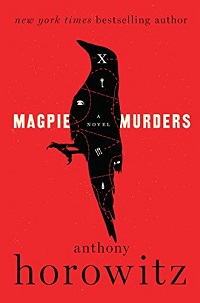
“Magpie Murders” by Anthony Horowitz

Magpie Murders

For those who love mysteries—and I very much belong in this category— Magpie Murders is a double treat. It is a mystery within a mystery, a classic whodunit (short for “Who [has] done it?”) within a whodunit. Agatha Christie was the undisputed queen of this genre, and I find her books absolutely riveting and impossible to put down until the end, when the detective finally reveals the murderer. I have always wished she was still alive and writing, so I wouldn’t have to make do by re-reading her books over and over again.

This is why I was delighted to come across Magpie Murders. Not only did it provide twice the thrill by being a book within a book, it had also one of the most innovative plot lines I have come across so far. A book editor of a publishing company, Susan Ryeland, is given the manuscript of the latest book by their most successful author, Alan Conway. The name of the book is Magpie Murders, and it is the ninth book in his widely popular crime series that is modeled almost entirely on Agatha Christie books—they also feature a Poirot-like detective and are set in small English villages in the 1950s. While Susan dislikes Alan Conway as a person, she loves his books and starts reading the manuscript. It is reproduced in full, and we are reading it with her. This is the “inside” book, and it is every bit as riveting as any Agatha Christie mystery, just as well-written, just as suspenseful, just as impossible to put down.

Therefore imagine her agony, as well as ours, when she comes to the end of the manuscript and finds that it is not complete! This is just before the big reveal when the detective gathers all the suspects and presents the solution to the mystery with a flourish. Needless to say, she can’t wait to get hold of Alan Conway to find out what happens. But then it turns out that he has died, ostensibly from suicide, going by the letter he sent to her boss, the head of the publishing company. In a quest to find the missing chapters of the manuscript, not just for her company but also to get the solution to the mystery in the book, Susan dig deeper and becomes increasingly convinced that Alan may have been died of murder rather than suicide.

This is the “outer” mystery, and while it is set in contemporary times and therefore easier to relate to, I have to admit that I didn’t find as gripping as the inner Agatha Christie-like mystery in the fictional book that Alan Conway wrote. Thankfully, Susan finds the missing end chapters of the inside book, so we find the answer to that mystery. And of course, by the end of the book, we get to know the mystery behind Alan Conway’s death as well.

The fictional Alan Convoy’s fictional book was so good, and such a terrific stand-in for Agatha Christie fans, that I wish Anthony Horowitz would keep writing these books in addition to the other books he writes.

Magpie Murders
Author: Anthony Horowitz
Publisher: Harper
Publication Date: June 2017

 Contributor: Lachmi Khemlani runs a technology publication in the San Francisco Bay Area.

“Wonder” by R. J. Palacio

Wonder

I came upon this book pretty much by chance. I was traveling and therefore looking for some eBooks that I could borrow from the library, since I don’t like to carry physical books with me when I am on a flight. That’s how I came upon Wonder. It had a very intriguing cover, and the fact that it was soon going to be made into a movie sealed the deal. I thought it would at least be a decent read.

I am happy to say that I greatly underestimated how good it was. Wonder is the story of a boy, August, who has a very rare facial deformity that makes him look literally like a zombie. He was born this way, and while he wasn’t conscious of his appearance and the reaction it elicits when he was small, he gradually becomes increasingly conscious of it as he grows older. Anyone who sees him for the first time, even if they have heard about him, are taken aback and cannot help staring. Smaller kids are downright scared. While August, or Auggie as he is called, has very loving and supportive parents and a fiercely protective older sister, he understandably does not like to go out in public and is homeschooled by his mother. Apart from the facial deformation, he has no other abnormality and is a bright kid who does well in academics and especially likes science. He is also just like any other boy who likes to play video games and loves Star Wars.

The book starts with Auggie attending school for the first time. This is a private middle school in which he did well enough on the entrance test to be admitted, and while he initially doesn’t want to go and be stared at by the other kids – even he acknowledges that he would stare if he was in their shoes – he does end up going, partly at the tentative urging of his parents who think it would be good for him, and partly because of the principal, who is extremely supportive and understanding. Wonder is the story of Auggie’s first year in school as a fifth grader, and of how the other kids in his grade and the school react to him, initially and over the course of the year. It starts being told from Auggie’s perspective – which is as you would expect – but then switches to being told from the perspective of several key people in his life including the two closest friends he makes at school, his sister, his sister’s best friend who has known him since he was a baby, and even his sister’s boyfriend. (His sister is just starting high school, and there’s another story there, but it is not central to the main plot.)

It would be easy to dismiss Wonder as just another kid’s book – it is, after all, written mostly from the perspective of a ten year old. However, while all kids should definitely read this book for the values of courage, acceptance, empathy, and kindness that it espouses, even I, as an adult, found it very heartwarming and uplifting. As one of the characters in the book ponders about what Auggie ever did to deserve the “sentence” of his one-in-four-million facial defect and whether this made the universe just a giant lottery where “it’s all just random whether you get a good ticket or a bad ticket,” he also sees how the universe takes care of its most fragile creatures like Auggie by giving him a wealth of good things in his life – parents who love him unconditionally for what he is and are unwavering in their support, a sister who adores him, a father who has a great sense of humor is always making him laugh, a small but equally loving extended family, great teachers at school, a principal he really likes and respects, and eventually good friends who, in time, can see beyond his face to the person beneath. Of course, we, as adults, know that this kind of balance does not happen for everyone who is the victim of a tragedy, it does highlight the fact that even the most down-and-out person has some blessings that they can count.

In addition, I found the exhortation from the principal in his commencement address to the fifth graders at the end of the school year to be “kinder than is necessary” very inspiring, and not just for kids. It’s something we could all remember and do more of throughout our lives; it would definitely make the world a better place to live. Apparently, this quote comes from the author, J. M. Barrie (best known for Peter Pan), in a book called The Little White Bird: “Shall we make a new rule of life … always to try to be a little kinder than is necessary?”

In addition to being very well written, Wonder was also very contemporary and relatable, such as in its references to Star Wars and PlayStations. In one scenario, Auggie’s sister, Via, storms into his room to confront him about something and despite slamming the door, Auggie does not even look up from the PlayStation he is on. Via says, “I hated how zombified his video games made him.” This is so identical to what happens in my own house that I really had to laugh.

I liked this book so much that I actually went out and bought a physical copy of it after finishing it. It is definitely a keeper.

Wonder
Author: R. J. Palacio
Publisher: Alfred A. Knopf
Publication Date: February 2012

Contributor: Lachmi Khemlani runs a technology publication in the San Francisco Bay Area.
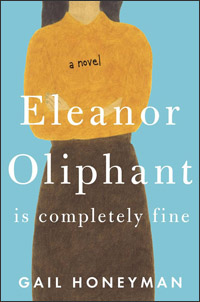
“Eleanor Oliphant Is Completely Fine” by Gail Honeyman

Eleanor Oliphant Is Completely Fine.jpg

I picked up this book from the library on the basis of its title alone — I had never heard of the name “Oliphant” before. Not only was it intriguing, it also sounded kind of funny, leading me to think that perhaps this would be a comedy. It was fiction, of course, and for some reason, fictional comedies are not very common — in fact, most fiction is extremely serious, faithfully mirroring life itself, which, by and large, is rarely funny for most people.

It turns out that I was partly, but not completely, right. The book is a comedy of sorts but at the basis of it is a tragic story. The title character, Eleanor Oliphant, is a thirty year old woman who has been so deeply traumatized by an event in her childhood that she has completely blocked it out and lives like an automaton — she has had the same job (an accountant in a graphics design firm) since she graduated from university; she goes to work every weekday at the same time; has lunch in the break room while solving the daily crossword puzzle in the newspaper; returns home in the evening at the same time after work; reads, listens to the radio, or watches TV before going to bed; drinks vodka on Friday evenings; and spends the weekends doing errands and waiting for Mondays. She doesn’t socialize and has no friends. Her footprint on the earth is so light, the ties that bind her to it are so tenuous, that, as she puts it: “It often feels as if I’m not here, that I’m a figment of my own imagination.”

Things change for Eleanor, when she has a chance encounter with Raymond, the IT guy in her firm, who she had to summon to fix her computer after it was infected by a virus. They gradually become friends, especially after they happen to rescue — one day after work when they are leaving their office building together by chance — an elderly man who passes out on the street. After summoning medical help, they continuing to visit him in the hospital, often together, and also get close to the members of his family who are extremely grateful to them for their help. Raymond and Eleanor start meeting for lunch occasionally at work. Raymond also invites Eleanor to one of his weekly visits to his mother, who is a sweet old lady and helps to give Eleanor a sense of warmth and caring that she never got from her own mother.

The big reveal at the end of the book is what exactly happened to Eleanor as a child to make her what she is, and how she comes to terms with it. She starts getting therapy, gets promoted at her job, and starts interacting with her co-workers, which she didn’t at all before. There is no definite romantic conclusion for Eleanor and Raymond by the end of the book — they just are very good friends — but the door is certainly open to the possibility.

Eleanor Oliphant Is Completely Fine was a sweet, heart-warming story, which was very easy to read. As I said earlier, it was also comic in parts, with the humor coming from Eleanor’s unusual, almost OCD-like thinking and behavior. I also appreciated that Raymond was far from the traditional hero who steps in to rescue the “damsel in distress” — he is not at all handsome, has a pot-belly and a receding hairline, and has several annoying habits that are off-putting to Eleanor, such as eating with his mouth open and constantly smoking. Yet, he is a really nice, good-hearted man, whose friendship is what ultimately helps Eleanor to confront and overcome her demons.

Still, the overall story seems a little “too good to be true,” with Eleanor’s many years of isolation, friendless existence, and automated living, all “healed” within a span of a few months after meeting Raymond. It is hard to believe that no one has, until now, reached out to her, given that she is a nice person at heart, despite the seemingly wacky exterior. The book is a bit of a fairy tale in that respect, which is why it will not be taken too seriously in literary circles — it is simply not realistic or sophisticated enough to win critical acclaim. But it is very well written, nice, and sweet, and we all could all do with reading fairy tales with “happily ever after” endings sometimes, even when we are all grown up.

Eleanor Oliphant Is Completely Fine
Author: Gail Honeyman
Publisher: Pamela Dorman Books
Publication Date: May 2017

Contributor: Lachmi Khemlani runs a technology publication in the San Francisco Bay Area.

“Born a Crime” by Trevor Noah

Born a Crime

I am addicted to three late-night comedy shows — The Daily Show with Trevor Noah, The Late Show with Stephen Colbert, and Late Night with Seth Meyers — all of which I record daily on my DVR and watch religiously the next day. They are essential for me to get my daily quota of laughs. While I heartily enjoy all three shows, the one that I invariably watch first is The Daily Show with Trevor Noah. He took it over from Jon Stewart barely a couple of years ago, and Jon Stewart was so good that it was hard to imagine anyone being able to fill in his shoes. But Trevor Noah has taken the show and made it his own, imbuing it with his unique sensibility — he is from South Africa and is biracial, and is therefore able to look at events in the US as well as the world with a perspective that is very different from the traditional American talk show host. He also has such a natural fair for comedy, which, combined with an innate charm, makes him immediately likable.

Born a Crime is a memoir Noah has written recently that is primarily focused on his childhood growing up in South Africa, against the ugly backdrop of apartheid. While this inhumane system of institutionalized racial segregation and discrimination was ending as he was growing up — thanks to activists like Nelson Mandela — Noah was born at a time when it was still illegal for black and white people to have sexual relations, let alone procreate. Thus, as the child of a white man and a black woman, he was “born a crime,” which explains the title of the book. However, Born a Crime is far from being a dark and depressing read that is focused on the many horrors of apartheid and the fight to end it; instead, it is an account of Noah’s childhood growing up as a “colored” person in South Africa. He was raised primarily by his mother and had more or less a black upbringing, although the tone of his skin did set him apart and made him learn to be like a “chameleon” to fit in with different groups of people. At the same time, it robbed him of the sense of belonging that comes from fitting in squarely in one group.

We see both these seemingly contradictory aspects manifested in so many ways in the anecdotes that Noah shares in this book about his life, from the time he was a little boy being brought up by his mother — with frequent visits to her family where he got a chance to experience the full gamut of relationships including cousins, aunts, uncles, grandmother, and even a great-grandmother — to his adolescent years — by which time his mother had remarried and had two more boys. By the time he was a young adult, he was well on his way to moving out of the house to a place of his own. He had his share of romantic crushes in school, just like any other adolescent, and also had several brushes with the law — mostly involving petty crime — which stopped when he actually ended up spending a few days in jail. Eventually, his natural flair for entertaining people and making them laugh is what led him to doing comedy for a living.

What I enjoyed most about Born a Crime are the stories of Noah’s early childhood, many of which would have been really sad and depressing but for his outlook and the manner in which he narrates them, which makes them funny rather than tragic. For example, the book starts with his mother throwing him out of a moving bus when he was nine years old and then jumping out of the bus herself with his infant step-brother. With an opening like that, how can you not be hooked? There is another story that is laugh-out hilarious, and that is to do with toilets, or rather, the lack of them. In Soweto, the place where Noah grew up, there were only communal toilets, and even those were little more than unceremonious holes into the ground, with flies a constant present. Noah describes how he always had “an all-consuming fear that they were going to fly up and into [Noah’s] bum.” There’s a lot more to this story which I cannot repeat here — it’s worthwhile reading the book for that story alone! — except this priceless observation, “I don’t care who you are, we all shit the same. Beyoncé shits. The pope shits. The Queen of England shits. When we shit we forget our airs and our graces, we forgot how famous or how rich we are. All of that goes away.”

While few people would refer to our bodily functions so crudely, at least in writing, it is so characteristic of Noah to share his observations so bluntly, without any attempt to sugar-coat them. The other stories he narrates are in a similar vein, and I could literally hear his “voice” as I was reading them, with the same tone and manner of speaking that he has on his show — it comes through loud and clear.

What also comes across is his love for his mother, a truly remarkable woman who was extremely tough as well as fiercely independent, who had him when she wanted to have a child but without the traditional marriage to a man in her community and the subservience that goes with it. She left home at a young age, found a secretarial job at a time when this was impossible for black women, found a decent man — who happened to be white — to father a child, and then raised the child on her own. This is how Noah came to be — a biracial kid brought up by his black mother, who couldn’t even be seen with him in public when he was small because it was illegal. His mother did eventually get married to a black man, who turned out to be abusive, but she never stopped being tough and independent, the rock that supported him. Quite simply, he was lucky to be her son.

I enjoyed reading Born a Crime and getting a chance to learn about the back story of someone whose comedy I thoroughly enjoy and who has made it so big in the US. It was also illuminating to hear a first-hand account of someone who has lived though the waning years of apartheid. Over and above all, it’s always fascinating to get a chance to see how people end up doing what they do.

Born a Crime
Author: Trevor Noah
Publisher: Spiegel & Grau
Publication Date: November 2016

Contributor: Lachmi Khemlani runs a technology publication in the San Francisco Bay Area.

“The Heart” by Maylis de Kerangal

The Heart.jpg

As a book lover, a strong recommendation for a book from someone you greatly respect is impossible to ignore, and that is how I came to read the book, The Heart – it was recommended by none other than Bill Gates (in a recent issue of Time magazine). Not that Bill Gates is a literary expert, but as the co-founder and former CEO of Microsoft, one of world’s most successful companies, and more recently, as the leader of the Gates Foundation, a philanthropic organization that he started with his wife, his book recommendations are certainly noteworthy. According to his blog – in which he has a dedicated section for books that he recommends – he mostly reads non-fiction but read The Heart, a novel, on the recommendation of his wife, who told him it was different from other books.

It certainly is. At its essence, The Heart is the story of a heart transplant. The heart in question belongs to a young man, Simon, just twenty years old, who meets with a fatal accident one day on the way back from an early morning surfing expedition with his friends. It was just a matter of chance that he was sitting in the middle and not wearing a seat belt. His friends, who were wearing seats belts, were also seriously injured in the accident, but they survive. The story of the  heart transplant is told through the lens of all the people directly involved in the process – Simon’s parents, who are utterly and completely devastated but eventually give their consent to the donation of his organs; the doctor and the nurse in charge of Simon at the ICU in the hospital where Simon is brought in after the accident; the liaison for the organ donation; the surgeon and nurse team who actually harvest the heart and transport it to the hospital where a recipient is being prepped to receive it; and finally, the recipient herself, Claire, a middle-aged woman whose own heart is failing rapidly and for whom a successful heart transplant is her only shot at survival.

The Heart is unapologetically a tragedy. There is no attempt to find any kind of silver lining in the situation—what can there be in the face of a young man dying so abruptly at the prime of his life? About the only positive thing in the story is the fact that Simon’s parents consent to his organs being harvested for donation, and we get to see firsthand the impact of the donation of one of these organs – his heart – and how it could potentially save the life of someone who would otherwise have died of heart failure. Other than this, the book is heart-breaking all the way through — it captures the shock and devastation of Simon’s parents so vividly and in so much detail that anyone who has lost a close family member will be able to identify completely with how they feel. In contrast to the grieving parents, it also shows how the doctors and nurses stoically go about their work — they have got to do what they do to keep our hospitals going, healing the people they can, and trying their best to save even those that they can’t.

Unlike most novels, The Heart is not a story that is told in a straightforward manner. The usual plot lines are simply not there. While you would expect the story to be primarily centered on Simon’s parents and on Claire, exploring their thoughts and feelings — perhaps with some profound insights on life — the book actually captures the background and personalities of each of the key people involved in the transplant. While this was interesting, I found that it seemed to detract from the overall impact and cohesiveness of the story — it was so broad that it just didn’t seem to come together. Also, some of these people got only a single chapter in the book for their story while others got several, and it wasn’t clear as to why that was the case. The Heart also goes into extensive, and sometimes excruciating, detail about the science and medical aspects of heart transplants — details that I didn’t particularly want or care to know about. Another point of departure for The Heart is the writing style, which is different and takes some getting used it. Sentences seem to go on and on, sometimes even for entire paragraphs, which, in turn, are often longer than a page.

In conclusion, I found The Heart an interesting book, with some aspects of it that were brilliant — notably in capturing the nightmare of a parent dealing with the sudden and irreversible loss of their child — but others that I could not really appreciate. Perhaps, I am too much of a traditionalist when it comes to novels to appreciate a book that is so unconventional.

Getting back to Bill Gates who strongly recommended this book, you can read his take on it at https://www.gatesnotes.com/Books/The-Heart.

The Heart
Author: Maylis de Kerangal (Translated from French by Sam Taylor)
Publisher: Farrar, Straus and Giroux (English edition)
Publication Date: 2016 (Originally published in French in 2014)

Contributor: Lachmi Khemlani runs a technology publication in the San Francisco Bay Area.

“My Life with Bob” by Pamela Paul

My Life with Bob

Of the thousands of podcasts that are now available, there are only two that I subscribe to, the New York Times Book Review podcast and NPR’s Fresh Air. In fact, I listen to them so regularly that the voices of their hosts – Pamela Paul of the New York Times Book Review podcast and Terry Gross of Fresh Air – seem more familiar to me than the sound of my own voice. So when I heard of the book, My Life with Bob, by Pamela Paul that was published recently, I had to, of course, read it – despite the fact that I have a marked preference for fiction and My Life with Bob is more of a memoir. (Interestingly, Pamela Paul was interviewed by Terry Gross on Fresh Air shortly after her book was published, so I had a chance to listen to both of them in the same podcast!)

Contrary to what you might expect, the “Bob” of My Life with Bob is not a guy, but a list of books that Pamela Paul has maintained for twenty-eight years, starting from the time she was in high school. This becomes obvious from the subtitle of the book, which is “Flawed Heroine Keeps Book of Books, Plot Ensues.” Thus, Bob here is an acronym for “Book of books.” It might seem strange to keep such a list – it’s not something people commonly do – and it is a testament to how much Pamela Paul loves books that she has kept a record of every book that she has read since high school. And not only that, her Bob is so precious to her that if she was forced to evacuate her home in a hurry, Bob is what she would choose to take – after her family, of course, but before critical documents such as passports and birth certificates. (Bob, is contained, so far, within a single notebook and is hand-written, and while I can see the importance of maintaining the hand-written aspect of it, I think it can at least be scanned and archived, so she does not live in mortal dread of losing it!)

For a fellow book lover, My Life with Bob provides a fascinating glimpse into the life of someone who has always been passionate about books since she was a kid. Keeping a list of books may have started out as a whim for Pamela Paul – one of those things you embark upon in your teens but soon lose interest in – but it actually became almost a necessity for her, as books were the one constant in her life that she was always passionate about. Her list starts with Franz Kafka’s The Trial on a summer-abroad trip to rural France as a high-school student and continues till the present day, following the arc of her life through college, early adulthood living in Thailand in the soul-searching “What do I want to do with my life?” phase, early career as a freelance writer in which she was able to land prestigious gigs such as a monthly column in The Economist, a first marriage ending in divorce, her second marriage, the birth of her three kids, and her professional ascent in the editorial and publishing world that has culminated in what would seem to be the pinnacle for someone who wants to work with books – becoming the editor of the New York Times Book Review.

Contrary to a personal journal or dairy which is commonly used by people to capture the events, thoughts, feelings – and very often, angst – at specific times in their lives, maintaining a list of every book that she has read is much more meaningful to Pamela Paul, as it concisely captures the trajectory of her life. Instead of reading her thoughts about what she felt at a certain time if she had captured them in a diary – most people who maintain regular journals will probably have hundreds of them – she can simply look at any book in her list and remember the event or experience associated with it, even if it was twenty years ago – similar to how a photograph can trigger long forgotten memories. In her list of books, she even indicates which ones she was not able to complete, which is also illuminating, as what a person does not like is as indicative of their personality as what they do like. While a list of books cannot always be a good filter to find like-minded people, a person’s reading list does tell you a lot about their personality, and the immediate affinity you feel towards someone who feels the same way about a specific book as you do is undeniable.

As you would expect from someone who is the editor of the New York Times Book Review, Pamela Paul is an accomplished writer, and while I have not read any of her earlier books, I found My Life with Bob very well written. It was fascinating to get an inside look at the life of someone whose world revolves around books, all the way from being a “bookish child” who always felt book-deprived, to her current position where she is surrounded by a glut of books and can only manage to read a tiny fraction of them.

My Life with Bob: Flawed Heroine Keeps Book of Books, Plot Ensues
Author: Pamela Paul
Publisher: Henry Holt and Co.
Publication Date: May 2017

Contributor: Lachmi Khemlani runs a technology publication in the San Francisco Bay Area.

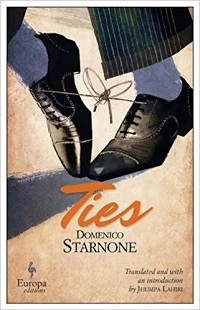
“Ties” by Domenico Starnone (Translated from Italian by Jhumpa Lahiri)


Ties

I have to confess that the only reason I read this book – that it even appeared on my radar in the first place – was because it was associated with Jhumpa Lahiri. Last year, I had written about her memoir, In Other Words, which she wrote in Italian and which was then translated into English by another translator – despite the fact that she is, or at least was until then, an English author. It is incredible to me that someone who has achieved so much success in one language – she won the Pulitzer Prize for Fiction for The Interpreter of Maladies in 2000 – would deliberately choose to discontinue all association with that language and attempt to adopt another language, which in her case was Italian, to the extent of actually moving to Italy with her family and talking and writing only in Italian. Well, she must have accomplished some of what she set out to do since she is back on the English scene, albeit not as an author but as a translator. I don’t know anything about the Italian literary scene, but the author of Ties, Domenico Starnone, is apparently a highly regarded writer in Italy, and Jhumpa Lahiri, after reading the book in its native Italian, jumped at the opportunity to translate the book to English and make it available to the English-speaking world. She has also written an Introduction to the English translation which was very illuminating, providing not only some interesting insights about the book but also about her journey from English to Italian and back.

Getting back to the book, Ties is more of a novella rather than a novel, which means that it is a relatively quick – and easy – read. (This is not to say that all short books are an easy read, but Ties was not in the least bit dense.) It is a story told in three parts, and is, at its heart, the story of a marriage beset by trials and tribulations. The protagonists of the story are a couple, Vanda and Aldo, who have two children, a boy, Sandro, and a girl, Anna. The novel opens when Vanda and Aldo have been married for twelve years, and Aldo walks out on his family to be with a younger woman who he has fallen in love with. Infidelity in a marriage is hardly an uncommon occurrence, but what makes Ties different is that that first part of the story is told entirely in the form of a series of letters written by Vanda to Aldo, entreating him to come to his senses and return home. She does not work and is having a hard time paying the bills; also, the kids miss their father terribly and feel abandoned. These pleas, admonishments, and guilt trips do not really work, as Aldo does not return and Vanda is forced to go out and find a job and singlehandedly run the home and bring up the children. Needless to say, she ends up becoming very hard-hearted and embittered.

The second part of the book fast-forwards several decades and is narrated by Aldo. Both he and Vanda are now in their seventies, and surprisingly, they are together as a married couple. At some point, therefore, Aldo did come back after all. This part of the book has a lot of reminiscing by Aldo on why he left and the reason that he came back. But the main reason for focusing on this particular time of their lives is because of a major incident – Aldo and Vanda have just returned from a vacation to find their house completely vandalized, turned upside down, and Vanda’s beloved cat missing. It is extremely upsetting, and as they go about starting to clean up, we come to know that Aldo has some compromising photographs which have gone missing, leaving him to think it was likely blackmail. At any minute, he is expecting a call threatening to show the photographs to his wife if he doesn’t pay up.

The “mystery” – if we can call it as such – is revealed in the third part of the book, and of course, I cannot write about it without giving it away, except to say that it was totally unexpected.

So, did I like the book? I definitely found it interesting as it captured personalities and a culture that I don’t know anything about. Also, it was a short and quick read, which I really appreciated. And the ending did come as a complete surprise, but not in any kind of unbelievable way. In fact, it brought the story back to the family unit, showing that the “ties” in any relationship, once they are weakened, do not really heal, despite our best efforts. This was particularly true of the marriage between Vanda and Aldo, which had started to develop fissures and cracks, and while it may seem that it all worked out in the end – Aldo did return to his family eventually – the damage was done. The rot had started to set in, and despite being together, neither Vanda nor Aldo was really happy. The situation also took a toll on the children, with both Sandro and Anna damaged in some way as a result of the problems in their parents’ marriage.

As Lahiri explains in the Introduction, the title of the book “Ties” is her interpretation of the Italian title “Lacci” which literally translates into laces. There is some reference in the book to the actual tying of shoelaces, and it seemed liked an apt metaphor for Lahiri to capture the essence of the story.

Does this signal the end of Jhumpa Lahiri’s hiatus from English? I certainly hope so, as she is a very talented writer, but we will just have to wait and see.

Ties
Author: Domenico Starnone, Jhumpa Lahiri (Translator)
Publisher: Europa Editions
Publication Date: March 2017

Contributor: Lachmi Khemlani runs a technology publication in the San Francisco Bay Area.
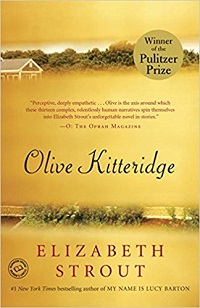
“Olive Kitteridge” by Elizabeth Strout

Olive Kitteridge

Elizabeth Strout is a well-known novelist who has written several highly acclaimed books, including last year’s My Name Is Lucy Barton and the new Anything Is Possible, However, she is most famous for her 2008 novel, Olive Kitteridge, which won the Pulitzer Prize for Fiction in 2009. I read an article about her in a recent issue of the New Yorker, which piqued my interest. I had tried reading My Name Is Lucy Barton when it came out last year, but didn’t really enjoy it. After the New Yorker article, I thought I should give her writing another try. And what better book than her Pulitzer Prize winning novel, Olive Kitteridge?

It was a good choice. While I can’t say that I loved the book – to the extent that I would go out and buy a copy of it to add to my personal collection – I found it extremely well written and can see why it won one of the highest literary honors there is for fiction. It is also very unusual in its format. Set in the small town of Cosby in Maine, the book tells the story of several different people in the town, with each of its thirteen chapters devoted to a different story. It’s almost like reading a collection of short stories, except that there is a common thread between them, an older woman called Olive Kitteridge. While some of the chapters are specifically about her and the significant events in her life – such as her husband having a stroke and eventually dying, and her son whom she doted on getting married to a somewhat obnoxious woman, moving away from home, getting divorced, getting remarried, and having a child – many of the stories center around other people in the town and she is peripheral to them. In fact, in some of them, she barely makes an appearance.

Typically, most story collections like this start off being disparate and disconnected but then bring all the threads together, with all the different characters’ lives somehow intersecting towards the end. But this is not the case with Olive Kitteridge. Only the stories that are focused on her seem to have some kind of story line, tracing her life as a young mother and school teacher—prone to impatience, somewhat insensitive, and completely unapologetic—to an old woman who has lost her husband and doesn’t quite know how to live by herself. The other stories are like snippets into the lives of different characters and their thoughts and emotions – such as a young man who is struggling with depression and lacks the will to live, a middle-aged piano player who is still haunted by a failed romance, a young girl suffering from anorexia who eventually dies, a young mother whose husband dies and she finds out that he was having an affair on the day of his funeral, a family whose young daughter runs away from home to be with her lover, and a psychologically disturbed woman who is planning to commit arson. What is common to all these stories, and to those about Olive Kitteridge as well, is how authentic and poignant they are. They seem to capture the different types of personalities people have, the range of emotions that they experience, and the different life events they are going through, all so realistically that it never seems for a moment that this is just something that someone made up. There is not the slightest hint of melodrama in any of them.

As a reader, I seemed to need the kind of continuity one expects from a novel, which is why I found the stories that were focused on Olive Kitteridge’s life the most compelling and wished there were more of them. And even though I greatly appreciated the other stories, I found myself not that caught up in their characters. I think this book should be approached more as a collection of short stories than a novel. I can see why it won the Pulitzer Prize, but I might have enjoyed it better if I knew in advance that it was not a novel in the conventional sense. It is best read, not in a stretch as I did, but as a collection of finely crafted stories, best enjoyed spaced apart rather than all at once.

Olive Kitteridge
Author: Elizabeth Strout
Publisher: Random House
Publication Date: September 2008

Contributor: Lachmi Khemlani runs a technology publication in the San Francisco Bay Area.

“My Cousin Rachel” by Daphne du Maurier

My Cousin Rachel

My Cousin Rachel is a book by Daphne du Maurier, who is most well known for her 1938 novel, Rebecca. While I have read Rebecca, years ago, I don’t remember much of it except that it was mysterious and suspenseful – and very good. I don’t think, however, that I got a chance to read any other novels by Daphne du Maurier at that time, perhaps because she never reached the kind of fame and ubiquity that novelists like Jane Austen, Charles Dickens, and Somerset Maugham enjoyed, whose books have become enduring literary classics. Lately, however, Daphne du Maurier has re-emerged in public consciousness with another one of her books, My Cousin Rachel, being made into a movie that has just been released. (Rebecca was made into a movie in 1940 by none other than Alfred Hitchcock). It provided me with the incentive to go out and get a copy of the book to read before watching the movie, as I hate it when my own visualizations of the characters in a book – usually the best part of reading – become overlaid by the actors playing those roles in the movie adaption. I found the book so good that I finished it in the course of a weekend.

My Cousin Rachel tells the story of a young man, Philip, who becomes infatuated with an older woman, Rachel, whom he was all set to detest. Philip is an orphan who has been brought up by his cousin, Ambrose, a wealthy landowner in England. Philip aspires nothing more in life than to be like Ambrose, and is very much like him in looks and in nature – shy and reserved with no social graces as such and little interest in material comforts, yet hardworking and generous to his servants and tenants. The story is set in the 19th century, at a time when there were still estates and landowners and large houses with many servants. Ambrose is a confirmed bachelor and has no interest at all in romance and marriage, until he travels to Italy one winter to escape the damp English weather that is making him unwell. (It was very common at that time for the English to go abroad every winter, typically somewhere warm and dry.) In Italy, he meets a widow, Rachel, marries her, continues to stay in her villa for several months, and is in the seventh heaven of bliss until his health rapidly deteriorates and he suddenly dies. All of this is communicated to Philip back at home through letters, which initially show how besotted Ambrose is by Rachel and subsequently, as time goes on, become darker and more paranoid. Ambrose starts to think that Rachel is a spendthrift, that she is too close to the Italian man who is her friend and financial advisor, and finally, when he has become extremely sick, that Rachel is trying to poison him. Philip rushes to Florence as soon as he gets Ambrose’s last few letters foretelling doom, but it is too late – Ambrose is already dead.

Naturally, Philip is devastated – and furious with Rachel, who is now his cousin. He is told that Ambrose might have suffered from a brain tumor similar to that which his father died from, but that doesn’t stop him from feeling almost a murderous rage towards Rachel. But that is before he meets her. She comes to visit, and Philip is soon as besotted with her as Ambrose was, to the extent that he eventually signs over all of his considerable property to her and gives her all his family jewels, which are worth a fortune. He doesn’t care – he is in love with this woman, and despite their age gap, wants to marry her. They have a one-night tryst, an occurrence which makes him think that she has agreed to marry him, when in fact, for her, it was just a “one-night stand” – as we would it now – with someone she has affection for and who has just given her a fortune in jewels. Naturally, she shoots down the idea immediately. Philip falls ill, and while Rachel continues to stay on in England to nurse him, things are different between them now – she remains affectionate, but also distant and firm. At the same time, her Italian friend comes to visit, and Philip, like Ambrose, hates him, thinking they have something going on between them. The final straw is when Philip finds some poisonous seeds in her bureau – is she trying to poison him like she did Ambrose?

While, of course, I can’t give away the ending, I would have to say that the book was so suspenseful that I couldn’t put it down until I had finished it, despite the fact that it was not a thriller or a murder mystery. I also found it beautifully written, very evocative, almost haunting. It is told from Philip’s point of view and captures all of his emotions – his diffidence, rage, jealousy, infatuation, and confusion – so authentically and in so much detail that we seem to be inside his head, actually experiencing all these feelings. I also found it such a welcome change from contemporary novels, many of which attempt to be “clever” but end up just being obscure and convoluted, not to mention pretentious. My Cousin Rachel is a wonderfully crafted story, told in a straightforward manner and without any artifice whatsoever. I wish people still wrote books like this today.

My Cousin Rachel
Author: Daphne du Maurier
Original Publisher and Date: Victor Gollancz Ltd, 1952
Reprint Publisher and Date: Sourcebooks, Inc, 2009

 Contributor: Lachmi Khemlani runs a technology publication in the San Francisco Bay Area.

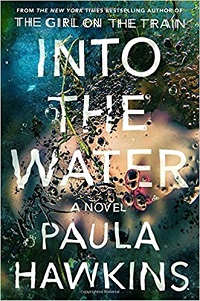
“Into the Water” by Paula Hawkins

Into the Water

Into the Water is the new book by Paula Hawkins, whose debut novel, The Girl on the Train, was such a huge success, not just commercially but also critically — it was on the New York Times Bestseller list for over four months following its release in 2015, which surely has to be a record, at least for a first book. I absolutely loved that book and wrote about it shortly after I reread it last summer and found that I enjoyed it as much as the first time I read it. Naturally, my expectations were really high from Into the Water, although I was also afraid that it wouldn’t be as brilliant as The Girl on the Train. After all, wasn’t it possible that the resounding success of her debut novel had blunted the artistic sensibilities of the author as well as her drive and motivation? Could Paula Hawkins really come up with something that would be as good as The Girl on the Train?

As it turns out, I needn’t have worried about not enjoying Into the Water as much as I did The Girl on the Train. It is as brilliantly written and as much of a taut, suspenseful thriller as The Girl on the Train – I couldn’t put it down and read it in the course of an evening, staying up till the early hours of the morning to finish it. I simply had to know what happens.

Into the Water is set in a small town in England that has a river running through it, one part of which happens to be a treacherous spot where people can drown – either by jumping into the water or by being thrown off. This spot, known to locals as “the Drowning Pool,” has a troubled history, with many women losing their lives there – hundreds of years ago, when people believed in witchcraft, women thought to be witches were thrown into the water, and more recently, it has become somewhat of a suicide spot for troubled women to end their lives. The book begins with the death of a woman, Nel, in the drowning pool. Did she jump into the water or was she pushed? Nel’s death seems to be connected to the death of Katie, a teenage girl, in the same spot about six months ago, which was believed to be a suicide. It’s also possible that the connection actually began with the death of another woman, Lauren, in that spot thirty years ago.

The story is told from the points of view of several characters: Nel’s long estranged sister, Jules, who is forced to come back to the town she and Nel grew up in; Nel’s teenage daughter, Lena, who also happened to be Katie’s best friend; Katie’s mother, Louise; the local detective to whom the case is assigned, Sean, who is also Lauren’s son; and several other characters including Katie’s brother, Sean’s wife, Sean’s father, the high school teacher with whom Katie was having an affair, and last but not least, a local psychic who everyone thinks is crazy but who actually has some important insights into what actually happened. Nel, who was a single mother, had always been obsessed with the Drowning Pool, and her research on it was not appreciated by the others in the community, particularly those whose lives had been affected by it, such as Katie’s mother, Louise. Katie’s brother was just a young boy, but he had seen his mother go out the night Nel died – had she something to do with Nel dying in the water? And why exactly had Katie committed suicide? Why was Jules estranged from her sister all these years? If Nel had indeed killed herself, maybe if Jules had responded when Nel had reached to her, she wouldn’t have been so troubled as to commute suicide? Why was Lena so difficult? Was it normal teenage rebelliousness compounded by the irrevocable loss of her mother, or was she hiding something? Why did Sean seem disturbed so often in the course of the investigation?

By the end of the book, you, of course, get the answers to these questions and things make sense. I was gratified to find the quality of the writing to be as good as The Girl on the Train, and it was just as suspenseful and thrilling, making it impossible to put the book down.

That said, while I thoroughly enjoyed reading Into the Water, I don’t see myself re-reading it with the same level of enjoyment as The Girl on the Train. For one, there are many more characters here, and not only is it initially confusing to the reader, I think it is also more difficult for the author to “get inside” the heads of so many characters, leaving us with a little more than a cursory understanding of many of them, even though they narrate their parts of the story in first person. Also, the reason behind Jules’s estranged relationship with Nel did not seem very convincing. And finally, I felt that the book does not sufficiently clarify every single question — and it could be because there were too many interconnected threads in the plot.

In short, I found Into the Water a great read, but not the kind of book I would go out and buy a copy of for my personal library, as I did for The Girl on the Train.

Into the Water
Author: Paula Hawkins
Publisher: Riverhead Books
Publication Date: May 2017

Contributor: Lachmi Khemlani runs a technology publication in the San Francisco Bay Area.
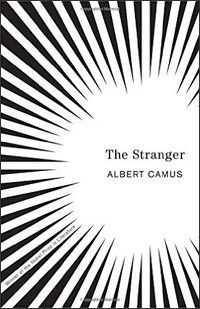
“The Stranger” by Albert Camus (translated from French by Matthew Ward)

The Stranger

After a series of books lately that left me somewhat disappointed – and made me question whether I was losing the pure, unadulterated enjoyment of books that I used to have as far back as I can remember – I picked up Camus’ The Stranger, at the recommendation of my high school daughter, who had been assigned this as one of her reading books this year. The Stranger is a classic that I had not read, and I hoped that a book that had withstood the test of time would get me out of my reading blues. While Albert Camus was familiar to me by name, I had not actually read any of his books, so I really did not know what to expect. But I was heartened by the fact that it was a slim book, as it meant that even if I didn’t like it, I could stick it out till the end. It was a classic, after all, and I wanted to see what it was about the book that had made it so enduring, well past the author’s death.

I would have to say that The Stranger helped restore my faith in books and reading. It tells the story of Monsieur Meursault, a man who is seemingly ordinary but who has such an unusual outlook on life – he is an atheist, and not only does he not believe in life after death, he also does not believe that there is any meaning to life itself – that it is almost impossible for most people to relate to him. He doesn’t wear these feelings on his sleeve, however, so up until the time the book starts, he was living a regular life – he worked in an office, was reasonably social, and had girlfriends, like most young men of his age. Things start to change when his mother, who has been living in a home for the elderly for the last few years, dies. He goes for the funeral, where his seeming lack of emotion strikes everyone else as a little strange. While he accepts his mother’s death as a matter of course and is not devastated by it, it doesn’t not occur to him to fake some emotion to show to others that he cares – he simply doesn’t think like that.

After the funeral, he goes back home and resumes his normal life – and as his mother was not staying with him, this was relatively easy. He meets an ex-girlfriend the next day and takes up with her again, going swimming, then to the movies, and finally to his place where they spend the night together. She soon becomes his regular girlfriend and they start seeing each other more often. At the same time, he becomes friendlier with one of the neighbors in his apartment building, Raymond, and somehow becomes involved in a conflict with Raymond’s enemies, culminating in Meursault thoughtlessly shooting one of them on a beach. There was no particular reason why he did this – it was something that happened on impulse rather than something he had planned or even thought about doing.

Needless to say, he is arrested and brought to trial, and this is where his unusual attitude to life – which is not only alien to everyone else dealing with his case, but also extremely annoying and frustrating – comes to play. While there is no question that he actually shot and killed a man, the argument centers around his character. The prosecution tries to prove that this was a premeditated crime and that he was a fundamentally cruel and evil person, as evidenced by his cold demeanor at his mother’s funeral where he didn’t show any emotion whatsoever. The fact that he hooked up with his girlfriend just a day after the funeral is an additional nail in the coffin. The defense attempts to contradict this reasoning by bringing some of his friends to testify on his behalf. But ultimately, the prosecution wins and Meursault is sentenced, not just to death but death by the guillotine – which was still around in France in the 1940s where this book is set.

The book ends with a chaplain making an unsuccessful attempt to make Meursault believe in God and an afterlife and to feel remorse. He just can’t fathom how someone can be so totally indifferent to death and not cling to some kind of meaning in life. But Meursault is like this, and he awaits his death with the same manner in which he has lived his life so far – by taking things as they come without getting caught up emotionally in them — making him the ultimate “stranger” compared to how most people think and feel.

I found it interesting how this attitude comes so close to the Buddhist philosophy of detachment, or even Krishna’s exhortation to Arjun in the Gita (Hinduism’s sacred text) to continue to act without being motivated by the fruits of your labor. There are millions of spiritual seekers in the world who aspire to have the same kind of outlook on life that the fictional Meursault has – to live without becoming wedded to the “pleasures” of the world, to not get caught up in it. Of course, for Meursault this comes from the conviction that “it doesn’t matter whether you die at thirty or at seventy,” and I imagine it would be hard to feel that sense of detachment without this conviction.

I am also amazed at how Camus was able to explore such deeply philosophical questions – which are still being debated today as much as ever – in his very first book. I was not surprised to find out that he was awarded the Nobel Prize for Literature in 1957. I also have to say that I am even more impressed with how famous this book has become, given that the protagonist is someone that I think not many people can relate to or identify with. I think we deserve a lot more credit that we give ourselves.

The Stranger
Author: Albert Camus (translated from French by Matthew Ward)
Publisher: Vintage International
Publication Date: March 1989
(Originally published in French as L’Etranger by Librairie Gallimard, France, in 1942.)

Contributor: Lachmi Khemlani runs a technology publication in the San Francisco Bay Area.

“Exit West” by Mohsin Hamid

Exit West

Exit West is the new novel by Mohsin Hamid, who is most well known for his book, The Reluctant Fundamentalist, which was also made into a movie. I have neither read that book nor watched the movie, but Exit West has made quite a splash in literary circles and is currently #9 on The New York Times bestseller list, which is an amazing accomplishment. It’s not that often that we have someone from the Indian subcontinent being interviewed in leading magazines, podcasts, and talk shows, and as someone who is “plugged into” the latest news from the literary world, I was definitely intrigued. In his interviews, Mohsin Hamid came across as very  intelligent and articulate, and he spoke particularly eloquently about his experience as a Muslim in an increasingly Islamaphobic world. I was curious to see how the book had captured his experience and knowledge of the Muslim world, and whether it was a good story. Because, ultimately, that is what really counts — even the most topical novels will fail to have any impact if they’re not well-told stories as well.

Exit West is indeed, set in the Muslim world, in an imaginary Muslim country in which the political situation is rapidly deteriorating. The protagonists of the novel are two citizens of this country, Saeed and Nadia, who meet and fall in love against its violence-ridden backdrop. Things are not so bad when they first meet, but the political crisis escalates rapidly – all around them, people are being killed, the living conditions are unspeakable, the brutality is extreme. Things come to a head when Saeed’s mother is also killed – it makes Saeed and Nadia determined to find a way to escape from their home country. Fortunately for them – and this is where the novel departs from physical reality and enters the territory of magic realism – there are these “magic doors” that function as portals out of the country, and eventually Saeed and Nadia decide to try their luck with one of them. It’s all very clandestine and they have to pay a substantial amount to a middleman for the passage, but one night, furtively in the dark, they finally manage to make their way out of a door. They have no idea where the door leads, but it turns out to be into the Greek island of Mykonos.

At this point, you might think of this as, “Wow! Greece!” and expect a happily-ever-after ending. But we’re only half-way through the book and it turns out that these magic doors exist in many places around the world, allowing lots of people to move from one place to another instantly. However, it’s not that easy to gain access to them. The doors from the “bad” places to the “good” places are heavily guarded, and naturally, no one is interested in the doors going from the “good” to the “bad” places. Needless to say, the mere existence of these doors — the influx through which cannot really be controlled by the country to which they are leading — ends up actually fostering the creation of a slew of migrants all over the world, similar to Saeed and Nadia. These are people escaping from war and poverty in their home countries and attempting to settle in the more stable and affluent countries. The situation is identical to the current refugee crisis in the world, except that in real life, migrants have to travel long distances — often in extremely hazardous conditions­ — to actually get to other countries – there are no magical shortcuts. Apart from this, the situation is similar to what we have now – the migrants are looked down upon by the people of the countries they have escaped to, the governments of those countries want to crack down on them, there is racism, and the migrants are housed in cramped, shanty towns that are not that much better than their living conditions back home.

Exit West was interesting and enjoyable up to this point, but I found myself losing interest in the book after Saeed and Nadia’s first entry to Mykonos and a narration of how life is for them and the other migrants who have also come there from various countries. Not much happens to Saeed and Nadia after that except that they travel to a few more places, including London and San Francisco, and drift apart. There is no other “magic” in the book apart from the doors, which was a little incongruous and somewhat disappointing. After all, if you want to have magic in a story, take it all the way through! Otherwise, just having magic doors to transport you from one place to another without any other change in the world is simply weird. (People in Exit West have smart phones and use social media, so that hasn’t changed.)

Thus, while the premise of the book was very interesting, I thought it simply didn’t live up to the hype. I also had mixed feelings about the writing style, which I found inconsistent — most of the book was written “normally” and was easy to read, when all of a sudden, it occasionally veered off into this bizarre style where there were long paragraphs, often longer than a page, written entirely without a period (i.e., full stop), with only commas to separate out the sentences. I personally find it somewhat pretentious and annoying when writers do this — a good example being Arundhati Roy in The God of Small Things, where several words and phrases are capitalized in the middle of sentences. But at least, this technique was consistently used across The God of Small Things, whereas in Exit West, the no-period paragraph style appears haphazardly, in just some places, and therefore sticks out like a sore thumb. I really wish writers would resort to less gimmicks and focus on creating stories that don’t need literary tricks to prop them up. It would make reading their books so much less onerous.

Exit West
Author: Mohsin Hamid
Publisher: Riverhead Books
Publication Date: March 2017

Contributor: Lachmi Khemlani runs a technology publication in the San Francisco Bay Area.

“Defending Jacob” by William Landay

Defending Jacob

Of late, it has been difficult for me to find books that hold my interest. I regularly listen to the New York Times Book Review podcast and also subscribe to Bookmarks magazine, so I am up to date with which are the hottest books being published – what critics are saying about them, as well as their authors in the course of the many interviews they do as part of their book promotion tours. I borrow these books from the library with great enthusiasm, but very often, I just don’t find them interesting enough to stick with them beyond the first few chapters – they don’t hold my attention or make me care enough about the characters to make reading them a pleasure rather than a chore.

Therefore, I decided to take a break from “heavy-duty” reading and go back to that genre which, when well done, is impossible for me to put down – a good old-fashioned murder mystery. I grew up on hundreds of Enid Blyton mystery books as a kid in India and I subsequently graduated to Agatha Christie – my all-time favorite mystery writer — whose books I can still read again and again and enjoy them even when I know whodunit (“Who [has] done it?”). Along the way, I also discovered that I like courtroom dramas, a great example of which are books by Jodi Picoult (see my review of Small Great Things). This is why when I came across Defending Jacob, it seemed to me like a no-brainer to give it a try and end my long dry run of finding something to read that I could actually finish. I’m happy to say that it worked. I was riveted by the book and finished it in the course of a day.

Defending Jacob tells the story of a regular family that is suddenly thrown in turmoil when the son, Jacob, is charged with the murder of a boy, Ben, from the same school, who is found stabbed to death in the neighborhood park. Jacob is the only son of Andy, who is actually the Assistant DA (District Attorney) of the small town near Boston where the murder happens and is given charge of the case. It is a real shock to the community, which has been crime-free until now — all the kids go to the local school and most of the parents have known each other since their kids started school in kindergarten. Andy and his wife, Laurie, are well liked and highly respected members of this community, and they remain so even after the murdered boy is found until it turns out that their son, Jacob, may have done it. They are then, of course, immediately ostracized. To his parents, Jacob seems just like any other high school adolescent boy – sullen, introverted, and uncommunicative — and it’s impossible for them to tell if these are normal or the signs of a killer. Complicating the fact is that Andy is descended from a family with a history of violence, with at least three generations of men prior to him convicted of murder and his father still in prison because of it. Andy has successfully disassociated himself from this aspect of his family’s history – even Laurie does not know about it – but now the issue comes up when the case goes to court. Is there such a thing as a “murder gene,” and if so, has Jacob inherited it?

Andy is removed from the case as soon as Jacob comes under suspicion and the book tells the harrowing story of the family’s long ordeal in the days leading up to the trial and the trial itself. The story is extremely well told without resorting to melodrama or clichés, making it extremely believable. And of course, it is a mystery that leaves you guessing – did Jacob do it, or someone else, such as the convicted pedophile who was often in the park where Ben was murdered? The fact that Ben bullied Jacob and that Jacob owned a knife that he had bought earlier naturally throws suspicion on him, along with the discovery of a single fingerprint found on Ben’s jacket that matches Jacob. Then there is the whole online world that Jacob inhabits — all the Facebooks posts among the school kids some of which openly accuse him of the murder, and the “cutter porn” chat rooms (focused on violence and torture) that he frequents and occasionally even contributes to. All of these are pretty incriminating, but are they sufficient for the jury to pronounce Jacob guilty without a reasonable doubt?

There is the proverbial twist at the end of this book, as with many books of this genre, but it is not something related to this crime itself – in fact, it is so believable that you do not feel for a minute that you have been cheated or that some information was withheld from you deliberately to throw you off the track. It ends on a solid conclusion rather than a shaky one, unexpected for sure, but not at all contrived. All in all, it was a very good read.

Defending Jacob
Author: William Landay
Publisher: Bantam
Publication Date: September 2013

Contributor: Lachmi Khemlani runs a technology publication in the San Francisco Bay Area.

“The Refugees” by Viet Thanh Nguyen

The Refugees

I really wanted to like this book. I had heard a lot about it in literary circles, as it was the new book by Viet Thanh Nguyen, a Vietnamese American novelist who had won the esteemed Pulitzer Prize for Fiction last year for his debut novel, The Sympathizer. The author was a recent visitor to a talk show that I happened to watch (Late Night with Seth Meyers), and I was very impressed—I found him intelligent, articulate, and extremely down-to-earth. Also, the subject of the book—refugees—seems particularly relevant these days, and even though the ones in this book are those who fled Vietnam after the Vietnam War in the 70s and 80s, they are refugees nevertheless. And while this book is a collection of short stories as opposed to a novel which I usually prefer, I have occasionally come across other collections of short stories that I have really enjoyed— the best example being Jhumpa Lahiri’s Interpreter of Maladies (which coincidentally also won the Pulitzer Prize for Fiction when it was published). I hadn’t read any book by a Vietnamese author before, so I was really open and receptive to this one. Thus, I had so many reasons to be predisposed towards liking this book—how could I not?

However, liking the book did not turn out to be as straightforward as I had anticipated. While I really appreciated Nguyen’s writing style—sparse, unpretentious, and eminently accessible—I did not find this collection of stories—there are eight of them—all that interesting, or even particularly insightful in better understanding the psyche of Vietnamese Americans who had fled their country and settled in the US. The horrors of that long-drawn out brutal war are not really captured except in one story, where a sister is visited by her brother’s ghost who died while trying to save her from soldiers on the boat their family was fleeing in. An oblique reference to the many land-mines that are still all over the country appears in another story in which an American military man, who was part of the air force that fought in the Vietnam War, visits it many years later with his wife to visit his daughter and her Vietnamese boyfriend. However, the focus of that story is really about the father-daughter relationship rather than Vietnam as such.

I also found that many of the stories ended very abruptly. For example, in a story called “The Other Man,” a young Vietnamese refugee, Liem, comes to live with a gay couple in San Francisco, is attracted to one of them, and ends up sleeping with him when the other unsuspecting partner has to go out of town for a few days. And the story pretty much just ends there, with Liem reading a letter from his family that he has just received and exchanging a glance with a stranger he sees with another man from his window. In another story, “The Transplant,” an American man, Arthur, gets fooled into storing fake merchandise in his garage for a Vietnamese American man, Louis Vu, who pretends to be the son of an unknown donor of the life-saving liver transplant that Arthur has recently received. The story just ends with Arthur finding out that Louis Vu had lied to him, and that’s it. The merchandise is still in Arthur’s garage, and we don’t know what happens to it or to Arthur. Several of the other stories had similarly inconclusive endings. It seemed as though the story could have well gone on, but the author just decided to pull the plug on it and move on. While I certainly wasn’t expecting a resolution to every story—that would be extremely unrealistic, given how messy life usually is—it would be nice to at least have some semblance of an ending. Otherwise, what’s the point? Why bother telling a story? Why bother reading one?

Of course, I am aware that very often, having a “non-ending” is often a stylistic choice by the author, which may be greatly appreciated by other readers, similar to how movies such as Terrence Malick’s The Tree of Life can be vilified by some and widely acclaimed by others at the same time. (I must admit to being one of the former.) However, even if I were to accept that I am one of those who just didn’t “get” the stories in The Refugees, I was disappointed to find that I was not able to really relate to them either, in the manner in which someone of Vietnamese descent might be able to identify with the characters and situations. I find this a real pity as it goes against our notion of universality — commonality of thought and feeling — as human beings. I do not know if the fact that I could not identify with much of the book is a problem with me or a failing of the book.

What I do know, however, is that I would like to give Viet Thanh Nguyen another try as an author, as I really respect him and like his writing style. I will go ahead and put his Pulitzer Prize-winning novel, The Sympathizer, on my reading list. Maybe I’ll have better luck with it.

The Refugees
Author: Viet Thanh Nguyen
Publisher: Grove Press
Publication Date: February 2017

Contributor: Lachmi Khemlani runs a technology publication in the San Francisco Bay Area.
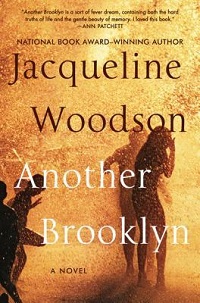
“Another Brooklyn” by Jacqueline Woodson

Another Brooklyn

There were several reasons that prompted me to pick up Another Brooklyn in the New Books section of my local library. To start with, its author, Jacqueline Woodson, had won the National Book Award in 2014 for her critically acclaimed memoir, Brown Girl Dreaming. Also, the title of the book reminded me of the classic 1943 novel, A Tree Grows in Brooklyn, which I had read several years ago, and which is still often quoted whenever Brooklyn is being discussed. Then there is also the fact that I recently visited Brooklyn—and walked on the famous Brooklyn Bridge—so I feel a visceral connection to the place.

And finally, Brooklyn is now one of the main cities in the U.S. going through a rapid gentrification process with enormous increases in the housing prices and apartment rentals, pricing out the traditional African-Americans who have lived there for generations. Another Brooklyn captures a time before all this happened, when Brooklyn was still very much a place dominated by black people, and it provides a fascinating glimpse into what it was like. In fact, the book is primarily set in the 1970s, when white people were fleeing from Brooklyn because of the influx of black people. The irony would be funny if it weren’t so tragic.

Anyway, getting back to the book, Another Brooklyn is the coming-of-age story of four girls growing up in Brooklyn, how they become inseparable friends, how they grow up from being kids to adolescents, and how they eventually drift apart and go their own separate ways as adults. August, the protagonist, is one of the four girls—she has recently moved to Brooklyn from Tennessee with her father and brother, following the tragic death of her mother (which she refuses to acknowledge for several years until she goes to meet a therapist at the insistence of her father). As she is adjusting to her new surroundings, Angela sees the clique of the other three—Sylvia, Angela, and Gigi—and desperately wants to be a part of it. This happens quite soon, without much fanfare, and the story then goes on to explore different issues through the interactions of the four friends with each other, their families, and the others around them.

What really impressed me about this book was that the issues that are explored through the lens of the four friends are issues that are common to any race and culture—the changes that adolescence brings in girls and in how others react to them, the growing interest in and from boys, going out on dates, the pressure from boyfriends to “go all the way,” the repercussions of resistance, the betrayals by close friends, teen pregnancies, parental expectations and failing to meet them, and the large part that luck plays in becoming successful even if you are very talented. There are no “black” issues as such, and from that perspective, the book is not at all stereotypical. About the only time race comes into play is when the parents of one of the girls, who is half-Chinese and half-black, disapprove of her friends and think that she can do better. (Not that this stops her.)

There are also none of the usual story lines you would expect. Soon after their arrival in Brooklyn, August’s father gets inducted into the Nation of Islam and eventually her brother also starts following Islam. Yet, there is nothing that shows the religion as being harmful or hurtful in any way. The father is not abusive, neither is the brother. They were poor, but always had enough to eat and were able to help those worse off than them. August is an academically good student, focuses on AP exams and SATs in high school, eventually goes to an Ivy League school, and becomes an anthropologist as an adult, travelling the world to study about death and dying in different cultures. (She returns to Brooklyn when her father dies and a chance glimpse of one of her friends on the subway brings back memories of her childhood to her.)

In addition to not being about race or racism at all, what also distinguishes Another Brooklyn is its lack of drama. This are no big defining moments when things change, no life-changing events, no plot twists and turns. This makes it more true to how life is for most people. The writing is also every poetic, making the term “understated eloquence” a very apt description of the book. I really liked it—not only was it beautifully written and different from other books I have read, it gave me a first-person glimpse into a life and culture I didn’t know much about.

Another Brooklyn
Author: Jacqueline Woodson
Publisher: Amistad (HarperCollins)
Publication Date: August 2016

Contributor: Lachmi Khemlani runs a technology publication in the San Francisco Bay Area.