“The South African Gandhi – Stretcher Bearer of Empire” by Ashwin Desai and Goolam Vahed

The South African Gandhi

Gandhi spent 21 years in South Africa practicing law. They called him the ‘coolie barrister.’ And he called the indigenous people ‘kaffirs.’ The scantily clad man Indians recognize as the ‘father of the nation’ had an image makeover on the eve of his departure from South Africa in 1914. Gone was the coat-suit ensemble. In came the oh-so-humble dhoti. This meticulously researched book by Ashwin Desai and Goolam Vahed (South African professors of Indian origin) unravels many facets of the saint-in-the-making. Quoting extensively from ‘The Collected Works of Mahatma Gandhi’ as well as newspaper publications including ‘Indian Opinion’ of which Gandhi himself was co-founder, they paint an unfamiliar portrait of a familiar global icon, leaving the reader shocked and saddened.

Here’s a sample of Gandhi’s pronouncements during his South African sojourn:

  • We believe also that the white race in South Africa should be the predominating race. (1903)
  • We have never asked for political equality. We do not hope to get that…I have never asked for the vote. (1914)
  • About this mixing of the Kaffirs with the Indians, I must confess I feel most strongly. I think it is very unfair to the Indian population….(In a 1904 letter to the Medical Health Officer of Johannesburg, he demanded that Kaffirs be withdrawn from a residential area peopled predominantly by Indians.)
  • Should they (Indians) be assigned a permanent part in the Militia, there will remain no ground for the European complaint that Europeans alone have to bear the brunt of Colonial defence. (1906)

The saddest part is that Gandhi failed to acknowledge African suffering. During the Boer war, he served the Empire as stretcher bearer. In 1906 when the Zulus in Natal revolted he seized the opportunity to demonstrate his loyalty to the British Crown. He wrote in Indian Opinion on 14th April 1906, “It is not for me to say whether the revolt is justified or not. We are in Natal by virtue of British power. Our very existence depends upon it. It is therefore our duty to render help….” In stark contrast, the ‘arch-imperialist’ Winston Churchill condemned the ‘disgusting butchery’ and referred to ‘this wretched colony’ as ‘the hooligan of the British Empire.”

Gandhi’s associates from outside the Indian community were all whites. He remained aloof from the blacks. The authors suggest that “Gandhi’s Anglophilia possibly played a role in developing his theory of satyagraha.” They point out that he conveniently forgot the principles of non-violence and satyagraha whenever the Empire was at risk. His strategy was one of whining, petitioning, lobbying, negotiating, compromising and surrendering. At the same time he was a great publicity agent. He had Joseph J Doke write his biography in 1909. It was published with the assistance of N M Cooper in England. Gandhi purchased all 600 copies and had them distributed in Britain, Rangoon, Madras and South Africa. Ironically, the Introduction to the book was written by Lord Ampthill who sat in the House of Lords from 1909 to 1935 and opposed every move in the direction of Indian self-governance.

In 1906, Gandhi announced his vow of celibacy. Authors such as Kathryn Tidrick have suggested that it was possibly in South Africa that Gandhi commenced the practice of sleeping with nubile nymphs ostensibly to ‘test’ his self control. Gandhi hailed as his ‘soul-mate’ a German Jew, Hermann Kallenbach. They met in 1903, shared a house from 1907/1908 to 1910 and wrote inexplicably intimate letters to each other ever after. (The letters were purchased for $1.3million by the Government of India in 2012 and the contents remain under wraps.) In May 1910 Kallenbach purchased an 1100 acre farm near Johannesburg for Gandhi’s use. It was named Tolstoy Farm. Residents were compelled to practice celibacy and vegetarianism.

Gandhi’s Indian benefactors financed his activities in South Africa. Among them were the Maharajas of Bikaner and Mysore and the Nizam of Hyderabad. Gopal Krishna Gokhale, Gandhi’s mentor, visited South Africa in 1912 and helped revive his sagging political fortunes. In October 1913, Gandhi failed to get majority support within the Natal Indian Congress and he formed another outfit called Natal Indian Association. The 1913 strike by Indians workers across the mining and plantation sectors underlined the futility of passive resistance. In a letter to Marshall Campbell on 23rd December 1913, the future Mahatma wrote: “We were endeavouring to confine the strike area to the collieries only. Whilst I was in Newcastle I was asked by my co-workers in Durban what answer to give the coastal Indians who wanted to join the movement, and I emphatically told them that the time was not ripe for them to do so….(but) after my arrest….the movement became not only spontaneous but it assumed gigantic proportions.”

On 20th December 1913, following his release from prison, Gandhi appeared at a public meeting at Durban wearing dhoti and kurta. He no longer had a moustache. In July 1914, he announced he was returning to India for good.

Historians and history buffs are wondering what to make of the book. It is too compelling to be wished away.

Overall Assessment: Deeply disturbing. A must read for every Indian.

THE SOUTH AFRICAN GANDHI – STRETCHER BEARER OF EMPIRE
AUTHORS: ASHWIN DESAI AND GOOLAM VAHED
PUBLISHER: NAVAYANA PUBLISHING & STANFORD UNIVERSITY PRESS
PUBLICATION DATE: 2015


Reviewer: Pushpa Kurup lives in Trivandrum, India and works in the IT sector.
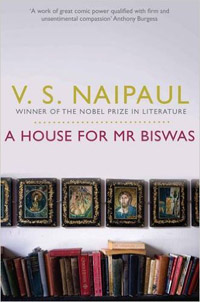
 

“A House for Mr. Biswas” by V S Naipaul

A House for Mr Biswas

This is a rather ancient book by 21st century standards, penned in the late fifties and published in 1961, by Trinidad born, Indian origin, Oxford educated, UK citizen, Vidiadhar Surajprasad Naipaul. Then why read it at all? Well, for one thing, this guy is no ordinary writer. All his life he did nothing but write, write and write. Many of his books are extraordinary. He won the Booker prize in 1971 and the Nobel Prize for Literature in 2001. He was knighted in 1990.

This book is a magnum opus spanning over 600 pages. The master storyteller brings to life each of the characters and locations in such explicit detail that everything becomes familiar to the reader as if the persons and places were all in his own backyard. Those who love fast paced action thrillers, murders and mysteries may not be fascinated by this one. It is a down to earth account of the daily lives of down to earth people, sons and daughters of a little British colony where many mixed races live together in harsh if not pathetic circumstances. The author manages to paint a perfect portrait without exaggeration or unnecessary recourse to sentiment. The reader is often left wondering whether to feel sorry for the central character or laugh at him.

The humour is typical of an English gentleman – subtle, tongue-in-cheek and greatly amusing. Take this for instance: “The house was alive but subdued when he got back. He found four children on his bed. They were not his. Thereafter he occupied his room early in the evening, bolted the door and refused to answer knocks, calls, scratches and cries.”

Naipaul offers some friendly advice for aspiring journalists: “Even people with outstanding writing ability say they cannot find subjects. But in reality nothing is easier. You are sitting at your desk. You look through your window. But wait. There is an article in that window. The various types of window, the history of the window, windows famous in history, houses without windows. And the story of glass itself can be fascinating. Already, then, you have subjects for two articles.”

Every now and then Naipaul makes a dig at Hindu rituals but the implied criticism is not unfounded. Nearly one fourth of the population of this tiny nation is Hindu (even half a century after Naipaul wrote the book.) They went to the colony as indentured labourers in the mid 19th century and their descendants have remained there ever since. Having little or no contact with India, they are left to practice Hinduism in their own unique ways. The author notes every religious ritual with amusement. Consider this: “In his thin voice, Hari whined out the prayers. Whining, he sprinkled water into the hole with a mango leaf and dropped a penny and some other things wrapped in another mango leaf.”

Naipaul does not hesitate to make cheeky remarks about well-know personalities, particularly Indians. And of course, he makes his characters do all the talking. Here’s an example: “Scathing was one of his favourite words and the person he had handled most scathingly was Krishna Menon.” Naipaul must have had a well-developed sixth sense or perhaps he bumped into Menon in London. This was before China invaded India and inflicted a humiliating defeat and Menon as Defence Minister drew a lot of flak.

How Trinidad-born Indians perceive India-born Indians is interesting too. “Owad disliked all Indians from India,” the author observes. “They were a disgrace to Trinidad Indians; they were arrogant, sly and lecherous; they pronounced English in a peculiar way…..” He goes on and on, making the reader double up with laughter (or red with indignation if his national pride is invoked). Incidentally the book is replete with umpteen examples of Trinidadian English which could give Indian English a run for its money. It is also peppered with politically incorrect words like ‘negro’ but we need to concede that in those days nobody called the blacks ‘blacks’ – and Naipaul was perhaps using common parlance.

If you have an interest in the Indian diaspora, do read this book. It takes patience, but it’s worth the effort.

A HOUSE FOR MR. BISWAS
AUTHOR: V S NAIPAUL
PUBLISHER: PICADOR
PUBLICATION DATE: 1961

Reviewer: Pushpa Kurup lives in Trivandrum, India and works in the IT sector.
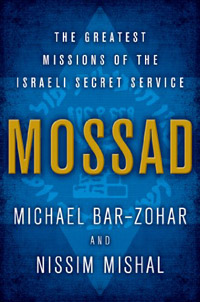
“MOSSAD – The Greatest Missions of the Israeli Secret Service” by Michael Bar-Zohar and Nissim Mishal

mossad-small

Iran had been threatening to wipe out Israel from the face of the earth. What would the Israelis have done without the Mossad, their secret service network that seems to have no parallel anywhere in the world? Israel has more hostile neighbours than any other country. And Jerusalem has, for thousands of years, been the most disputed territory on earth. Now this does not justify or rationalize the Mossad’s undercover activities, and yet……it certainly makes you ponder!

This book gives an account of the Mossad’s multifarious activities, some of them benign and humanistic like the transfer of thousands of Ethiopian Jews through Sudan to Israel, and others deadly and diabolic like the cold-blooded elimination of those identified as enemies of Israel. One develops a grudging respect for spies in general and the ‘art’ of espionage in particular. And one begins to wonder whether there is anything that the Mossad doesn’t know!

The authors provide many thrills, among them:

1) A spine-chilling account of the Nazi fugitive Adolf Eichmann’s detection and capture in Argentina and his hush-hush transfer to Israel to stand trial.

2) Inside information of the systematic sabotage of Iran’s nuclear program, not to mention similar ventures in Syria and Iraq.

3) A vivid description of the daring assassination of Mahmoud Al-Mabhouh, a Hamas kingpin in Dubai in January 2010. This operation was carried out in the full glare of CCTV cameras. Within 6 hours of the man’s arrival in Dubai he was dead. The Mossad’s 27 member hit team was out of the country within hours of the assassination. The comings and goings were watched worldwide on YouTube.

Some of the ultra fascinating chapters include: The Quest for the Red Prince, I want a MiG 21, Saddam’s Supergun and “Oh that? It’s Khrushchev’s Speech…!” On second thoughts, every page is mind-blowing. It’s hard to pinpoint the best parts.

I can’t help wondering what Mossad is doing about ISIS right now. I guess that will remain under wraps for a few decades more – until someone writes another tell-all book.

Overall assessment: Sure to make your hair stand on end. No wonder they say ‘truth is stranger than fiction.’

MOSSAD – THE GREATEST MISSIONS OF THE ISRAELI SECRET SERVICE
AUTHOR: MICHAEL BAR-ZOHAR AND NISSIM MISHAL
PUBLISHER: HARPERCOLLINS/ECCO (ENGLISH EDITION)
PUBLICATION DATE: November 2012 (FIRST PUBLISHED IN ISRAEL IN 2010)

Reviewer: Pushpa Kurup lives in Trivandrum, India and works in the IT sector.

“At the Dark End of the Street: Black Women, Rape, and Resistance” by Danielle L McGuire

dark-end-street-small

March 2nd, 1955: Claudette Colvin, a schoolgirl, is arrested for refusing to give up her seat on a bus and saying, “I’m just as good as any white person.”

October 21st, 1955: Mary Louise Smith, an eighteen year old housemaid, is arrested for a similar offence.

December 1st, 1955: Rosa Parks does the same thing – and her name goes down in history. (And no, she was not tired and her feet didn’t really hurt.)

So when does Martin Luther King, Jr. come in?

This book takes a fresh look at the history of the Civil Rights Movement. It is sure to change the reader’s perspective as well. The case histories, the crimes, the testimonies, and the nature of the trials, everything shocks – and rocks. We get to know the real Rosa Parks, how and by whom the Montgomery Bus Boycott of 1955 was organized, and how the Civil Rights movement was rooted in the long and painful history of African American women’s struggle against sexual violence. The horrifying gang rape of Recy Taylor in Abeville, Alabama in 1944, the miscarriage of justice that occurred again and again during the Jim Crow era, when white men systematically abused black women and went unpunished, the determined resistance offered by black women and men, and many other dark secrets of American history are outlined in the book.

The author reveals the names of many hitherto unknown persons who had spearheaded the Civil Rights movement and spent decades resisting white supremacy – names that have been largely erased from the historical narrative. One is left wondering whether Martin Luther King, Jr. was merely lucky to find himself at the right place at the right time. Jo Ann Robinson played a crucial role in organizing the bus boycott, but nobody ever heard of her. That’s why the book asks to be read.

Overall Assessment: Bold and controversial. A must-read for historians, women and everyone born in America.

At the Dark End of the Street: Black Women, Rape, and Resistance–A New History of the Civil Rights Movement from Rosa Parks to the Rise of Black Power
Author: Danielle L McGuire
Publisher: Vintage
Publication Date: October 2011

Reviewer: Pushpa Kurup lives in Trivandrum, India and works in the IT sector.
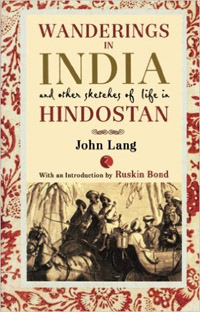
“Wanderings in India and Other Sketches of Life in Hindostan” by John Lang

wanderingsinindia-small

“In almost every one of the villages in India, fowls, eggs, rice, flour, native vegetables, curry stuff and milk are procurable, and at very small prices.” Sounds like Ram Rajya? Well folks, that’s an Englishman’s account of 19th century India. Born in Sydney, Lang made India his home, travelling widely and marveling at everything he saw.

John Lang’s chronicles would have been lost to us had it not been for the efforts of our dear old Ruskin Bond. Lang practiced law in India during the British Raj, represented the Rani of Jhansi against the East India Company, made a fortune, owned a newspaper, died in 1864 and was buried at Mussoorie. His notes remained unpublished (in India) for well over a century until Ruskin Bond and Rupa Publications joined hands to bring about his reincarnation.

Wanderings in India and Other Sketches of Life in Hindostan contains interesting snippets that shed new light on India’s history and social systems. Gurkhas, Afghans and Bengali Babus appear in his anecdotes. At Monghyr on the Ganges, he makes the acquaintance of a few Thugs. “It is part of the Thug’s religion not to rob a live body. The crime of murder must precede that of theft,” he observes. Approaching a twenty something woman he asks her what she thinks of the crime of strangulation. She replies with a smile, ‘Heaven will hold us all, sahib!’ Presently her husband comes along and says she has strangled eighteen persons. She insists that her score is twentyone. Truth? Fiction? Exaggeration? We don’t know. But fascinating it surely is.

A transaction involving an Afghan trader and a British memsaab is particularly interesting. ‘…thirty five rupees….may seem a large sum of money to give for a brace of young cats, but it must be remembered that they came from Bokhara (presently in Uzbekistan), and were of the purest breed that could possibly be procured.’ The trader has a slave boy who was undeniably British. When Lang’s British hosts question the trader, they discover that the boy’s parents had been killed, but his wealthy grandparents are alive in Britain. The cross-examination goes like this: ‘What did you give for him?’ ‘Three camels.’ ‘Of what value?’ ‘Thirty rupees each.’ The story ends with the boy going to England and living happily ever after.

Describing the Taj Mahal as one of the wonders of the world, Lang goes on to share some contemporary gossip, ‘The Mahrattas carried away the huge silver gates and made them into rupees. What became of the inner gate, which was formed of a single piece of agate, no one can say. The general opinion is that it is buried somewhere in Bhurtpore. …Lord William Bentick was for pulling the Taj down and selling the marble, or using it for building purposes.’ OMG!

‘Runjeet Singh began life as a petty chieftain, with a few hundred followers. He acquired a vast kingdom, and had the most powerful army that the east ever saw. ….His chief horror was that the Koh-i-noor would be carried off – that diamond which Runjeet Singh stole, and which the Ranee has worn a thousand times as a bracelet. That diamond which is now in the crown of England.’ (The British, of course, did not steal it! No! No! Whoever would suggest such a thing? How can you ask how Lord Dalhousie perpetrated a fraud by taking it away from Duleep Singh, the minor son of Maharaja Ranjeet Singh?)

Lang describes a catastrophe that befell Her Majesty’s 50th Regiment of Foot at Ludhiana during the First Sikh Campaign in which only 300 of 900 soldiers survived. The survivors were felled by administrative neglect as a dust storm on 21st May of that year destroyed the tumbledown barracks, killing 51 men, 18 women and 29 children. Lang states that ‘The Jhansi Rajah had been particularly faithful to the British Government.’ He adds ‘In the time of the Peishwah, the late Rajah of Jhansi was merely a large zemindar…It was the acceptance of the ‘Rajahship’ that led to the confiscation of his estates.’ Lang’s encounter with the Rani of Jhansi evokes interesting observations: ‘The hour came and the white elephant (an Albino, one of the very few in all India) bearing on his immense back a silver houdah, trimmed with red velvet was brought to the tent.’ Lang notices the Rani’s beautiful eyes, ‘delicately shaped nose’ and ‘remarkable figure’ (though she appeared behind a veil) and goes on to say, ‘What spoilt her was her voice, which was something between a whine and a croak.’ She was generous with her gifts. ‘The Ranee presented me with an elephant, a camel, an Arab, a pair of greyhounds of great swiftness, a quantity of silks and stuffs, and a pair of Indian shawls.’ The year was 1854. Lang was in England when the 1857 War of Independence broke out. When he returned in 1859, not only the Rani but many of his friends, both British and Indian, were dead.

Lang laments that the Newab of Moorshedabad and the Rajahs of Durbungah and Burdwan did not lift a finger to help the British in their hour of need. He speaks of the incarceration of 5000 Christians in the Agra fortress for several months. He witnesses the discovery of bricked up bodies of young women and men in a vault in Agra and the hanging of a Brahmin convict. He reports the discovery of a ‘wolf child’ at Burnampore and describes the Gurkha method of hunting tigers by surrounding and closing in on them before attacking them with their kukris (knives).

Lang’s observations are amusing as well as enlightening, especially if you can ignore the inevitable racist overtones. He opines that the people of Hindostan are the world’s best actors and hypocrites. ‘…when they cry out ‘if we do so we shall lose our caste’ it is nothing more than a rotten pretext for escaping some duty or for refusing to obey a distasteful order. There are hypocrites in all countries, but India swarms with them more thickly than any country in the world.’ Through the characters in the book Lang shares some universal insights: ‘All men born equal. God’s rain wet black man and white man all the same.’

The contrast between the lot of the ‘natives’ and their white rulers is particularly galling. Consider Lang’s account of his overall expenses: ‘My (travelling) establishment numbered in all eight servants, whose pay in the aggregate amounted to fifty rupees per mensum.….The expense of keeping the camels, the bullocks and the ponies was in all thirty five rupees per mensum; while my own expenses including everything (except beer and cheroots) were not in excess of fifty rupees per month.’ You need little imagination to figure out that he lived like a king, not to mention his compatriots. Of rental and property values in Mussoorie, Lang says, ‘The average rent for a furnished house is about five hundred rupees (fifty pounds) for the six months,’ adding, ‘The value of these properties ranges from five hundred to fifteen hundred pounds.’ Gambling was obviously a pet hobby of the British in India. ‘There were also two victims (both youngsters) to billiards. One lost 3000 rupees in bets, another 2500 by bad play. They too will have to fly for assistance to the banks.’ The 21st century banks that merrily financed Vijay Mallya’s peccadilloes are perhaps unaware that the roots of this practice are deep indeed.

Duelling appears to have been another pastime. This is how Lang sums up the events of a particular season: ‘Two duels were fought on the day after the ball. In one of these duels an officer fell dead……There were two elopements.’ Recounting an incident of grave miscarriage of justice Lang writes, ‘The man was hanged about six weeks ago; and now I have discovered, beyond all question, that he was hanged for the offence of which the prosecutor was guilty!’ So much for the famed British jurisprudence! On a visit to a graveyard Lang is asked by a Hindu sweeper, ‘Why don’t you British burn your dead as we do, instead of leaving their graves here, to tell us how much you can neglect them and how little you care for them?’

The Hindutva brigade will love this one: An Italian priest tells Lang that the Catholic Church is concentrating on fulfilling the spiritual needs of the Europeans as it is convinced of ‘the hopelessness of converting the Hindoo and the Mussulman to Christianity.’

The style is down to earth and the stories are sensitive, insightful and humorous. Innovative spellings add to the hilarity of the narrative. Allyghur, Futteypore, Oude, Muttra, Deyrah Dhoon, Nepaul, Caubul, Scinde, Cashmere, Loodianah, Hoolee festival, moonshee, shasters (shasthras).

Overall Assessment: Must read – but remember to take it with a pinch of salt. The masala is already there!

Wanderings in India and Other Sketches of Life in Hindostan
Author: John Lang
Publisher: Rupa Publications India
Publication Date: April 2015

Reviewer: Pushpa Kurup lives in Trivandrum, India and works in the IT sector.

“A History of the World in 100 Objects” by Neil MacGregor

historyoftheworld-small

“In 7 houses there are 7 cats. Each cat catches 7 mice. If each mouse were to eat 7 ears of corn and each ear of corn, if sown, were to produce 7 gallons of grain, how many things are mentioned in total?” This is just one of 84 different problems that grace the Rhind mathematical papyrus found near Luxor in Egypt. It dates back to 1550 B.C. and records not only the questions but also the answers and the calculation sequences in true textbook style. There are computations such as how many gallons of beer or loaves of bread you can get from a given amount of grain or how to calculate the slope of a pyramid.

In this spectacular book, MacGregor presents 100 artifacts from the British Museum that shed new light on the human experience. A 1.8 to2 million year old stone cutting tool from the Olduvai Gorge in Tanzania testifies that man existed long before the biblical God created him in 4004 B.C. The Flood Tablet from Nineveh (near Mosul, Iraq) that relates the story of the Great Flood pre-dates the Old Testament by a few centuries. A 5500 year old clay model of four cows found near Luxor reveals that cows were venerated in the Nile region then (as they are in India today).

The earliest pottery was made in Japan 16,500 years ago. (No, there isn’t an extra zero!) The Olmecs of Mexico devised the first ball games using rubber balls well over 3000 years ago. A 5000 year old clay tablet with the earliest writing reveals beer measures and the birth of bureaucracy in Mesopotamia (Iraq). Apparently, beer was the first currency, for coins appeared only 4500 years later. The earliest gold coins minted by Croesus of Lydia (Turkey) around 550 B.C. are also mentioned in the book.

The 196 B.C. Rosetta stone led to the cracking of the Egyptian hieroglyphics. A silver drinking cup made around 10 A.D. near Jerusalem depicts scenes of adult men having sex with adolescent boys. (In those days, Jesus would have been a young boy living in the region.) The cup was shunned by art collectors until the British Museum finally bought it in 1999.

A 27-25 B.C. bronze head of Augustus Caesar found in Sudan has piercing eyes that avoid your gaze, no matter where you stand. The statue has an interesting history. A fierce one-eyed queen of Meroe decapitated the statue and had it buried at the base of a flight of steps leading up to a temple, thereby ensuring that every person mounting the stairway would step on the head of the Roman emperor.

The first Islamic gold coins minted in Damascus in 696-697 A.D. had the image of the 9th caliph, Abd al-Malik, but within a year the coins with images disappeared and were replaced with Quranic text. Today a selfie with a Sheikh would not be considered un-Islamic and one could boldly post it on FB and expect dozens of ‘likes’.

A stone fragment dated around 238 B.C. from one of Emperor Asoka’s pillars declares, “I act in the same manner with respect to all. I am concerned similarly with all classes. Moreover, I have honoured all religious sects with various offering.” These values of tolerance, pluralism and humanism still hold good.

Among the recent finds is a throne of weapons obtained from Mozambique, a chair made from parts of guns that were made all over the world and exported to Africa. An aboriginal bark shield brought to England by Captain James Cook tells a sad tale of the Botany Bay encounter between the white invaders and the aborigines. A 1903 penny from England has the words VOTES FOR WOMEN stamped all over the king’s head. The coin’s Latin inscription proudly proclaims, ‘Edward VII by the grace of God, King of all Britain, defender of the faith, Emperor of India.’ The slogan that disfigured it was an ingenious campaign method devised by the suffragettes. It would circulate widely and indefinitely because it was too numerous and too low in value to recall.

A Buddha head from Borubodur in Indonesia. An Inca gold llama from Peru. A banknote from Ming China. An ancient stone statue from Easter Island. A ritual seat of the Taino people of the Dominican Republic who were wiped out by 1600, a century after the arrival of Columbus. A Huastec goddess from Mexico. An Indus Valley seal dating back to 2500-2000 B.C. From Istanbul, a 16-century tughra, the stamp of authority of the Ottoman sultan, Suleiman the Magnificent, a magnificent calligraphy with the sultan’s name in Arabic and the words below in Turkish.

From the Isle of Lewis in Scotland, several chess pieces made of walrus ivory and whales’ teeth, probably fashioned in Norway. The queens have their palms supporting their chins and their eyes stare into the distance. The kings are seated on thrones and have their swords on their laps. Only the soldiers lack distinctive character.

A 700 year old Shiva-Parvati sculpture from Orissa brought to England by Charles Stuart, an officer of the East India Company, who was nicknamed ‘Hindoo Stuart’ due to his love for all things Indian. He spoke out against missionary attempts to convert Hindus and in 1808 he published a pamphlet titled, ‘Vindication of the Hindoos’. Will our Hindutva brigade scour the libraries of Kolkata to trace this document? I would love to read it.

Overall Assessment: Never judge a book by its cover – this one’s a masterpiece.

A History of the World in 100 Objects
Author: Neil MacGregor
Publisher: Penguin UK
Publication Date: June 2012


Reviewer: Pushpa Kurup lives in Trivandrum, India and works in the IT sector.
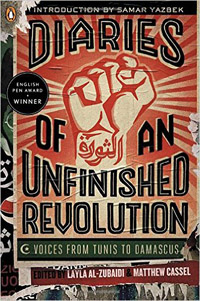
“Diaries of an Unfinished Revolution: Voices from Tunis to Damascus”edited by Layla Al-Zubaidi and Matthew Cassel

diaries-revolution-small

This book contains first person accounts by activists and authors from eight different countries in the year of the Arab Spring. From Algeria, Libya, Tunisia, Egypt, Syria, Bahrain, Yemen and Saudi Arabia, the voices of four women and four men tell us things we never heard from the international media.

Tripoli-born London resident Mohamed Mesrati describes his childhood in Gaddafi’s Libya. ‘On my first day my teacher slapped me because I couldn’t memorize a small verse of the Quran. I remember her telling me, “You are a donkey!” and to this day, whenever anyone uses that word I am reminded of my introduction to the world of learning.’ Egyptian Yasmine El Rashidi says, ‘I watched people fall to the ground, gasping their last breaths. I fell to the ground myself, choking on tear gas. We dodged bullets and ran from armed men.’ Algerian human rights activist Ghania Muffouk speaks of people who resort to self-immolation or ocean-crossing to escape their misery. ‘When Mohammed Bouazizi set fire to his body it was the drop that made the cup run over,’ says Tunisian student leader Malek Sghiri, recounting the event that triggered the Arab Spring. He avers that self-immolation was a common occurrence in Tunisia as well. Sghiri was imprisoned and tortured by the Ben Ali regime at the height of the Jasmine Revolution, just days before the dictator fled the country. When an interrogator told him he had interrogated his father in the same building in 1991, the young man replied, ‘I hope God grants you a long life that you might get to interrogate my son as well.’

‘Words were my weapons’, writes Jamal Jubran from Yemen where the dictatorship of Ali Abdullah Saleh stifled all sections of society. Son of an Eritrean mother and a Yemeni father, Jubran describes painful childhood experiences of racism and discrimination, and recollects how an Indian film inspired him when the hero demolished a multitude of villains with one masterstroke. Growing up to become a teacher and writer, he passionately clamoured for change. He was hit by a truck attempting to bump him off, but survived with cuts and bruises. He does not mince words when he refers to Saleh’s poor language skills. ‘As I listened to him speak, I would ask myself in amazement how an idiot like this could end up ruling a country as large as Yemen.’

Kwala Duniya says Syria reached the breaking point when a group of schoolchildren in Deraa were arrested and tortured for scribbling on the walls of the school the popular slogan of the Arab Spring: “The people demand the fall of the regime.” Safa al Alhmadi, a Saudi woman, writes, ‘The entire Arab world was engaged in a collective uprising for its freedom and dignity, and my countrymen and women were begging for scraps.’ She continues, ‘What do we want? Women to drive. What do we get? Prison sentences and lashes, followed by patriarchal pardons.’ Summing up the citizen’s dilemma she says, ‘Even though no one wanted the status quo, few wanted to pay the price for revolt.’

Bahrain born Ali Aldairy, now living in exile, recounts how he had tweeted from the scene of disaster, ‘Here at Salmaniya Hospital, the medical teams are confused, the protestors are confused, and the wounded are left waiting. Only the martyrs are confused no longer. They are perfectly at peace.’ Remembering a phone call from the father of a young martyr, he writes, ‘He was thanking me for setting down his son’s obituary in ink; I wanted to thank him for giving us a son who wrote the future of this country with his blood, but I could not summon even these words…’

Piecing together the first person accounts in this book, the reader experiences horror and hope, mingled with disgust and admiration, joy and pathos. The Arab Spring is obviously a work in progress. Long live the revolution!

Diaries of an Unfinished Revolution: Voices from Tunis to Damascus
Editors: Layla Al-Zubaidi, Matthew Cassel
Publisher: Penguin Books
Publication Date: December 2013

Reviewer: Pushpa Kurup lives in Trivandrum, India and works in the IT sector.