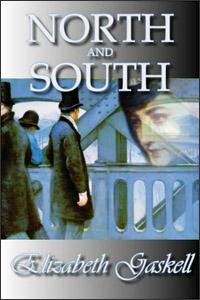
“North and South” by Elizabeth Gaskell

North and South.jpg

Two of my all-time favorite books are Victorian classics — Pride and Prejudice by Jane Austen and Jane Eyre by Charlotte Brontë – and I have been so starved of books in this genre that discovering North and South was like coming across a gem I never even knew existed. I stumbled upon its 2004 BBC adaptation — in the form of a four-part miniseries — on Netflix last week, remembered the recent write-up of the book by Nathalie Dorado-Fields, and started watching it – and couldn’t stop. It made me then get the book which I first obsessively read cover to cover, and then went right back and re-read it. It was simply that good.

As with most Victorian classics, North and South is, at its heart, a love story, and as with most books like it, the romantic tension between the hero and the heroine is sustained throughout the book, literally right down to the last page. The heroine here is Margaret Hale, the daughter of a clergyman who is forced to move with her family from the idyllic pastoral community in the south of England to the gritty industrial and manufacturing community in the north. The hero is a mill-owner in her new surroundings, John Thornton, who is taken with her right away, but whom she finds too harsh and unfeeling until it is almost too late.

While it would be easy to write North and South off as just another romance, what makes it so much more is how it captures the weighty social issues of that time related to industrialization — the growth in manufacturing, the increase in factories, the economic disparity between the mill owners and the workers employed in them, and the class divide. It provides an unflinching look at the lives of the mill workers, their extreme poverty, and their poor health, attributable in large measure to the unhealthy working conditions and polluted air inside the mills. A large portion of the novel is centered around a strike by the mill workers, and the part played in it by the workers’ union. This was when unionization was first starting, and while the strike didn’t end up benefitting the workers in this case, the perspectives of both the workers and the mill owners are the subject of extensive debate and discussion between the various characters. Also, the book does not shy away from the harsh realities of life at that time — there are quite a few deaths and even a suicide. It reminded me a lot of Oliver Twist by Charles Dickens, which portrayed the brutality of criminals and the pitiful treatment of orphans in mid-19th century London in the same heart-rending vein. You feel like you are there and can viscerally experience the pain.

Usually, novels like this are written entirely from one point of view, such as Elizabeth Bennett in Pride and Prejudice or Jane Eyre in Jane Eyre. But North and South was unique in that respect — it takes you inside the head of both the hero and the heroine. You can feel both of their feelings, their emotions, their reactions to each other, and to the world around them. It made the book so much more richer and the story so much more vivid.

I am thrilled to have discovered a new book to add to my much-loved collection of classic literature as well as another author in this genre that I so much admire. I have already added Elizabeth Gaskell’s other books to my reading pipeline.

North and South
Author: Elizabeth Gaskell
Original Publisher and Publication Date: Chapman & Hall, 1855
Edition: Norilana Books, Nov 2007

Contributor: Lachmi Khemlani runs a technology publication in the San Francisco Bay Area.

“The Time Machine” by H.G. Wells

The Time Machine

I had the privilege of reading this book along with a friend. I wasn’t sure what to expect from this book, since I didn’t know too much about it except from what the title suggested, that it would be about time traveling.

When I first started to read this story, it reminded me a little of the Sherlock Holmes’ series because we are introduced to the time traveler through the perspective of another character, very much like how Watson recounts his observations of Holmes. The time traveler is passionately proposing his idea of time traveling and introducing the machine he has invented to a group of men who are very skeptical of him.

On their second meeting, the time traveler shows up late to their dinner meeting and when he arrives, he is looking very haggard. It turns out that he had just returned from visiting the future. What follows from then on is the time traveler sharing the story of his journey into the future and what he experienced there.

I was really excited and curious to know what happened to him over there. Why was he looking the way he was? Would they finally believe him? Was he even telling the truth? Those were some of the questions that sustained me throughout this book.

Another thing that intrigued me about this story was that it was a science fiction book written in the Victoria Era. I was curious to know how science fiction would play out during that time period. Moreover, it was my first science fiction novel. Some of the science fiction aspects that I really enjoyed were the descriptions of the actual travel into the future and the descriptions of the world and inhabitants he encounters over there. I look forward to continuing to explore this genre thanks to this book.

The author, H.G. Wells, seemed to be very passionate about issues and changes that were going on during his time period due to industrialization. His beliefs come through heavily in his story. It seemed like he believed that the type of progress that was happening during his time would bring about moral decline. These are themes and questions that arise throughout his story. I enjoyed this part as well because I was able to understand what aspects of society were important to him, and it caused me to question where I stood on the issues he would bring up.

This was something I wasn’t expecting. I thought it would mostly be fantasy-like but I enjoyed that he was able to create a fantasy world that symbolized real issues. It was fun to read about this world and imagine it, but it was also interesting to think about the heavier issues that each of these aspects represented.

Overall, it was a fun book to read, especially since I read it with a friend. It was fun to briefly be part of this world and also discuss the heavier topics that were brought up. It was also a short book. If you enjoy the morality aspects that are often brought up in Victorian literature, along with the fantasy elements from science fiction, you might enjoy this book.

The Time Machine
Author: H.G. Wells
Original Publisher and Publication Date: William Heinemann, 1895
Edition: Signet Classics, October 2002

Contributor: Nathalie Dorado-Fields is a stay at home mother who lives in Mount Vernon, Ohio.

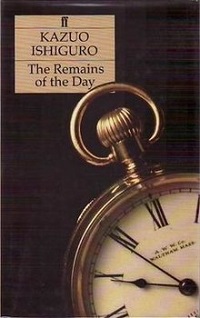
“The Remains of the Day” by Kazuo Ishiguro

Remains of the Day

The Remains of the Day is the most well known novel by Kazuo Ishiguro, who was awarded the Nobel Prize in Literature — unarguably the most prestigious literary award — a few months ago. Unlike most other writing awards, the Nobel Prize is awarded for an entire body of work rather than one particular book, and I was very gratified that it had been awarded to someone whose work I am familiar with and really like. I had read The Remains of the Day shortly after it was published in 1989 and while I couldn’t remember the specifics of the story, I remember it being a very good book. It won the Booker Prize the year it was published, which now seems remarkable to me as well — those were the days when the Booker Prize went to novels I could actually read and comprehend and admire, rather than the current trend of awarding it (along with other awards) to what seems to be post-modern fiction that does not believe in straightforward story telling. The Remains of the Day was also made into a highly acclaimed Oscar-nominated movie in 1993 starring Anthony Hopkins and Emma Thompson, further cementing its reputation as one of the best books in recent times.

Given that I didn’t remember much about the book except that it was about a butler in olden day England, I picked it up again, spurred by the awarding of the Nobel Prize to its author. It is indeed told from the viewpoint of a butler, Mr. Stevens, who has been the head butler of a grand estate in England in the early 1990s. It traces the years of his work – he prefers to call it “service” – at Darlington Hall, starting from when he was a young man in the years before the First World War to several years after the Second World War. The story is narrated in the form of his reminiscences while he is undertaking a journey to reconnect with Miss Kenton, who used to work in Darlington hall as a housekeeper for many years and who he thinks, from a recent letter from her, might be interested in returning to work there. She left when she got married and while it has been several years, he gets the feeling that she is not really happy and may want to return. So he takes a few days off to journey through the English countryside to meet her.

While several of his reminiscences are about Miss Keaton, we also get to know about his life as a butler in detail, about his employer, the politics of that time, and about how his father, who was also a butler, exemplified loyalty, professionalism, and dignity, right up to the end of his days. It is these exact same values that Mr. Stevens also lives by. He has the utmost loyalty to Lord Darlington, an essentially good man who, in the years leading up to the second World War, tries to broker peace with the Germans and ends up being branded as a Nazi sympathizer. Needless to say, in the course of these years, Darlington Hall becomes the hotbed for a lot of political activity, with lots of important visitors and lots of meetings. Throughout, Mr. Stevens prides himself on running the household smoothly and precisely, and being the perfect butler, who strives to be as unobtrusive as possible yet always on hand when something is needed.

What Mr. Stevens sets most store by, however, is “dignity” — he seems to personify the “stiff upper lip” the English are famous for having. Nothing seemed to faze him, he was never flustered. Even in his encounters with Miss Keaton – some of which were rather unsettling – he remained very stoic, practically unfeeling. It is obvious to us as readers that Miss Keaton is drawn to him, but she becomes so frustrated in his apparent lack of outward responsiveness that she ends up accepting a marriage proposal and leaving. Their encounters are beautifully captured, and you can feel the underlying tension between them, the powerful emotion of unrequited love that she must have experienced until she could bear it no longer and was forced to leave.

The title of the book refers to a revelation Mr. Stevens has at the end of the book, thanks to a chance encounter on his return journey at a seaside town after his meeting with Miss Keaton. He gets into a conversation with a stranger sitting beside him on a bench, who talks about how relaxed and happy people feel in the evening after doing their day’s work, making it the best part of the day. They can just put their feet up and enjoy the fruits of their labor. Mr. Stevens realizes that this can apply to one’s entire life as well, where we can take the time to enjoy the later years of our lives — with no regrets — after the hard work we have put in during our earlier years. These are “the remains of the day” as it were, and it’s a beautiful and uplifting idea that all older people can appreciate. There a sense of rest in the later years of our lives, with all those hectic days – focused on achievement and success – well behind us.

The Remains of the Day is so beautifully written — it makes the old world charm of early England come alive — and is so authentic in its portrayal of a butler if that time that it’s hard to believe it is written by a contemporary author. I’m always amazed when a writer can create something so real from something so far removed from their own experience. The Nobel Prize in Literature to Kazuo Ishiguro is so well deserved. I absolutely loved this book.

The Remains of the Day
Author: Kazuo Ishiguro
Publisher: Faber and Faber
Publication Date: May 1989

Contributor: Lachmi Khemlani runs a technology publication in the San Francisco Bay Area.
“Salvage the Bones” by Jesmyn Ward

Salvage the Bones

Salvage the Bones is Jesmyn Ward’s 2011 National Book Award winner (she is much in the news lately for her 2017 National Book Award winner Sing, Unburied, Sing which I loved). It is the story of a family living in poverty in semi-rural Mississippi in the fictional town of Bois Sauvage. The protagonist is a young teenage girl who has two older brothers and a younger brother. Their father is largely absent in any supervisory sort of parenting role and focused on preparing the house for the onslaught of Katrina. The mother has died some years ago in childbirth.

As the story unfolds, we get to meet the family and their friends and see the world from our protagonist’s viewpoint, with all the pain and panic of realizing she is pregnant, the care and concern for her brothers and the anguish of unrequited love. We see her brothers struggle with their own demons – one brother has basketball aspirations and hopes for opportunity, another is totally absorbed with his dog and her litter and the puppies’ well being. The father is focused on preparing their decrepit house to withstand the coming storm, oblivious of the storms raging in his children’s lives. Ward is not verbose and descriptions do not drag on, but the early chapters are awash with all manner of big and small details of life that make this family real to the reader. When the storm finally hits, we are heavily vested in their struggle to survive, and the description of the power and majesty of the storm is gripping. However, it is in the aftermath with the family picking themselves up, that this book shines brightest.

The writing is lyrical and reminds me of Maya Angelou – Jesmyn Ward writes like a painter or poet. The scenes she sets, the characters she puts in those scenes and the description is so absorbing that you barely notice the story unfolding. Ward takes a poor dysfunctional family with problems aplenty (petty crime, dog fighting, drugs and teenage pregnancy) and makes them beautiful and noble and heroic.

This is a book that will shine for some years to come. I am so glad to have read it.

Salvage the Bones
Author: Jesmyn Ward
Publisher: Bloomsbury
Publication Date: September 2011

Contributor: Seema Varma is an avid reader, sometime engineer.

“The Association of Small Bombs” by Karan Mahajan

The Association of Small Bombs

This debut novel won a lot of awards when it was published last year and was one of the finalists for the National Book Award. Not only did it come to me with a strong recommendation, I was also intrigued at the prospect of discovering a new talented Indian author whose books I could identify with. Having grown up in India, it’s always nice to read fiction set in familiar surroundings that I can immediately relate to.

As should be obvious from its title, The Association of Small Bombs is about terrorism, not the large-scale terrorist attacks that make deadlines but the many smaller ones that are set off in local markets and neighborhoods, which happen so frequently in India that not a big deal is made of them. Unless, of course, you happen to be one of the families that are affected, in which case your whole world is turned upside down. The Association of Small Bombs starts off with one such bomb blast in a Delhi neighborhood in which two young boys — brothers who had gone to pick up their family’s television set at a repair shop, accompanied by their friend — are immediately killed. Their parents, the Khuranas, are shocked and devastated, and their marriage never recovers, despite having another baby five years after the blast. They spend much of their time in the courts where the terrorism suspects that the police have rounded up are on trial, and as to be expected, these are long-winded court cases where there is no real evidence of the crime. Eventually, the Khuranas take the lead in bringing together other families who have been affected by similar blasts into an “association,” which is where the title of the book comes from. Sadly, even this common cause is not enough to prevent the Khuranas’ marriage from eventually unraveling.

Meanwhile, the friend that the Khurana boys were with at the time of the blast, Mansoor, managed to survive but with severe injuries from the shrapnel of the bomb. He seemed to eventually recover and even goes to the US to study and get a degree in computer engineering. But after just a few semesters, the pain comes back with a vengeance, making it impossible for him to type on a computer and forcing him to return to India. He never goes back to the US to resume his studies and instead gets caught up in an NGO — a group of idealistic young Muslims — working on behalf of suspected terrorists — all Muslim — that have been jailed without any real proof of wrong-doing. While Mansoor is also Muslim, he was brought up in a non-religious family and never gave religion much thought until he joined this group, after which he becomes almost an Islamic fundamentalist. Eventually, one of his close friends, Ayub, from the NGO becomes inducted into the same terrorist group which had planted the first bomb and goes on to detonate another bomb, also in Delhi, on a scale similar to the first one. Ayub himself is injured in the blast and eventually dies. Mansoor is arrested as the bombing suspect because he was close to Ayub and spends several years in prison. The book ends with his release from prison; he goes home and never leaves the house again.

I can’t really say that I enjoyed reading this book or even learned something from it. It started off on a very strong footing by powerfully capturing the first bomb blast and the toll it took on a couple whose lost both their young sons to it, their utter devastation along with terrible feelings of guilt — why had they sent the boys to a TV repair shop to fix an old TV instead of just buying a new one? This “if only I had done this or hadn’t done that” persistent feeling of guilt will be familiar to anyone who has experienced the irreversible loss of a loved one. However, the rest of the book lacked a similar strong focus and seemed quite disjointed, going inside the minds of multiple characters including the Khuranas, Mansoor, Mansoor’s parents, Ayub, and the perpetrator of the original blast, Shockie, but without really delving too deeply into any of them. While it could have been very interesting to understand the mindset and psyche of a terrorist, The Association of Small Bombs didn’t really succeed in achieving that. Instead, there were bits and pieces of different lives, experiences, and thoughts, none of which added up to any kind of comprehensive understanding of even one person in the story.

It was all the more disappointing because the book had such a promising start. It definitely points to a talented author, and I hope he can bring it together in his next book.

The Association of Small Bombs
Author: Karan Mahajan
Publisher: Penguin Books
Publication Date: October 2016

 Contributor: Lachmi Khemlani runs a technology publication in the San Francisco Bay Area.

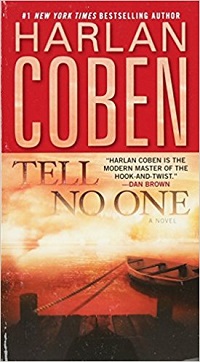
“Tell No One” by Harlan Coben

Tell No One

When I started reading this book, I had this funny feeling that I knew this story, everything including the climax (that’s a nice feeling to have if you have not experienced it). As I progressed, the feeling became stronger but I couldn’t remember when or where it happened. Soon it dawned to me. I had seen a movie adaptation of this book a long time ago. I didn’t knew the movie name then.

I have to admit that even after that, the book managed to keep me on the edge of my seat until the very last page.

It is one of the best suspense thrillers that I have read. The story remains solid throughout the book. There’s romance, suspense, there are murders and twists to keep you engaged. And I felt that all the characters had a soul, even the secondary, not so significant ones.

You will feel sympathy for the main character, Dr. Beck, when you know the tragedy that happened in his life. And you will most certainly get chills from a man named Eric Wu and his way of handling people.

The story unfolds at a fast pace and there are enough thrills at the end of each chapter. And it ends with a beautiful flourish. You need to be extra sharp while reading the ending or you may lose some important information.

You can surely race through this book in a matter of hours. I highly recommend it for people who are looking for thrilling page turners.

Tell No One
Author: Harlan Coben
Publisher: Dell
Publication Date: August 2009

Contributor: Anoop Mukundan is a casual reader and a cyber wanderer.

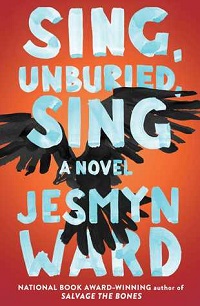
“Sing, Unburied, Sing” by Jesmyn Ward

Sing Unburied Sing

This book won the National Book Award for fiction this year (2017) and therefore has been in the news a lot, both before and after the award was announced. It seems almost mandatory for these awards to be given only to those books that have been on the radar, doing the rounds as it were, and heralded by book critics everywhere. I follow book news closely and am therefore always aware of which books are currently “hot” — so whenever I see them in the library, I never pass up on the opportunity to borrow them. While I can’t say that I have had a good track record lately with critically acclaimed books — I didn’t care much for Exit West, and I couldn’t even get beyond a few chapters of The Underground Railroad which won the Pulitzer Prize, and Lincoln in the Bardo which won the Booker Prize — it never hurts to keep trying. This is how I came to read Sing, Unburied, Sing, and the fact that I was able to read through and finish it, was, to me, a significant aspect in favor of the book.

Sing, Unburied, Sing is set in Mississippi and is focused on an eventful few months in the life of Jojo, a thirteen year old boy who is biracial and is being brought up by his maternal grandparents. They are from the black side of his family, or as the author refers to it, the “Black” side — black with a capital “B.” Jojo’s mother, Leonie, also lives with them, but she is a drug addict and has few nurturing instincts. Jojo’s father, Micheal, who is “White,” is in prison on a drug-related offence. Micheal’s parents refuse to even acknowledge Jojo’s existence, as they didn’t want their son to marry a black woman. Jojo has an adorable three year old sister, Kayla, for whom he is the world, given that their mother is not much of a mother and their father is largely absent. Jojo’s black grandfather, Pop, is thankfully a good man who provides the children with love and care — Jojo has the highest regard for him. Pop’s wife, Jojo’s grandmother, was also a loving and caring woman, but she is now very sick and completely bed-ridden. Pop has his own demons from his youth, notably from the time he was also in prison — the same one Michael is now at.

The trigger for the story — what sets it off — is Michael’s release from prison, and Leonie setting off on a road trip to pick him up. She insists both the kids go with her to pick up their father, and they set off in a car with one of her friends, whose boyfriend is in the same prison. The friend is as drug-addled as Leonie, and the trip is a horrible one — they make a stop to do a drug pick-up, Kayla is sick throughout the trip with Jojo comforting her as best as he can, and after they pick up Michael, they are stopped by the cops forcing Leonie to swallow the drugs they were carrying so that the cops wouldn’t find them. As wretched as this was — with the plight of the children especially gut-wrenching — what was worse was that a “ghost,” who had unresolved issues with Pop when he was at that prison, came back with them. This ghost, Richie, who was also thirteen when he died, can be seen only by Jojo, and is not able to transition to the beyond — he is “unburied,” so to say, which is where the title of the book comes from. He is finally freed from this unburied life by a song sung by Kayla.

Needless to say, it is hard to take a book as serious as this seriously when it involves a ghost. And the ghost is a prominent part of the story, even narrating some of the chapters in the book. It turns out that he is not the only ghost — Leonie, when she is drugged, can see the ghost of her brother, Given, who was killed by some of his racist white college mates when he was a young man.

Overall, I have to say that I had conflicting feelings about this book. On the one hand, it is a deeply moving and touching story, and what makes it particularly poignant is that most of it is narrated by Jojo, allowing you to see the world from the perspective of a thirteen year old boy in a very unconventional and troubled family. His devotion to his little sister is touching, and your heart goes out to these two children on their horrifying road trip, making you constantly dread about what is going to happen to them. There are also the themes of racism, mob lynching, and incarceration, and while these are hardly new — a great example being the classic To Kill a Mockingbird — they have been captured in Sing, Unburied, Sing in a manner that is extremely haunting. I can see why this book was so highly acclaimed.

But then there were the ghosts, and they just didn’t work for me.

Sing, Unburied, Sing
Author: Jesmyn Ward
Publisher: Scribner
Publication Date: September 2017

Contributor: Lachmi Khemlani runs a technology publication in the San Francisco Bay Area.

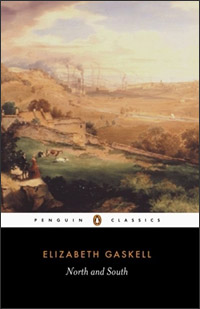
“North and South” by Elizabeth Gaskell

North and South

I picked up North and South by Elizabeth Gaskell based on the premise that this book would be about the Hale family and their decision to leave the South of England. I wanted to know what struggles or personal convictions Mr. Hale faced with the Church in order to resign his position as parishioner and move his family to the North of England, to a manufacturing town.

I was quite disappointed that the story did not develop this reason at all. However, all my disappointment was forgotten as I continued reading and learned more about the character of Margaret Hale, Mr. Hale’s daughter. She had initially struck me as someone gentle and kind as she interacted with her mother. But as I continued reading, I soon learned that she was also very bold in communicating her thoughts/disapproval when she felt it was necessary.

This story largely focuses on the misunderstanding and conflict between two groups. One group was the factory owners and their mill workers while the other group was the Hale family, who are from the South and the people of Milton, from the North. Throughout this story, we meet different characters which give us insight into the issues of each group and what biases each group must overcome to understand one another. This was probably one of my favorite parts.

The author, Mrs. Gaskell, does such a fair job at allowing each side to plead their case through dialogue between characters. The dialogue was kind of heavy, at times, for me because it contained a lot of references to how unions and factory businesses’ work, which I am not too familiar with. However, it was coupled with compelling events that demonstrated just how much each person’s life was affected by the environment at Milton such as illness, poverty, hunger, work strikes, death, etc. Again, all very striking and heavy social issues relative to the culture and time. Mrs. Gaskell was able to sustain me as a reader, as I grew to love each and every one of her characters to whom she gives so much depth to as they interact with one another.

Going into the story, I knew that Margaret’s love interest would be Mr. Thornton, which is what intrigued me to continue reading. Amidst all the societal issues, I was so curious to know how Margaret and Mr. Thornton resolved their prejudices towards one another and move on to becoming more than acquaintances. There were many times Mrs. Gaskell created such opposition between them and allowed us, the readers, to be aware of events that maybe the other party was not, which really magnified the tension causing me to ask, “Why, Mrs. Gaskell. Why?!” In a good way, of course.

Overall, this story has left quite an impression on me, especially Margaret’s character. I was so inspired by how strong of a woman she was throughout her experiences at Milton. Mrs. Gaskell did an excellent job at crafting this story together.

North and South
Author: Elizabeth Gaskell
Publisher: Penguin Classics, Revised edition
Publication Date: June 1996 (Originally published in 1855)

Contributor: Nathalie Dorado-Fields is a stay at home mother who lives in Mount Vernon, Ohio.

“The House of Silk: A Sherlock Holmes Novel” by Anthony Horowitz

The House of Silk.jpg

I picked up The House of Silk thanks to a comment that was posted in response to my take on Anthony Horowitz’s book, Magpie Murders, a few months ago. While Magpie Murders was a classic whodunit in the style of Agatha Christie — whose books I find thoroughly entertaining, even today, and even after multiple re-readings — The House of Silk is directly based on the style of Arthur Conan Doyle best known for his Sherlock Holmes detective books. In fact, The House of Silk is not just inspired by Sherlock Holmes, it is, as the title states, an actual Sherlock Holmes book. This means that it is written from the point of view of Dr. Watson, as the original books were, and features the same characters in the same setting. It’s almost as if Arthur Conan Doyle rose from the ashes and gave us another Sherlock Holmes book, or if there was another book in his canon that was lost and was discovered only now. In fact, that is the premise of The House of Silk — that it was written over a hundred years ago by Dr. Watson but was sealed until now because the “case” that was solved in the book was too shocking and too controversial for those times.

I found the premise very successful in its execution — the book is indistinguishable from the original Sherlock Holmes books and transports you back to 221B Baker Street, the London address where Sherlock Holmes lives and which forms the base setting for all his cases. At the time of this book, Dr. Watson is already married but his wife is away visiting friends, so he returns to live at 221B Baker Street as he used to and continues to be Holmes’s trusted right-hand man and chronicler of this case. Their intrepid landlady, Mrs. Hudson, plays only a small role in this book, but the loyal Inspector Lestrade has a large part to play. The case starts off being a relatively straightforward one of an art theft and a murder threat, but soon balloons into something a lot more sinister — the brutal murder of a young boy, an underground opium den, another murder that Sherlock Holmes himself seems to have committed and is arrested for, an orphanage for boys that does not quite seem to be what it purports to be, and a conspiracy that seems to go so high up in government levels that even Sherlock Holmes’ well-connected brother, Mycroft Holmes, cannot help.

As with all Sherlock Holmes books, The House of Silk is a thrilling ride that takes you back to the familiar setting of Victorian England, and the case that Sherlock Holmes and Dr. Watson have to solve gets increasingly darker, complicated, and dangerous. Fans of the original books will revel in the resurrection of their favorite detective, and there is no doubt that Anthony Horowitz is an extremely talented writer who has shown that he can match the writing styles of Agatha Christie as well as Arthur Conan Doyle to a tee. The only problem I found with the book was with the intent of the premise — it pointed to something “so monstrous” and “so shocking” that the book had to be locked up for a hundred years. However, when the finale came, I did not find it to be as big a deal. While I can appreciate that Horowitz needed to find a way to explain why a new Sherlock Holmes book was being published now, the explanation he chose was not very compelling.

But despite the problem I found with the intent of the premise, its execution, as I mentioned earlier, was spot on, making The House of Silk a terrific read.

The House of Silk: A Sherlock Holmes Novel
Author: Anthony Horowitz
Publisher: Mulholland Books
Publication Date: November 2011

Contributor: Lachmi Khemlani runs a technology publication in the San Francisco Bay Area.
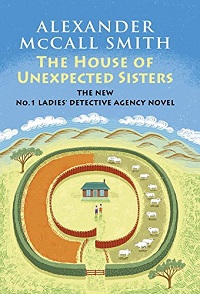
“The House of Unexpected Sisters” (Book 18 of the No. 1 Ladies Detective Agency Series) by Alexander McCall Smith

House of Unexpected Sisters

This is the latest book in the No. 1 Ladies Detective Agency Series, which I absolutely love. I own all the books in the series and have previously written about the 17th book that was released last year, Precious and Grace.  I find the newer books in this series every bit as enjoyable as the first, which was published all the way back in 1998. This a remarkable achievement for any writer, even one as prolific as Alexander McCall Smith, who writes other series as well as stand-alone books (such as My Italian Bulldozer, which I also wrote about recently). It recalls other favorite authors of mine such as Enid Blyton and Agatha Christie (who are no longer alive and cannot write any more books) as well as J.K. Rowling, who seems to be done with Harry Potter but is still continuing to write the Cormoran Strike books under the pseudonym, Robert Galbraith.

What never ceases to amaze me about the No. 1 Ladies Detective Agency Series books is how they manage to capture the sights, the sounds, and even the smells of Botswana, where the series is set. I have not personally been to Botswana, but the country seems so familiar to me because of these books. What is also amazing is how McCall Smith is able to write from the point of view of an African woman, Mma Ramotswe, who is the protagonist of the books and the proprietor of the No. 1 Ladies Detective Agency. It’s almost as if he is able to get into the skin of the character — she seems so real, so authentic. I know that this is what all writers aspire for, but it seems to me that there are few writers who are able to inhabit the character of someone who is so diametrically different from them as Alexander McCall Smith, a Scottish man, is from Mma Ramotswe, an African woman. He did spend a part of his childhood in Botswana, however, which is probably where the “heart” of the novels comes from. He is able to capture his love for the country in these books so beautifully that, as a reader, you can’t help falling in love with the country yourself.

The House of Unexpected Sisters returns with its familiar cast of endearing characters: Mma Ramotswe, who runs the detective agency and is an old-fashioned, “traditionally built,” astute woman; her prickly assistant, Mma Makutsi, who has promoted herself throughout the series and is now the “co-director” of the agency; Mr. JLB Matekoni, Mma Ramotswe’s husband who is a mechanic and runs the garage that is co-located with the detective agency; Charlie, a part-time apprentice at the garage who also occasionally helps out with detective work, and whose main interest in life is “girls”; Mma Potokwani, the matron of a nearby orphanage who is the closest friend of Mma Ramotswe and makes irresistible fruit cake; and Mr. Polopetsi, a school teacher who is also a part-time colleague at the agency. While the main “case” in this book that the agency investigates is a woman who seems to have been unjustly dismissed from her job, the other big mystery is a personal one for Mma Ramotswe — the discovery of another woman who shares the same last name, which might point to Mma Ramotswe’s father not quite being the man she looked up to and revered.

As in all the books in the series, each one is focused only on two or three cases for the detective agency rather than being a “thriller” as such — the focus is more on the characters, their daily lives, their conversations, their thoughts, and their relationships. Reading all the books sequentially makes you feel like you are growing up with the characters, you know them so well. What I also love about these books is how funny and chock-full of witticisms they are, with the humor coming naturally from everyday thoughts and conversations rather than tacked on. For instance, in The House of Unexpected Sisters, Mma Ramotswe and Mma Makutsi are discussing why more and more women think that the shorter a skirt, the more fashionable it is, and Mma Makutsi comments: “I do not understand that. Men know that women have legs — that is one of the things that they learn at any early age. So why do you have to show them that you have legs when they are already well aware of that?”

Now who can argue that that?

The House of Unexpected Sisters (Book 18 of the No. 1 Ladies Detective Agency Series)
Author: Alexander McCall Smith
Publisher: Pantheon
Publication Date: November 2017

Contributor: Lachmi Khemlani runs a technology publication in the San Francisco Bay Area.
“Cigarette Girl” by Ratih Kumala

Cigarette Girl.jpg

The unusual title caught my attention as I was browsing in a bookshop in Bali. I picked it up. The book’s central character is a cigarette rolling, cigarette smoking girl, Dasiya or Jeng Yah, who remains an enigma right until the story reaches its climax. The tale begins when a cigarette tycoon utters her name on his deathbed to the utter amazement of his three sons and the utter disgust of his wife. Soeraja’s appeal is heeded by his sons – Tegar, Karim and Lebas – who set out on a wild goose chase to find the mystery woman, much to the anger and resentment of their poor mother.

“As if the Angel of Death was casually stopping by his room, taking a little piece of him each time it visited, and along with it pieces of his memory as well.” This is how the author describes Soeraja’s slow descent into oblivion. She says of Lebas, the youngest of the three brothers: “He had been a Bob Marley follower for eight months, until some lice decided that his dreadlocks made a nice and cosy nest.”

There is pathos and humour and suspense. But far too much about cigarette smoking and cigarette making to attract a non-smoker. Djagad Raja clove cigarettes, Lady cigarettes, Mendak medicinal cigarettes, Independence cigarettes, Proclamation cigarettes, Red Sickle cigarettes, Djojobojo klobot, and what not. Frankly, I disliked the portions where much is made of the “flavour,” “feel” and “formula” of the weed. The cost, the weight, the texture, the smell, the taste – all these were enough to drive me mad! I felt myself going up in smoke – and almost lost my grip on the story.

The family drama is interesting though – and the language simple and sweet. Rivalries, jealousies, and human struggles spanning three generations, the liberation brought by the Japanese, followed by unexpected repression, the coming of Independence, the brutal suppression of communist groups, the danger of political activity and its deep impact on the daily lives of common people – all form part of this pot-boiler. The cigarette ads are totally hilarious. Lady cigarettes: inhale just once and the lady of your dreams will appear before you. Garwo Kulo cigarettes: the cigarette for the man who loves his wife.

The tale is set in Java, Indonesia. We are reminded in rare flashes that the country once had a Hindu legacy. “But her husband had pulled her way cruelly, like Kurawa who had won Drupadi from Yudhistira in the Mahabharata.” Idroes Moeria and the scribe’s daughter, Roemaisa, Soedjagad and his desire to win the same woman, the American education of Soerja’s sons and its influence on Lebas in particular, the conformism of Tegar and the bohemian lifestyle of Lebas, Pak Djagad and his daughter Purwanti, the search for the elusive cigarette girl and the final unexpected twist to the story are all laid out in fascinating detail. How I wish it had been about some herbal product instead of cigarettes! The characters have one thing in common – they all enjoy smoking! No, I’m not joking. (And yes, I did get away before Mt. Agung erupted.)

Overall Assessment: Not bad.

Cigarette Girl
AUTHOR: Ratih Kumala
PUBLISHER: Monsoon Books
DATE OF PUBLICATION: 2017 (First published in 2012 in Bahasa Indonesia)

Contributor: Pushpa Kurup lives in Trivandrum, India and works in the IT sector.

“Big Little Lies” by Liane Moriarty

Big Little Lies

I had read many of Liane Moriarty books, including Big Little Lies, a few years ago at the recommendation of a friend. I found them all very enjoyable, the kind that are difficult to put down and that you don’t really have to because they are so easy to read – written in a light-hearted manner and not at all dense. You could read them quickly, be entertained, and move on. They didn’t, however, stay with me – I would be hard-pressed to remember the characters and the plot of a book, let alone how it works out, after a few months.

This is why when Big Little Lies came out earlier this year as a TV miniseries with A-list stars like Nicole Kidman and Reese Witherspoon and I started watching it, I simply could not remember the story beyond a sliver of familiarity. This turned out to be a good thing as I could enjoy the series without any “spoilers,” without knowing exactly what was going to happen and how it was going to end. The show was so well made and was so successful – winning eight Emmy Awards – that the book got a new lease of life and became an instant bestseller. I just found a copy of it in the “New Books” section of my library and decide to re-read it. I wanted to see how such an excellent TV series had been made from a book I didn’t recall as being “great” as such – it had been an enjoyable and fun end, but was definitely not literary by any stretch of imagination. Perhaps the televised version was only loosely based on the book, as many well-made “based-on-a-book” movie and TV adaptations tend to be?

I was wrong about that. After re-reading the book, I found that the TV adaptation was almost a scene-by-scene translation of the book. Some changes had been made, but the story was, by and large, very true to the original. It starts with a murder, which takes place in a school during a “parents only” costumed trivia night party. But who exactly the victim is, how the murder happens, and who did it are revealed only at the end of the story.

As in the book, there are snippets of the parents being interviewed by the detectives trying to figure out how the murder happened, and you can sense their frustration when most of the parents they are interviewing are telling them about the school politics, about the two main “camps” of parents in the school. In one camp are Madeline, the ringleader, a non-nonsense person who “tells it like it is”; Jane, a single mom who has just moved into the area, attempting to escape from a traumatic past; and Celeste, an ethereally beautiful woman, but one who is struggling with demons of her own. In the other camp are Renata, a career mother who is a high-powered executive, and some other moms who are aligned with her. All these mothers have kids who are just starting kindergarten in a local school, set in the suburb of Australia where they live.

The trouble starts when Renata’s daughter, Amabella, is bullied by another kid during the kindergarten orientation the kids attend at the school, and when pressured to name the kid who bullied her, she points to Jane’s son, Ziggy. But Ziggy maintains that he did not do anything to Amabella, and is, in general, such a sweet and honest child that Jane believes he is telling the truth. So do Madeline and Celeste, who have, by now, become good friends with Jane. However, Renata is livid that her daughter was bullied, does not believe that Ziggy is innocent, and repeatedly attempts, over the course of the school year, to ostracize him. This is how the two camps are formed, which provides the backbone of the drama that eventually results in the murder at the heart of the book. Additional intrigue comes from the thorny relationship that Madeline has with her ex-husband and his wife, Bonnie, whose daughter is also attending the kindergarten class where the drama is unfolding. Add to this domestic violence, sexual assault, teenage rebellion, and a budding romance, not to mention the murder, and you have all the elements of a cinematic “spice mix” – or “masala” as we call in Hindi, India’s national language.

It goes to show that even a “not-so-literary” book can be adapted into a high-quality movie or TV show. What is important are the individual ingredients in the story and how they come together, and Big Little Lies has all of them.

Big Little Lies
Author: Liane Moriarty
Publisher: Berkley; Reprint edition
Publication Date: August 2015
(Originally published by Penguin in July 2014)

Contributor: Lachmi Khemlani runs a technology publication in the San Francisco Bay Area.
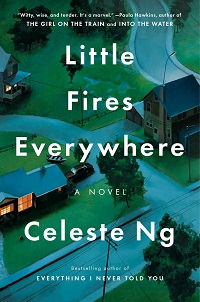
“Little Fires Everywhere” by Celeste Ng

Little Fires Everywhere

One of the surest signs that a book has been a good read is when you reach the end and are disappointed that it is over — you wish there was more of it. That is how I left after finishing Little Fires Everywhere. It’s not a traditional page-turner – not a mystery or a thriller that you can’t put down because of the suspense. Rather, the book is a family drama, and not even a highly melodramatic one at that. It is not written in scintillating prose that sweeps you off your feet but in “normal” language for regular people. It is, simply put, a very good story.

The story opens with a fire, or rather, “little fires everywhere” as described by the firemen who come to put the fire out. The fires are in a house in a wealthy suburb of Cleveland called Shaker Heights (which happens to be a real place) and have actually been set by someone living in the house – the youngest daughter, Izzy, of the Richardson family, who absconds after setting the fires. What inspires her to set the fires is a comment made by a woman, Mia, an artist whom she greatly admires and has become very close to. Mia had said: “Sometimes you need to scorch everything to the ground and start over. After the burning the soil is richer, and new things can grow. People are like that, too. They start over. They find a way.” Although Mia had said this in the context of a tragedy someone else was going through, the rebellious, tempestuous, adolescent Izzy found this idea so powerful, so deep, and so intense, that she took it literally and was so upset with her family — especially her mother, Elena, with whom she has never got along — that she methodically lit a fire in each room of her house before she left.

What makes Izzy actually set the fires is the crux of the story, along with the mystery of Mia’s background, who has come into the neighborhood with her daughter, Pearl, and is renting an apartment that belongs to Elena. No one, including Pearl herself, knows who her father is. Just as Izzy of the Richardson family is drawn to Mia and persuades Mia to take her on as an (unpaid) assistant, in the same way, Pearl is drawn to the Richardson family and constantly hangs out in Elena’s house with her son, Moody, and her two older children. (All the kids go to the same high school, but are in different grades, except for Pearl and Moody.)

In addition to this “switch” where Izzy hangs out with Mia and Pearl hangs out with the Richardsons, there is a lot of additional intrigue in the story including a surrogacy, an abortion, and a custody battle for a Chinese American baby between the baby’s mother (a coworker of Mia) — who initially abandoned her because of her circumstances but now wants her back — and the wealthy white couple (close friends of the Richardsons) — who took in the baby when she was abandoned, loved and nurtured her, and desperately want to adopt her as they have not been able to have children of their own. Above all, there is also the uneasy feeling Elena has about Mia, who makes her feel unsettled just by being who she is. She takes it upon herself to investigate Mia’s background and find out more about her and the mystery behind her fatherless daughter.

I really enjoyed reading this book and am happy to find that it has also achieved critical acclaim, especially after many unsuccessful attempts at reading award-winning books (recent examples being The Underground Railroad which won the Pulitzer Prize and Lincoln in the Bardo which won the Booker Prize). It’s good to know that even books devoid of literary calisthenics can be appreciated by literary critics in addition to being enjoyed by regular folks like me.

Little Fires Everywhere
Author: Celeste Ng
Publisher: Penguin Press
Publication Date: September 2017


Contributor: Lachmi Khemlani runs a technology publication in the San Francisco Bay Area.

“Misery” by Stephen King

Misery1

This was one of the few “page turners” that I’ve read. I got pulled into Misery the moment I read the plot summary. Technically, it is something that could happen to anyone, any unlucky celebrity to be precise.

It starts with a back-breaking accident to a famous novelist and thankfully he gets rescued by his number one fan. Hold on. It’s a Stephen King novel. The man who is famous for his thrillers and killers. I’ll have to take that “thankfully” back… I won’t spoil anything here, but I guarantee you that it’s not a horror story (but a scary one).

There are books that can give us surprises, good scares, heart breaks, adrenaline rush and so forth. For this book, courtesy the title, I was expecting a miserable time for our lead character and was prepared to sympathize with him even before I started reading. But I got a surprise right away when I learned that “Misery” was, in fact, a character’s name in the book (Misery Chastain is a beautiful name). And our lead did not have a miserable time. He had something worse!

Here’s some more leverage to get you start reading. The book was adapted into a movie in 1990 and Anne Wilkes (the female lead character) was portrayed by Kathy Bates. Ms. Bates won the Best Actress Oscar and the Golden Globe for the role.

Then again, if you have already read the book then you might be a tad disappointed with the way the film turned out. I can’t say it was totally bad but it could have been much better. I’m not sure how to put it. Let’s just say that there’s a big difference in using an axe to hack someone versus using a hammer for the same thing.

Ouch. Gruesome! I know. But it’s Stephen King. Not me. So the example demands gruesomeness… 🙂

You can expect some heart-thumping moments in the book. And it beautifully (or should I say, rather casually) portrays a writer’s agony and thought process in creating something new.

With Halloween around the corner, you could get your share of thrills by reading Misery or by watching the movie. I won’t suggest both.

Misery
Author: Stephen King
Publisher: Viking Press
Publication Date: June 1987

Contributor: Anoop Mukundan is a casual reader and a cyber wanderer.

“Rules of Civility” by Amor Towles

Rules of Civility

I picked up this book at the recommendation of my daughter, who told me she read it in one day. While I didn’t find it so gripping that it was impossible to put down, I did find it engaging enough to hold my interest and keep reading — which was remarkable to me given the number of books I started recently that I couldn’t read beyond the first chapter. Going through somewhat of a dry spell with regard to reading fiction, I was happy to get out of the doldrums and be reassured that books could still give me the enjoyment they always have.

Rules of Civility is set in New York in the late 1930s, a time period that is so reminiscent of The Great Gatsby by F. Scott Fitzgerald that it is impossible not to be reminded of it. Rules of Civility fares quite well in the comparison, and while it comes nowhere to achieving the classic status of The Great Gatsby, it is far from being a cheesy rip-off. It is extremely well written and strongly evocative, bringing vividly to life all the details of the Big Apple in the 30s — the people, the culture, the parties, the music, the smoking, the clothes — the overall milieu.

The story is told from the point of view of a 25 year old single girl, Katey Kontent, and of the most eventful year in her life, 1938. What sets it off is a chance meeting that she and her best friend and roommate, Eve, have with a wealthy, handsome banker, Tinker Grey, at a jazz bar on the last night of 1937. Both fall for him, but instead of a someway predictable storyline in which the “heroine” eventually gets the “hero,” the plot takes several twists and turns, including a car crash, a move to Los Angeles, a relationship between a wealthy older woman and a younger man, a friend who enlists in the war and is killed, and dropping out of high society to become a blue-color worker. In the course of that one year, Katey goes from becoming a secretary to the editor’s assistant of a high-profile magazine, and further leaves behind her working class roots by moving and socializing in the upper echelons of New York society.

I found Rules of Civility less of a story with a definite plot and more of an experience, an indepth look at what life in New York must have been like in the 1930s. The details are so rich and seem as authentic that it really makes the city and the characters come alive. Even more so than The Great Gatsby, I found that this book is inextricably tried to its setting, so for those who can’t get enough of reading about New York, this book is a must-read.

PS: And by the way, the title of the book comes from “Rules of Civility and Decent Behaviour In Company and Conversation,” a list of 110 rules compiled by George Washington as part of a school exercise when he was sixteen. They are used in Towles’ Rules of Civility as a reference by one of the key characters to appear refined in high society. To name the character would be giving too much away!

Rules of Civility
Author: Amor Towles
Publisher: Penguin Books
Publication Date: June 2012

Contributor: Lachmi Khemlani runs a technology publication in the San Francisco Bay Area.