“Precious and Grace” (Book 17 of the No. 1 Ladies Detective Agency Series) by Alexander McCall Smith

precious-and-grace

A new book in the No. 1 Ladies Detective Agency Series is always an unbridled treat for me. I love the books and have all of them, and unlike the Harry Potter series which I also love, these are still coming! Set in Botswana and narrated by a female protagonist—the indomitable Mma Ramotswe, who is the proprietor of the No. 1 Ladies Detective Agency—the books capture the feel of Africa and the skin of the character so completely, that it’s hard to believe that they are written by a Scottish man. Alexander McCall Smith was born in Africa in what is now known as Zimbabwe, so he is certainly familiar with the place, but still, it takes exceptional talent to be able to immerse the reader in the character and the setting so completely.

Each book in the series—the first of which was published in 2003—has one or two main cases and a few side cases. Unlike typical detective stories that are usually fast-paced and action-packed, the focus in these books is more on the people and their lives, their relationships with each other, and the sights and sounds of Botswana. The stories unfold at a very leisurely pace, and in most of them, there is no “mystery” as such to be solved, but instead, “problems” to be resolved.

In Precious and Grace, the main case is that of a young Canadian woman who was born and spent her early childhood in Botswana, and after many years of living in Canada and a failed relationship, has come to Botswana to rediscover and reconnect with her roots. She approaches the agency to help with this, and by the end of the book, Mma Ramotswe does manage to dig out her past, including where she grew up and the nanny who looked after her. However, it turns that rediscovering the past is not as fulfilling as she had hoped. In the course of this main investigation, Mma Ramotswe also helps Mr. Polopetsi, an occasional assistant at the agency, to get out of a pyramid scheme he has unwittingly been tricked into. There’s also a stray dog that Fanwell, a junior mechanic at the garage next door, rescued that has become very attached to him—there’s the issue of what to do with him. This many not be a “case” in a traditional detective book, but it is very much in line with the human issues that Mma Ramotswe concerns herself with.

Precious and Grace has the usual cast of lovable characters who have been there since the first book: Mma (Precious) Ramotswe, who set up the agency—which is the only ladies detective agency in Botswana—and lives by a “how-to” book by an American detective, from which she quotes liberally; Mma (Grace) Makutski, her prickly assistant, who has kept promoting herself until she is now the co-director of the agency; Mr. J.L.B. Matekoni, Mma Ramotswe’s husband and the owner of the garage next door, who knows cars inside out and probably dreams of engines in his sleep; Charlie, a former apprentice in the garage who is now working in the detective agency, and hasn’t gotten very far in life as he is mostly thinking of girls; Fanwell, who, as mentioned earlier, works in the garage under Mr. J.L.B. Matekoni, and is a little more serious about life than Charlie; and Mma Potokwane, a close friend of Mma Ramotswe who runs an orphan farm and who is famous for serving the best fruit cake to which Mma Ramotswe always helps herself liberally whenever she visits her to talk about her cases and life in general.

Although Precious and Grace is the 17th book in the series, the quality has not flagged a bit, and it is every bit as enjoyable and entertaining as the first book. And this is true of all the books in the series. Not only do they capture the essence of Botswana so completely that you feel you are living and breathing it, but they are also among the most delightfully funny books I have read, with so many laugh-out-loud moments which I can’t but help reading out to those around me. And the humor is always intelligent, always good-natured, and never crass. For instance, in response to a government official (whom Mma Ramotswe has approached for some information) who complains about the many injustices of being a junior staff member, Mma Ramotswe sympathizes with him and then thinks that this would never happen to Mma Makutski. “If you were Mma Makutski, you simply promoted yourself regularly until you ended up as junior co-director, of whatever her current position was— Mma Ramotswe had rather lost track of Mma Makutski stellar ascent.”

The book is sprinkled with such witticisms throughout. Another constant source of humor is the fact that Mma Ramotswe is “traditionally built” and sees this as a source of pride rather than shame. She has no compunction about indulging in food—whether it is stew, or fat cakes (similar to our doughnuts), or the delicious fruit cake that Mma Potokwane (who is also traditionally built) always seems to have on hand at the orphan farm. Also, when it comes to hiring a new housemother for the orphan farm, of all the qualified applicants, Mma Potokwane makes the final selection in favor of the woman who is traditionally built, because she feels that “the most traditionally built lady would be the happiest, and would therefore make the children happy—they would love her and she would have the most acreage, so to say, for them to climb on, and her lap would be big enough for many children to sit on at the same time.” That’s the most compelling justification of being plump that I’ve ever heard of!

It’s a testament to how enjoyable all the books in No. 1 Ladies Detective Agency Series are that I’m always sad to reach the end—I wish they would last forever. It’s not a feeling adults have much of anymore, and I am in awe of a writer who can still make us feel this way.

Precious and Grace (Book 17 of the No. 1 Ladies Detective Agency Series
Author: Alexander McCall Smith
Publisher: Pantheon
Publication Date: October 2016

Contributor: Lachmi Khemlani runs a technology publication in the San Francisco Bay Area.
 

“Little Bee” by Chris Cleave

little-bee

Little Bee is a highly acclaimed novel that was published several years ago in 2008, but which I came upon only recently. Going through a dry spell lately with books that are able to engage and sustain my interest, I started Little Bee without much hope and was pleasantly surprised to find that it held my attention throughout, and was, in fact, difficult to put down, especially towards the end. The story is extremely compelling and is told in a simple clear-cut manner without any literary flourishes or pretensions. This is exactly the kind of book I like – where the focus is entirely on the story and the writing is simply a means to tell it rather than an end in itself.

And oh, the author is British, and perhaps I am biased, having grown up with mostly British authors in India, but I feel an easier and more immediate affinity with British authors than with American ones. Many of the books that I have really liked (and written about here) in recent months have been from British authors such as Paula Hawkins (The Girl on the Train), Clare Mackintosh (I Let You Go), and Fiona Barton (The Widow), not to mention long-standing favorites such as J.K. Rowling and Agatha Christie. I was not surprised to learn that the author of Little Bee, Chris Cleave, had won the Somerset Maugham book award in 2006, given that Somerset Maugham is one of my favorite authors and I love all his books (including The Razor’s Edge, which I recently re-read).

Getting back to Little Bee, the titular character of the novel is a Nigerian refugee girl who escaped from extreme brutality in her country and travelled to London as a stowaway on a cargo ship, was caught and held at a detention center for two years, and then one day is suddenly let out (with a group of other girls, one of whom has bribed a detention officer to let them go). Even though Little Bee — which is the name she takes on after escaping Nigeria — is no longer imprisoned in the center, she is still an illegal immigrant and therefore not free. Not knowing where to go or what to do, she ends up contacting the only people in England that she knows—Sarah and Andrew, a couple that she met on a beach in Nigeria on that fateful day when she and her sister were trying to escape from the men hunting them down. (The turmoil and killings in Nigeria at that time, in the mid to late 2000s, were related to the oil reserves that had just been discovered there and which were being seized by “the oil men,” who got local thugs to eliminate entire villages where the oil was located by killing all the locals en masse.) Little Bee and her sister appeal to Sarah and Andrew to save them from the men, but eventually, only Little Bee is let go, thanks to a spontaneous, courageous act by Sarah — she hacks off one of her fingers in response to the men’s demand that Andrew give them one of his fingers in exchange for the sisters’ lives. Andrew cannot do this, and the men retaliate by assaulting and killing Little Bee’s sister.

This momentary weakness, all the more stark in contrast to his wife’s courage, continues to haunt Andrew and causes further strain in his relationship with Sarah. When contacted by Little Bee two years later after she is set free from the detention center, the past catches up with him and he commits suicide, leaving Sarah to fend for their four year old boy on her own. Then there’s the arrival of Little Bee, whom Sarah takes in. It brings back for her all the horrific memories of that fateful day at the Nigerian beach, yet at the same time, she finds comfort in her presence, not to mention the fact that Little Bee is very good with Sarah’s son. So what ultimately happens with these two women? Is Little Bee found by the authorities and deported back to Nigeria? Or does she continue to stay with Sarah? Is Sarah able to come to terms with Andrew’s suicide, her guilt at the extramarital affair she has been having, and her feelings of inadequacy and helplessness at not being able to help Little Bee beyond saving her life just that one time? What about all those people whom she was not able to help? What about Little Bee’s sister, who was so brutally assaulted and killed shortly after their encounter at that beach? Can Sarah do something now, or will she continue to be haunted, just like Andrew was?

While I don’t want to give away the ending, I have to say that the book had a very satisfying conclusion – very realistic and believable without being overtly mushy or unbearably depressing. In addition to just telling a story, it makes a very strong statement about refugees, political asylum, detention centers, the contrast between the first world and developing countries, and what even ordinary individuals like us can do. In the current world scenario with the growing refugee crisis, I found the book remarkably prescient. It manages to be tragic and uplifting at the same time, which is quite an achievement.

Little Bee
Author: Chris Cleave
Publisher and Date: Originally published as The Other Hand by Sceptre in August 2008; Reprint edition published by Simon & Schuster in February 2010

Contributor: Lachmi Khemlani runs a technology publication in the San Francisco Bay Area.

“I am a Troll: Inside the Secret World of the BJP’s Digital Army” by Swati Chaturvedi

troll

Prime Minister Narendra Modi, “the leader of the world’s largest democracy follows and felicitates trolls.” Shocked? Well no, not really. Everyone knows he’s the most Twitter-friendly person on the planet. I’ve no idea whether journalist Swati Chaturvedi is lying or telling the truth, but what she has to say in this book is definitely worth serious consideration. At least some of the information she passes on can be easily verified by a tech savvy person. While many of us do suspect that trolling is not a random harmless activity of stray individuals but a targeted intervention by well organized groups having a definite (often political) agenda, we rarely have evidence to back our beliefs. This book makes an attempt to bring out certain home-truths about trolling, fake news and false propaganda.

Describing internet trolls as “the goons of the online world,” the author goes on to share her own experiences of online stalking and sexual harassment and her disappointment at the inaction of the Delhi Police (which incidentally is controlled by the BJP-led Central Government). Referring to the “use of lies by verified Twitter users to generate communal hatred” she states that, “It’s akin to giving them the equivalent of a megaphone and a primetime TV slot.”

The book is full of revelations. “In a Right to Information petition, the Prime Minister’s Office (PMO) said that the PM’s handles, @Narendramodi and @PMO, are run by the PM himself.” Modi follows 1375 people on Twitter, and his own followers number 21.6 million. (The numbers have since risen to 1640 and 26.3 million. I checked!) Of the people he follows, “twenty-six accounts routinely sexually harass, make death threats and abuse politicians from other parties and journalists, with special attention being given to women, minorities and Dalits.” The author names many of them and provides screen-shots of some of their most offensive tweets. Honestly, I wonder how Twitter puts up with the stuff!

Pictures of Burhan Wani’s funeral procession in Kashmir were tweeted by @ggiittiikkaa with the crude comment, “20k attended funeral of terrorist Burhan. Should have dropped a bomb and given permanent Azadi to these 20k pigs.” The author points out that this was retweeted 1184 times and liked 1086 times. Priti Gandhi (@MrsGandhi), self proclaimed ‘huge fan of Nathuram Godse’, who was “thrown out of the BJP when she tweeted a fake endorsement of Mr. Modi by Julian Assange of Wikileaks before the 2014 general election,” is currently a national executive member of the BJP Mahila Morcha. Tinu Jain, who is ‘followed by the PM’, was arrested in Gwalior in September 2106 for running a sex racket.

Every day the BJP’s IT cell sets the tweet agenda for the day. Synchronized tweeting, trending hastags, bots (algorithms acting in social networks to appear as real users), the ‘hit list’ of leading journos – all activities are controlled and coordinated by 11 Ashoka Road, New Delhi. Sadhavi Khosla’s account of the modus operandi is very interesting. The book also profiles a few trolls whom the author met and interviewed. Tweeting and trolling are becoming paid occupations, the evidence suggests. And online hate often results in offline violence.

Ankit Lal, social media chief of the Aam Aadmi Party (AAP) informed the author that Twitter handles in remote locations in Thailand are regularly tweeting BJP-created Modi hastags. Has the BJP hired a marketing agency in Thailand to do their trolling? Or are they using virtual private networks (VPN) to hide their location and identity? Is their online support base diminishing? Ankit Lal’s report which forms part of the Appendix is worth scrutinizing.

The book attributes Modi’s spectacular 2014 election victory to the effectiveness of his social media campaign. Further, the author notes that the PM, in his 2016 Independence Day speech, lied about the electrification of a village in Uttar Pradesh and used the PMO twitter handle to tweet the speech. Power Minister Piyush Goyal tweeted pictures of Nagla Fatela villagers watching the PM’s speech on TV. The gram panchayat immediately contradicted the claim and maintained that they still had no electricity. The tweets were hastily withdrawn.

The author here is taking a major risk, considering the outpouring of hate messages and violent threats that customarily follow any attempts to malign any of the sacred cows in our political firmament. At the same time, one realizes that what she has exposed is barely the tip of the iceberg. The rest is yet to come – for not all voices can be silenced by online intimidation.

(I did some quick reality checks before publishing this review and found that some of named Twitter handles are definitely interconnected. Their tweets are vitriolic, hate-filled, and illogical, they encapsulate lies and half-truths rather than verified facts, and furiously tweeting and retweeting seems to be the main occupation of the persons involved. And yes, NaMo does follow them!)

Overall Assessment: The author has opened a Pandora’s box.

I am a Troll- Inside the Secret World of the BJP’s Digital Army
AUTHOR: Swati Chaturvedi
PUBLISHER: Juggernaut Books, New Delhi, India
DATE OF PUBLICATION: December 2016

Contributor: Pushpa Kurup lives in Trivandrum, India and works in the IT sector.

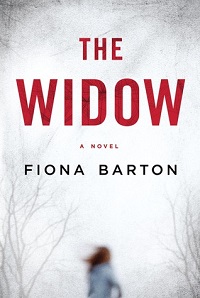
“The Widow” by Fiona Barton

the-widow

Contrary to what you would expect this book to be from its title – a tragedy or at least a drama – The Widow is actually a crime thriller. And a really good one at that – I couldn’t put it down until I had got to the end, to the “bottom of the mystery,” as they would say in our much-beloved Five Find-Outers mystery series by Enid Blyton that we grew up with in India.

Set in England, The Widow is a debut novel by Fiona Barton, who, I wasn’t surprised to learn, is a journalist, given the fluency and quality of the writing. The “widow” in the story is Jean, whose husband has just died in an accident. But there’s an entire back story to their marriage that gradually unfolds in the course of the book. Her husband, Glen, turns out to be a pedophile who may have abducted a two year girl, Bella, from her house. It takes a lot of digging and investigation to hone in on Glen as the probable suspect. The detective in charge of the case is convinced that he is the man. But there is no conclusive proof, and even though Glen is charged and brought to trial, there is not enough evidence to convict him. In the meantime, Jean is obsessed with kids but for a different reason — Glen is infertile so she cannot have kids of her own. Did Glen kidnap Bella? And if so, was Jean complicit in the kidnapping? Did she want Bella to be her child? And was Glen’s death really accidental or did Jean actually cause it? We don’t really get to know the answers to these questions until the end of the book.

The book’s structure adds to the drama. The story unfold over a span of four years, starting from the time of Bella’s kidnapping to a few weeks after Glen’s death. Not only does it keep alternating between different times instead of being chronological – a fairly common literary device adopted in novels these days – it is also narrated from the points of view of a few key people: Jean, the widow; Bob, the detective who becomes very emotionally invested in the case; Dawn, Bella’s mother, who is single and has a few skeletons in the closet of her own; and finally, Kate, a reporter who is the only one able to get through to Jean, past the media circus plaguing her life for four years since Bella disappeared.

Most crime thrillers have almost an obligatory surprise twist towards the end — they lead you down a certain path almost intentionally and then knock you off the sails with a big reveal. And in the most successful books of this genre like Gone Girl, their sheer brilliance make you forget and forgive the fact that they practically cheated into believing something that wasn’t true. The Widow is not like that. There are no surprise plot twists thrown in like a curve ball; yet, it still has a very satisfying conclusion in which you are assured that justice has been done. It’s far from being the next Gone Girl or The Girl on the Train, but I found it a very well written, engrossing, and page turning thriller.

The Widow
Author: Fiona Barton
Publisher: Penguin
Publication Date: February 2016

Contributor: Lachmi Khemlani runs a technology publication in the San Francisco Bay Area.
“Voices from Chernobyl: The Oral History of a Nuclear Disaster” by Svetlana Alexievich

voices-from-chernobyl

The 1986 nuclear disaster at the Chernobyl nuclear power station in the erstwhile USSR is a horror story we’ve all heard. The site is now in Belarus – a tiny country with a tiny population. The Nazis obliterated 619 villages and their populations during World War II, and the Chernobyl fiasco wiped out 485 villages. Of those who remain 20% are said to be living on contaminated land.

This book by Ukraine born Nobel laureate Svetlana Alexievich traces the events that unfolded during those days of horror and the slow death and disease that transformed the lives of innocent people in the vicinity. The author raises a poignant question, “Why repeat the facts – they cover up our feelings.”

It comes as no surprise that the book is full of heart rending stories. Any sensitive person will have a hard time getting through it. Half way through the book you’re sure to stop and ask yourself: Do we really need nuclear energy, leave alone nuclear weapons?

Here’s a simple narrative: “Tell everyone about my daughter. Write it down. She’s four years old and she can sing, dance, she knows poetry by heart. Her mental development is normal, she isn’t any different from other kids, only her games are different. She doesn’t play “store” or “school” – she plays “hospital”. She gives her dolls shots, takes their temperature, puts them on IV. If a doll dies, she covers it with a white sheet. We’ve been living with her in the hospital for four years, we can’t leave her there alone, and she doesn’t even know that you’re supposed to live at home.”

Nikolai Kalugin, a father says, “I want to bear witness: my daughter died from Chernobyl. And they want us to forget.” He shares a painful memory: “My daughter was six years old. I’m putting her to bed, and she whispers in my ear, ‘Daddy, I want to live. I’m still little.’ And I had thought she didn’t understand anything.”

Anatoly Simanskiy, a journalist says, “Yesterday my father turned eighty. The whole family gathered around the table. I looked at him and thought about how much his life had seen: Gulag, Auschwitz, Chernobyl.”

Vasily Nesterenko, former director of the Institute for Nuclear Energy at the Belorussian Academy of Sciences, shared some real pearls of wisdom: “No they weren’t a gang of criminals. It was more like a conspiracy of ignorance and obedience. The principle of their lives, the one thing the Party machine had taught them was never to stick their necks out.” He had this to add: “The State always came first, and the value of a human life was zero.” And this: “People feared their superiors more than they feared the atom.”

Vladimir Ivanov, a former first secretary of the Satvgorod regional Party committee told the author, “It was the military way of dealing with things. They didn’t know any other way. They didn’t understand that there is really such a thing as physics. There is a chain reaction. And no orders or government resolutions can change that chain reaction. The world is built on physics, not on the ideas of Marx. But what if I’d said that then?” Perhaps he wouldn’t have lived long enough to speak to the author. (This speculation is mine alone!)

A quarter century after the fall of the Soviet Union, as we read these personal testimonies we are left with a feeling of great sadness. But there is a faint thread of humour too, like a rainbow emerging from the dark clouds. An Ukranian woman is selling big red apples at the market, calling them ‘Chernobyl’ apples. Someone advises her to drop the advertisement as no one would buy them if they heard they were from Chernobyl. The woman then says coolly, “They buy them any way. Some need them for their mother-in-law, some for their boss.”

Overall Assessment: The author has done a brilliant job. Steel yourself before you read the book.

Voices from Chernobyl: The Oral History of a Nuclear Disaster
AUTHOR: Svetlana Alexievich (translated from the Russian by Keith Gessen)
PUBLISHER: PICADOR
DATE OF PUBLICATION: 2006

Contributor: Pushpa Kurup lives in Trivandrum, India and works in the IT sector.

“The World in the Evening” by Christopher Isherwood

the-world-in-the-evening

I have always loved to read fiction, but I have been going through a drought lately when it comes to finding something to read that holds my attention and makes me care about the characters, that makes me lose myself in a book as I always did since I was a kid. Over the holidays, I tried reading several critically acclaimed books that had recently been published including the Booker-prize winning The Underground Railroad by Colson Whitehead, Swing Time by Zadie Smith, and Here I Am by Jonathan Safran Foer; but I found that I couldn’t care enough about the plot and the characters to stick with them beyond the first chapter. Then, on a trip to New York City, I visited its famous Strand bookstore where, in the course of browsing through the thousands of books it carries, I came across Christopher Isherwood’s The World in the Evening. I have been a fan of  Isherwood’s writing ever since I read his A Meeting by the River several years ago, which I still rate as one of the best books I have ever read. Isherwood was a contemporary of Aldous Huxley and Gerald Heard, and is best known for his The Berlin Stories book, which was adapted into the hit movie, Cabaret, starring Liza Minnelli, as well as for his book, A Single Man, which was also made into a movie starring Colin Firth. Thus, when I came across The World in the Evening, I picked it up immediately, hoping it would bring back some of the enjoyment of fiction that I have always had until now.

I found this true for The World in the Evening, for the most part. Set around the time of the Second World War, the book is centered around the experiences of a young man, Stephen, in his early thirties, including his first marriage when he was in his twenties to a woman who was twelve years older than him, his brief affair with a young man while he was still married to his first wife, and his second marriage (after his first wife dies) to a young, carefree, rather hedonistic woman, which ends disastrously after he finds out that she is having an affair and walks out on her. Most of the book is in the form of reminiscences he has when he is holed up in bed for several weeks after being hit by a truck when visiting his childhood home in rural Pennsylvania, where he comes after walking out on his second wife. He has extended conversations with the people looking after him, which include his adopted aunt who has been like a mother to him (his own died when he was very young); a war refugee from Germany his aunt has taken in, who is uncertain about the fate of her husband as a war captor; and his doctor, who is homosexual and lives with a man whom the conservative community they belong to is determined to view as just a “roommate.” In the course of his conversations with these people, his perusal of his first wife’s letters – she was a famous author – a collection of which he might publish, and the memories triggered by them, we come to know the details of his life, the ups and downs he has gone through, his own feelings about them, and what has motivated him to do what he has done.

What struck me most about this book was how self-introspective it was —Stephen lays bare all his bad behavior, his petty jealousies, his irrational rages, and his many contradictory feelings for us to see. Ultimately, he comes to perceive everything bad that has happened to him as his own fault, caused by how he thinks and acts rather than by bad things happening to him. It is refreshing to come across a story in which the protagonist realizes that it is their own attitude and behavior that is primarily responsible for the trials and tribulations they are experiencing in life. It is also how eventually Stephen is able to resolve his problems, put his demons to rest, and find some measure of peace and acceptance in his life. It seems to be an important lesson for all of us.

Also, given that the book was written in the early 50s, I was amazed by how frank it was about sex and sexuality, both straight and gay. The main character was, for all practical purposes, heterosexual but still has a homosexual fling, showing that the divide between homosexuals and heterosexuals may not as rigid as is commonly believed. In the present day, we would call Stephen’s character bisexual, but at the time the book was written, there was no such concept, and Stephen is not at all conflicted about his fling with a man, despite being clearly attracted to, and married to, women. In fact, the only guilt he feels is in the fact that he is cheating on his wife. The fact that it is with a man is almost inconsequential to him.

The World in the Evening is a great example of the kind of book I like —where the focus is simply on telling the story without resorting to linguistic tricks or stylistic cadences. There are no examples of “beautiful writing” to showcase here. It was a little long-winded at times and did not come anywhere close to the brilliance of A Meeting by the River, but it was eminently readable, engaging and held my attention throughout.

The World in the Evening
Author: Christopher Isherwood
Publication Date: First published 1954 by Methuen Publishing Ltd; Reprint edition published in November 2013 by Farrar, Straus and Giroux (FSG Classics)

Contributor: Lachmi Khemlani runs a technology publication in the San Francisco Bay Area.

“Shores of Knowledge: New World Discoveries and the Scientific Imagination” by Joyce Appleby

shores-of-knowledge1

Marco Polo, the 13th century traveler, landed in a Genoese prison on his return from the Far East. His cell-mate was a writer and that’s how his story came to be told. ‘The Travels of Marco Polo’ was Columbus’ favourite book. Columbus was Genoese but his sponsors were the King and Queen of Spain. When he returned from the West Indies in 1493 he presented them with six Taino Indians, besides many species of plants and animals. Columbus made three more voyages to the Americas in the next decade, and when Hispaniola ran out of gold, he introduced sugarcane cultivation using forced labour. Religious conversion happened simultaneously. In the meantime the indigenous peoples encountered European induced diseases such as small pox and died in droves.

On Columbus’ second voyage, the Spaniards discovered pineapple on the island of Guadeloupe. Little did they know the ‘Indians’ had imported these plants from Brazil and Uruguay in their ancient canoes!

There are stories within stories. Spaniards invaded Cuba in 1511 and Mexico in 1521. Seven decades after Columbus’ arrival the New World had seven times as many Africans as Europeans. Eventually it was Amerigo Vespucci (a Florentine) whom the great new continents were named after. Unlike others before him Vespucci realized that the spot where he had landed (Brazil) was part of a new continent. His travel accounts published in 1502 won him instant fame. Martin Waldseemuller, a German cartographer, while preparing a new map in 1507 chose the name ‘America’ for the two continents in the western hemisphere. The rest is history.

Balboa discovered the Pacific Ocean, but it was Magellan who named it. John Cabot (a man from Genoa) had explored Greenland, Newfoundland and the east coast of North America under the English flag in 1497-98 but he didn’t get much press. (Cabot’s expedition is believed to be the first by Europeans to mainland North America since the Vikings landed five centuries earlier.)

Hernan Cortez, conqueror of Mexico, wrote about the Spanish occupation of Tenochtitlan and their utter surprise at finding resplendent buildings, stone statues, gold artifacts, frescoes, floating gardens et al. Bartolome de Las Casas (traveler and writer) denounced the cruelty of the conquistadors in his 16th century book “The History of the Indies”. When other European writers mentioned the Aztecs’ human sacrifices and the cannibalism of the Caribs in the Lesser Antilles, Las Casas reminded them of the biblical story where God commanded Abraham to sacrifice his only son.

Ferdinand Magellan did not really circumnavigate the globe but one of his ships did. Magellan was killed in the Philippines and only one of his five ships, the Victoria, returned to Spain in 1522 with 18 survivors and 26 tons of cloves, nutmeg and cinnamon. Magellan was Portuguese but he took Spanish citizenship in order to participate in the exploration.

The book is full of interesting facts that a lover of history and sociology is sure to lap up with immense pleasure. Here are some samples:

  • Jeanne Baré, the first woman to circumnavigate the globe (1766-69), went on Bougainville’s expedition disguised as a man, but on landing in Tahiti was instantly recognized as a woman by the natives.
  • The Aztec jugglers whom Cortez brought to Spain were later sent to Rome to entertain the Pope. That’s when rubber balls had their European debut. Yes, the Aztecs were rubber-tappers!
  • Francis Drake looted the Spanish silver fleet during his 1577-80 circumnavigation of the globe. This enabled Queen Elizabeth to pay off her country’s debt.
  • In Java, Antonio Pigafetta (a writer accompanying Magellan) “learned about the practice of suttee, described by his native interpreter in glowing terms as a ceremony in which a flower-bedecked widow happily accepted her duty to join her husband’s corpse on the funeral pyre.”
  • An island near Borneo “was occupied by Muslims who, though as naked as the other natives, adhered strictly to Muslim rules about diet and hygiene.”
  • “When the Lutheran archbishop of Uppsala, chided him (Carl Linnaeus) for placing humankind among other primates, Linnaeus replied airily that he knew of no way that would follow from the principles of natural history to make a generic difference between humans and simians. Either the archbishop should find one or cease his complaint.” Wow! So much for the Creation myth and the cute tale of Noah’s Ark!
  • “Thomas Jefferson, then the United States foreign minister to France, supposedly brought back the recipe for French fries, which he served over the next decade at the White House.”
  • In 1867 America bought Alaska from Russia. The purchase was described as “Seward’s Folly” after Lincoln’s secretary of state, William Seward who had negotiated the treaty.
  • In 1785 Napoleon Bonaparte, then aged 16, made an effort to join a naval expedition but did not qualify. The two ships carrying 220 men met a tragic end after leaving their last port of call in New South Wales, Australia in January 1788, and were never heard of again.

The story of the potato is a must-read. And that’s not all. Pedro Alvares Cabral, Charles Darwin, Alexander Humboldt, the Medicis of Florence, Adam Smith, Voltaire, Alexander Selkirk, Captain James Cook, and a horde of other stalwarts make guest appearances that are sure to leave the reader absolutely delighted.

Overall assessment: A scholarly masterpiece.

Shores of Knowledge: New World Discoveries and the Scientific Imagination
Author: Joyce Appleby
Publisher: W .W. Norton & Co.
Year of Publication: 2014

Contributor: Pushpa Kurup lives in Trivandrum, India and works in the IT sector.