“A Revolutionary History of Interwar India” by Kama Maclean

A Revolutionary History of Interwar India.jpg

“On 12th April 1931, a conference of India’s martyrs was held in Paradise. We know because the proceedings were published in the Lahori Urdu newspaper Vir Bharat the following week.” This brilliant piece of anonymous journalism envisions a full-fledged conference with all the formalities and protocol, and presents an intricate blend of humour and pathos. Khudiram Bose, Ramparshad Bismil, Ishfaqullah, Haribhai Balmukand and Khushi Ram occupy prominent seats. The martyrs of Jallianwala Bagh appear in bloodied outfits. The martyrs of Sholapur are there too. Jatindranath Das as head the reception committee ushers in the much awaited trio of Bhagat Singh, Rajguru and Sukhdev. Conches are blown, the gods shower flowers and shouts of ‘Shahidon ki jai’ rend the air. As Jatin Das delivers the welcome address, Jesus Christ arrives. Sardar Bhagat Singh says, “India’s martyrs greet the martyr of Jerusalem.” The Jallianwala martyrs chip in, “Accept our salutation O peaceful shepherd of bloodthirsty sheep.” Jesus announces that “Dyer is today being burnt in hell fire.”

Kama Maclean painstakingly traces the role of revolutionaries in ushering in India’s freedom, unearthing many enigmatic characters who fail to surface in mainstream narratives. In a 1937 book titled The Vanishing Empire, Chamanlal predicted that the British Empire would collapse in ten years. Later he became a Buddhist monk, ‘Bhikshu’ Chamanlal. Ganesh Shankar Vidyarthi was fatally stabbed in Kanpur when he intervened to make peace amidst communal riots. Uddham Singh waited 21 years to avenge Jallianwala Bagh finally murdering Michael O Dwyer in London in 1940.

The Hindustan Republican Army sprang up in the 1920s in the United Provinces, later metamorphosed into the HSRA (Hindustan Socialistic Republican Association/Army) and shifted its focus to Lahore. There were invisible linkages between the HSRA and Nau Jawan Bharat Sabha (NJBS) and the Jugantar and Anushilan groups of Bengal.

The revolutionaries were determined to free India from British rule. Their main strategy was to make targeted attacks on powerful people. They attacked a train near Lucknow on 9th August 1925, looted government funds and killed a passenger. For this ‘Kakori Conspiracy’, four men were hanged and five transported for life. On 17th December 1928 Bhagat Singh and Shivram Rajguru shot dead a British policeman J P Saunders at Lahore, and Chandrashekhar Azad killed an Indian constable who gave chase. This was their revenge for the lathi-charge in November that had resulted in the death of Lala Lajpat Rai. They went underground, regrouped in Agra and on 8th April 1929 Bhagat Singh and Batukeswar Dutt threw low intensity bombs and leaflets on the floor of the Legislative Assembly before courting arrest. Soon other co-conspirators were arrested. The trial dragged on for 23 months, and the bravery and brilliance of the revolutionaries captured the imagination of the nation. Interestingly, they had had themselves photographed in studios in anticipation of capital punishment. These pictures made their way to every nook and corner of India in a brilliantly orchestrated campaign, and soon Bhagat Singh was just as popular as Mahatma Gandhi.

In June 1929 in Lahore Jail the revolutionaries commenced a hunger strike in protest against the differential treatment meted out to Indian and European prisoners. On 13th September Jatindranath Das passed away after 63 days of fasting. Subhas Chandra Bose (on behalf of the Bengal Congress) arranged to repatriate his body to Calcutta, and all along the way it was hailed by wailing crowds.

Jock Scott, Lahore’s Senior Superintendent of Police (who had been the original target of the Saunders assassination) soon packed his bags and sailed for England. The California-based based Ghadar Party threatened that if Bhagat Singh was executed, they would assassinate the incoming Viceroy even before he landed in India.

The HSRA bombed the Viceroy’s train on 23 December 1929 as it approached Delhi but Lord Irwin escaped unhurt. In April 1930 the daring Chittagong Armoury Raid by the Bengal revolutionaries masterminded by Surya Sen rattled the British. However, the young militants were out-numbered and died fighting.

Azad managed to remain incognito until he was killed in a shootout with the police at Allahabad on 27th February 1931. British intelligence noted that the Allahabad Provincial Congress Committee “took an active interest in the cremation of Azad’s body.” Motilal Nehru had died only two weeks earlier and revolutionary memoirs recounted that Azad had taken part in the funeral procession in disguise. It came to light later that Motilal had communicated with and funded Azad. In fact the revolutionaries usually relied on Congress members for financial backing and legal defence.

Bhagat Singh, Rajguru and Sukhdev were hanged on 23rd March 1931. It is one of the classic ironies of Indian history that Bhagat Singh, although shunned by Gandhi and neglected by historians, was omnipresent in visual culture. Though originally a turbaned Sikh, his ‘hat portrait’ was firmly imprinted on the Indian psyche, never to be erased.

In Bengal on 14th December 1931, teenagers Shanti Ghosh and Suniti Choudhury shot dead a British magistrate, and expressed disappointment when they received only jail sentences.

HSRA members had multiple aliases. David Petrie (who later headed the MI5) was convinced that Balraj, Chief of the HSRA, was Bhagat Singh but decades later Shiv Verma, a surviving member of the inner circle, disclosed that Balraj was Azad.

The book has a chapter on the secret life of Durga Devi, widow of HSRA leader Bhagwati Charan Vohra. The latter had died in a bomb-making accident on 28th May 1930. Durga had masqueraded as Bhagat Singh’s wife to facilitate his escape from Lahore in December 1928. On 8th October 1930 she took part in a daring shooting attempt on Lamington Road, Mumbai, leaving her infant son with Babarao Savarkar, brother of V D Savarkar.

Overall Assessment: The best part of the book is the exhaustive array of photographs and pictures.

A Revolutionary History of Interwar India
AUTHOR: Kama Maclean
PUBLISHER: PENGUIN BOOKS
YEAR OF PUBLICATION: 2016

Contributor: Pushpa Kurup lives in Trivandrum, India and works in the IT sector.
“The Story of the Jews: Finding the Words 1000 BC – 1492 AD” by Simon Schama

The Story of the Jews

Well, I thought I knew their story – until I read this masterpiece and found out how little I knew. The Exodus story is something you can’t help knowing, how Moses led the Israelites out of Egypt, how they wandered in the desert and finally reached the Promised Land. You needed faith to believe the story but I had believed it anyway, at least most of it, excepting of course the more fanciful parts, like the parting of the Red Sea and the encounter with God on Mount Sinai. Nebuchadnezzar destroyed the Temple of Solomon in 587 BCE. Cyrus of Persia liberated the Jews and enabled the rebuilding of the temple. Jesus was a Jew. The Romans destroyed Jerusalem in 70CE and scattered the Jews in all directions. All this I knew. I also knew that my home state, Kerala, had a Jewish community from times immemorial – and after the birth of Israel many of them migrated. Like everyone else, I knew about the Holocaust. And well, the Qumran scrolls or Dead Sea Scrolls as they are called. (I’m somewhat ashamed to admit that I’d learnt about the Spanish Inquisition in my schooldays but had forgotten what it was all about.)

This book was an eye-opener. It brought to mind just as many questions as answers. If the Israelites found Egypt so abhorrent, why did they keep going back there? “The very first time that ‘Israel’ appears on any historical artefact is on the famous late thirteenth century BCE triumphal inscription of Pharaoh Merneptah, son of Rameses II.” The inscription claimed that Israel had been routed. This lends credence to the belief that Rameses II is the Pharaoh of the Exodus. And the Exodus probably did happen, though no evidence has been found till date.

Egyptian sources claim that when Sennacherib’s Assyrian army surrounded Jerusalem in 715 BCE it was an army under the Nubian pharaoh that broke the siege. Very plausible, says Simon Schama. So Egypt wasn’t a permanent enemy after all.

In the 6th century BCE Jews were settled in many parts of Egypt. In Elephantine, the capital of the Pathros region, they even had a temple. They kept the Sabbath, made animal sacrifices and circumcised their sons. Surviving documents related to marriage and divorce reveal interesting facts. While Israelite men had unilateral rights to divorce their wives, in Egypt Jewish women were also entitled to initiate the separation. Tragedy truck in 410 BCE when the temple was destroyed, rebuilt, and destroyed again. By the middle of the fourth century BCE, before the coming of Alexander, the Elephantine colony had ceased to exist. However, a century later Jewish settlements had popped up all over Egypt, especially at Alexandria and Thebes.

The Hebrew Bible was written over three centuries – eighth to fifth BCE. While it proclaims monotheism and an exclusive bond with Yehowah, it chronicles a saga of betrayals, transgressions, atrocities, disasters and defeats. “David’s best-loved son, Absalom, is killed in a particularly horrifying way while in rebellion against his father. Solomon’s imperially aggrandizing kingdom lasts not even one generation after his death. King Manasseh institutes the horror of child sacrifice by fire. The Egyptians are always at one gate and the Mesopotamian empires at the other.”

The Song of the Sea has much in common with the Phoenician epic of the storm god Baal’s conquest of the sea. Ecclesiastes is a ‘Wisdom Book’ that owes something to Persian-Babylonian proverbial literature. It was the Hellenistic Jewish world that invented the synagogue. ‘Holocaust’ was the Greek word for ritual cremation of whole animals. Only Greeks and Jews made fire sacrifices of whole animals.

Judaism was imposed at the point of the sword (and the circumciser’s knife) on neighbouring peoples like Itureans and Idumeans. In the first century BCE the Roman general Pompey marched through the Temple, tearing aside the curtain veil and entering the Holy of Holies, where only the high priest was admitted. But he spared the temple, as Alexander had done centuries ago. Eventually Vespasian would destroy it.

The mass social upheaval in the towns and villages of Palestine, the coming of Jesus and his crucifixion, the exaltation of Christianity as the state religion of Rome, the birth of Islam, the Muslim conquest of Jerusalem, the Crusades, the persecution of Jews by Christians in various parts of Europe, and the horrors of the Inquisition are set out in explicit detail. One is left feeling sorry for the Jews, although the author recounts the atrocities committed by the Jews as well.

There is much that would evoke shock and/or surprise. Here are some examples:

  • Judaism and Zoroastrianism had shared purity obsessions,including a belief in the uncleanness of menstruation.
  • Peter the apostle refused to share a table with the uncircumcised.
  • The Prophet Muhammad first commanded the Believers to pray in the direction of Jerusalem. It was only when the Jews of Yathrib rejected his beliefs that he switched the orientation to Makkah.
  • Christians were forbidden by Canon Law to lend money at interest. So it wasn’t just the Jews and Muslims who had this prohibition!
  • Much of the heart of Westminster Abbey comes from the estate of Licoricia the Jewess and her husband, David of Oxford. The Crown had appropriated the estate in the thirteenth century. Soon thereafter the Jews of England were all sent packing. This happened in France, Germany, Spain and Portugal. By the time Columbus had set out to discover America in 1492, Spain had been wiped clean of its Jewish population and five years later Portugal followed suit.!
  • When Vasco da Gama returned in triumph after his India expedition he brought to Portugal back not only spices and animals but also a Polish Jew. I wonder what became of the poor man in a country that had evicted all its Jews!

The book has a sequel. I intend to read it soon.

Overall Assessment: A labour of love.

The Story of the Jews: Finding the Words 1000 BC – 1492 AD
AUTHOR: SIMON SCHAMA
PUBLISHER: VINTAGE
YEAR OF PUBLICATION: 2014


Contributor: Pushpa Kurup lives in Trivandrum, India and works in the IT sector.

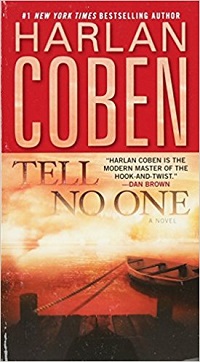
“Tell No One” by Harlan Coben

Tell No One

When I started reading this book, I had this funny feeling that I knew this story, everything including the climax (that’s a nice feeling to have if you have not experienced it). As I progressed, the feeling became stronger but I couldn’t remember when or where it happened. Soon it dawned to me. I had seen a movie adaptation of this book a long time ago. I didn’t knew the movie name then.

I have to admit that even after that, the book managed to keep me on the edge of my seat until the very last page.

It is one of the best suspense thrillers that I have read. The story remains solid throughout the book. There’s romance, suspense, there are murders and twists to keep you engaged. And I felt that all the characters had a soul, even the secondary, not so significant ones.

You will feel sympathy for the main character, Dr. Beck, when you know the tragedy that happened in his life. And you will most certainly get chills from a man named Eric Wu and his way of handling people.

The story unfolds at a fast pace and there are enough thrills at the end of each chapter. And it ends with a beautiful flourish. You need to be extra sharp while reading the ending or you may lose some important information.

You can surely race through this book in a matter of hours. I highly recommend it for people who are looking for thrilling page turners.

Tell No One
Author: Harlan Coben
Publisher: Dell
Publication Date: August 2009

Contributor: Anoop Mukundan is a casual reader and a cyber wanderer.

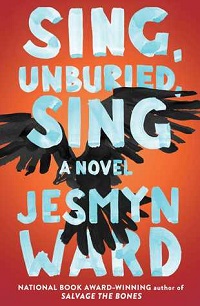
“Sing, Unburied, Sing” by Jesmyn Ward

Sing Unburied Sing

This book won the National Book Award for fiction this year (2017) and therefore has been in the news a lot, both before and after the award was announced. It seems almost mandatory for these awards to be given only to those books that have been on the radar, doing the rounds as it were, and heralded by book critics everywhere. I follow book news closely and am therefore always aware of which books are currently “hot” — so whenever I see them in the library, I never pass up on the opportunity to borrow them. While I can’t say that I have had a good track record lately with critically acclaimed books — I didn’t care much for Exit West, and I couldn’t even get beyond a few chapters of The Underground Railroad which won the Pulitzer Prize, and Lincoln in the Bardo which won the Booker Prize — it never hurts to keep trying. This is how I came to read Sing, Unburied, Sing, and the fact that I was able to read through and finish it, was, to me, a significant aspect in favor of the book.

Sing, Unburied, Sing is set in Mississippi and is focused on an eventful few months in the life of Jojo, a thirteen year old boy who is biracial and is being brought up by his maternal grandparents. They are from the black side of his family, or as the author refers to it, the “Black” side — black with a capital “B.” Jojo’s mother, Leonie, also lives with them, but she is a drug addict and has few nurturing instincts. Jojo’s father, Micheal, who is “White,” is in prison on a drug-related offence. Micheal’s parents refuse to even acknowledge Jojo’s existence, as they didn’t want their son to marry a black woman. Jojo has an adorable three year old sister, Kayla, for whom he is the world, given that their mother is not much of a mother and their father is largely absent. Jojo’s black grandfather, Pop, is thankfully a good man who provides the children with love and care — Jojo has the highest regard for him. Pop’s wife, Jojo’s grandmother, was also a loving and caring woman, but she is now very sick and completely bed-ridden. Pop has his own demons from his youth, notably from the time he was also in prison — the same one Michael is now at.

The trigger for the story — what sets it off — is Michael’s release from prison, and Leonie setting off on a road trip to pick him up. She insists both the kids go with her to pick up their father, and they set off in a car with one of her friends, whose boyfriend is in the same prison. The friend is as drug-addled as Leonie, and the trip is a horrible one — they make a stop to do a drug pick-up, Kayla is sick throughout the trip with Jojo comforting her as best as he can, and after they pick up Michael, they are stopped by the cops forcing Leonie to swallow the drugs they were carrying so that the cops wouldn’t find them. As wretched as this was — with the plight of the children especially gut-wrenching — what was worse was that a “ghost,” who had unresolved issues with Pop when he was at that prison, came back with them. This ghost, Richie, who was also thirteen when he died, can be seen only by Jojo, and is not able to transition to the beyond — he is “unburied,” so to say, which is where the title of the book comes from. He is finally freed from this unburied life by a song sung by Kayla.

Needless to say, it is hard to take a book as serious as this seriously when it involves a ghost. And the ghost is a prominent part of the story, even narrating some of the chapters in the book. It turns out that he is not the only ghost — Leonie, when she is drugged, can see the ghost of her brother, Given, who was killed by some of his racist white college mates when he was a young man.

Overall, I have to say that I had conflicting feelings about this book. On the one hand, it is a deeply moving and touching story, and what makes it particularly poignant is that most of it is narrated by Jojo, allowing you to see the world from the perspective of a thirteen year old boy in a very unconventional and troubled family. His devotion to his little sister is touching, and your heart goes out to these two children on their horrifying road trip, making you constantly dread about what is going to happen to them. There are also the themes of racism, mob lynching, and incarceration, and while these are hardly new — a great example being the classic To Kill a Mockingbird — they have been captured in Sing, Unburied, Sing in a manner that is extremely haunting. I can see why this book was so highly acclaimed.

But then there were the ghosts, and they just didn’t work for me.

Sing, Unburied, Sing
Author: Jesmyn Ward
Publisher: Scribner
Publication Date: September 2017

Contributor: Lachmi Khemlani runs a technology publication in the San Francisco Bay Area.

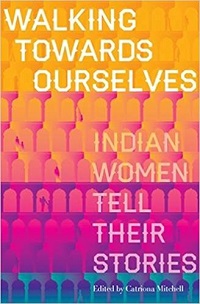
“Walking Towards Ourselves: Indian Women Tell Their Stories” by Catriona Mitchell (Editor)

Walking Towards Ourselves

This book is a brilliant mosaic of many feminine voices from India, a collection of short stories carefully crafted to present a consistent and yet diverse pattern of thought and emotion. From Ira Trivedi’s Rearranged Marriage to Sharanya Manivannan’s Karaikkal Ammayar to Urvashi Butalia’s Oxygen, the book takes the reader on a roller coaster ride that is both exciting and frightening. The voices are by no means weak or even similar – and no facet of the feminine experience is left untouched. From the embarrassment of dark skin, to the agonies of match-making, marriage, motherhood and childlessness, alternative relationships and alternative sexual identities, difficult choices and painful lives, this book leaves no stone unturned in its quest for free expression of thought.

Mitali Saran writes, “This country worships phalluses, but women are raised to believe in their own shamefulness, and taught that female modesty protects the whole world’s honour. There are degrees, of course – perhaps you’re a rural woman who’s allowed an unrelated man to see her face uncovered, or you’re a city slicker showing too much cleavage – but shame is the monkey on your back, and when it shows up, it imperils your whole family’s reputation. It’s been a long historical fall from the erotic celebration of Khajuraho to the prudery of today.”

Bollywood belle Tisca Chopra writes of the legendary casting couch, “I have been asked, plenty of times — by actors, directors and producers. I play dumb. Smile and pretend I don’t get the hint. Yet, somehow, many men from the film business think it is their right to ask.”

Describing the near trauma of hunting for toilets in the Mumbai metropolis, Annie Zaidi writes, “The commute was tough, the deadline pressure insane, harassment was a possibility that lay in wait at every corner. But my greatest worry was not finding a toilet when I needed one. Which was several times a day every day. The city seemed to be lurching along anyhow, kidding itself that women didn’t get out much and, if they did, it was never long enough for their bladders to fill up. Mumbai was rumoured to have public toilets, at least at train stations, but to my dismay and fury, I found that most toilets were either non-functional or locked up, especially at night. The official excuse was that women didn’t use them anyway and that if toilets were open, they might be used for ‘other’ purposes.”

“Women were so central in the battle for independence, why did we hear virtually nothing about them afterwards? Or for that matter during colonial times?” asks Urvashi Butalia, the firebrand founder of the publishing house Kali for Women.

Salma’s account of her urge to write (translated from the Tamil by N Kalyanraman) and the vicious suppression she encountered is especially heart-rending. The reader is left wondering: Is this my Incredible India? “After hiding within the lime-coated walls of my parents’ home for several years, I moved to my husband’s family house on a neighbouring street and was enclosed by brand new walls, freshly coated with paint.” Salma’s predicament would shock the conscience of anyone who has a conscience. “Writing poems and reading books were considered serious crimes. My husband warned me to stop reading. He threatened that if he happened to see any books lying around the house he would burn them, and if he saw me writing he would break my fingers.” Salma didn’t stop writing. Today she is a celebrated author, and everyone knows her given name is Rokkaiyya Begum.

“Within a marriage, fighting back comes with its consequences. The man who rapes me is not a stranger who runs away. He is not the silhouette in the car park, he is not the masked assaulter, he is not the acquaintance who has spiked my drink. He is someone who wakes up next to me. He is the husband for whom I have to make the morning coffee. He is the husband who can shrug it away and ask me to stop imagining things.” This one is by an anonymous author – not even a pen name.

Saranya Manivannan writes, “In the long history of female silencing, the wardrobe was an instrument long before the pen.” And she elaborates, “In order to be taken seriously, in order to be left alone, in order to be perceived as neither desirable nor desirous, I twist my uncombed hair into a bun and leave my face bare and bespectacled, throw a loose tunic over pants and slip into pre-distressed chappals. Make no mistake about it: it is a cultivated look. It is a form of armour.”

Chitra Banerjee Divakaruni remembers seeing the picture of ‘Sultana Raziyya’ in her brother’s history’ book and being impressed with the way the queen exuded power. “In this picture the woman sat on a tigerskin while a man knelt nearby, offering her his scimitar. Instead of flowing veils, she wore the male attire of the time: baggy pants and a vest. Instead of daintily sniffing at a rose, like the women in my father’s book of Mughal paintings, she leaned forward boldly to grasp the weapon offered to her.”

Overall Assessment: Must read.

Walking Towards Ourselves: Indian Women Tell Their Stories
EDITOR: Catriona Mitchell
CONTRIBUTING AUTHORS: Ira Trivedi, Rosalyn D’Mello, Mitali Saran, Urvashi Butalia, Annie Zaidi, Anjum Hasan, Salma, Anita Agnihotri, Tishani Doshi, Margaret Mascarenhas, Sharanya Manivannan, Tisca Chopra, Deepti Kapoor, C S Lakshmi, Nirupama Dutt, Chitra Banerjee Diwakarunni and one ANONYMOUS writer.
PUBLISHER: Harper Collins
YEAR OF PUBLICATION: 2016

Contributor: Pushpa Kurup lives in Trivandrum, India and works in the IT sector.
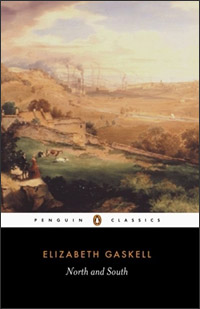
“North and South” by Elizabeth Gaskell

North and South

I picked up North and South by Elizabeth Gaskell based on the premise that this book would be about the Hale family and their decision to leave the South of England. I wanted to know what struggles or personal convictions Mr. Hale faced with the Church in order to resign his position as parishioner and move his family to the North of England, to a manufacturing town.

I was quite disappointed that the story did not develop this reason at all. However, all my disappointment was forgotten as I continued reading and learned more about the character of Margaret Hale, Mr. Hale’s daughter. She had initially struck me as someone gentle and kind as she interacted with her mother. But as I continued reading, I soon learned that she was also very bold in communicating her thoughts/disapproval when she felt it was necessary.

This story largely focuses on the misunderstanding and conflict between two groups. One group was the factory owners and their mill workers while the other group was the Hale family, who are from the South and the people of Milton, from the North. Throughout this story, we meet different characters which give us insight into the issues of each group and what biases each group must overcome to understand one another. This was probably one of my favorite parts.

The author, Mrs. Gaskell, does such a fair job at allowing each side to plead their case through dialogue between characters. The dialogue was kind of heavy, at times, for me because it contained a lot of references to how unions and factory businesses’ work, which I am not too familiar with. However, it was coupled with compelling events that demonstrated just how much each person’s life was affected by the environment at Milton such as illness, poverty, hunger, work strikes, death, etc. Again, all very striking and heavy social issues relative to the culture and time. Mrs. Gaskell was able to sustain me as a reader, as I grew to love each and every one of her characters to whom she gives so much depth to as they interact with one another.

Going into the story, I knew that Margaret’s love interest would be Mr. Thornton, which is what intrigued me to continue reading. Amidst all the societal issues, I was so curious to know how Margaret and Mr. Thornton resolved their prejudices towards one another and move on to becoming more than acquaintances. There were many times Mrs. Gaskell created such opposition between them and allowed us, the readers, to be aware of events that maybe the other party was not, which really magnified the tension causing me to ask, “Why, Mrs. Gaskell. Why?!” In a good way, of course.

Overall, this story has left quite an impression on me, especially Margaret’s character. I was so inspired by how strong of a woman she was throughout her experiences at Milton. Mrs. Gaskell did an excellent job at crafting this story together.

North and South
Author: Elizabeth Gaskell
Publisher: Penguin Classics, Revised edition
Publication Date: June 1996 (Originally published in 1855)

Contributor: Nathalie Dorado-Fields is a stay at home mother who lives in Mount Vernon, Ohio.

“The House of Silk: A Sherlock Holmes Novel” by Anthony Horowitz

The House of Silk.jpg

I picked up The House of Silk thanks to a comment that was posted in response to my take on Anthony Horowitz’s book, Magpie Murders, a few months ago. While Magpie Murders was a classic whodunit in the style of Agatha Christie — whose books I find thoroughly entertaining, even today, and even after multiple re-readings — The House of Silk is directly based on the style of Arthur Conan Doyle best known for his Sherlock Holmes detective books. In fact, The House of Silk is not just inspired by Sherlock Holmes, it is, as the title states, an actual Sherlock Holmes book. This means that it is written from the point of view of Dr. Watson, as the original books were, and features the same characters in the same setting. It’s almost as if Arthur Conan Doyle rose from the ashes and gave us another Sherlock Holmes book, or if there was another book in his canon that was lost and was discovered only now. In fact, that is the premise of The House of Silk — that it was written over a hundred years ago by Dr. Watson but was sealed until now because the “case” that was solved in the book was too shocking and too controversial for those times.

I found the premise very successful in its execution — the book is indistinguishable from the original Sherlock Holmes books and transports you back to 221B Baker Street, the London address where Sherlock Holmes lives and which forms the base setting for all his cases. At the time of this book, Dr. Watson is already married but his wife is away visiting friends, so he returns to live at 221B Baker Street as he used to and continues to be Holmes’s trusted right-hand man and chronicler of this case. Their intrepid landlady, Mrs. Hudson, plays only a small role in this book, but the loyal Inspector Lestrade has a large part to play. The case starts off being a relatively straightforward one of an art theft and a murder threat, but soon balloons into something a lot more sinister — the brutal murder of a young boy, an underground opium den, another murder that Sherlock Holmes himself seems to have committed and is arrested for, an orphanage for boys that does not quite seem to be what it purports to be, and a conspiracy that seems to go so high up in government levels that even Sherlock Holmes’ well-connected brother, Mycroft Holmes, cannot help.

As with all Sherlock Holmes books, The House of Silk is a thrilling ride that takes you back to the familiar setting of Victorian England, and the case that Sherlock Holmes and Dr. Watson have to solve gets increasingly darker, complicated, and dangerous. Fans of the original books will revel in the resurrection of their favorite detective, and there is no doubt that Anthony Horowitz is an extremely talented writer who has shown that he can match the writing styles of Agatha Christie as well as Arthur Conan Doyle to a tee. The only problem I found with the book was with the intent of the premise — it pointed to something “so monstrous” and “so shocking” that the book had to be locked up for a hundred years. However, when the finale came, I did not find it to be as big a deal. While I can appreciate that Horowitz needed to find a way to explain why a new Sherlock Holmes book was being published now, the explanation he chose was not very compelling.

But despite the problem I found with the intent of the premise, its execution, as I mentioned earlier, was spot on, making The House of Silk a terrific read.

The House of Silk: A Sherlock Holmes Novel
Author: Anthony Horowitz
Publisher: Mulholland Books
Publication Date: November 2011

Contributor: Lachmi Khemlani runs a technology publication in the San Francisco Bay Area.

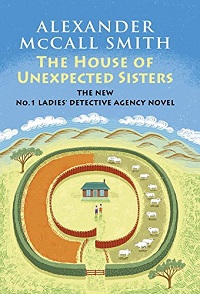
“The House of Unexpected Sisters” (Book 18 of the No. 1 Ladies Detective Agency Series) by Alexander McCall Smith

House of Unexpected Sisters

This is the latest book in the No. 1 Ladies Detective Agency Series, which I absolutely love. I own all the books in the series and have previously written about the 17th book that was released last year, Precious and Grace.  I find the newer books in this series every bit as enjoyable as the first, which was published all the way back in 1998. This a remarkable achievement for any writer, even one as prolific as Alexander McCall Smith, who writes other series as well as stand-alone books (such as My Italian Bulldozer, which I also wrote about recently). It recalls other favorite authors of mine such as Enid Blyton and Agatha Christie (who are no longer alive and cannot write any more books) as well as J.K. Rowling, who seems to be done with Harry Potter but is still continuing to write the Cormoran Strike books under the pseudonym, Robert Galbraith.

What never ceases to amaze me about the No. 1 Ladies Detective Agency Series books is how they manage to capture the sights, the sounds, and even the smells of Botswana, where the series is set. I have not personally been to Botswana, but the country seems so familiar to me because of these books. What is also amazing is how McCall Smith is able to write from the point of view of an African woman, Mma Ramotswe, who is the protagonist of the books and the proprietor of the No. 1 Ladies Detective Agency. It’s almost as if he is able to get into the skin of the character — she seems so real, so authentic. I know that this is what all writers aspire for, but it seems to me that there are few writers who are able to inhabit the character of someone who is so diametrically different from them as Alexander McCall Smith, a Scottish man, is from Mma Ramotswe, an African woman. He did spend a part of his childhood in Botswana, however, which is probably where the “heart” of the novels comes from. He is able to capture his love for the country in these books so beautifully that, as a reader, you can’t help falling in love with the country yourself.

The House of Unexpected Sisters returns with its familiar cast of endearing characters: Mma Ramotswe, who runs the detective agency and is an old-fashioned, “traditionally built,” astute woman; her prickly assistant, Mma Makutsi, who has promoted herself throughout the series and is now the “co-director” of the agency; Mr. JLB Matekoni, Mma Ramotswe’s husband who is a mechanic and runs the garage that is co-located with the detective agency; Charlie, a part-time apprentice at the garage who also occasionally helps out with detective work, and whose main interest in life is “girls”; Mma Potokwani, the matron of a nearby orphanage who is the closest friend of Mma Ramotswe and makes irresistible fruit cake; and Mr. Polopetsi, a school teacher who is also a part-time colleague at the agency. While the main “case” in this book that the agency investigates is a woman who seems to have been unjustly dismissed from her job, the other big mystery is a personal one for Mma Ramotswe — the discovery of another woman who shares the same last name, which might point to Mma Ramotswe’s father not quite being the man she looked up to and revered.

As in all the books in the series, each one is focused only on two or three cases for the detective agency rather than being a “thriller” as such — the focus is more on the characters, their daily lives, their conversations, their thoughts, and their relationships. Reading all the books sequentially makes you feel like you are growing up with the characters, you know them so well. What I also love about these books is how funny and chock-full of witticisms they are, with the humor coming naturally from everyday thoughts and conversations rather than tacked on. For instance, in The House of Unexpected Sisters, Mma Ramotswe and Mma Makutsi are discussing why more and more women think that the shorter a skirt, the more fashionable it is, and Mma Makutsi comments: “I do not understand that. Men know that women have legs — that is one of the things that they learn at any early age. So why do you have to show them that you have legs when they are already well aware of that?”

Now who can argue that that?

The House of Unexpected Sisters (Book 18 of the No. 1 Ladies Detective Agency Series)
Author: Alexander McCall Smith
Publisher: Pantheon
Publication Date: November 2017

Contributor: Lachmi Khemlani runs a technology publication in the San Francisco Bay Area.

“Cigarette Girl” by Ratih Kumala

Cigarette Girl.jpg

The unusual title caught my attention as I was browsing in a bookshop in Bali. I picked it up. The book’s central character is a cigarette rolling, cigarette smoking girl, Dasiya or Jeng Yah, who remains an enigma right until the story reaches its climax. The tale begins when a cigarette tycoon utters her name on his deathbed to the utter amazement of his three sons and the utter disgust of his wife. Soeraja’s appeal is heeded by his sons – Tegar, Karim and Lebas – who set out on a wild goose chase to find the mystery woman, much to the anger and resentment of their poor mother.

“As if the Angel of Death was casually stopping by his room, taking a little piece of him each time it visited, and along with it pieces of his memory as well.” This is how the author describes Soeraja’s slow descent into oblivion. She says of Lebas, the youngest of the three brothers: “He had been a Bob Marley follower for eight months, until some lice decided that his dreadlocks made a nice and cosy nest.”

There is pathos and humour and suspense. But far too much about cigarette smoking and cigarette making to attract a non-smoker. Djagad Raja clove cigarettes, Lady cigarettes, Mendak medicinal cigarettes, Independence cigarettes, Proclamation cigarettes, Red Sickle cigarettes, Djojobojo klobot, and what not. Frankly, I disliked the portions where much is made of the “flavour,” “feel” and “formula” of the weed. The cost, the weight, the texture, the smell, the taste – all these were enough to drive me mad! I felt myself going up in smoke – and almost lost my grip on the story.

The family drama is interesting though – and the language simple and sweet. Rivalries, jealousies, and human struggles spanning three generations, the liberation brought by the Japanese, followed by unexpected repression, the coming of Independence, the brutal suppression of communist groups, the danger of political activity and its deep impact on the daily lives of common people – all form part of this pot-boiler. The cigarette ads are totally hilarious. Lady cigarettes: inhale just once and the lady of your dreams will appear before you. Garwo Kulo cigarettes: the cigarette for the man who loves his wife.

The tale is set in Java, Indonesia. We are reminded in rare flashes that the country once had a Hindu legacy. “But her husband had pulled her way cruelly, like Kurawa who had won Drupadi from Yudhistira in the Mahabharata.” Idroes Moeria and the scribe’s daughter, Roemaisa, Soedjagad and his desire to win the same woman, the American education of Soerja’s sons and its influence on Lebas in particular, the conformism of Tegar and the bohemian lifestyle of Lebas, Pak Djagad and his daughter Purwanti, the search for the elusive cigarette girl and the final unexpected twist to the story are all laid out in fascinating detail. How I wish it had been about some herbal product instead of cigarettes! The characters have one thing in common – they all enjoy smoking! No, I’m not joking. (And yes, I did get away before Mt. Agung erupted.)

Overall Assessment: Not bad.

Cigarette Girl
AUTHOR: Ratih Kumala
PUBLISHER: Monsoon Books
DATE OF PUBLICATION: 2017 (First published in 2012 in Bahasa Indonesia)

Contributor: Pushpa Kurup lives in Trivandrum, India and works in the IT sector.

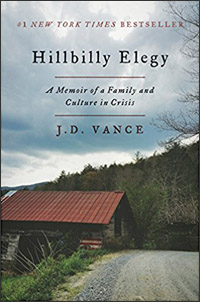
“Hillbilly Elegy: A Memoir of a Family and Culture in Crisis” by J. D. Vance

Hillbilly Elegy1

J.D. Vance’s Hillbilly Elegy was my first real insight into white working-class America – what he describes as ‘hillbillies’ from a poor Rust Belt town. The author gives a compelling explanation of why it’s so hard for someone who grew up the way he did to ‘make it.’ I picked up this book after the 2016 election to get an idea of the Republican base.

I just loved the glimpse into Vance’s chaotic family history – his grandparents, aunt, uncle, sister, and, most of all, his mother dealing with demands of their new middle-class life while struggling with the legacy of addiction, alcoholism and poverty that is so characteristic of their part of America.

Vance’s grandparents moved north from Kentucky’s Appalachia region to Ohio in the hopes of escaping the dreadful poverty around them and to raise a middle-class family. When J.D. graduates from Yale Law School, he succeeds in achieving generational upward mobility – a story interspersed with its fair share of humor and colorful characters. He was mostly raised by his grandparents along with his half-sister because his mother was an addict who went from husband to husband and Vance barely knew his father. He did poorly in school and was lucky to get out of the cyclical poverty when a cousin pushed him into joining the Marines, which was an American melting pot. From there he went to Ohio State and then to Yale Law School.

At Yale, his mentor was Amy Chua – the famous ‘tiger mom.’ But he feels the disdain from his fellow-mates who come from a different socio-economic class and cannot relate to his ‘white poverty’ or his marine background. He meets his future wife, Usha, at Yale and finds much more

Vance doesn’t pretend to be a policy expert or offer solutions – he merely opens our eyes to them. But after reading the book, it did make me think about what can be done to create opportunity in poor communities, especially in ‘middle America.’

Hillbilly Elegy: A Memoir of a Family and Culture in Crisis
Author: J. D. Vance
Publisher: Harper
Publication Date: June 2016

Contributor: Shamita Tripathy is a book enthusiast and works as a finance professional in the Bay area.

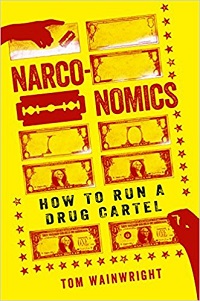
“Narconomics: How to Run a Drug Cartel” by Tom Wainwright

Narconomics

I was at the Munich airport and had time to kill. I went to the bookstore and my eyes fell on a book with an intriguing name. I went ahead and bought it. And sure, I got my money’s worth.

I was startled to learn that this is the author’s first book. He sure writes like a pro. And he’s chosen a mind-blowing topic. I’ve read many books written by journalists, but this one’s the best of all. It’s a lesson in economics, sociology, crime and the dark side of human life.

We learn that the world’s taxpayers spend $100 billion a year combating the illegal drugs trade. “There is an overwhelming focus on suppressing the supply side of the business, when basic economics suggests that addressing demand would make more sense.”

The global narcotics industry has annual revenues amounting to about $300 billion and serves a quarter of a billion consumers. It closely resembles a professionally run multinational corporation. “Colombian cocaine manufacturers have protected their profits by tightening control of their supply chains, along the same lines as Walmart. Mexican cartels have expanded on a franchise basis, with the same success as Macdonald’s.”

Monopsony means ‘single buyer.’ While a monopolist can dictate prices to its consumers as it’s the only seller, a monopsonist can dictate prices to its suppliers, because it’s the only buyer. Drug cartels keep the price of coca stable by putting pressure on the suppliers who in turn squeeze the growers. So any production loss or destruction of crop affects only the farmers – those at the very bottom of the supply chain. On the international market the price of cocaine has remained steady for over two decades. So has the number of cocaine users.

“Prison is fabulously expensive. Sending a teenager to jail costs more than it would to send hint to Eton College, the private boarding school in England that educated Princes William and Harry.” For criminal organizations, prisons pay a pivotal role in the recruitment and training of staff. The La Nuestra Familia (our family), a California based prison gang was founded in the 1960s by prison inmates looking to protect themselves from another gang, the Mexican Mafia. The Aryan Brotherhood is another American prison gang. (Gosh, there’s a whole world out there that we’re clueless about!)

“Buy cocaine in Europe or the United States and it’s an uncomfortable certainty that you have helped to pay for someone to be tortured to death…” Drug cartels often seek publicity for their gruesome murders. The author was told that the worst time to step out in Ciudad Juarez (in the Mexican state of Chihuahua) is 5-45 p.m. because that’s when the gangs carry out their executions in time to lead the 6 p.m. news broadcast.

There’s a whole lot of interesting information:

  • In the early 1970s, Stanford University students used Arpanet (a precursor of the internet) for the first time to arrange a deal with the students of MIT. The subject of the transaction was a bag of marijuana. Today, on the ‘dark web’ of the internet drugs and weapons are anonymously bought with bitcoins, and contract killings are said to be on sale. A recent Global Drug Survey revealed that in the UK 22% of illegal drugs are purchased online.
  • Many hotels in La Paz, Bolivia serve coca tea to guest on arrival.
  • The UN estimates that the average coca grower in Columbia earns $2 a day.
  • Brazil is the world’s second biggest market for cocaine after the United States.
  • Spain is the main gateway to Europe for Latin American drugs.
  • New Zealand shuts down more crystal-meth labs each year than any country in the world apart from the United States and Ukraine.
  • “For criminals looking for an offshore base in the Americas, Guatemala has a lot to offer. But it faces stiff competition from its southern neighbour, Honduras.”
  • Guatemala’s president Otto Perez Molina, stated that, “Today more people are dying in Central America through drug trafficking, and the violence it generates, than are dying in the United States through the consumption of drugs.”

The book talks of the franchising of criminal brands, the manufacture of ‘designer drugs’, the emergence of “Frankenstein drugs’, and lots more. In short, it’s one deadly cocktail.

Overall Assessment: Absolutely brilliant.

Narconomics: How to Run a Drug Cartel
AUTHOR: Tom Wainwright
PUBLISHER: Ebury Press
YEAR OF PUBLICATION: 2016

Contributor: Pushpa Kurup lives in Trivandrum, India and works in the IT sector.
“Big Little Lies” by Liane Moriarty

Big Little Lies

I had read many of Liane Moriarty books, including Big Little Lies, a few years ago at the recommendation of a friend. I found them all very enjoyable, the kind that are difficult to put down and that you don’t really have to because they are so easy to read – written in a light-hearted manner and not at all dense. You could read them quickly, be entertained, and move on. They didn’t, however, stay with me – I would be hard-pressed to remember the characters and the plot of a book, let alone how it works out, after a few months.

This is why when Big Little Lies came out earlier this year as a TV miniseries with A-list stars like Nicole Kidman and Reese Witherspoon and I started watching it, I simply could not remember the story beyond a sliver of familiarity. This turned out to be a good thing as I could enjoy the series without any “spoilers,” without knowing exactly what was going to happen and how it was going to end. The show was so well made and was so successful – winning eight Emmy Awards – that the book got a new lease of life and became an instant bestseller. I just found a copy of it in the “New Books” section of my library and decide to re-read it. I wanted to see how such an excellent TV series had been made from a book I didn’t recall as being “great” as such – it had been an enjoyable and fun end, but was definitely not literary by any stretch of imagination. Perhaps the televised version was only loosely based on the book, as many well-made “based-on-a-book” movie and TV adaptations tend to be?

I was wrong about that. After re-reading the book, I found that the TV adaptation was almost a scene-by-scene translation of the book. Some changes had been made, but the story was, by and large, very true to the original. It starts with a murder, which takes place in a school during a “parents only” costumed trivia night party. But who exactly the victim is, how the murder happens, and who did it are revealed only at the end of the story.

As in the book, there are snippets of the parents being interviewed by the detectives trying to figure out how the murder happened, and you can sense their frustration when most of the parents they are interviewing are telling them about the school politics, about the two main “camps” of parents in the school. In one camp are Madeline, the ringleader, a non-nonsense person who “tells it like it is”; Jane, a single mom who has just moved into the area, attempting to escape from a traumatic past; and Celeste, an ethereally beautiful woman, but one who is struggling with demons of her own. In the other camp are Renata, a career mother who is a high-powered executive, and some other moms who are aligned with her. All these mothers have kids who are just starting kindergarten in a local school, set in the suburb of Australia where they live.

The trouble starts when Renata’s daughter, Amabella, is bullied by another kid during the kindergarten orientation the kids attend at the school, and when pressured to name the kid who bullied her, she points to Jane’s son, Ziggy. But Ziggy maintains that he did not do anything to Amabella, and is, in general, such a sweet and honest child that Jane believes he is telling the truth. So do Madeline and Celeste, who have, by now, become good friends with Jane. However, Renata is livid that her daughter was bullied, does not believe that Ziggy is innocent, and repeatedly attempts, over the course of the school year, to ostracize him. This is how the two camps are formed, which provides the backbone of the drama that eventually results in the murder at the heart of the book. Additional intrigue comes from the thorny relationship that Madeline has with her ex-husband and his wife, Bonnie, whose daughter is also attending the kindergarten class where the drama is unfolding. Add to this domestic violence, sexual assault, teenage rebellion, and a budding romance, not to mention the murder, and you have all the elements of a cinematic “spice mix” – or “masala” as we call in Hindi, India’s national language.

It goes to show that even a “not-so-literary” book can be adapted into a high-quality movie or TV show. What is important are the individual ingredients in the story and how they come together, and Big Little Lies has all of them.

Big Little Lies
Author: Liane Moriarty
Publisher: Berkley; Reprint edition
Publication Date: August 2015
(Originally published by Penguin in July 2014)

Contributor: Lachmi Khemlani runs a technology publication in the San Francisco Bay Area.

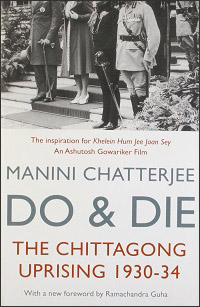
“Do and Die: The Chittagong Uprising 1930-34” by Manini Chatterjee

Do and Die

19th April 1930. “The Government regrets to have to announce that the railway and police armouries at Chittagong were attacked on the night of 18th-19th April by a body of insurgents, estimated at about 100, and were gutted. Details are not yet fully known. Telegraphic communications were interfered with but are being restored. A train was also derailed on the night of April 18th….”

This book gives a minute by minute account of what the British called the ‘Chittagong Armoury Raid.’ Surjya Sen, reverently called ‘Masterda,’ was the elusive, enigmatic mastermind behind this daring act. Ambika Chakravati and Ananta Singh were among his closest associates.

In October 1924, the Bengal government arrested many revolutionaries for “suspected terror links,” among them Subhash Chandra Bose. Surjya Sen was jailed for two years from October 1926 and released two years later along with several others from Chittagong. They forged a group, generating funds, procuring arms and preparing for combat. Officially, they were all members of the Congress party.

In February 1929, Surjya Sen was elected secretary of the Chittagong District Congress Committee. He virtually lived in the party office, recruiting and training youngsters for an armed revolt. On 15th September, there was a massive demonstration when Jatin Das died in Lahore jail after a 63 day hunger strike. On 15th October, the Chittagong revolutionaries adopted the ‘Death Program’ – to do and die. They called themselves the Indian Republican Army and vowed to re-enact the Easter Rising that had occurred three years ago in Dublin, Ireland.

On 18th April 1930, the IRA carried out their action plan with 64 revolutionaries. The youngest was only 14 years old. They got the arms but not the ammunition. Without ammunition there was no way they could hold the positions they had captured. So they retreated after setting the armoury on fire. Himangshu Sen, badly burned in the process was safely evacuated but died a few days later.

The fugitives were hunted down and on 22nd April at the Battle of Jalalabad, 10 youngsters died fighting. Harigopal Bal, the first to fall, called out to his brother Lokenath Bal, “I’m on my way, you carry on.” Later the British would throw the bodies in a heap, pour petrol over them and set them alight. Two days later, Ardhendhu Dastidar and Matilal Kanungo died of wounds sustained in the battle.

Gandhi did not speak of these martyrs. The author wryly remarks that, “Even martyrdom lies in the ideology of the bestower”.

42 survivors melted way into the surrounding villages, splitting into two groups, one led by Masterda and Nirmal Sen, the other by Lokenath Bal. The army undertook combing operations, motor launches searched the river, and aircraft made aerial surveys but the boys could not be traced. Amarendra Nandi, who had been sent on a reconnaissance mission to Chittagong town died in a police encounter on 24th April.

Masterda soon ordered his group to disperse. Those who were unknown to the police were advised to return home. Masterda told the young Subodh Roy that if he was tortured by the police he should not divulge any names. “Remember at the time the martyrs who gave you their lives in the Jalalabad Hill,” he said. Subodh remembered the leader’s words when days later he was mercilessly beaten by the police.

There were other encounters, other martyrs. On June 28th, Ananta Singh, one of the most charismatic ring-leaders, surrendered. Soon after his arrival in jail the few youngsters who had given confessional statements retracted them one by one. The government could not find a single approver. Sarat Chandra Bose, elder brother of Subhash Chandra Bose, stepped up to represent Ananta Singh at the trial.

On 25th August in Calcutta a bid to assassinate Police Commissioner, Charles Tegart, misfired. A few were injured, and Anuja Sengupta died in the blast. Four days later Bengal’s Inspector General of Police, Lowman was shot in Dacca and died of his injuries. The shooter escaped.

On 2nd September the British discovered that a few of the absconders were being sheltered at the French enclave of Chandernagore. They attacked the hideout, and Jiban Goshal (Makhan) was killed. Lokenath Bal, Ganesh Ghosh and Ananda Gupta were captured. Makhan was accorded an emotional farewell as the entire populace paid respects to the martyr. The people of the settlement passed a resolution condemning the British action on French soil.

Ramkrishna Biswas was hanged on 4th August 1931 for attempting to assassinate Lowman’s successor on 1st December 1930. Kalipada Chakravarty was awarded transportation for life.

Pritilata Wadedar led the Pahartali Raid and died a martyr on 24th September 1932. It was a classic case of a woman leading men in action. A leaflet issued after the Pahartali raid read, “….the Indian Republican Army plunges today in this bloody revenge and lets the British rulers know that however weak and helpless, India will never tolerate these sorts of wanton barbarity with equanimity and silence.” There were no arrests.

All this and more are an integral part of India’s independence struggle. The Dynamite Conspiracy case, the Dhalghat encounter that claimed the lives of Nirmal Sen and Apurba (Bhola) Sen, the Gohira encounter and a variety of other events come alive in the pages of this book.

Masterda was finally captured in February 1933, while Kalpana Dutta and others survived the encounter only to be arrested a month later in a shootout at Gohira. When the Special Tribunal announced its verdict in August 1933, it was death for Masterda and Tarakeshwar Dastidar. Kalpana was got a reduced sentence – transportation for life – in view of the fact that she was only 19 years old and a woman.

Surjya Sen and Tarakeshwar Dastidar were hanged in secret on 12th January 1934 and their bodies dumped in the Bay of Bengal. When Independence came in 1947, new generations were led to believe that the ‘transfer of power’ was the result of non-violent struggle.

Overall assessment: Must read.

Do and Die: The Chittagong Uprising 1930-34
AUTHOR: MANINI CHATTERJEE
PUBLISHER: PENGUIN
YEAR OF PUBLICATION: 1999

Contributor: Pushpa Kurup lives in Trivandrum, India and works in the IT sector.
“Little Fires Everywhere” by Celeste Ng

Little Fires Everywhere

One of the surest signs that a book has been a good read is when you reach the end and are disappointed that it is over — you wish there was more of it. That is how I left after finishing Little Fires Everywhere. It’s not a traditional page-turner – not a mystery or a thriller that you can’t put down because of the suspense. Rather, the book is a family drama, and not even a highly melodramatic one at that. It is not written in scintillating prose that sweeps you off your feet but in “normal” language for regular people. It is, simply put, a very good story.

The story opens with a fire, or rather, “little fires everywhere” as described by the firemen who come to put the fire out. The fires are in a house in a wealthy suburb of Cleveland called Shaker Heights (which happens to be a real place) and have actually been set by someone living in the house – the youngest daughter, Izzy, of the Richardson family, who absconds after setting the fires. What inspires her to set the fires is a comment made by a woman, Mia, an artist whom she greatly admires and has become very close to. Mia had said: “Sometimes you need to scorch everything to the ground and start over. After the burning the soil is richer, and new things can grow. People are like that, too. They start over. They find a way.” Although Mia had said this in the context of a tragedy someone else was going through, the rebellious, tempestuous, adolescent Izzy found this idea so powerful, so deep, and so intense, that she took it literally and was so upset with her family — especially her mother, Elena, with whom she has never got along — that she methodically lit a fire in each room of her house before she left.

What makes Izzy actually set the fires is the crux of the story, along with the mystery of Mia’s background, who has come into the neighborhood with her daughter, Pearl, and is renting an apartment that belongs to Elena. No one, including Pearl herself, knows who her father is. Just as Izzy of the Richardson family is drawn to Mia and persuades Mia to take her on as an (unpaid) assistant, in the same way, Pearl is drawn to the Richardson family and constantly hangs out in Elena’s house with her son, Moody, and her two older children. (All the kids go to the same high school, but are in different grades, except for Pearl and Moody.)

In addition to this “switch” where Izzy hangs out with Mia and Pearl hangs out with the Richardsons, there is a lot of additional intrigue in the story including a surrogacy, an abortion, and a custody battle for a Chinese American baby between the baby’s mother (a coworker of Mia) — who initially abandoned her because of her circumstances but now wants her back — and the wealthy white couple (close friends of the Richardsons) — who took in the baby when she was abandoned, loved and nurtured her, and desperately want to adopt her as they have not been able to have children of their own. Above all, there is also the uneasy feeling Elena has about Mia, who makes her feel unsettled just by being who she is. She takes it upon herself to investigate Mia’s background and find out more about her and the mystery behind her fatherless daughter.

I really enjoyed reading this book and am happy to find that it has also achieved critical acclaim, especially after many unsuccessful attempts at reading award-winning books (recent examples being The Underground Railroad which won the Pulitzer Prize and Lincoln in the Bardo which won the Booker Prize). It’s good to know that even books devoid of literary calisthenics can be appreciated by literary critics in addition to being enjoyed by regular folks like me.

Little Fires Everywhere
Author: Celeste Ng
Publisher: Penguin Press
Publication Date: September 2017


Contributor: Lachmi Khemlani runs a technology publication in the San Francisco Bay Area.

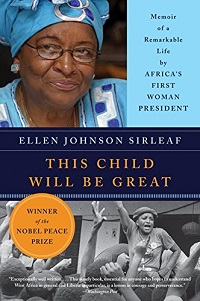
“This Child Will Be Great: Memoir of a Remarkable Life by Africa’s First Woman President” by Ellen Johnson Sirleaf

This Child Will Be Great

Ellen Johnson Sirleaf was Africa’s first woman president and this book is her memoir. She recounts how she came to power in her native Liberia and the tremendous odds she had to overcome to get there. Sworn in as President in January 2006 at the end of a fourteen year long civil war, she remained at the helm for 12 years and oversaw a peaceful transition. Liberia went to the polls in October 2017 to elect a new leader.

The book reveals the complexities of Liberia’s links with the New World and its long and painful history. While the slave trade saw Africans shipped from West Africa to the Americas to undergo forced labour, there was a reverse flow of freed slaves to these shores in the early 19th century. Monrovia, the capital of Liberia is named after US President James Munroe and the country’s flag resembles the American flag. The settlers thought they were somehow superior to the indigenous peoples and the seeds of conflict were sown. Liberia’s first President was a man born in Virginia.

Ellen’s paternal grandfather has eight wives and god knows how many children. Her maternal grandfather, a German trader, had married a local woman and the couple had one daughter. At the start of World War I, Liberia expelled all Germans, to demonstrate its loyalty to the US. The grandfather returned to Germany and was never heard of again.
Ellen’s father was the first indigenous man to be elected to the legislature. He suffered a paralytic stroke while in his early forties and soon the family fortunes nose-dived.

At 17, Ellen fell in love and married James “Doc” Sirleaf, who had just returned from college in Alabama. They both found jobs and had four children in quick succession. When James moved to Madison, Wisconsin to study further, Ellen went too, leaving the grandmothers to care for the little ones. She studied at the Madison Business college, and worked part time, sweeping floors and waiting tables.

“In Madison I was so cold I sometimes feared my tears would freeze.” James was alcoholic and abusive and Ellen had to learn to cope. “Doc always did enough to hurt but not enough to maim or kill. Just enough to keep me in a state of fear.” Twice he put a gun to her head but did not shoot. She knew that if she walked away, or even if her husband did, she would lose custody of the children. When they returned to Liberia, James did, in fact, take away the children from her. Following their divorce, he remarried and moved to Florida with the youngest child.

Ellen had a government job and soon she had an opportunity to study at Boulder, Colorado and Harvard. She had already created ripples in government circles by criticizing the powers that be. Her American education, work experience and contacts stood her in good stead as she returned to Liberia and slowly but surely worked her way up the political ladder. When the President of Liberia died in 1971 and a new President came to power, Ellen was offered a new job- that of Deputy Minister of Finance. Eight years later there was a coup. Ellen left the country and took up a position with the World Bank.

Liberia had enjoyed political stability for century but glaring economic disparities threatened the delicate equilibrium and the insensitivity of the men in power brought things to ahead. The Rice Riots saw police fire upon a crowd of demonstrators killing at least 41. Soon thereafter at a conference of the OAU (Organization of African Unity – now African Union) in July 1979, President Tolbert remarked that the most pressing problem of the continent was apartheid in South Africa. The following month Ellen was made the first female Finance Minister in the nation’s history. A year later there was a coup and president Tolbert was killed. Only four ministers were spared – and Ellen was one of them.

The United States bolstered the new government and Liberia soon became the CIA’s main station in Africa. Ellen went back to the World Bank and later worked for Citibank. By then three of her sons were studying in the US.

Ellen never ceased political activity. She was arrested and sentenced to 10 years of hard labour for speaking out against the government. But she was offered clemency due to intense pressure from Citibank and elsewhere. One of the messages passed to her in prison had read, “We’d rather have a live ant than a dead elephant.” Of her subsequent flight from her homeland Ellen writes, “As much as I wanted to stay in Liberia, I wanted even more to stay alive. It was time to go.”

In 1990 civil war erupted and there were massacres in Monrovia followed by a massive exodus to neighbouring countries and total internal displacement of indigenous peoples. A Boston Globe reporter was told by a local, “The dogs ate the dead, and we ate the dogs.”

The book is one long politico-historical story that almost eclipses the personal. But there are interesting insights too, not entirely about Africa. For instance, the Confederate general Robert E Lee freed most of his slaves before the Civil War and offered to pay for their passage to Liberia. Wow! Do you think his statues ought to stay?

Overall assessment: Good read.

This Child Will Be Great: Memoir of a Remarkable Life by Africa’s First Woman President
Author: Ellen Johnson Sirleaf
Publisher: Harper Collins
Year of Publication: 2010

Contributor: Pushpa Kurup lives in Trivandrum, India and works in the IT sector.