“Rebecca” by Daphne du Maurier

Rebecca.jpg

Rebecca is, by far, Daphne du Maurier’s most famous book, and while I had read it years ago, I was inspired to read it again after reading My Cousin Rachel a few months ago. Billed as a “classic tale of romantic suspense,” I found this to be very true even though I had read the book before and vaguely remembered what the suspense was. It’s a testament to how good the book was that I still enjoyed it so much.

The story is that of a young girl who gets married to a middle-aged man, Maxim De Winter, whose first wife has died. She meets him in Monte Carlo – where she is employed as a companion to a rich American woman on holiday – falls in love with him, accepts his proposal of marriage, and returns with him to Manderlay, his stately estate in England. However, she finds herself continuously haunted by the presence of his first wife, Rebecca, at Manderlay. This is not a physical haunting – Rebecca is not a ghost story – but an emotional one. Rebecca seems to be everything she is not – beautiful, gregarious, bold, stately, decisive, stylish, with impeccable taste, the life and soul of a party. It seemed that she could do anything and was adored by everyone. The girl, now the new Mrs. De Winter – whose Christian name we are never told – is engulfed by extreme feelings of inadequacy. These are compounded by the housekeeper at Manderlay, Mrs. Danvers, who was devoted to Rebecca and makes no bones about how she feels towards the new Mrs. De Winter, despite continuing to do her housekeeping duties. She, the new Mrs. De Winter, also thinks her husband is still in love with Rebecca and can’t get over her death.

What exactly happened to Rebecca? How did she die? Why does Maxim look so haunted at times? Why is Mrs. Danvers so sinister, and so contemptuous of the new Mrs. De Winter? What does Frank Crawley, who handles the affairs of the estate for Maxim, know about Rebecca? And who is the shady Jack Favell, who comes to Manderlay to meet Mrs. Danvers and is supposedly a cousin of Rebecca, but is strongly disliked by Maxim and has therefore to keep his visit a secret?

While Rebecca is not a detective story — there is no “investigator” as such — it does have a strong element of mystery about it, with so many lingering questions that persist for most of the book. While that, in and of itself, is not unique to a novel, what sets this book apart is the masterful quality of the writing. It gradually builds up the suspense and captures the increasingly haunted feeling experienced by the protagonist — and thus, by extension, the readers — so vividly that I could almost viscerally experience a growing feeling of dread as I was reading it. And this is despite having read it before and guessing what the suspense was.

I can see why Rebecca has secured Daphne du Maurier a secure place in the annals of literary history. It is truly a timeless classic.

Rebecca
Author: Daphne du Maurier
Original Publisher and Date: Victor Gollancz Ltd, 1938
Reprint Publisher and Date: William Morrow Paperbacks, September 2006

Contributor: Lachmi Khemlani runs a technology publication in the San Francisco Bay Area.
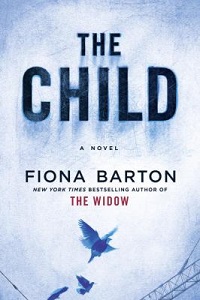
“The Child” by Fiona Barton

The Child

The Child follows up on Fiona Barton’s debut novel, The Widow, which I had written about last year. I am an aficionado of the mystery/thriller genre and I had found The Widow a very good book in that genre. It was not spectacular by any means – far from contemporary hits like Gone Girl or The Girl on the Train, let alone classics such as Agatha Christie’s many books – but it was a well written, entertaining, and gripping read. Barton’s new book, The Child, is in the same genre, and while it is as well written as The Widow, I would have to say that its entertainment and gripping quotient was a notch lower.

The mystery in The Child is that of a dead newborn baby, whose remains are discovered when some buildings are demolished in a London neighborhood and the construction site is being dug up for a new development. While the exact year of death cannot be determined from the remains as they have been buried for many years, the fact that they are wrapped up in a specific kind of plastic bag provides some clues on a possible time frame. A DNA test reveals a match with a woman, Angela, whose newborn baby mysteriously disappeared shortly after it was born from the maternity ward of the hospital she was in. While Angela has two other children who are now grown up and have kids of their own, she has never gotten over the disappearance of Alice, the name they had given the baby. The discovery of the remains on the building site gets her hopes up so she can know once and for all what happened to her baby and get some closure, even though it means definitively knowing that Alice is dead.

Just when everyone was certain the dead baby was Alice, a wrench is thrown into the mystery when further testing shows that the remains had been buried on the site at least ten years, if not more, after the date that Alice disappeared. So it is still Alice? If so, were the remains hidden somewhere else for over a decade and then buried at the building site? Is that even possible? And if, does that make any sense? Or is this another baby? But no other baby was reported missing in that time. And what about the DNA match?

This is the central mystery in The Child, and while Angela is one of the main characters in the book, there is also Kate, the intrepid reporter who is fascinated by the case and keeps digging into it, and Emma, another woman who happened to live at the housing development at the time when the remains were buried. Emma has a deeply disturbed past and secrets of her own, and for some reason, the story of the baby’s remains becomes one she gets obsessed with.

The mystery is, of course, resolved at the end of the book, and just as in The Widow, in a satisfying, entirely believable way, without any “curve ball” type of plot twists. While there is sufficient intrigue in the story to make The Child as much of a page-turner as The Widow, it wasn’t a book that I couldn’t put down — I read it over the course of a week rather than a day — and in that respect, I would have to say that it was not as gripping as Barton’s first book.

The Child
Author: Fiona Barton
Publisher: Berkley
Publication Date: June 2017

Contributor: Lachmi Khemlani runs a technology publication in the San Francisco Bay Area.
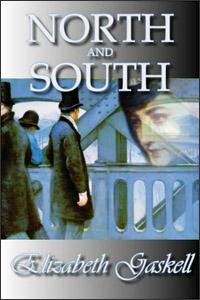
“North and South” by Elizabeth Gaskell

North and South.jpg

Two of my all-time favorite books are Victorian classics — Pride and Prejudice by Jane Austen and Jane Eyre by Charlotte Brontë – and I have been so starved of books in this genre that discovering North and South was like coming across a gem I never even knew existed. I stumbled upon its 2004 BBC adaptation — in the form of a four-part miniseries — on Netflix last week, remembered the recent write-up of the book by Nathalie Dorado-Fields, and started watching it – and couldn’t stop. It made me then get the book which I first obsessively read cover to cover, and then went right back and re-read it. It was simply that good.

As with most Victorian classics, North and South is, at its heart, a love story, and as with most books like it, the romantic tension between the hero and the heroine is sustained throughout the book, literally right down to the last page. The heroine here is Margaret Hale, the daughter of a clergyman who is forced to move with her family from the idyllic pastoral community in the south of England to the gritty industrial and manufacturing community in the north. The hero is a mill-owner in her new surroundings, John Thornton, who is taken with her right away, but whom she finds too harsh and unfeeling until it is almost too late.

While it would be easy to write North and South off as just another romance, what makes it so much more is how it captures the weighty social issues of that time related to industrialization — the growth in manufacturing, the increase in factories, the economic disparity between the mill owners and the workers employed in them, and the class divide. It provides an unflinching look at the lives of the mill workers, their extreme poverty, and their poor health, attributable in large measure to the unhealthy working conditions and polluted air inside the mills. A large portion of the novel is centered around a strike by the mill workers, and the part played in it by the workers’ union. This was when unionization was first starting, and while the strike didn’t end up benefitting the workers in this case, the perspectives of both the workers and the mill owners are the subject of extensive debate and discussion between the various characters. Also, the book does not shy away from the harsh realities of life at that time — there are quite a few deaths and even a suicide. It reminded me a lot of Oliver Twist by Charles Dickens, which portrayed the brutality of criminals and the pitiful treatment of orphans in mid-19th century London in the same heart-rending vein. You feel like you are there and can viscerally experience the pain.

Usually, novels like this are written entirely from one point of view, such as Elizabeth Bennett in Pride and Prejudice or Jane Eyre in Jane Eyre. But North and South was unique in that respect — it takes you inside the head of both the hero and the heroine. You can feel both of their feelings, their emotions, their reactions to each other, and to the world around them. It made the book so much more richer and the story so much more vivid.

I am thrilled to have discovered a new book to add to my much-loved collection of classic literature as well as another author in this genre that I so much admire. I have already added Elizabeth Gaskell’s other books to my reading pipeline.

North and South
Author: Elizabeth Gaskell
Original Publisher and Publication Date: Chapman & Hall, 1855
Edition: Norilana Books, Nov 2007

Contributor: Lachmi Khemlani runs a technology publication in the San Francisco Bay Area.
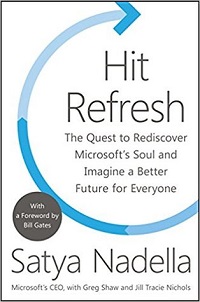
“Hit Refresh: The Quest to Rediscover Microsoft’s Soul and Imagine a Better Future for Everyone” by Satya Nadella

Hit Refresh

I typically do not read business books. However, the author of this book, Microsoft CEO Satya Nadella, recently appeared on a talk show that I watch, and I was intrigued. Not just by the premise of the book — when do you hear the word “soul” in the context of a technology company? — but by Nadella’s own story. I found out that his son has severe cerebral palsy, and this topic only came up because he was talking about the power of technology to do good, exemplified by some students from the local university who had rigged his son up with a device that allowed him to play music on his own. While that was a truly inspiring example of how technology can help, what I found even more inspiring is how he had achieved so much, risen to lead the leading technology company of the world, all while having a very challenging personal life. Usually when I read about highly successful people, I assume that they must have a charmed personal life which allows them to achieve the great things that they have achieved. But clearly, this was not the case with Satya Nadella.

They say that what doesn’t kill you makes you stronger, and having a child with special needs would, I think, certainly make you more empathetic, more generous, and overall, a nicer person. But I didn’t think it could actually make you capable of also rising all the way to the top as a business and technology leader, which is typically a highly competitive, cut-throat field. But, as it turns out, it can, as evidenced in Hit Refresh, in which Nadella describes how his personal experiences have shaped the way he leads Microsoft. It’s no longer just about being the market leader and increasing profit margins, but more about making a difference. It’s being able to steer Microsoft to use its vast engineering talents to continue developing devices and software that can improve the lives of millions of people around the world, using cloud connectivity, mobile access, data analytics and other technologies. It calls for cooperation with companies that were once bitter rivals, such as Apple, along with younger powerhouses such as Google. When the focus is more on doing good rather than on under-cutting rivals and being the “best,” even employees can feel imbued with a sense of purpose and meaning that makes their everyday work much more life-affirming.

For those curious about Nadella himself, Hit Refresh does provide a brief account of his background and journey from India to the US — a journey which will be familiar to many Indians who also came to the US to work in engineering and software — as well his many years working at Microsoft as he rose through the ranks before finally becoming CEO. The book also discusses upcoming technologies such as artificial intelligence, machine learning, mixed reality, and quantum computing, all of which seem promising to our continued improvements as a society and which Microsoft is exploring. Hit Refresh also has some discussion about politically sensitive issues such as privacy, security, and globalization, but not as much as I had hoped. It would have been very illuminating to know how a progressive technology company, which wants to have a global impact, can operate in a political climate that is protectionist and nationalistic, almost regressive?

While the subtitle of this book, The Quest to Rediscover Microsoft’s Soul and Imagine a Better Future for Everyone, is somewhat grandiose, it is a simple, non-pretentious, non-erudite, straight-from-the-heart account of how Satya Nadella — only the third CEO in Microsoft’s 42 year old history — has been inspired by his personal experiences to make empathy rather than competitiveness the essence of Microsoft, so it can contribute to making the world a better place for everyone.

Hit Refresh: The Quest to Rediscover Microsoft’s Soul and Imagine a Better Future for Everyone
Author: Satya Nadella
Publisher: HarperCollins Publishers
Publication Date: September 2017

Contributor: Lachmi Khemlani runs a technology publication in the San Francisco Bay Area.

“My Lovely Wife in the Psych Ward” by Mark Lukach

My Lovely Wife in the Psych Ward

This book has been selected as one of the two “Silicon Valley Reads” books for 2018, and as a result, it seems to be everywhere in the Bay Area where I live, prominently displayed on library shelves and multiple copies available for check-out. The author, Mark Lukach, is also local to the Bay Area, a high school teacher and freelance writer. As the title suggests, it is a memoir of his experience with the mental illness that afflicted the person he was closest to – his wife, Giulia.

Mark and Giulia had a fairy tale romance – they met as freshmen at Georgetown University, dated, fell in love, got married and moved to San Francisco to start their careers. They both come from loving families and had little to complain about – they were smart, good looking, ambitious (she more than him), and most importantly, they had each other.

Their idyllic life was unexpectedly shattered three years into their marriage by Giulia’s psychotic breakdown, which came literally out of nowhere. It started out with some normal stress at work which caused her some pressure, most self-imposed, and quickly ballooned into a full-blown panic attack, making her delusional and suicidal. She had to be admitted to the psych ward and was there for almost a month before she was allowed to come home. She went on to have two more psychotic episodes, one shortly after the birth of their son, and again a few years after that. The book closes with what seems to be the end of the third hospitalization. However, given the nature of this illness and its typical pattern, Giulia’s psychosis is likely to recur, so this is by no means the end of the struggle for her and Mark.

This book captures Mark’s harrowing experience as he goes from being a “normal,” carefree, happily married young man — who can scarcely believe his good fortune at being able to spend the rest of his life with the girl he fell in love with — to having his life completely upended and being thrust in the role of caregiver to the same girl who now seems to be a completely different person. Caregiving is hard enough for physical illness, but at least the person that is being looked after is the same — the illness may have devastated their bodies, but not their minds. With mental illness, however, the person can literally become someone else. In Giulia’s case, while she was eventually able to get back to the person she was after the end of each of three psychotic episodes she has had so far, Mark had to keep drawing from the memories of their earlier life together to keep going when she became ill.

And the “going” was unimaginably rough — doctor’s appointments, hospital visits, keeping up with work, worrying about rapidly draining finances, looking after their baby boy during her second episode, and continuing to be a single dad to a preschooler during her third hospitalization. Thankfully, both his and her parents were very supportive and tried to help out as much as they could, but there was only so much that they could do. It really was his “cross to bear.” In addition to being physically exhausted and having no time for himself, Mark also captures his anger, his resentment, and his feelings of helplessness candidly. Even though he knows that it’s not Giulia’s fault that she is mentally ill, he can’t help being frustrated to the point where it seems almost impossible to go on.

I found My Lovely Wife in the Psych Ward a brutally honest account of how mental illness can come from nowhere and utterly devastate lives, not just for those who are ill but for their family members, who have to continue to look after them even when they become completely different people who often have delusions, hallucinations, manic depressions, and suicidal tendencies. Kudos to Mark for not giving up on his marriage — the thought of skipping out because it was too hard did not even occur to him. In a day and age when close to half of all marriages in the US end in divorce, Mark’s commitment to Giulia is an inspiring affirmation of the “in sickness and in health” maxim that a marriage is supposed to embody.

My Lovely Wife in the Psych Ward
Author: Mark Lukach
Publisher: HarperCollins
Publication Date: May 2017

Contributor: Lachmi Khemlani runs a technology publication in the San Francisco Bay Area.
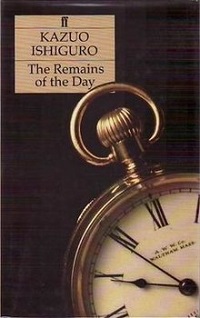
“The Remains of the Day” by Kazuo Ishiguro

Remains of the Day

The Remains of the Day is the most well known novel by Kazuo Ishiguro, who was awarded the Nobel Prize in Literature — unarguably the most prestigious literary award — a few months ago. Unlike most other writing awards, the Nobel Prize is awarded for an entire body of work rather than one particular book, and I was very gratified that it had been awarded to someone whose work I am familiar with and really like. I had read The Remains of the Day shortly after it was published in 1989 and while I couldn’t remember the specifics of the story, I remember it being a very good book. It won the Booker Prize the year it was published, which now seems remarkable to me as well — those were the days when the Booker Prize went to novels I could actually read and comprehend and admire, rather than the current trend of awarding it (along with other awards) to what seems to be post-modern fiction that does not believe in straightforward story telling. The Remains of the Day was also made into a highly acclaimed Oscar-nominated movie in 1993 starring Anthony Hopkins and Emma Thompson, further cementing its reputation as one of the best books in recent times.

Given that I didn’t remember much about the book except that it was about a butler in olden day England, I picked it up again, spurred by the awarding of the Nobel Prize to its author. It is indeed told from the viewpoint of a butler, Mr. Stevens, who has been the head butler of a grand estate in England in the early 1990s. It traces the years of his work – he prefers to call it “service” – at Darlington Hall, starting from when he was a young man in the years before the First World War to several years after the Second World War. The story is narrated in the form of his reminiscences while he is undertaking a journey to reconnect with Miss Kenton, who used to work in Darlington hall as a housekeeper for many years and who he thinks, from a recent letter from her, might be interested in returning to work there. She left when she got married and while it has been several years, he gets the feeling that she is not really happy and may want to return. So he takes a few days off to journey through the English countryside to meet her.

While several of his reminiscences are about Miss Keaton, we also get to know about his life as a butler in detail, about his employer, the politics of that time, and about how his father, who was also a butler, exemplified loyalty, professionalism, and dignity, right up to the end of his days. It is these exact same values that Mr. Stevens also lives by. He has the utmost loyalty to Lord Darlington, an essentially good man who, in the years leading up to the second World War, tries to broker peace with the Germans and ends up being branded as a Nazi sympathizer. Needless to say, in the course of these years, Darlington Hall becomes the hotbed for a lot of political activity, with lots of important visitors and lots of meetings. Throughout, Mr. Stevens prides himself on running the household smoothly and precisely, and being the perfect butler, who strives to be as unobtrusive as possible yet always on hand when something is needed.

What Mr. Stevens sets most store by, however, is “dignity” — he seems to personify the “stiff upper lip” the English are famous for having. Nothing seemed to faze him, he was never flustered. Even in his encounters with Miss Keaton – some of which were rather unsettling – he remained very stoic, practically unfeeling. It is obvious to us as readers that Miss Keaton is drawn to him, but she becomes so frustrated in his apparent lack of outward responsiveness that she ends up accepting a marriage proposal and leaving. Their encounters are beautifully captured, and you can feel the underlying tension between them, the powerful emotion of unrequited love that she must have experienced until she could bear it no longer and was forced to leave.

The title of the book refers to a revelation Mr. Stevens has at the end of the book, thanks to a chance encounter on his return journey at a seaside town after his meeting with Miss Keaton. He gets into a conversation with a stranger sitting beside him on a bench, who talks about how relaxed and happy people feel in the evening after doing their day’s work, making it the best part of the day. They can just put their feet up and enjoy the fruits of their labor. Mr. Stevens realizes that this can apply to one’s entire life as well, where we can take the time to enjoy the later years of our lives — with no regrets — after the hard work we have put in during our earlier years. These are “the remains of the day” as it were, and it’s a beautiful and uplifting idea that all older people can appreciate. There a sense of rest in the later years of our lives, with all those hectic days – focused on achievement and success – well behind us.

The Remains of the Day is so beautifully written — it makes the old world charm of early England come alive — and is so authentic in its portrayal of a butler if that time that it’s hard to believe it is written by a contemporary author. I’m always amazed when a writer can create something so real from something so far removed from their own experience. The Nobel Prize in Literature to Kazuo Ishiguro is so well deserved. I absolutely loved this book.

The Remains of the Day
Author: Kazuo Ishiguro
Publisher: Faber and Faber
Publication Date: May 1989

Contributor: Lachmi Khemlani runs a technology publication in the San Francisco Bay Area.

“The Association of Small Bombs” by Karan Mahajan

The Association of Small Bombs

This debut novel won a lot of awards when it was published last year and was one of the finalists for the National Book Award. Not only did it come to me with a strong recommendation, I was also intrigued at the prospect of discovering a new talented Indian author whose books I could identify with. Having grown up in India, it’s always nice to read fiction set in familiar surroundings that I can immediately relate to.

As should be obvious from its title, The Association of Small Bombs is about terrorism, not the large-scale terrorist attacks that make deadlines but the many smaller ones that are set off in local markets and neighborhoods, which happen so frequently in India that not a big deal is made of them. Unless, of course, you happen to be one of the families that are affected, in which case your whole world is turned upside down. The Association of Small Bombs starts off with one such bomb blast in a Delhi neighborhood in which two young boys — brothers who had gone to pick up their family’s television set at a repair shop, accompanied by their friend — are immediately killed. Their parents, the Khuranas, are shocked and devastated, and their marriage never recovers, despite having another baby five years after the blast. They spend much of their time in the courts where the terrorism suspects that the police have rounded up are on trial, and as to be expected, these are long-winded court cases where there is no real evidence of the crime. Eventually, the Khuranas take the lead in bringing together other families who have been affected by similar blasts into an “association,” which is where the title of the book comes from. Sadly, even this common cause is not enough to prevent the Khuranas’ marriage from eventually unraveling.

Meanwhile, the friend that the Khurana boys were with at the time of the blast, Mansoor, managed to survive but with severe injuries from the shrapnel of the bomb. He seemed to eventually recover and even goes to the US to study and get a degree in computer engineering. But after just a few semesters, the pain comes back with a vengeance, making it impossible for him to type on a computer and forcing him to return to India. He never goes back to the US to resume his studies and instead gets caught up in an NGO — a group of idealistic young Muslims — working on behalf of suspected terrorists — all Muslim — that have been jailed without any real proof of wrong-doing. While Mansoor is also Muslim, he was brought up in a non-religious family and never gave religion much thought until he joined this group, after which he becomes almost an Islamic fundamentalist. Eventually, one of his close friends, Ayub, from the NGO becomes inducted into the same terrorist group which had planted the first bomb and goes on to detonate another bomb, also in Delhi, on a scale similar to the first one. Ayub himself is injured in the blast and eventually dies. Mansoor is arrested as the bombing suspect because he was close to Ayub and spends several years in prison. The book ends with his release from prison; he goes home and never leaves the house again.

I can’t really say that I enjoyed reading this book or even learned something from it. It started off on a very strong footing by powerfully capturing the first bomb blast and the toll it took on a couple whose lost both their young sons to it, their utter devastation along with terrible feelings of guilt — why had they sent the boys to a TV repair shop to fix an old TV instead of just buying a new one? This “if only I had done this or hadn’t done that” persistent feeling of guilt will be familiar to anyone who has experienced the irreversible loss of a loved one. However, the rest of the book lacked a similar strong focus and seemed quite disjointed, going inside the minds of multiple characters including the Khuranas, Mansoor, Mansoor’s parents, Ayub, and the perpetrator of the original blast, Shockie, but without really delving too deeply into any of them. While it could have been very interesting to understand the mindset and psyche of a terrorist, The Association of Small Bombs didn’t really succeed in achieving that. Instead, there were bits and pieces of different lives, experiences, and thoughts, none of which added up to any kind of comprehensive understanding of even one person in the story.

It was all the more disappointing because the book had such a promising start. It definitely points to a talented author, and I hope he can bring it together in his next book.

The Association of Small Bombs
Author: Karan Mahajan
Publisher: Penguin Books
Publication Date: October 2016

 Contributor: Lachmi Khemlani runs a technology publication in the San Francisco Bay Area.
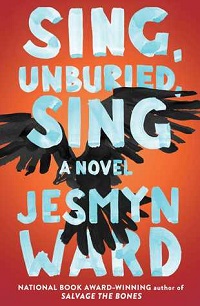
“Sing, Unburied, Sing” by Jesmyn Ward

Sing Unburied Sing

This book won the National Book Award for fiction this year (2017) and therefore has been in the news a lot, both before and after the award was announced. It seems almost mandatory for these awards to be given only to those books that have been on the radar, doing the rounds as it were, and heralded by book critics everywhere. I follow book news closely and am therefore always aware of which books are currently “hot” — so whenever I see them in the library, I never pass up on the opportunity to borrow them. While I can’t say that I have had a good track record lately with critically acclaimed books — I didn’t care much for Exit West, and I couldn’t even get beyond a few chapters of The Underground Railroad which won the Pulitzer Prize, and Lincoln in the Bardo which won the Booker Prize — it never hurts to keep trying. This is how I came to read Sing, Unburied, Sing, and the fact that I was able to read through and finish it, was, to me, a significant aspect in favor of the book.

Sing, Unburied, Sing is set in Mississippi and is focused on an eventful few months in the life of Jojo, a thirteen year old boy who is biracial and is being brought up by his maternal grandparents. They are from the black side of his family, or as the author refers to it, the “Black” side — black with a capital “B.” Jojo’s mother, Leonie, also lives with them, but she is a drug addict and has few nurturing instincts. Jojo’s father, Micheal, who is “White,” is in prison on a drug-related offence. Micheal’s parents refuse to even acknowledge Jojo’s existence, as they didn’t want their son to marry a black woman. Jojo has an adorable three year old sister, Kayla, for whom he is the world, given that their mother is not much of a mother and their father is largely absent. Jojo’s black grandfather, Pop, is thankfully a good man who provides the children with love and care — Jojo has the highest regard for him. Pop’s wife, Jojo’s grandmother, was also a loving and caring woman, but she is now very sick and completely bed-ridden. Pop has his own demons from his youth, notably from the time he was also in prison — the same one Michael is now at.

The trigger for the story — what sets it off — is Michael’s release from prison, and Leonie setting off on a road trip to pick him up. She insists both the kids go with her to pick up their father, and they set off in a car with one of her friends, whose boyfriend is in the same prison. The friend is as drug-addled as Leonie, and the trip is a horrible one — they make a stop to do a drug pick-up, Kayla is sick throughout the trip with Jojo comforting her as best as he can, and after they pick up Michael, they are stopped by the cops forcing Leonie to swallow the drugs they were carrying so that the cops wouldn’t find them. As wretched as this was — with the plight of the children especially gut-wrenching — what was worse was that a “ghost,” who had unresolved issues with Pop when he was at that prison, came back with them. This ghost, Richie, who was also thirteen when he died, can be seen only by Jojo, and is not able to transition to the beyond — he is “unburied,” so to say, which is where the title of the book comes from. He is finally freed from this unburied life by a song sung by Kayla.

Needless to say, it is hard to take a book as serious as this seriously when it involves a ghost. And the ghost is a prominent part of the story, even narrating some of the chapters in the book. It turns out that he is not the only ghost — Leonie, when she is drugged, can see the ghost of her brother, Given, who was killed by some of his racist white college mates when he was a young man.

Overall, I have to say that I had conflicting feelings about this book. On the one hand, it is a deeply moving and touching story, and what makes it particularly poignant is that most of it is narrated by Jojo, allowing you to see the world from the perspective of a thirteen year old boy in a very unconventional and troubled family. His devotion to his little sister is touching, and your heart goes out to these two children on their horrifying road trip, making you constantly dread about what is going to happen to them. There are also the themes of racism, mob lynching, and incarceration, and while these are hardly new — a great example being the classic To Kill a Mockingbird — they have been captured in Sing, Unburied, Sing in a manner that is extremely haunting. I can see why this book was so highly acclaimed.

But then there were the ghosts, and they just didn’t work for me.

Sing, Unburied, Sing
Author: Jesmyn Ward
Publisher: Scribner
Publication Date: September 2017

Contributor: Lachmi Khemlani runs a technology publication in the San Francisco Bay Area.

“The House of Silk: A Sherlock Holmes Novel” by Anthony Horowitz

The House of Silk.jpg

I picked up The House of Silk thanks to a comment that was posted in response to my take on Anthony Horowitz’s book, Magpie Murders, a few months ago. While Magpie Murders was a classic whodunit in the style of Agatha Christie — whose books I find thoroughly entertaining, even today, and even after multiple re-readings — The House of Silk is directly based on the style of Arthur Conan Doyle best known for his Sherlock Holmes detective books. In fact, The House of Silk is not just inspired by Sherlock Holmes, it is, as the title states, an actual Sherlock Holmes book. This means that it is written from the point of view of Dr. Watson, as the original books were, and features the same characters in the same setting. It’s almost as if Arthur Conan Doyle rose from the ashes and gave us another Sherlock Holmes book, or if there was another book in his canon that was lost and was discovered only now. In fact, that is the premise of The House of Silk — that it was written over a hundred years ago by Dr. Watson but was sealed until now because the “case” that was solved in the book was too shocking and too controversial for those times.

I found the premise very successful in its execution — the book is indistinguishable from the original Sherlock Holmes books and transports you back to 221B Baker Street, the London address where Sherlock Holmes lives and which forms the base setting for all his cases. At the time of this book, Dr. Watson is already married but his wife is away visiting friends, so he returns to live at 221B Baker Street as he used to and continues to be Holmes’s trusted right-hand man and chronicler of this case. Their intrepid landlady, Mrs. Hudson, plays only a small role in this book, but the loyal Inspector Lestrade has a large part to play. The case starts off being a relatively straightforward one of an art theft and a murder threat, but soon balloons into something a lot more sinister — the brutal murder of a young boy, an underground opium den, another murder that Sherlock Holmes himself seems to have committed and is arrested for, an orphanage for boys that does not quite seem to be what it purports to be, and a conspiracy that seems to go so high up in government levels that even Sherlock Holmes’ well-connected brother, Mycroft Holmes, cannot help.

As with all Sherlock Holmes books, The House of Silk is a thrilling ride that takes you back to the familiar setting of Victorian England, and the case that Sherlock Holmes and Dr. Watson have to solve gets increasingly darker, complicated, and dangerous. Fans of the original books will revel in the resurrection of their favorite detective, and there is no doubt that Anthony Horowitz is an extremely talented writer who has shown that he can match the writing styles of Agatha Christie as well as Arthur Conan Doyle to a tee. The only problem I found with the book was with the intent of the premise — it pointed to something “so monstrous” and “so shocking” that the book had to be locked up for a hundred years. However, when the finale came, I did not find it to be as big a deal. While I can appreciate that Horowitz needed to find a way to explain why a new Sherlock Holmes book was being published now, the explanation he chose was not very compelling.

But despite the problem I found with the intent of the premise, its execution, as I mentioned earlier, was spot on, making The House of Silk a terrific read.

The House of Silk: A Sherlock Holmes Novel
Author: Anthony Horowitz
Publisher: Mulholland Books
Publication Date: November 2011

Contributor: Lachmi Khemlani runs a technology publication in the San Francisco Bay Area.
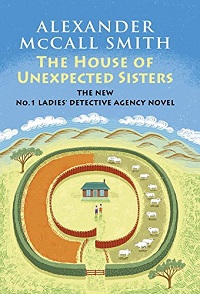
“The House of Unexpected Sisters” (Book 18 of the No. 1 Ladies Detective Agency Series) by Alexander McCall Smith

House of Unexpected Sisters

This is the latest book in the No. 1 Ladies Detective Agency Series, which I absolutely love. I own all the books in the series and have previously written about the 17th book that was released last year, Precious and Grace.  I find the newer books in this series every bit as enjoyable as the first, which was published all the way back in 1998. This a remarkable achievement for any writer, even one as prolific as Alexander McCall Smith, who writes other series as well as stand-alone books (such as My Italian Bulldozer, which I also wrote about recently). It recalls other favorite authors of mine such as Enid Blyton and Agatha Christie (who are no longer alive and cannot write any more books) as well as J.K. Rowling, who seems to be done with Harry Potter but is still continuing to write the Cormoran Strike books under the pseudonym, Robert Galbraith.

What never ceases to amaze me about the No. 1 Ladies Detective Agency Series books is how they manage to capture the sights, the sounds, and even the smells of Botswana, where the series is set. I have not personally been to Botswana, but the country seems so familiar to me because of these books. What is also amazing is how McCall Smith is able to write from the point of view of an African woman, Mma Ramotswe, who is the protagonist of the books and the proprietor of the No. 1 Ladies Detective Agency. It’s almost as if he is able to get into the skin of the character — she seems so real, so authentic. I know that this is what all writers aspire for, but it seems to me that there are few writers who are able to inhabit the character of someone who is so diametrically different from them as Alexander McCall Smith, a Scottish man, is from Mma Ramotswe, an African woman. He did spend a part of his childhood in Botswana, however, which is probably where the “heart” of the novels comes from. He is able to capture his love for the country in these books so beautifully that, as a reader, you can’t help falling in love with the country yourself.

The House of Unexpected Sisters returns with its familiar cast of endearing characters: Mma Ramotswe, who runs the detective agency and is an old-fashioned, “traditionally built,” astute woman; her prickly assistant, Mma Makutsi, who has promoted herself throughout the series and is now the “co-director” of the agency; Mr. JLB Matekoni, Mma Ramotswe’s husband who is a mechanic and runs the garage that is co-located with the detective agency; Charlie, a part-time apprentice at the garage who also occasionally helps out with detective work, and whose main interest in life is “girls”; Mma Potokwani, the matron of a nearby orphanage who is the closest friend of Mma Ramotswe and makes irresistible fruit cake; and Mr. Polopetsi, a school teacher who is also a part-time colleague at the agency. While the main “case” in this book that the agency investigates is a woman who seems to have been unjustly dismissed from her job, the other big mystery is a personal one for Mma Ramotswe — the discovery of another woman who shares the same last name, which might point to Mma Ramotswe’s father not quite being the man she looked up to and revered.

As in all the books in the series, each one is focused only on two or three cases for the detective agency rather than being a “thriller” as such — the focus is more on the characters, their daily lives, their conversations, their thoughts, and their relationships. Reading all the books sequentially makes you feel like you are growing up with the characters, you know them so well. What I also love about these books is how funny and chock-full of witticisms they are, with the humor coming naturally from everyday thoughts and conversations rather than tacked on. For instance, in The House of Unexpected Sisters, Mma Ramotswe and Mma Makutsi are discussing why more and more women think that the shorter a skirt, the more fashionable it is, and Mma Makutsi comments: “I do not understand that. Men know that women have legs — that is one of the things that they learn at any early age. So why do you have to show them that you have legs when they are already well aware of that?”

Now who can argue that that?

The House of Unexpected Sisters (Book 18 of the No. 1 Ladies Detective Agency Series)
Author: Alexander McCall Smith
Publisher: Pantheon
Publication Date: November 2017

Contributor: Lachmi Khemlani runs a technology publication in the San Francisco Bay Area.

“Big Little Lies” by Liane Moriarty

Big Little Lies

I had read many of Liane Moriarty books, including Big Little Lies, a few years ago at the recommendation of a friend. I found them all very enjoyable, the kind that are difficult to put down and that you don’t really have to because they are so easy to read – written in a light-hearted manner and not at all dense. You could read them quickly, be entertained, and move on. They didn’t, however, stay with me – I would be hard-pressed to remember the characters and the plot of a book, let alone how it works out, after a few months.

This is why when Big Little Lies came out earlier this year as a TV miniseries with A-list stars like Nicole Kidman and Reese Witherspoon and I started watching it, I simply could not remember the story beyond a sliver of familiarity. This turned out to be a good thing as I could enjoy the series without any “spoilers,” without knowing exactly what was going to happen and how it was going to end. The show was so well made and was so successful – winning eight Emmy Awards – that the book got a new lease of life and became an instant bestseller. I just found a copy of it in the “New Books” section of my library and decide to re-read it. I wanted to see how such an excellent TV series had been made from a book I didn’t recall as being “great” as such – it had been an enjoyable and fun end, but was definitely not literary by any stretch of imagination. Perhaps the televised version was only loosely based on the book, as many well-made “based-on-a-book” movie and TV adaptations tend to be?

I was wrong about that. After re-reading the book, I found that the TV adaptation was almost a scene-by-scene translation of the book. Some changes had been made, but the story was, by and large, very true to the original. It starts with a murder, which takes place in a school during a “parents only” costumed trivia night party. But who exactly the victim is, how the murder happens, and who did it are revealed only at the end of the story.

As in the book, there are snippets of the parents being interviewed by the detectives trying to figure out how the murder happened, and you can sense their frustration when most of the parents they are interviewing are telling them about the school politics, about the two main “camps” of parents in the school. In one camp are Madeline, the ringleader, a non-nonsense person who “tells it like it is”; Jane, a single mom who has just moved into the area, attempting to escape from a traumatic past; and Celeste, an ethereally beautiful woman, but one who is struggling with demons of her own. In the other camp are Renata, a career mother who is a high-powered executive, and some other moms who are aligned with her. All these mothers have kids who are just starting kindergarten in a local school, set in the suburb of Australia where they live.

The trouble starts when Renata’s daughter, Amabella, is bullied by another kid during the kindergarten orientation the kids attend at the school, and when pressured to name the kid who bullied her, she points to Jane’s son, Ziggy. But Ziggy maintains that he did not do anything to Amabella, and is, in general, such a sweet and honest child that Jane believes he is telling the truth. So do Madeline and Celeste, who have, by now, become good friends with Jane. However, Renata is livid that her daughter was bullied, does not believe that Ziggy is innocent, and repeatedly attempts, over the course of the school year, to ostracize him. This is how the two camps are formed, which provides the backbone of the drama that eventually results in the murder at the heart of the book. Additional intrigue comes from the thorny relationship that Madeline has with her ex-husband and his wife, Bonnie, whose daughter is also attending the kindergarten class where the drama is unfolding. Add to this domestic violence, sexual assault, teenage rebellion, and a budding romance, not to mention the murder, and you have all the elements of a cinematic “spice mix” – or “masala” as we call in Hindi, India’s national language.

It goes to show that even a “not-so-literary” book can be adapted into a high-quality movie or TV show. What is important are the individual ingredients in the story and how they come together, and Big Little Lies has all of them.

Big Little Lies
Author: Liane Moriarty
Publisher: Berkley; Reprint edition
Publication Date: August 2015
(Originally published by Penguin in July 2014)

Contributor: Lachmi Khemlani runs a technology publication in the San Francisco Bay Area.
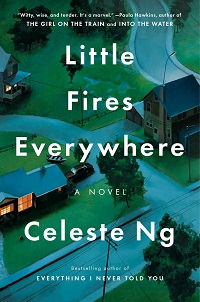
“Little Fires Everywhere” by Celeste Ng

Little Fires Everywhere

One of the surest signs that a book has been a good read is when you reach the end and are disappointed that it is over — you wish there was more of it. That is how I left after finishing Little Fires Everywhere. It’s not a traditional page-turner – not a mystery or a thriller that you can’t put down because of the suspense. Rather, the book is a family drama, and not even a highly melodramatic one at that. It is not written in scintillating prose that sweeps you off your feet but in “normal” language for regular people. It is, simply put, a very good story.

The story opens with a fire, or rather, “little fires everywhere” as described by the firemen who come to put the fire out. The fires are in a house in a wealthy suburb of Cleveland called Shaker Heights (which happens to be a real place) and have actually been set by someone living in the house – the youngest daughter, Izzy, of the Richardson family, who absconds after setting the fires. What inspires her to set the fires is a comment made by a woman, Mia, an artist whom she greatly admires and has become very close to. Mia had said: “Sometimes you need to scorch everything to the ground and start over. After the burning the soil is richer, and new things can grow. People are like that, too. They start over. They find a way.” Although Mia had said this in the context of a tragedy someone else was going through, the rebellious, tempestuous, adolescent Izzy found this idea so powerful, so deep, and so intense, that she took it literally and was so upset with her family — especially her mother, Elena, with whom she has never got along — that she methodically lit a fire in each room of her house before she left.

What makes Izzy actually set the fires is the crux of the story, along with the mystery of Mia’s background, who has come into the neighborhood with her daughter, Pearl, and is renting an apartment that belongs to Elena. No one, including Pearl herself, knows who her father is. Just as Izzy of the Richardson family is drawn to Mia and persuades Mia to take her on as an (unpaid) assistant, in the same way, Pearl is drawn to the Richardson family and constantly hangs out in Elena’s house with her son, Moody, and her two older children. (All the kids go to the same high school, but are in different grades, except for Pearl and Moody.)

In addition to this “switch” where Izzy hangs out with Mia and Pearl hangs out with the Richardsons, there is a lot of additional intrigue in the story including a surrogacy, an abortion, and a custody battle for a Chinese American baby between the baby’s mother (a coworker of Mia) — who initially abandoned her because of her circumstances but now wants her back — and the wealthy white couple (close friends of the Richardsons) — who took in the baby when she was abandoned, loved and nurtured her, and desperately want to adopt her as they have not been able to have children of their own. Above all, there is also the uneasy feeling Elena has about Mia, who makes her feel unsettled just by being who she is. She takes it upon herself to investigate Mia’s background and find out more about her and the mystery behind her fatherless daughter.

I really enjoyed reading this book and am happy to find that it has also achieved critical acclaim, especially after many unsuccessful attempts at reading award-winning books (recent examples being The Underground Railroad which won the Pulitzer Prize and Lincoln in the Bardo which won the Booker Prize). It’s good to know that even books devoid of literary calisthenics can be appreciated by literary critics in addition to being enjoyed by regular folks like me.

Little Fires Everywhere
Author: Celeste Ng
Publisher: Penguin Press
Publication Date: September 2017


Contributor: Lachmi Khemlani runs a technology publication in the San Francisco Bay Area.

“Rules of Civility” by Amor Towles

Rules of Civility

I picked up this book at the recommendation of my daughter, who told me she read it in one day. While I didn’t find it so gripping that it was impossible to put down, I did find it engaging enough to hold my interest and keep reading — which was remarkable to me given the number of books I started recently that I couldn’t read beyond the first chapter. Going through somewhat of a dry spell with regard to reading fiction, I was happy to get out of the doldrums and be reassured that books could still give me the enjoyment they always have.

Rules of Civility is set in New York in the late 1930s, a time period that is so reminiscent of The Great Gatsby by F. Scott Fitzgerald that it is impossible not to be reminded of it. Rules of Civility fares quite well in the comparison, and while it comes nowhere to achieving the classic status of The Great Gatsby, it is far from being a cheesy rip-off. It is extremely well written and strongly evocative, bringing vividly to life all the details of the Big Apple in the 30s — the people, the culture, the parties, the music, the smoking, the clothes — the overall milieu.

The story is told from the point of view of a 25 year old single girl, Katey Kontent, and of the most eventful year in her life, 1938. What sets it off is a chance meeting that she and her best friend and roommate, Eve, have with a wealthy, handsome banker, Tinker Grey, at a jazz bar on the last night of 1937. Both fall for him, but instead of a someway predictable storyline in which the “heroine” eventually gets the “hero,” the plot takes several twists and turns, including a car crash, a move to Los Angeles, a relationship between a wealthy older woman and a younger man, a friend who enlists in the war and is killed, and dropping out of high society to become a blue-color worker. In the course of that one year, Katey goes from becoming a secretary to the editor’s assistant of a high-profile magazine, and further leaves behind her working class roots by moving and socializing in the upper echelons of New York society.

I found Rules of Civility less of a story with a definite plot and more of an experience, an indepth look at what life in New York must have been like in the 1930s. The details are so rich and seem as authentic that it really makes the city and the characters come alive. Even more so than The Great Gatsby, I found that this book is inextricably tried to its setting, so for those who can’t get enough of reading about New York, this book is a must-read.

PS: And by the way, the title of the book comes from “Rules of Civility and Decent Behaviour In Company and Conversation,” a list of 110 rules compiled by George Washington as part of a school exercise when he was sixteen. They are used in Towles’ Rules of Civility as a reference by one of the key characters to appear refined in high society. To name the character would be giving too much away!

Rules of Civility
Author: Amor Towles
Publisher: Penguin Books
Publication Date: June 2012

Contributor: Lachmi Khemlani runs a technology publication in the San Francisco Bay Area.

“My Italian Bulldozer” by Alexander McCall Smith

My Italian Bulldozer

This is a recent “one-off” novel by Alexander McCall Smith, by which I mean that it is not part of a series. He is best known for his No. 1 Ladies’ Detective Agency series, which I absolutely love – I own all of those books. He also writes many other serialized books including the 44 Scotland Street series, The Sunday Philosophy Club series, and the Corduroy Mansions series. While he is continuing, fortunately, to write books in these series (such as Precious and Grace, which I wrote about earlier this year), he does occasionally write stand-alone books such as My Italian Bulldozer. Although I haven’t become addicted to any of his other series as I have to his No. 1 Ladies’ Detective Agency series, he is such a good writer, and such a prolific one, that you can be assured of a good read whenever you pick up one of his books.

This is exactly how I would describe My Italian Bulldozer. It tells the story of Paul Stuart, a successful food writer in Scotland, who is heartbroken after his girlfriend, Becky, dumps him for another man (that too, her personal trainer, which seems to add insult to injury!), and goes to stay in Italy for a few weeks. He is ostensibly going to wrap up his cookbook on Tuscan food and wine at the suggestion of his editor, Gloria, who is secretly in love with him and thinks it would do him good to get away and have a change of scene. Once he lands in Italy, some unexpected snafus cause him to first be arrested and spend some time in a jail, and once he is released, to have a bulldozer as the only rental option available to him. And that is how he comes to be driving around on a bulldozer on Italy.

That, in itself, is funny when you visualize it – driving around the Italian countryside in a bulldozer! During the course of his trip, a lot happens in a similar humorous vein – he knows a smattering of Italian and is able to have some really interesting conversations with the people he meets; Becky unexpectedly visits to say she is sorry for leaving him, but he realizes he doesn’t really want to get together with her and encourages her to go back home; he develops a crush on an attractive, intelligent American woman he happens to help out when her car breaks down, but she is already with another guy and can’t reciprocate; and finally, he comes to realize that his deep friendship with Gloria is the solid foundation of a meaningful and loving relationship. Also, he is able to finish his book, so at least “mission accomplished” on that front.

I found My Italian Bulldozer to be a delightful and entertaining read, in the author’s trademark witty style with lots of tongue-in-cheek humor. And as with all his other writing, his humor never degenerates to becoming outlandish or slapstick in the least. Another typical characteristic of McCall Smith’s fiction is that it is always lighthearted, never dark or depressing. Even the “villains” – which in this book would be the rental car agent who duped Paul and made him go to jail – are bad in a funny way. In McCall Smith’s world, there is some humor in every situation. It’s a world that I, for one, would very much like to live in.

My Italian Bulldozer
Author: Alexander McCall Smith
Publisher: Pantheon
Publication Date: April 2017

Contributor: Lachmi Khemlani runs a technology publication in the San Francisco Bay Area.


“The Lake of Dreams” by Kim Edwards

The Lake of Dreams

This book is from the author of a brilliant book that I read several years ago — The Memory Keeper’s Daughter by Kim Edwards. It wasn’t just me who loved it — that book became a runaway hit and spent 122 weeks on the New York Times bestseller list. Kim Edwards hasn’t written a whole lot of other books, so when I did find another one by her, The Lake of Dreams, I picked it up immediately to read.

If I was hoping for an encore performance, for something as brilliant as The Memory Keeper’s Daughter, I was disappointed. The Lake of Dreams is definitely not as good, or even as successful, as her earlier book, which I remember being everywhere when it was published (in 2006). However, the writing quality is just as good, not at all pedestrian, and as it so often happens, perhaps my expectations from this book were way too high for it to live up to them.

The Lake of Dreams is the story of a young woman, Lucy, struggling to find her place in the world and never able to really come to terms with the death of her father in a freak boating accident when she was a teenager. If only she had accompanied him for a ride on the boat that night when he had asked her to join him, perhaps the accident wouldn’t have happened. She leaves the town they lived in – called “The Lake of Dreams” – soon after to go to college and thereafter becomes a  nomad of sorts – traveling to different countries for projects as part of her job as a hydrologist. When the book opens, she is living in Japan with her boyfriend of Japanese descent and is temporarily out of a job, and she takes a trip home to The Lake of Dreams to visit her family – her mother and her brother. Once there, she is caught up in the familiar emotions brought on after the death of her father – restlessness, guilt, the feeling of being unmoored – until the chance discovery of a letter and a piece of fabric in her home – which dates back to several generations – leads her to a search for an ancestor who seems to have been expunged from the family history. Who is this Rose and what happened to her? And what about her daughter Iris? Why was she forced to leave her? And was Rose the woman modeled in the stained glass windows in the local church that were created by a famous artist? If so, what was the connection between them?

While Lucy is researching the mystery of Rose, Iris, and the stained glass windows, she is, at the same time, dealing with the attraction she still feels for her high school boyfriend, who is settled in The Lake of Dreams, and runs a successful artisanal glass factory. At the same time, she is still in love with her boyfriend in Japan. In addition to this inner conflict, family issues with her brother and her uncle come up, compounding her feelings of guilt about her father’s death.

Eventually, everything is resolved, and there is a surprise twist regarding the circumstances of her father’s death, reinforcing the fact that his accident was not her fault in any way and she did not need to blame herself for it. This was the only somewhat dramatic part of the book, which was otherwise not melodramatic in the least. While I appreciated this aspect of the book – the story was so believable – it did make it a little slow, plodding almost. A little drama could have spiced it up a bit, I think.

But I guess that is not the author’s style, which is subtle, almost understated. It worked beautifully for The Memory Keeper’s Daughter, and while I’m glad I read The Lake of Dreams, it reinforced the fact that great art owes a lot to serendipity, to a flash of inspiration. It cannot be manufactured at will, it cannot be commanded, which is why there is no guarantee of loving someone’s second book or movie or painting just because you have loved the first.

The Lake of Dreams
Author: Kim Edwards
Publisher: Viking
Publication Date: January 2011

Contributor: Lachmi Khemlani runs a technology publication in the San Francisco Bay Area.