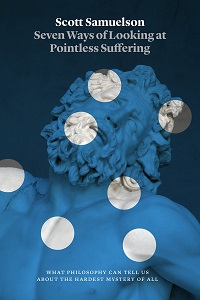
“Seven Ways of Looking at Pointless Suffering” by Scott Samuelson

Seven Ways of Looking at Pointless Suffering

Life is tough. There is no getting around that fact. Even if you are not personally experiencing a crisis or a tragedy at the moment, you only have to look around you to see how much misery is there in the world. And this is not a new phenomenon — it has been like this since the dawn of civilization. The kinds of crises that we face may differ from generation to generation, but suffering seems to be very much a part of the human condition. Not only are we vulnerable to natural disasters such as earthquakes, volcanoes, hurricanes, and tsunamis just like any other species on earth, we also have to contend with wars, epidemics, poverty, starvation, injustice, crime, illness, and of course, death — not just of our own, but more painfully, of those we love.

What, then, are we to do? How can we cope with suffering? How do human beings, as a whole, deal with what seems to be an inevitable fact of life? The book, Seven Ways of Looking at Pointless Suffering, attempts to show us how. The author, Scott Samuelson, draws from his extensive knowledge and study of philosophy to highlight seven different approaches to suffering, ranging from the Book of Job in the Bible, to the teachings of Confucius, to philosophers such as Nietzsche, and surprisingly, even the Blues music genre that has slavery at its roots. While each of these has a distinct approach to suffering, they can, by and large, be divided into two main camps: fix-it, where you seek to eliminate it; and face-it, where you come to terms with it.

Interestingly however, these two camps are not as far apart as they may seem — we have to accept suffering as it is inevitable, but at the same time, we are hard-wired to oppose it. The drive to ameliorate suffering is responsible for all human advancements — witness the enormous strides we have made in medicine, agriculture, weather forecasting, technology, and so in, in every field of human endeavor. At the same time, we have to accept that just as you cannot have a right without a left, or an up without a down — the yin/yang principle — you cannot have joy without sorrow, happiness without sadness, and goodness without evil. In short, humans will continue doing what we can to “fix” suffering while reconciling to the fact that some of it is inevitable and we have no choice but to “face” it. In fact, suffering seems to be integral to human growth — most of our art, music, and literature has been created in response to it. This understanding is pivotal to our acceptance of suffering and learning to live with it gracefully.

While Seven Ways of Looking at Pointless Suffering seeks to provide insights into suffering for anyone seeking to understand it better, it is also unequivocally a philosophy book. This makes it essential reading for anyone who would like to delve into how different philosophers throughout the ages have thought about the question of suffering and its centrality to human existence. However, for those who are not particularly interested in philosophy as a subject to be studied, or in learning about different philosophers and their lives, this is not a book that they will likely read cover to cover. I found myself skimming though many sections of the book that seemed more like a history lesson on different philosophers, since I was more interested in learning about how people cope with suffering rather than what different philosophers have had to say about it. Few people now have the luxury of not having to work for a living, of having the time and the resources to ponder about life and its mysteries as they were able to do in the past. It’s one thing to arrive at an intellectual understanding of something, but another thing to actually feel it. This is why philosophy as a discipline has a limited appeal for me, and I didn’t appreciate Seven Ways of Looking at Pointless Suffering as someone who was into philosophy would have.

To me, the best parts of the book were when the author talked about his own personal experiences with suffering as well as the many discussions he had in the course of his volunteer work in a prison where he was teaching philosophy to prisoners. There is an entire thread in the book on the problem of evil — which is at the root of so much suffering — and the related issue of incarceration as a punishment for crime. I would have been interested in reading a lot more about that.

That said, I found Seven Ways of Looking at Pointless Suffering an invaluable read for its extended discussion of something that is a fundamental part of our existence and for its holistic look at suffering, not just as something to be accepted, but also as something it is in our nature to work to avoid. That goes a long way with learning to make peace with it.

Seven Ways of Looking at Pointless Suffering
Author: Scott Samuelson
Publisher: University of Chicago Press
Publication Date: May 2018

Contributor: Lachmi Khemlani runs a technology publication in the San Francisco Bay Area.

“Lethal White” by Robert Galbraith

Lethal White

Lethal White is the fourth book in the Cormoran Strike detective series written by J.K. Rowling under the pseudonym Robert Galbraith. I love this series, just as I had loved the Harry Potter series before it, and in preparation for the release of Lethal White — which I was able to read right away as I had pre-ordered it — I went back and re-read all the earlier books in the series, starting with Career of Evil, the third book, and then the first two, The Cuckoo’s Calling and The Silkworm.

The series is set in contemporary London and has two main characters: Cormoran Strike, an army veteran in his late thirties who lost a leg in the war, has returned to civilian life, and is trying to establish himself as a private detective; and Robin Ellacott, who comes to him as a temporary secretary for a week but ends up staying on and becoming a key part of the detective firm. Each book is focused on one key case. However, it is not just about the cases and how they are solved — there are so many authors writing thrillers these days — but also about how the investigations are tied into the personalities of Strike and Robin, their personal lives, and their relationship with each other, which is not only that of mutual respect but also has strong undercurrents of romantic tension that continue to build up over the course of the books in the series.

Strike is not a conventional hero by any means — he is overweight, very hairy, has a bit of a belly, is constantly eating burgers and the standard British fish-and-chips, and is constantly smoking and drinking beer. Robin, on the other hand, is more conventionally pretty, in addition to having a lot of character, integrity, and a genuine passion for investigative work. This is something her fiancé and later her husband, Matthew, just doesn’t get. Meanwhile, Strike has his own relationship issues with a stunningly beautiful but very damaged woman, Charlotte, with whom he has had an on-again, off-again toxic relationship for over sixteen years. They are just breaking up — after their worst fight, which well may be the last straw for Strike — at the start of the first book, and this happens to coincide with Robin’s arrival in the agency as a temp, newly engaged and on cloud nine every time she looks at her engagement ring. J.K. Rowling brings her trademark brilliance and mastery to how the relationship between Strike and Robin slowly evolves from being forced to work together, to a grudging respect, to something that neither of them wants to analyze in case it affects how well they have started working together. Robin goes from being a secretary to assistant detective to junior partner in the firm, proving herself to be indispensable in solving the tricky cases in each book, which include the apparent suicide of a famous model in The Cuckoo’s Calling, the gruesome murder of a writer in The Silkworm, and tracking down a psychopathic killer who has a personal grudge against Strike in Career of Evil.

The case in Lethal White is in two seemingly separate but somehow connected events — a claim that a child had been strangled and buried a long time ago, and the blackmailing of a minister in the British parliament who dies of what seems to be suicide but is actually murder. Surprisingly, horses play a major part in this book — in fact, the name of the book, “lethal white,” come from a genetic disorder that afflicts some breeds of horses, causing their foals to die just a few days after being born. The case happens against the backdrop of the 2012 Olympics in London, and there are several political events that play a major role in the plot, including the government-mandated austerity measures imposed in the UK during this time, the lingering impacts of the economic depression of 2008, public demonstrations and street protests by activists, political scheming and intrigues, and even the abolishment of the death penalty, which happened in the UK in 1965 but which provides a pivotal plot point.  Strike and Robin are eventually able to solve the case, and this time, they have the help of one of the additional employees Strike has been able to take on in the firm thanks to his burgeoning fame bringing in more business.

Given how much I loved the earlier books in this series and how eagerly I was awaiting this next book, I have to say that Lethal White was a huge disappointment in terms of the actual case that had to be investigated. The plot was extremely convoluted and had so many threads and aspects to it that it seemed to be all over the place. The progress of the relationship between Strike and Robin was relatively better done, and from that respect, Lethal White was less of a thriller that you can’t bear to put down and more of a drama about two people and their relationship with each other. Compared to Career of Evil — my personal favorite of the series — which starts with Robin getting a package containing the severed leg of a woman and just gets more riveting as it progresses, there was nothing which even came close to that level of thrill, suspense, and danger in Lethal White.

Just as with the Harry Potter books which were eventually adapted into movies, the Cormoran Strike books have been adapted for TV — the show is already out on BBC —  and in my opinion, once this happens, it is extremely difficult for an author to maintain the quality of his or her writing. It happened with Harry Potter — Book 7 came out well after the release of the first movie adaptations and it was simply not as good as the earlier books. Lethal White seems to have suffered from the same fate — its writing seems to have been subconsciously influenced by its upcoming dramatization and suffers as a consequence, losing its intensity, its focus, and I would even say, its purity. There are too many characters, too many events, too many plot points, and even the final setting where the villain is nabbed seems more melodramatic than genuine. Of course, this is nobody’s fault — how could any author turn down the opportunity for a dramatic adaption of their work? And how can the imagery from this adaptation not blunt their creativity, their imagination, their inspiration?

But it is such a pity for readers like me who love their books so much.

Lethal White: A Cormoran Strike Novel
Author: Robert Galbraith (aka J. K. Rowling)
Publisher: Mulholland Books
Publication Date: September 2018

Contributor: Lachmi Khemlani runs a technology publication in the San Francisco Bay Area.

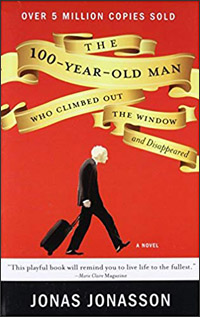
“The 100-Year-Old Man Who Climbed Out the Window and Disappeared” by Jonas Jonasson

The 100 year old Man.jpg

The title of this book points to what a laugh riot it will be and in that respect, it does not disappoint. Translated from Swedish to English, it tells the story of Allan Karlsson, a 100 year old man still in good health, who escapes from the nursing home, where he has been forced to live, on the morning of his 100th birthday — and from the party planned in his honor that day — and goes, literally, on the run. Along the way, he collects not just a suitcase full of cash but also a motley crew of a 70 year old petty thief, a highly educated hot-dog stand proprietor and his brother, a red-headed fiery-tempered woman with a dog and an elephant, the head of a gang of thugs, and a police chief. Eventually, the six of them — along with the dog and the elephant — manage to escape to Bali in Indonesia with the cash, where they live happily ever after.

Is this doesn’t sound hilarious enough, throw in the two accidental deaths of the thugs who had stolen the money in the first place, with one of them dying in the cold storage where he was locked up temporarily by Allan and his 70 year old cohort, and the second dying from being crushed by the redhead’s elephant when she (the elephant) inadvertently sat on him!

In addition to following Allan’s journey all the way from his solo escape from the nursing home to the collective escape of his group of six to Bali in the present — which is the year 2005 — the book also recounts the story of his life all the way from his birth in 1905 to how he eventually landed up in the nursing home. We get a good primer on world history in the course of this narration, because it turns out that Allan has participated in some of the key events of the 20th century — thanks to being an explosives expert — such as the Second World War in Europe, the development of the atom bomb in the US, the uprising in Iran, the Cold War between the US and USSR, the Korean War, and the political unrest in Indonesia. He has also not only met, but actually interacted with some of the most prominent historical figures of the last century including General Franco, Winston Churchill, Harry Truman, Richard Nixon, Stalin, Kim Jong II, Chairman Mao, and Charles de Gaulle.

Of course, most of this is downright unbelievable and therefore The 100-Year-Old Man Who Climbed Out the Window and Disappeared is not a book to be taken seriously, but it is very well written with intelligent, tongue-in-cheek, laugh-out loud humor that is not slapstick in the least. For some reason, we have plenty of comedy when it comes to TV and movies, but it is difficult to find books in this genre, so this book is a real find.

While you would not expect a book like this to have any life lessons, there is one sentence that captures the essence of Allan’s philosophy of life: “Things are what they are, and whatever will be, will be.” These were his mother’s words when he was a boy, and while it took some years for the message to seep his soul, once it was there, it was there forever and guided everything he did. I can’t imagine a more Zen-like summation of and approach to life!

The 100-Year-Old Man Who Climbed Out the Window and Disappeared
Author: Jonas Jonasson
Publisher: Hachette Books
Publication Date: September 2012

Contributor: Lachmi Khemlani runs a technology publication in the San Francisco Bay Area.

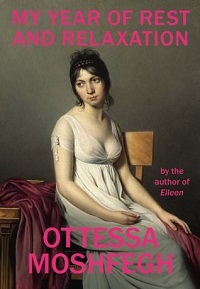
“My Year of Rest and Relaxation” by Ottessa Moshfegh

My Year of Rest and Relaxation

The premise of this book is very intriguing – a young woman decides to go into hibernation for a year to get through a depressing and listless period of her life. She has plenty of money to bankroll this, thanks to her inheritance from her wealthy parents who died within six months of each other a few years ago. Rather than committing suicide, which would be a permanent end to life, she thinks of “checking out” for a year, hoping it will help with the general malaise she is feeling and rejuvenate her. This hibernation – a whole year of rest and relaxation — is accomplished with the help of a large number of drugs prescribed by a not-very-professional therapist the woman manages to find, who seems to have no issues prescribing increasingly stronger drugs for depression and insomnia that the woman tells her she is experiencing.

Not only is the plot of book so fascinating, it also draws you in right away. Narrated in first person, it is almost like reading a diary – it is brutally honest and describes the narrator’s thoughts and feelings in such vivid detail, we can almost feel like we are her. The first person account is so well maintained throughout the book that we never learn the narrator’s name. We do, however, learn a lot of other details about her – in addition to having a lot of money, she is smart with a degree in art history from Columbia, and she is outstandingly pretty without even trying, attracting a lot of attention from guys and envy from women. She lives in a fancy apartment in Manhattan, buys very expensive clothes, and occasionally dates. She has an on-again off-again relationship with a handsome and successful man working in Wall Street, and has one loyal friend who is always dropping in to check on her. After graduation, she lands a job in a prestigious art gallery reputed for discovering “eclectic” artists and hosting their cutting-edge, post-modernist work.

While all of these may seem to be more than enough for a very rewarding and satisfying life for most people, for our narrator, they are not. While there is no one particular event that triggers her wanting to “check out” and go into hibernation, it seems to be the culmination of years of not having many happy or joyful moments, and a childhood growing up with parents who really didn’t feel anything for each other. Sometimes, it is not just the presence of bad things that can lead to antipathy and depression; it can also very well be the absence of good things. And this seems to be what is afflicting our narrator.

While the first few chapters of the book continue to hold your interest as you learn more about the narrator, her background, her reasons for wanting to hibernate, and the process she follows – heavy doses of drugs which make her sleep most of the time, long periods of blackouts in which she does not know what she is doing or where she is going, a lot of TV watching, trips to the local coffee shop to pick up coffee and snacks, a lot of take-out for meals, monthly visits to the therapist and the pharmacy to refill prescriptions – it begins to get very repetitive after some time, and I found myself skipping a lot of the content towards the second half of the book. By this time, you also lose sympathy for the narrator as she shows herself to be quite a selfish, uncaring person, and is particularly mean to her one friend who continues to visit her. You simply stop caring about what happens to her.

The time period that the book is set in is an important part of the plot, although you don’t realize that in the beginning. The woman goes into hibernation in the summer of 2000, which means that when her “one year” ends, it is close to 9/11. Her friend was working in the World Trade Center when the planes hit, and she keep watching the recording of the event over and over as it seems like one of the women jumping off from one of the towers may have been her friend.

The book ends with this, and you can’t help but read it with a catch in your throat.

My Year of Rest and Relaxation
Author: Ottessa Moshfegh
Publisher: Penguin Press
Publication Date: July 2018

Contributor: Lachmi Khemlani runs a technology publication in the San Francisco Bay Area.

“My Ex-Life” by Stephen McCauley

My Ex-Life

This was a fun, breezy book, a welcome change from the intense, heavy, and serious plotlines of most of the current crop of critically acclaimed novels that I have been reading lately. However, it was not escapist fiction by any means, which can be fun to read at times, but is neither memorable not uplifting. My Ex-Life was both.

The book tells the story of a gay man, David, who travels from San Francisco to the East Coast to help out his ex-wife, Julie, who he was briefly married to in his early twenties, and her seventeen year old daughter from a subsequent marriage, Mandy, whose father, Henry, is pushing her to “get her act together” and get into a good college. David is a college counselor, and when Mandy finds out that he was Julie’s first husband, she reaches out to him. She is going through the turmoil and angst typical of kids of that age, and it is compounded by the fact that her parents are going through a divorce. While this is not an emotional blow for Julie — she fell out of love with Henry a long time ago — it is problematic in a different way — she will lose the house that she jointly owns with Henry unless she buys out his share. She is running it as an Airbnb, and while she is not making a whole lot of money from it, she loves it.

David, too, is in somewhat of a crisis — his younger boyfriend has left him for another man, and the house that he was renting is going to be sold, so he will have to find another place to live. Therefore, when Mandy reaches out to him, ostensibly for help with her college applications, he actually travels to the small town near Boston called Beauport where Julie lives, to visit them and help Mandy in person. He ends up staying at the Airbnb and helping Julie with it, doing a lot of repairs and de-cluttering. Despite the breakup of their marriage all those years ago, David and Julie remain very fond of each other, and their deep mutual affection is rekindled by David’s extended visit. Not only is he working with Julie on trying to get the money to buy out Henry’s share so she can retain the house, the trip to Beauport has also allowed him to get away from his own problems in San Francisco. And, of course, there’s the challenge of helping Mandy, who has some other issues in addition to typical teenage rebellion and aimlessness.

With such an unconventional plotline, My Ex-Life was hard to put down, and it was made even more enjoyable by the quality of the writing, especially the humor. There were so many parts that were funny, especially earlier on in the book — David’s chance meeting with his ex-boyfriend at a party, Julie’s struggles with her pot addiction, Mandy’s summer job at a knick-knacks store in Beauport from which she is fired for not having an enthusiastic “cheery” attitude that could encourages sales, and the increasingly scathing feedback from the Airbnb consultant that Julie has hired to figure out how to improve business as she (the consultant) is taken on a tour of the house. All of the humor is extremely witty, and I appreciated that it was intelligent rather than slapstick.

It was also both funny and insightful to learn about David’s work as a college counselor and read some of the college essays that the students he was counseling were writing for their applications. Apparently, about 90% of essays begin with the mention of a grandparent or cancer and these rarely get read by admission directors, since they have so many to plow throw. In contrast, there is this one with an opening that is impossible to not continue reading:

Growing up, my father encouraged my brother and me to piss in the kitchen sink when my mother wasn’t home.”

Just that one line made reading this book so worth it!

My Ex-Life
Author: Stephen McCauley
Publisher: Flatiron Books
Publication Date: May 2018

Contributor: Lachmi Khemlani runs a technology publication in the San Francisco Bay Area.
“A Place for Us” by Fatima Farheen Mirza

A Place for Us

This book had almost too much hype surrounding it, as it was the first book to be published by Sarah Jessica Parker’s new imprint at Hogarth Publishing, called SJP. (She is best known as the lead actress from TV’s Sex and the City.) Apparently, it was hand-picked by her and she described herself as being “taken hostage by Fatima Mirza’s heartrending and timely story.” I was naturally excited when I was able to get a copy of the book to read — I expected it to be mind-blowing.

At the outset, I must say that it was not. It tells the story of a traditional Muslim family living in the San Francisco Bay area — although it would be more accurate to say that it is more of a narration of their lives rather than a “story” as such. The parents are extremely religious and follow all the Islamic rules and rituals. They have three children, all of whom were born in the US. You would expect some kind of conflict between the parents and the kids, some kind of culture clash, which is so much a part of the immigrant experience. However, for the family in A Place for Us, the two older children — who are girls — grow up following the religion and being obedient daughters, not out of fear of their parents but because they simply do not question their faith. While they do go on to achieve professional success — one becomes a doctor and the other a teacher – their lives are firmly rooted in Islam. They both wear the hijab and end up marry Muslims. About the only rebellious thing the elder daughter does is marry a Muslim boy from a different sect!

There is some drama, however, that comes from the youngest child, Amar, who does rebel – he smokes, drinks alcohol, and eventually gets into drugs, all of which are forbidden by Islam. Naturally, he clashes with his traditional parents and ends up leaving home. And oh, he also falls for a girl, but she is also a Muslim. That is the extent of his non-conformity. Amar never returns home, apart from a brief visit for his sister’s wedding. The book ends with the father looking back on his parenting with some regret and wishing that he had been less angry and more loving with his children, so that his son was not driven away.

This, really, was the extent of the plot of the book. Apart from Amar rebelling and leaving the house, nothing really happens. There is no other issue, no calamity as such. It made me wonder why I was even reading about this family, with its relative lack of problems. If all they had to worry about was one child not being sold on the religious beliefs of the family, they seemed to be very lucky. Even the fact that they were Muslims in an increasingly Islamaphobic world did not emerge as an issue. There was only a brief reference to 9/11 and its aftermath — Amar got into a fight at school and the two older girls stopped wearing the hijab for some time following their parents’ advice — but that was about it. A passing reference is made to the 2016 election towards the end of the book, but I imagine that most of the book must have been written before the current hostile political climate.

Given the lack of a real plot, what may have given the book credibility and led to its selection by Sarah Jessica Parker as the first book for her new imprint was that it was very well written and provided a lot of details about the lives of the individual members of the family. I could see how this could be a novelty to Western audiences, allowing them a glimpse into a totally different way of life and culture — how a Muslim family lives in the US, how the kids are brought up, what are the customs and rituals they follow, and so on. However, as someone from India who now lives in the US, none of these details were new to me or even especially interesting. It was as if anyone could just capture the mundane details of their life — how they were brought up, the little things they did, their relationships with their parents and their siblings, etc. — and it would be worthy of publication in a novel. I imagine that many of the details in A Place for Us come directly from the author’s own life and experiences, given that it is her first novel and most first novels tend to be very autobiographical.

I would put this book in the same category as Exit West, another book that was highly acclaimed by critics, but which I did not much care for. While I appreciate the fact that these young authors are getting a chance and feel happy for them, I wish critics and publishers were a little more discerning and found books with some real merit to them.

A Place for Us
Author: Fatima Farheen Mirza
Publisher: SJP for Hogarth
Publication Date: June 2018

Contributor: Lachmi Khemlani runs a technology publication in the San Francisco Bay Area.

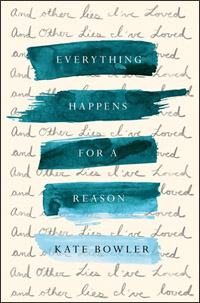
“Everything Happens for a Reason: And Other Lies I’ve Loved” by Kate Bowler

Everything Happens for a Reason

Anyone who has ever asked the fundamental question, “Why do bad things happen to good people?” would not be able to pass on this book without being intrigued by its title. It seems to be unequivocally saying that the platitude, “Everything happens for a reason,” that we hear so often being bandied about, especially addressed to people who are going through a tragedy, is a lie, plain and simple. For anyone who is not religious — who does not believe in a “grand scheme” for life, who does not believe in an afterlife, who finds the concept of “God” to be something that humans have fabricated to makes themselves feel that someone is in charge – for such a person, a book like this simply affirms what they already know. But for those who do believe that “everything happens for a reason,” this book is a must-read, especially because it is written by someone who was steeped in religion and knows exactly what that line of thinking is like.

The author of Everything Happens for a Reason: And Other Lies I’ve Loved is Kate Bowler, a professor at Duke Divinity School, who was not only brought up as a Christian and still follows it, but has spent her professional life specializing in the study of something called the “prosperity gospel” in Christianity, which sees fortune – notably money, success, and good health – as a blessing from God and conversely, any misfortune as a sign of God’s disapproval. While it may seem amazing to other people that such a line of thinking even exists – despite all evidence to the contrary, with innumerable people, including babies and children, suffering everyday through no fault of their own – it does, with plenty of preachers teaching it and plenty of followers believing it. Despite being an academic, Bowler also experienced her own “prosperity gospel” or sorts when she was able to conceive and give birth to a baby after several setbacks, had a book published, and was cured of a crippling physical ailment that had temporarily made her unable to use her hands and arms. All of this, and with a loving husband to boot, she was flying high. How could she not see herself as blessed?

But then, it all suddenly came crashing down. She started having several abdominal pains, and it was diagnosed as stage 4 colon cancer. With a survival rate of only 10% and no “cure” as such, Bowler had just been handed a death sentence. While she didn’t know exactly how long she had to live, she knew that sooner rather than later, she would die, and her baby boy would have to grow up without her and her beloved husband would have to bring up their son on his own. This has made her look anew at not just the prosperity gospel, but at many of the common religious beliefs people hold and which several of them tried to comfort her with — not just “Everything happens for a reason,” but also things such as, “God needs an angel,” “You will be in heaven and can watch over your family,” and so on. She now sees these not just as harmless platitudes that can help to comfort some people when they are dying, but outright lies that can prevent people from accepting the inevitable in good grace.

So far, Bowler is still living with the cancer, with traditional treatments and some promising new immunotherapy ones that are continuing to keep her alive, a few months at a time. But she does not know when her time will run out. Hearing first-hand from someone who is looking at death right in the face is a searing experience, whether you are religious or not. The book is chock-full of insights that can only come once you are in that place of knowing your days are numbered. (Actually, everyone’s days are numbered, but it’s easy to forget this in the hum and bustle of our daily lives.) And even for those who are not faced with this calamity yet, she provides some sage advice on what NOT to say to people who are going through tough times as well as what to say or do to help. Reading the book is worth it just for this alone.

Everything Happens for a Reason: And Other Lies I’ve Loved
Author: Kate Bowler
Publisher: Random House
Publication Date: February 2018

Contributor: Lachmi Khemlani runs a technology publication in the San Francisco Bay Area.

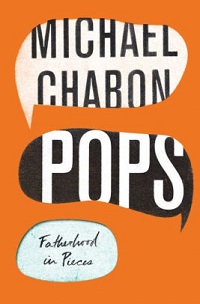
“Pops: Fatherhood in Pieces” by Michael Chabon

Pops

Even though Michael Chabon is a well-known author – he has written several novels and has also won the Pulitzer Prize for one of them – I had not read any of his books. What prompted me to pick up his latest book, Pops: Fatherhood in Pieces, was a recent interview with him on NPR’s Fresh Air, in which he talked about the book. It sounded very interesting, and once I got a copy, I found that it was such a short book that I was able to read it in just a few days, which is usually impossible to do with nonfiction books unless they are so riveting that you just can’t put them down.

Pops is a collection of seven essays on fatherhood of which six have already been published in different magazines including GQ, Atlantic.com, and Details. It is not at all unusual for a famous author to repackage his or her articles, essays, or short stories into a book, which is what Chabon has done with Pops. However, what does make it atypical — and not in a good way — is how little new content it has. The book is essentially made by sandwiching the six already-published essays between an Introduction and a seventh essay at the end of the book. It seems almost too easy, especially when you think of the millions of wannabe writers slaving away for years to make their words see the light of day and are often disappointed when it never happens. Evidently, when you become a famous author, you can get away with simply collating some of your already published essays into a new book. But as they say, success builds on success. And who ever said that life was fair?

Getting back to the book itself, there were parts of Pops that I really liked – and these were the parts that Chabon also talked about in his Fresh Air interview, making me somewhat miffed that there wasn’t much else so gripping in the book that I had not already heard. As is obvious by its name, all the essays in the book are primarily about some of Chabon’s experiences as a father to his four children on a range of issues, including clothes, sports, behavior, and language. The final essay is about Chabon as a son himself, when he goes to visit his father who suddenly falls very ill. I would say that while none of these experiences were particularly insightful, it is Chabon’s skill as a writer that makes them interesting. In any case, parenting is something that most people who are parents themselves can usually relate to, and it is always interesting to hear about how other parents deal with different aspects of raising kids.

While I was overall somewhat disappointed by Pops — it seemed to cover too little ground to be a “full-fledged” book — there was one sentiment expressed in the book that was so profound that it simply blew my mind away and made the book a must-read. In the Introduction, Chabon describes how he was strongly advised against parenthood by a famous author when he was a young aspiring writer himself. He was told: “You can write great books. Or you can have kids. It’s up to you.” Chabon not only went on to have four children, but he also became a famous, award-winning author with fourteen books. Thus, while disregarding this (unsolicited) advice actually turned out to be a good thing for him, he obviously did not know it at that time and chose to have kids anyway. He explains why he made this choice in the last paragraph of the book’s Introduction:

“If I had followed the great man’s advice and never burdened myself with the gift of my children, or if I had never written any novels at all, in the long run the result would have been the same as the result will be for me here, having made the choice I made: I will die; and the world in its violence and serenity will roll on, through the endless indifference of space, and it will take only 100 of its circuits around the sun to turn the six of us, who loved each other, to dust, and consign to oblivion all but a scant few of the thousands upon thousands of novels and short stories written and published during our lifetimes. If none of my books turns out to be among that bright remnant because I allowed my children to steal my time, narrow my compass, and curtail my freedom, I’m all right with that. Once they’re written, my books, unlike my children, hold no wonder for me; no mystery resides in them. Unlike my children, my books are cruelly unforgiving of my weaknesses, failings, and flaws of character. Most of all, my books, unlike my children, do not love me back. Anyway, if, 100 years hence, those books lie moldering and forgotten, I’ll never know. That’s the problem, in the end, with putting all your chips on posterity: You never stick around long enough to enjoy it.”

To me, just reading this one paragraph made the book worthwhile – it’s the kind of wisdom that needs to be framed so that we can keep coming back to it. I may not care for Chabon’s novels, but his sentiments expressed in this one paragraph captures, for me, the crux of the human condition—death is evitable, our lives spans are but a blip in cosmic time, and is there any point striving for “eternal” fame when we won’t even be around to experience it?

Pops: Fatherhood in Pieces
Author: Michael Chabon
Publisher: Harper
Publication Date: May 2018

Contributor: Lachmi Khemlani runs a technology publication in the San Francisco Bay Area.
“Brideshead Revisited” by Evelyn Waugh

Brideshead Revisited

Brideshead Revisited was one more foray into the world of classical literature that I embarked upon recently, sparked by Elizabeth Gaskell’s North and South. I had not read any books by Evelyn Waugh before, but had heard of him and of Brideshead Revisited, thanks to a recent movie adaptation. Since I haven’t seen the movie, I could enjoy the book unencumbered by the images of the movie characters superimposed over those in the book — which I find quite annoying and avoid as much as possible.

Brideshead Revisited is primarily an account of life in England in the first half of the 20th century narrated by a young man, Charles Ryder, starting with his days as a college student at Oxford where he meets and befriends a charismatic fellow student, Sebastian Flyte. The two soon become inseparable, not in any romantic sense as we would now assume, but simply as very close friends who spend a lot of time together. Sebastian comes from a very wealthy family and lives in a palatial mansion called Brideshead to which he frequently takes Charles whenever he visits. Charles meets and becomes close to all the members of Sebastian’s family, including his beautiful sister, Julia, whom he almost ends up marrying, but much later in the book.

Most of the early part of the story is devoted to Charles and Sebastian’s escapades as students in Oxford, their visits to Brideshead, their travels abroad, and their interactions with the different members of Sebastian’s family. It almost gets to the point where you are over halfway into the book and you are wondering if anything is actually to happen! But then it does. Sebastian rapidly descends into alcoholism from which he never really recovers, Julia gets married but eventually ends up getting a divorce, and Charles drops out of Oxford to become a successful architectural painter. He also gets married and has children, but realizes, after a chance meeting with Julia many years later, that it is her whom he really loves. He also ends up divorcing his wife, and he and Julia are all set to get married when Julia realizes that she cannot go through with the wedding after all because of religious reasons — she is a staunch Catholic while Charles is an agnostic.

For a book set in the 1940s, there are a surprising number of divorces and affairs, which was surprising to me. What I also found unique about Brideshead Revisited was the extended discussions about religion and the critical role it plays in the book — not in bringing the hero and heroine together as you would expect, but in actually breaking them up. This disagreement in religious views happens so often between couples in real life but is hardly ever captured in fiction, and what impressed me the most about Brideshead Revisited was how it made religion a pivotal aspect of the plot.

Apart from this, I cannot really say that Brideshead Revisited was exceptional in any way, and I can see why it did not become a top-tier must-read classic. Much of it seemed to me to be “much ado about nothing.” I was glad to have read it, but I did not find it particularly riveting.

Having failed to find any classics that come even remotely close to how enraptured I was by North and South, I am reverting back to contemporary fiction. Just as Brideshead Revisited was primarily a social commentary on life in the 1940s, I hope to be able to find books situated in modern times with plotlines and settings that I can at least relate to.

Brideshead Revisited
Author: Evelyn Waugh
Reprint Publisher and Date: Back Bay Books, December 2012
Original Publisher and Date: Chapman & Hall, 1945

Contributor: Lachmi Khemlani runs a technology publication in the San Francisco Bay Area.

“The Kind Worth Killing” by Peter Swanson

The Kind Worth Killing

Being an avid fan of the mystery/thriller genre of books, especially when interspersed with more literary fare, I recently picked up The Kind Worth Killing which was written about in this forum by another contributor. A few weeks ago, I had also read and written about Strangers on a Train, a 1950s novel which was made into a movie by Alfred Hitchcock and which, according to the first write-up, had seemingly inspired this book. While I found The Kind Worth Killing a better read than Strangers on a Train, it does not come anywhere close to crime thrillers such as Gone Girl or The Girl on the Train, despite the best efforts of the publisher to promote it as such.

The book starts with two strangers, Ted and Lily, meeting in an airport bar where they share some drinks. They are on the same flight and manage to sit next to each other and continue their conversation. Ted has just discovered that his wife is cheating on him and he jokingly remarks that he would like to kill her. Lily asks him why not, in all seriousness, and offers to help him. It is definitely an intriguing plot line which draws you in, and while the rest of the book does not quite live up to its initial intrigue, it is interesting enough to keep you going. Do they actually go through with killing Ted’s wife? Why is Lily encouraging Ted to do this and why is she offering to help? Has she killed before, given that she thinks that some people are “the kind worth killing?”

While Ted and Lily don’t actually switch murders in this book as the main characters do in Strangers on a Train, what the two books have in common is that there are no twists as such, making them more of thrillers than mysteries. What I did find especially remarkable about The Kind Worth Killing is that you are actually rooting for the murderer, given his/her compelling back story. And just when you think that he/she got away with it — and are almost happy about it — the last three lines of the book unexpectedly throw a wrench into it. Justice might be served after all.

While the opening of the book immediately drew me in and the end showed some creativity, the rest of the book was unfortunately a standard, run-off-the-mill potboiler, with crass generalizations and stereotypes — beautiful wife, rich husband, wife wants to kill the husband to get his insurance money, wife seduces a not-too-bright guy and encourages him to kill the husband, husband falls for another beautiful woman, detective investigating the case also falls for a beautiful woman, and so on. And of course, there is plenty of sex. The quality of the writing was also quite pedestrian and far from classy.

Overall, The Kind Worth Killing is the equivalent of a popcorn flick — entertaining, even somewhat thrilling, but eminently forgettable as soon as it is over.

The Kind Worth Killing
Author: Peter Swanson
Publisher: William Morrow
Publication Date: February 2015

Contributor: Lachmi Khemlani runs a technology publication in the San Francisco Bay Area.

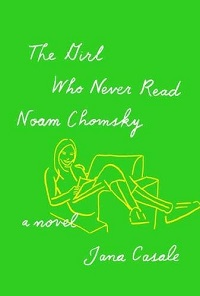
“The Girl Who Never Read Noam Chomsky” by Jana Casale

The Girl Who Never Read Noam Chomsky

The title of this book is so intriguing that it would be difficult to come upon it without picking it up to least see what it was about. And for someone like me who has not read Noam Chomsky but always felt I should, it was something I could immediately identify with. The book is a debut novel by a young writer, which further appealed to me — there is always the hope of discovering a fresh voice amidst the vast numbers of books that get published these days. I was happy to find that my hope, in this case, was not belied — Jana Casale does indeed have a writing style that I found refreshing and eminently readable.

The Girl Who Never Read Noam Chomsky traces the life of a woman, Leda, all the way from being a college student to a grandparent, ending with her death. The narrative is entirely in the form of vignettes — detailed descriptions of different days along the timeline of her life, with the earlier stages chronicled much more frequently than the later ones. I use the word “narrative” rather than “story” or “plot” because there isn’t one as such. There are no dramatic moments, no twists and turns in Leda’s life, no overwhelming decisions she makes that determine the course of her life. While this may not seem exciting or book-worthy, it is exactly how most people live — you could take the life of any average person and it could be written about in a book, similar to how Leda’s life has been chronicled in this book.  In fact, reading it is just like reading Leda’s diary, had she maintained one. Also, given how similar Leda’s early life is to the author’s — Leda wants to be an author and moves to San Francisco with her husband — the book seems to very autobiographical.

So what is it that makes this book worth reading, given than it is not capturing anything particularly newsworthy about anyone particularly remarkable? I would have to say that it is precisely this real-life narration of a person’s life that makes it unique, and completely relatable. Each vignette is extremely well-written — simple and straightforward, without any literary gimmicks of the kind that are so common in contemporary literature. It is also extremely candid, with frank observations about every single thing that human beings experience in their lives. Nothing is off the table, even bodily functions, which are usually considered too gross to be written about in fiction. The first half of the book, which captures Leda’s innermost thoughts and feelings of insecurity and loneliness as a young woman, her self-consciousness, the intensity of her emotions at the beginning stages of a serious relationship, and her desperation to get married and settle down, are especially well done and have an authenticity to them that seems all too real, reinforcing the pathos of the human condition.

And by the way, the unusual — and very catchy — title of the novel refers to a book by Noam Chomsky that Leda had bought as a college student, inspired by a cute guy reading a Noam Chomsky book that she sees at a coffee shop and who she hopes will hit on her. While that does not happen, she also does not ever get down to reading the Noam Chomsky book that she had brought, and it is eventually discarded by her daughter when she is going through her mother’s things after her death. It seems be an apt metaphor for life — that it rarely goes according to plan.

The Girl Who Never Read Noam Chomsky
Author: Jana Casale
Publisher: Knopf
Publication Date: April 2018

Contributor: Lachmi Khemlani runs a technology publication in the San Francisco Bay Area.

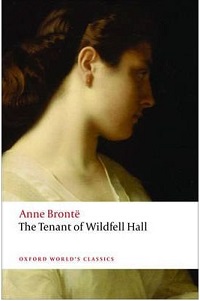
“The Tenant of Wildfell Hall” by Anne Brontë

The Tenant of Wildfell Hall.jpg

Having recently rediscovered my love for Victorian classics (courtesy Elizabeth Gaskell’s North and South), I turned to one I hadn’t yet read – The Tenant of Wildfell Hall by Anne Brontë. She is, I think, the least known of the Bronte sisters – Charlotte Brontë has become immortalized in our literary canon with Jane Eyre and so has Emily Brontë’s Wuthering Heights. After finishing the book, I can see why. While the writing is as good – all the Brontë sisters were undeniably talented writers – I did not find the The Tenant of Wildfell Hall the kind of book I would necessarily want to again read, unlike Jane Eyre, for example, which I have re-read multiple times and find it as enthralling each time as the first time I read it.

The Tenant of Wildfell Hall is primarily the story of a young woman, Helen Huntington, and her journey – from being wooed as a young girl by a dashing, charming man whom she falls madly in love with and marries, to the gradual descent of the marriage into a loveless nightmare because of her husband’s predilection for alcohol and dissoluteness. Her only consolation is her son, born shortly after her marriage, but whom she eventually becomes desperate to remove from the corrupting influence of his father. So she does what was almost unimaginable in those days – she runs away. With the help of her brother, she becomes a tenant in a house he owns in a distant location, Wildfell Hall, and assumes a false name and the guise of being a widow. Being young and beautiful, she naturally arouses the interest and gossip of the families in the neighborhood, as well as the ardent love of a local landowner, Gilbert Markham. While the story does come to a happy conclusion at the end of the book, most of it describes the trials and tribulations faced by Helen and the degenerate behavior of her husband — to the point at which you just wanted to say, “Enough, already! Just leave him!”

Even though I did not find The Tenant of Wildfell Hall the kind of book I would love to read multiple times, it is definitely a good book and I am glad to have read it. For those who enjoy Victorian classics, it is one more on the rather limited list we have of these books. In addition to their literary merits, they allow us to know what it was like to live in those times, and therefore also serve as important historical records. The Tenant of Wildfell Hall is especially a important reminder that while many of us have very romantic notions of what it was like to live in Victorian times, it was far from being hunky-dory, especially for women, the vast majority of whom were not so lucky to have devoted husbands with whom they could “live happily ever after.” Apparently, Charlotte Brontë tried to block the publication of this book because it was so scandalous at that time, with its account of a marriage gone sour, the dissipation of a man to alcohol, and a woman escaping from an untenable situation. We are fortunate to live in an age when it’s even hard to comprehend how a woman could be forced to stay in a marriage that was as abusive as Helen Huntington’s in The Tenant of Wildfell Hall.

Not only this, the book was initially published under a male pseudonym, Acton Bell. It is bound to make any feminist’s hackles rise!

The Tenant of Wildfell Hall
Author: Anne Brontë
Original Publisher and Date: Thomas Cautley Newby (June 1848)
Reprint Publisher and Date: Oxford University Press (May 2008)

Contributor: Lachmi Khemlani runs a technology publication in the San Francisco Bay Area.
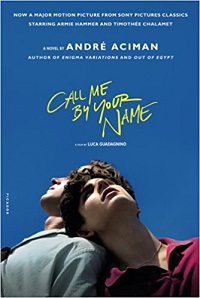
“Call Me by Your Name” by André Aciman

Call Me By Your Name

It was only after I had seen the movie “Call Me by Your Name”—which was nominated for four Oscars at this year’s Academy Awards and won the Oscar for Best Adapted Screenplay—did I realize that it was based on a book. The movie was excellent, but the book was not very well known prior to the movie. It would be fair to say that it had not really made a “splash” in literary circles, which was somewhat unusual as most movie adaptations are made of books that are highly acclaimed. I typically do not like to watch the movie adaptation of a book before reading it first, but in this case, I wanted to find out more about the book that had inspired such a beautiful movie.

Call Me by Your Name is what is commonly referred to as a “coming-of-age” story of an adolescent going from youth to adulthood. The adolescent here is a 17-year-old American-Italian boy named Elio, the setting is Italy, and the time period is in the 1980s. While the story is being narrated by Elio twenty years later, it is almost entirely an account of the one summer when a visitor, Oliver, comes to stay in Elio’s house. Elio’s father is a professor, and every summer, he takes in a doctoral student as a house guest for six weeks as an apprentice of sorts, who helps him with some academic work while simultaneously engaged in some academic activity of his own. In the case of Oliver, he is working on a manuscript for a book, and a summer in the beautiful Italian countryside seems like the perfect place to do it in.

Not every “coming-of-age” story is about love and sex, but this one is. And what makes it especially distinctive is that both Elio and Oliver are male. Elio feels an overpowering attraction towards Oliver from the minute he sees him, and Oliver eventually reciprocates after holding out for a few weeks. The book chronicles their intense and passionate relationship over that summer, and while this is not one of those “happily ever after” love stories, it represents the most meaningful relationship of their lives for both Elio and Oliver, as they realize when they get a chance to meet years later.

While the movie adaptation of Call Me by Your Name was referred to as a “gay” love story, I found it interesting that neither the word “gay” nor the word “homosexual” are ever mentioned in the book. Of course, social norms were a lot less liberal in the mid-80s, and while Elio often feels “shame,” especially after sex, he never ever feels that it is wrong to experience the overwhelming love he feels for Oliver. The story is told entirely in the form of an internal monologue in Elio’s head, making us experience the depth of his emotions in all of their complexity. The fact that these are no different from the teenage angst experienced by a “heterosexual” adolescent points to the universality of human emotions. Not everyone may be able to identify with the attraction Elio feels for another man, but we can all identify with the intense, overpowering, and often tortured emotions that typically accompany the throes of first love.

Call Me by Your Name
Author: André Aciman
Original Publisher and Date: Farrar, Straus, and Giroux (January 2007)
Reprint Publisher and Date: Picador Media Tie-in edition (October 2017)

Contributor: Lachmi Khemlani runs a technology publication in the San Francisco Bay Area.
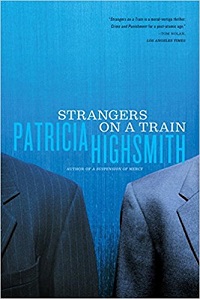
“Strangers on a Train” by Patricia Highsmith

Strangers on a Train

I was alerted to this book by the recent write-up of The Kind Worth Killing, which was seemingly inspired by Strangers on a Train. While I had not read any books by Patricia Highsmith before, I have seen other movies based on her novels including The Talented Mr. Ripley and Carol, both of which were very good. Strangers on a Train was her first novel and it was made into a movie by none other than Alfred Hitchcock shortly after it was published in 1950. The book, therefore, came with an impressive back story and I was prepared to be wowed, especially given that I enjoy thrillers in general.

The plot line of Strangers on a Train is very intriguing. Two men, Guy and Bruno, meet on a train, they both have someone in their lives they’re unhappy with, but instead of “sucking it up” as most people do, one of the men, Bruno, floats the idea of getting rid of their respective nemeses by doing exchange murders — he would kill Guy’s ex-wife and Guy, in turn, would kill his father. Like most people, Guy shies away from Bruno when he proposes this plan and is very happy to see the last of him when the train journey ends. Or so he thinks. Bruno actually goes ahead with killing Guy’s ex-wife, and subsequently keeps up the pressure on Guy to carry out the exchange murder — kill his father. Ultimately, Guy caves in and does it, but his life subsequently becomes a living hell, plagued by guilt and Bruno’s continued presence in his life. Because it turns out that Bruno is a psychopath and cannot leave Guy alone, despite the fact that Guy ultimately succumbed to his pressure and killed his father.

Strangers on a Train is really a psychological thriller, and it does a great job in capturing Guy’s perspective, starting from his chance meeting with Bruno on a train, his desire to get away after Bruno proposes his bizarre “exchange murder” idea, his consternation at the murder of his ex-wife and his horror at the growing realization that Bruno might be responsible, his dread once Bruno starts stalking him, the constant pressure from Bruno that makes him eventually kill Bruno’s father, and living in constantly torment and dread after the murder. In contrast, we don’t get inside Bruno’s mind that much and cannot really understand why he does what he does.

I found Strangers on a Train an enjoyable read in parts, but not particularly gripping. The premise of the story was more interesting than its execution — it was not very well developed, and the end was especially disappointing. The writing style was also quite pedestrian, which didn’t help to redeem the book. Overall, it seems like the kind of book which could be made into a good movie by a talented director, rather than a book that can be enjoyed in and of itself.

Strangers on a Train
Author: Patricia Highsmith
Original Publisher and Date: Harper & Brothers, 1950
Reprint Publisher and Date: W. W. Norton & Company Norilana Books Norilana Books, August 2001

Contributor: Lachmi Khemlani runs a technology publication in the San Francisco Bay Area.

“Wives and Daughters” by Elizabeth Gaskell

Wives and Daughters

After being introduced to North and South, a Victorian classic novel by Elizabeth Gaskell that I absolutely loved, I picked up Gaskell’s Wives and Daughters, hoping that it would assuage the withdrawal symptoms I was suffering from after finishing North and South and looking for another book that could inspire the same level of emotion. Wives and Daughters was Gaskell’s last novel before her sudden death in 1865; in fact, she was not able to finish it and it was completed by another writer of that time.

Wives and Daughters is centered around the life of Molly Gibson, a young girl living with her widowed father in a small English town in the 1830s. Her mother died when she was very young, but she still leads a very happy life, adored by everyone in the town, with many friends of her mother who watch out for her, and a very close and loving relationship with her father, who is a highly respected doctor. This tranquil state of affairs is completely upended when her father gets remarried. The new Mrs. Gibson is far from being the “evil stepmother” that is almost a caricature in most stories when the father remarries, but she is somewhat of an airhead, with not much sense, intelligence, and depth of character — all of which Molly has in abundance. This makes it very difficult for Molly to really respect her stepmother, and she finds her very wearying at times, but she puts up with it in good spirit — helped enormously by the fact that her stepmother has a daughter, Cynthia, whom Molly takes to right away. There is even less of the “evil stepsister” angle here that we are used to from our Cinderella fairy tale days — Molly and Cynthia form an instant sisterly bond that only grows stronger as time passes and it is their relationship that is the real highlight of the book.

There is, of course, the obligatory romance, and in Wives and Daughters, it is in the form of Roger Hamley, the son of a local squire who develops a close friendship with Molly but then falls head-over-heels in love with Cynthia when he sees her. This is not surprising, given that Cynthia is exceptionally beautiful and has that effect on most men. However, she does not have Molly’s character and depth of feeling — and she is the first person to acknowledge that. In contrast to Cynthia, Molly’s feelings for Roger are very intense, but she never lets them be known and does not ever feel jealous or envious of Cynthia for capturing Roger’s attention.

Of course, eventually, everything is resolved, and Roger and Molly do get together — it wouldn’t be much of a story if they didn’t. That said, this wasn’t really the point of the book. As evidenced by its title, the story was more about the close relationship between Molly and Cynthia and the experiences they go through together, including how they deal with a somewhat villainous character, Mr. Preston, the aristocratic lords and the ladies of the neighboring manor, and the gossip of the local townsfolk. At over 600 pages, Wives and Daughters is a long, extensive, minutely detailed book that captures much of the life of those times and the thoughts and feelings of all the characters, so much so that reading it is an experience in and of itself. For those who love reading about Victorian times, there’s so much of the book to sink into — the author seemed to be in no rush at all to wrap things up.

On my part, while I enjoyed the book, I didn’t fall in love with it as I did with North and South, and this brought home to me an important realization — that the inspiration behind any great work of art cannot be manufactured at will. Thus, there is no guarantee that anyone who has created an outstanding book, movie, painting or song will continue to do so with the same level of success. Inspiration has to strike, and while the creator cannot force it, he or she can make the best of it when it comes and create something truly remarkable that can bring joy to millions of others. And for those of us who are fortunate enough to enjoy the fruits of their labor, we should appreciate that these could be “once in a lifetime” creations and savor them as such.

Wives and Daughters
Author: Elizabeth Gaskell
Original Publisher and Date: Elder and Company, 1866
Reprint Publisher and Date: Norilana Books Classics Norilana Books Norilana Books, April 2008

Contributor: Lachmi Khemlani runs a technology publication in the San Francisco Bay Area.