“The Sense of an Ending” by Julian Barnes

The Sense of an Ending

This book by Julian Barnes won the Man Booker Prize in 2011. However, I hadn’t heard of this book or this author before, up until a few weeks ago when I read, following a recommendation, another book by Barnes, Levels of Life, in which he writes poignantly about grief following the sudden death of his wife of 30 years. Not only did I find it deeply moving, it was also extremely well written, with a grace and fluency that pointed to years of experience with writing. I did some research on Barnes and found that he is indeed an established writer with a career spanning over three decades with over 25 books. While three of his earlier novels had been shortlisted for the Booker prize, he finally won it in 2011 for The Sense of an Ending. Even more intriguingly, I found that this book has now been made into a movie—which has just been released—and that it is directed by an Indian director, Ritesh Batra, who made his directorial debut with the highly acclaimed movie, The Lunchbox. That moved The Sense of an Ending immediately to the top of my reading list, as I wanted to read it well before I saw—if I decided to—the movie.

The Sense of an Ending tells the story of a middle-aged man, Anthony, who has been living a relatively uneventful life so far—he is divorced but still has an amicable relationship with his ex-wife, he has a grown-up daughter who is married, he is retired but keeps himself occupied with some volunteer activities—when suddenly, his world is shaken up by “ghosts from the past.” Not literally—this is not a ghost story—but figuratively. It happens in the form of a mysterious legacy; the mother of his ex-girlfriend, Veronica, leaves him a small amount of money, but more importantly, the diary of his close childhood friend, Adrian, who committed suicide as a young man. Throughout his youth, Anthony always looked up to Adrian as someone who was a lot more intelligent, sophisticated, erudite, and well-read than him and his other two friends in their group of four, and Adrian’s suicide seemed to be, on the surface, a calculated high-minded move inspired by Albert Camus who famously said that suicide was the only true philosophical question. Adrian’s diary would give Anthony a better insight into his friend’s state of mind and possible shed some light on his decision to kill himself, and Anthony would really like to have it—it was left to him, after all.

But Adrian’s diary has fallen into the possession of Veronica, who was not only his ex-girlfriend, but who subsequently started going out with Adrian, and who, as far as Anthony knows, was still with Adrian when he killed himself. Anthony’s relationship with Veronica, when they were together, was complicated, and the fact that she took up with Adrian soon after they had broken up had upset Anthony so much that he had sent them an acrimonious letter, full of vitriol, at that time. Therefore, it is not altogether surprising that Veronica refuses to give him Adrian’s diary, despite the fact that Anthony is very ashamed of having written and send that letter all those years ago, and apologizes for it repeatedly when they now meet.

So how does it end? Is there a resolution, the “sense of an ending” as the title implies? Of course, I cannot give it away except to say that there was an ending, although it was extremely unexpected. From that perspective, the book is suspenseful and builds up the drama, making it hard to put down until you know what happens. It is also a relatively short book, and therefore you don’t have to wait too long to find out how it ends. The writing is masterful—concise and precise but without feeling rushed, taking the time to dwell on the main events in the story but not wasting time and words on things that don’t contribute to it.

That said, I did find the ending of the book too abrupt and a little too mysterious, to the extent that I actually had to do some online research to clarify what exactly had happened. There is eventually a revelation which provides the “sense of an ending,” but it leads to several unanswered questions and was therefore not very satisfying. Thus, while Julian Barnes’ talent as a writer is beyond question and I found The Sense of an Ending a good read, I would hesitate to give it my whole-hearted seal of approval.

The Sense of an Ending
Author: Julian Barnes
Publisher: Alfred A. Knopf
Publication Date: October 2011

Contributor: Lachmi Khemlani runs a technology publication in the San Francisco Bay Area.


“Selection Day” by Aravind Adiga

selection-day

Selection Day is the new book by Aravind Adiga, who hit a jackpot in 2008 with his debut novel, The White Tiger, which won one of the most prestigious and highly coveted literary awards, the Man Booker Prize, that year. I recall reading The White Tiger when it came out, and while I found it a decent read, I didn’t think it was that spectacular as to win the Booker prize. At the same time, I don’t always find award-winning books as good as they are heralded to be by the critics who are largely responsible for determining which books win awards, and this is something I have come to accept. So it was primarily out of curiosity – and the recommendation of a friend – that I picked up a copy of Selection Day, which has just been published.

Selection Day is unabashedly about cricket, and it tells the story of two brothers who are being groomed by their father to be cricket superstars and make it to the Indian cricket team. The “selection day” of the book’s title refers to that crucial day when tryouts are held among 18-year old cricket aspirants to determine who will make it to the next level – starting with the regional level which is the starting point for anyone aspiring to make it to the state level, and finally, the national level. The protagonist of the story is the younger of the two brothers, Manjunath. For most of their childhood, he was always considered to be second-best to his older brother, Radha Krishna, and it’s something his brother, his father, and he as well take for granted. Things change when he suddenly becomes a better player than his brother, which leads to sibling rivalry, jealousy, and even deep disappointment for his father.

In addition to the cricket obsession that Manju’s father has which has dominated their lives, other aspect of Manju’s personality that gradually become evident, and which the book is focused on, is his possible homosexuality – through his friendship with and growing attraction to Javed, one of his brother’s peers who used to play cricket with them. Javed is like the typical “bad boy” – the rich kid – in contrast to the simple and poor, almost uncouth, Manju. But, of course, this doesn’t eventually work out – that would have been too simplistic. Manju starts going out with girls, but remains a closeted homosexual. While Radha loses his cricketing prowess at about the same time Manju starts shining and makes it through the “selection,” this loss of luster eventually happens to Manju as well and he is replaced in the hearts and minds of the cricketing-obsessed public with a new cricketing “prodigy,” reinforcing the fact that fame and glory are fleeting, ephemeral.

The story in Selection Day, as I have captured it here, seems pretty straightforward, and it could have been the basis for a really good book. But I found Adiga’s telling of this tale so contrived, so difficult to follow, that I have to rate it as one of the worst books I have ever read, or rather, as one of the worst books I have actually finished—most of time, if I don’t find a book engaging after the first few chapters, I don’t bother continuing to read it. In the case of Selection Day, I stuck it out till the end as it had been recommended by a friend and I wanted to give it a shot. I even went back and re-read The White Tiger, hoping it would give me a better perspective on Adiga’s writing. But it didn’t. Adiga’s writing seems to have become much more convoluted since that debut novel, with characters so weird and behaving so strangely that they are hard to relate to, and the liberal use of profanity throughout the book.

That the book is so much about cricket was not a problem for me, as I was as much into the game growing up in India as the rest of that cricket-obsessed nation. It was the entire rest of the book that I couldn’t get.

Selection Day
Author: Aravind Adiga
Publisher: Scribner
Publication Date: January 2017

Contributor: Lachmi Khemlani runs a technology publication in the San Francisco Bay Area.

“A Man Called Ove” by Fredrik Backman

A Man Called Ove.jpg

A Man Called Ove is one of those surprise hits that has spread entirely through word-of-mouth rather than by any kind of critical acclaim. It came to my attention when it was featured in one of the many year-end lists of “must-read” books that came out recently. I also found that it had very favorable reviews on Amazon—four and a half stars with as many as 10,356 reviews at the time of this writing!—which is what even many best-selling and critically acclaimed books do not get. Obviously, there had to be something to it, and once I was able to get a copy of it from the library, I could see what it was.

Set in Sweden and written by a Swedish author—in English—A Man Called Ove tells the heart-warming, even if somewhat predictable, story of an elderly man, Ove, who is a curmudgeon to the extreme and lashes out at everyone around him, but who, by the end of the book, finds some measure of peace, and even happiness, and comes to be loved dearly by those around him. Ove has always been somewhat anti-social and awkward around others, and things come to a head when his wife of 40 years—whom he loved dearly and who was pretty much his main reason for existence—dies of cancer. He has no kids because his wife got into a horrific bus crash shortly after they were married which left her paralyzed from the waist down, and while he continues to go to work after his wife’s death—because that is the kind of person that he is, a stickler for rules and doing what is right—once he gets laid off from his job, he finds no reason to go on living. So he draws up a meticulous plan to kill himself.

However, even the best-laid plans don’t always work, and Ove is thwarted every time he tries to commit suicide by being forced to come to the aid of people around him—his new neighbors, which is a family with a very pregnant mom who is from Iran, a stray cat who literally adopts herself as his, his once-upon-a-time best-friend-turned-enemy who now has Alzheimer’s and might be forced to live in a home, a gay young man disowned by his father who ends up living with him until he is accepted by his family, a random stranger he saves from the train tracks where has gone to actually get under the train himself, and a few others. Along the way, he reluctantly forges bonds with all these people, especially with the Iranian woman’s two little girls. And eventually, of course, as someone who is so needed and loved, Ove’s suicide plans are permanently put to rest. He does die after some years, but of natural causes.

As I said, the story is extremely predictable and you can tell how it will end from a mile off. Also, the writing is quite basic, with none of the literary finesse that would be needed for critics to sit up and take notice. Yet, the book has been such a hit that it is even being made into a movie. I can think of a couple of reasons for the book’s success. Most importantly, it is entirely a “feel-good” story, one that tugs at your heart-strings but which still ends happily rather than tragically. In our current anxiety-filled political climate, we appreciate these kind of heart-warming stories all the more. The fact that it is not highbrow at all means that more people can read it and enjoy it. I personally found it a good, fast read with even a bit of humor thrown in that I appreciated. (It pokes fun at the digital world we live in, with those into technology not capable of performing even basic chores and repairs.) It is not a book you can’t put down, but I did find it enjoyable enough to read it all the way up to the end.

A Man Called Ove
Author: Fredrik Backman
Publisher: Washington Square Press (US Edition)
Publication Date: 2012 in Sweden, 2013 in US

Contributor: Lachmi Khemlani runs a technology publication in the San Francisco Bay Area.
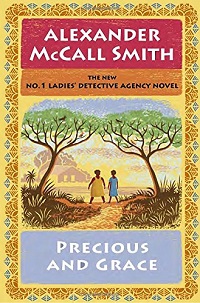
“Precious and Grace” (Book 17 of the No. 1 Ladies Detective Agency Series) by Alexander McCall Smith

precious-and-grace

A new book in the No. 1 Ladies Detective Agency Series is always an unbridled treat for me. I love the books and have all of them, and unlike the Harry Potter series which I also love, these are still coming! Set in Botswana and narrated by a female protagonist—the indomitable Mma Ramotswe, who is the proprietor of the No. 1 Ladies Detective Agency—the books capture the feel of Africa and the skin of the character so completely, that it’s hard to believe that they are written by a Scottish man. Alexander McCall Smith was born in Africa in what is now known as Zimbabwe, so he is certainly familiar with the place, but still, it takes exceptional talent to be able to immerse the reader in the character and the setting so completely.

Each book in the series—the first of which was published in 2003—has one or two main cases and a few side cases. Unlike typical detective stories that are usually fast-paced and action-packed, the focus in these books is more on the people and their lives, their relationships with each other, and the sights and sounds of Botswana. The stories unfold at a very leisurely pace, and in most of them, there is no “mystery” as such to be solved, but instead, “problems” to be resolved.

In Precious and Grace, the main case is that of a young Canadian woman who was born and spent her early childhood in Botswana, and after many years of living in Canada and a failed relationship, has come to Botswana to rediscover and reconnect with her roots. She approaches the agency to help with this, and by the end of the book, Mma Ramotswe does manage to dig out her past, including where she grew up and the nanny who looked after her. However, it turns that rediscovering the past is not as fulfilling as she had hoped. In the course of this main investigation, Mma Ramotswe also helps Mr. Polopetsi, an occasional assistant at the agency, to get out of a pyramid scheme he has unwittingly been tricked into. There’s also a stray dog that Fanwell, a junior mechanic at the garage next door, rescued that has become very attached to him—there’s the issue of what to do with him. This many not be a “case” in a traditional detective book, but it is very much in line with the human issues that Mma Ramotswe concerns herself with.

Precious and Grace has the usual cast of lovable characters who have been there since the first book: Mma (Precious) Ramotswe, who set up the agency—which is the only ladies detective agency in Botswana—and lives by a “how-to” book by an American detective, from which she quotes liberally; Mma (Grace) Makutski, her prickly assistant, who has kept promoting herself until she is now the co-director of the agency; Mr. J.L.B. Matekoni, Mma Ramotswe’s husband and the owner of the garage next door, who knows cars inside out and probably dreams of engines in his sleep; Charlie, a former apprentice in the garage who is now working in the detective agency, and hasn’t gotten very far in life as he is mostly thinking of girls; Fanwell, who, as mentioned earlier, works in the garage under Mr. J.L.B. Matekoni, and is a little more serious about life than Charlie; and Mma Potokwane, a close friend of Mma Ramotswe who runs an orphan farm and who is famous for serving the best fruit cake to which Mma Ramotswe always helps herself liberally whenever she visits her to talk about her cases and life in general.

Although Precious and Grace is the 17th book in the series, the quality has not flagged a bit, and it is every bit as enjoyable and entertaining as the first book. And this is true of all the books in the series. Not only do they capture the essence of Botswana so completely that you feel you are living and breathing it, but they are also among the most delightfully funny books I have read, with so many laugh-out-loud moments which I can’t but help reading out to those around me. And the humor is always intelligent, always good-natured, and never crass. For instance, in response to a government official (whom Mma Ramotswe has approached for some information) who complains about the many injustices of being a junior staff member, Mma Ramotswe sympathizes with him and then thinks that this would never happen to Mma Makutski. “If you were Mma Makutski, you simply promoted yourself regularly until you ended up as junior co-director, of whatever her current position was— Mma Ramotswe had rather lost track of Mma Makutski stellar ascent.”

The book is sprinkled with such witticisms throughout. Another constant source of humor is the fact that Mma Ramotswe is “traditionally built” and sees this as a source of pride rather than shame. She has no compunction about indulging in food—whether it is stew, or fat cakes (similar to our doughnuts), or the delicious fruit cake that Mma Potokwane (who is also traditionally built) always seems to have on hand at the orphan farm. Also, when it comes to hiring a new housemother for the orphan farm, of all the qualified applicants, Mma Potokwane makes the final selection in favor of the woman who is traditionally built, because she feels that “the most traditionally built lady would be the happiest, and would therefore make the children happy—they would love her and she would have the most acreage, so to say, for them to climb on, and her lap would be big enough for many children to sit on at the same time.” That’s the most compelling justification of being plump that I’ve ever heard of!

It’s a testament to how enjoyable all the books in No. 1 Ladies Detective Agency Series are that I’m always sad to reach the end—I wish they would last forever. It’s not a feeling adults have much of anymore, and I am in awe of a writer who can still make us feel this way.

Precious and Grace (Book 17 of the No. 1 Ladies Detective Agency Series
Author: Alexander McCall Smith
Publisher: Pantheon
Publication Date: October 2016

Contributor: Lachmi Khemlani runs a technology publication in the San Francisco Bay Area.
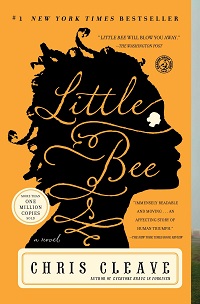
 

“Little Bee” by Chris Cleave

little-bee

Little Bee is a highly acclaimed novel that was published several years ago in 2008, but which I came upon only recently. Going through a dry spell lately with books that are able to engage and sustain my interest, I started Little Bee without much hope and was pleasantly surprised to find that it held my attention throughout, and was, in fact, difficult to put down, especially towards the end. The story is extremely compelling and is told in a simple clear-cut manner without any literary flourishes or pretensions. This is exactly the kind of book I like – where the focus is entirely on the story and the writing is simply a means to tell it rather than an end in itself.

And oh, the author is British, and perhaps I am biased, having grown up with mostly British authors in India, but I feel an easier and more immediate affinity with British authors than with American ones. Many of the books that I have really liked (and written about here) in recent months have been from British authors such as Paula Hawkins (The Girl on the Train), Clare Mackintosh (I Let You Go), and Fiona Barton (The Widow), not to mention long-standing favorites such as J.K. Rowling and Agatha Christie. I was not surprised to learn that the author of Little Bee, Chris Cleave, had won the Somerset Maugham book award in 2006, given that Somerset Maugham is one of my favorite authors and I love all his books (including The Razor’s Edge, which I recently re-read).

Getting back to Little Bee, the titular character of the novel is a Nigerian refugee girl who escaped from extreme brutality in her country and travelled to London as a stowaway on a cargo ship, was caught and held at a detention center for two years, and then one day is suddenly let out (with a group of other girls, one of whom has bribed a detention officer to let them go). Even though Little Bee — which is the name she takes on after escaping Nigeria — is no longer imprisoned in the center, she is still an illegal immigrant and therefore not free. Not knowing where to go or what to do, she ends up contacting the only people in England that she knows—Sarah and Andrew, a couple that she met on a beach in Nigeria on that fateful day when she and her sister were trying to escape from the men hunting them down. (The turmoil and killings in Nigeria at that time, in the mid to late 2000s, were related to the oil reserves that had just been discovered there and which were being seized by “the oil men,” who got local thugs to eliminate entire villages where the oil was located by killing all the locals en masse.) Little Bee and her sister appeal to Sarah and Andrew to save them from the men, but eventually, only Little Bee is let go, thanks to a spontaneous, courageous act by Sarah — she hacks off one of her fingers in response to the men’s demand that Andrew give them one of his fingers in exchange for the sisters’ lives. Andrew cannot do this, and the men retaliate by assaulting and killing Little Bee’s sister.

This momentary weakness, all the more stark in contrast to his wife’s courage, continues to haunt Andrew and causes further strain in his relationship with Sarah. When contacted by Little Bee two years later after she is set free from the detention center, the past catches up with him and he commits suicide, leaving Sarah to fend for their four year old boy on her own. Then there’s the arrival of Little Bee, whom Sarah takes in. It brings back for her all the horrific memories of that fateful day at the Nigerian beach, yet at the same time, she finds comfort in her presence, not to mention the fact that Little Bee is very good with Sarah’s son. So what ultimately happens with these two women? Is Little Bee found by the authorities and deported back to Nigeria? Or does she continue to stay with Sarah? Is Sarah able to come to terms with Andrew’s suicide, her guilt at the extramarital affair she has been having, and her feelings of inadequacy and helplessness at not being able to help Little Bee beyond saving her life just that one time? What about all those people whom she was not able to help? What about Little Bee’s sister, who was so brutally assaulted and killed shortly after their encounter at that beach? Can Sarah do something now, or will she continue to be haunted, just like Andrew was?

While I don’t want to give away the ending, I have to say that the book had a very satisfying conclusion – very realistic and believable without being overtly mushy or unbearably depressing. In addition to just telling a story, it makes a very strong statement about refugees, political asylum, detention centers, the contrast between the first world and developing countries, and what even ordinary individuals like us can do. In the current world scenario with the growing refugee crisis, I found the book remarkably prescient. It manages to be tragic and uplifting at the same time, which is quite an achievement.

Little Bee
Author: Chris Cleave
Publisher and Date: Originally published as The Other Hand by Sceptre in August 2008; Reprint edition published by Simon & Schuster in February 2010

Contributor: Lachmi Khemlani runs a technology publication in the San Francisco Bay Area.
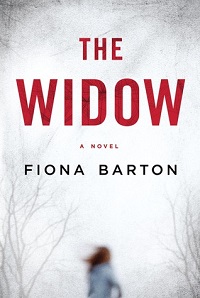
“The Widow” by Fiona Barton

the-widow

Contrary to what you would expect this book to be from its title – a tragedy or at least a drama – The Widow is actually a crime thriller. And a really good one at that – I couldn’t put it down until I had got to the end, to the “bottom of the mystery,” as they would say in our much-beloved Five Find-Outers mystery series by Enid Blyton that we grew up with in India.

Set in England, The Widow is a debut novel by Fiona Barton, who, I wasn’t surprised to learn, is a journalist, given the fluency and quality of the writing. The “widow” in the story is Jean, whose husband has just died in an accident. But there’s an entire back story to their marriage that gradually unfolds in the course of the book. Her husband, Glen, turns out to be a pedophile who may have abducted a two year girl, Bella, from her house. It takes a lot of digging and investigation to hone in on Glen as the probable suspect. The detective in charge of the case is convinced that he is the man. But there is no conclusive proof, and even though Glen is charged and brought to trial, there is not enough evidence to convict him. In the meantime, Jean is obsessed with kids but for a different reason — Glen is infertile so she cannot have kids of her own. Did Glen kidnap Bella? And if so, was Jean complicit in the kidnapping? Did she want Bella to be her child? And was Glen’s death really accidental or did Jean actually cause it? We don’t really get to know the answers to these questions until the end of the book.

The book’s structure adds to the drama. The story unfold over a span of four years, starting from the time of Bella’s kidnapping to a few weeks after Glen’s death. Not only does it keep alternating between different times instead of being chronological – a fairly common literary device adopted in novels these days – it is also narrated from the points of view of a few key people: Jean, the widow; Bob, the detective who becomes very emotionally invested in the case; Dawn, Bella’s mother, who is single and has a few skeletons in the closet of her own; and finally, Kate, a reporter who is the only one able to get through to Jean, past the media circus plaguing her life for four years since Bella disappeared.

Most crime thrillers have almost an obligatory surprise twist towards the end — they lead you down a certain path almost intentionally and then knock you off the sails with a big reveal. And in the most successful books of this genre like Gone Girl, their sheer brilliance make you forget and forgive the fact that they practically cheated into believing something that wasn’t true. The Widow is not like that. There are no surprise plot twists thrown in like a curve ball; yet, it still has a very satisfying conclusion in which you are assured that justice has been done. It’s far from being the next Gone Girl or The Girl on the Train, but I found it a very well written, engrossing, and page turning thriller.

The Widow
Author: Fiona Barton
Publisher: Penguin
Publication Date: February 2016

Contributor: Lachmi Khemlani runs a technology publication in the San Francisco Bay Area.
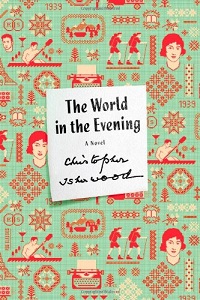
“The World in the Evening” by Christopher Isherwood

the-world-in-the-evening

I have always loved to read fiction, but I have been going through a drought lately when it comes to finding something to read that holds my attention and makes me care about the characters, that makes me lose myself in a book as I always did since I was a kid. Over the holidays, I tried reading several critically acclaimed books that had recently been published including the Booker-prize winning The Underground Railroad by Colson Whitehead, Swing Time by Zadie Smith, and Here I Am by Jonathan Safran Foer; but I found that I couldn’t care enough about the plot and the characters to stick with them beyond the first chapter. Then, on a trip to New York City, I visited its famous Strand bookstore where, in the course of browsing through the thousands of books it carries, I came across Christopher Isherwood’s The World in the Evening. I have been a fan of  Isherwood’s writing ever since I read his A Meeting by the River several years ago, which I still rate as one of the best books I have ever read. Isherwood was a contemporary of Aldous Huxley and Gerald Heard, and is best known for his The Berlin Stories book, which was adapted into the hit movie, Cabaret, starring Liza Minnelli, as well as for his book, A Single Man, which was also made into a movie starring Colin Firth. Thus, when I came across The World in the Evening, I picked it up immediately, hoping it would bring back some of the enjoyment of fiction that I have always had until now.

I found this true for The World in the Evening, for the most part. Set around the time of the Second World War, the book is centered around the experiences of a young man, Stephen, in his early thirties, including his first marriage when he was in his twenties to a woman who was twelve years older than him, his brief affair with a young man while he was still married to his first wife, and his second marriage (after his first wife dies) to a young, carefree, rather hedonistic woman, which ends disastrously after he finds out that she is having an affair and walks out on her. Most of the book is in the form of reminiscences he has when he is holed up in bed for several weeks after being hit by a truck when visiting his childhood home in rural Pennsylvania, where he comes after walking out on his second wife. He has extended conversations with the people looking after him, which include his adopted aunt who has been like a mother to him (his own died when he was very young); a war refugee from Germany his aunt has taken in, who is uncertain about the fate of her husband as a war captor; and his doctor, who is homosexual and lives with a man whom the conservative community they belong to is determined to view as just a “roommate.” In the course of his conversations with these people, his perusal of his first wife’s letters – she was a famous author – a collection of which he might publish, and the memories triggered by them, we come to know the details of his life, the ups and downs he has gone through, his own feelings about them, and what has motivated him to do what he has done.

What struck me most about this book was how self-introspective it was —Stephen lays bare all his bad behavior, his petty jealousies, his irrational rages, and his many contradictory feelings for us to see. Ultimately, he comes to perceive everything bad that has happened to him as his own fault, caused by how he thinks and acts rather than by bad things happening to him. It is refreshing to come across a story in which the protagonist realizes that it is their own attitude and behavior that is primarily responsible for the trials and tribulations they are experiencing in life. It is also how eventually Stephen is able to resolve his problems, put his demons to rest, and find some measure of peace and acceptance in his life. It seems to be an important lesson for all of us.

Also, given that the book was written in the early 50s, I was amazed by how frank it was about sex and sexuality, both straight and gay. The main character was, for all practical purposes, heterosexual but still has a homosexual fling, showing that the divide between homosexuals and heterosexuals may not as rigid as is commonly believed. In the present day, we would call Stephen’s character bisexual, but at the time the book was written, there was no such concept, and Stephen is not at all conflicted about his fling with a man, despite being clearly attracted to, and married to, women. In fact, the only guilt he feels is in the fact that he is cheating on his wife. The fact that it is with a man is almost inconsequential to him.

The World in the Evening is a great example of the kind of book I like —where the focus is simply on telling the story without resorting to linguistic tricks or stylistic cadences. There are no examples of “beautiful writing” to showcase here. It was a little long-winded at times and did not come anywhere close to the brilliance of A Meeting by the River, but it was eminently readable, engaging and held my attention throughout.

The World in the Evening
Author: Christopher Isherwood
Publication Date: First published 1954 by Methuen Publishing Ltd; Reprint edition published in November 2013 by Farrar, Straus and Giroux (FSG Classics)

Contributor: Lachmi Khemlani runs a technology publication in the San Francisco Bay Area.
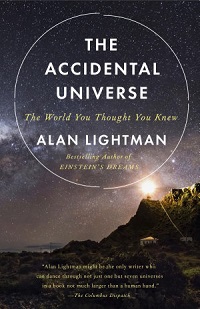
“The Accidental Universe” by Alan Lightman

the-accidental-universe

While it is all too easy to get caught up in our everyday lives—the daily grind, the demands, the challenges, the joys, the sorrows—all we need to do to get some sense of perspective is look up at the stars. Not only are we tiny specks on one planet which itself is part of a solar system comprising other planets, that solar system itself is one of millions of such stars in our galaxy, the Milky Way, which itself is one of millions of galaxies in our universe! And as if that is not enough to make us feel completely insignificant, space scientists are now postulating that our universe may actually be one of multiple universes—a “multiverse.” If that is true, the implications are even more staggering, making us even less than insignificant in the larger scheme of things—if such a thing is even possible.

For those who find this “bigger picture” intriguing and fascinating and would like to understand it better, The Accidental Universe is a must-read. Written by Alan Lightman who is both a theoretical physicist and a writer, the book is able to take the concept of space­—the science of which is incredibly complex—and present it in humanistic terms that everyone can relate to. And this is really important for anyone trying to understand their place in the universe without having to devote their lives to becoming space scientists, astronomers, astronauts, or theoretical physicists like Lightman—because any of these professionals could spend their lifetimes doing what they do without pondering on the personal implications of what they are studying, or even if they do, lacking the ability to express it. Who better than a writer to present the complex science of space in a non-scientific way that is accessible to everyone, and most importantly, to still preserve the feeling of awe at the idea of being part of something so mysterious, so magical, so “out of the world”?

Although the title of the book is The Accidental Universe, it is actually a collection of essays on several different aspects of the universe in addition to accidental, such as temporary, spiritual, symmetrical, gargantuan, lawful, and disembodied. Each of these chapters makes for a fascinating read in and of itself, although I found that the first chapter on the “accidental” universe seemed to be the crux of the book, capturing most of the current ideas and discoveries about the universe. It seems to provide an answer to the most fundamental puzzle of our existence, at least of the physical aspect of it, namely: How come? How come there is life­­—of which we are a part—on this planet?

The answer, based on current cosmological discoveries and thought, seems to be that our universe is only one of an enormous number of universes, each of which has different properties and laws; and of all the possible permutations, the universe we live in happens to have the properties to support life as we know it. (Hence, the term “accidental.”) For all we know, any of the other universes has the properties to support an entirely different kind of life. We can only conjecture about this rather than know for certain, as current science has not reached beyond the boundaries of our own universe. And given that even within our own universe, stars are billions of light-years away and that our own life spans are only about a hundred years, it seems impossible to know for certain. In fact, we do not even know for sure whether there is life elsewhere in our own universe apart from on our little tiny planet, although it seems difficult to imagine why there shouldn’t be.

We seem to getting into the realm of science fiction here, but The Accidental Universe makes no such conjectures or predictions about life elsewhere and instead remains firmly rooted in the actual science of what we know. At the same time, the book also veers into topics that would seem more philosophical than scientific. For example, with regard to the fundamental existential question of why we exist, we need to keep in mind that the only reason why this question is raised in the first place is because we are here, in this universe, to ponder it. As Lightman so eloquently puts it, “From the cosmic lottery hat containing zillions of universes, we happened to draw a universe that allowed life. But then again, if we had not drawn such a ticket, we would not be here to ponder the odds.” The idea is a bit of a mind-bender, but the bottom line is that even if we were not here, if the happy accident of our particular universe supporting our life form did not happen, the world comprising these multiverses would still exist. We would not be here to ask what life means, as we would not exist. So should we ask for meaning in life simply because we exist?

It’s a tricky question, as human beings have a deep-rooted need for meaning in their lives. Perhaps by learning more about the universe, ours as well as the many others that might be out there, we might come to realize that the question itself makes no sense and therefore the search for meaning is futile. By a random chance, we exist, so let’s just make the best of it.

The Accidental Universe: The World You Thought You Knew
Author: Alan Lightman
Publisher: Vintage; Reprint edition
Publication Date: October 2014

Contributor: Lachmi Khemlani runs a technology publication in the San Francisco Bay Area.
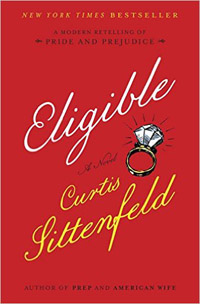
“Eligible: A Modern Retelling of Pride and Prejudice” by Curtis Sittenfeld

eligible

I absolutely loved Jane Austen’s Pride and Prejudice when I first read it as a teenager, and even now as an adult, having re-read it multiple times, I still rate it as the best—not “one of the best” but unequivocally “the best”—book I have read. This is why when I heard of the new book, Eligible, described as a contemporary take on the beloved Jane Austen classic, I was intrigued. The author, Curtis Sittenfeld, was a young, upcoming novelist who had already written a few books, was well respected, and generally considered as one of the promising literary stars of the new generation. While it is always difficult to appease die-hard fans of any book—I found the BBC mini-series of Pride and Prejudice a decent attempt but the recent Keira Knightley movie quite bad, even though it got good reviews—the promise of reliving my favorite Pride and Prejudice characters seemed too good to pass up on.

So I went ahead with reading Eligible. For the most part, I found it a fun and entertaining read. There is still the Bennet family with five unmarried sisters, who their mother, Mrs. Bennet, is desperately trying to find matches for. They live in Cincinnati, and while the three younger sisters still live at home, the older two, Jane and Elizabeth, live in New York where they have their own lives and careers. A sudden heart attack suffered by their father brings them back home for a visit, and this is how they get a chance to meet Mr. Bingley and Mr. Darcy, the eventual love interests of Jane and Elizabeth respectively. Both are doctors, so deemed as great “catches” by Mrs. Bennet, although Darcy soon falls out of favor by seeming to be snooty and obnoxious, as in the original. Bingley, on the other hand, is, in addition to being a doctor, a reality TV star, just coming off the sets of a Bachelor-type show called Eligible (which is where the name of the book comes from). Jane, meanwhile, is almost 40 and is trying to have a baby using artificial insemination through an anonymous sperm donor. Elizabeth, or Liz as she is called, is a fairly successful magazine writer who has been having an affair with a married man for many years and is not terribly happy with that relationship. Darcy, as in the original, is fabulously wealthy, exceptionally smart, and extremely handsome—he is a neurosurgeon, went to Stanford, has a Ph.D., and has a sprawling estate called “Pemberly” in Atherton, the priciest location in the already pricey Bay Area. In short, apart from his perceived arrogance and pride, he is perfection personified!

Rounding off the main characters from the original are Liz’s closest friend Charlotte, who gets paired off with Liz’s cousin Willie, a highly successful Silicon Valley entrepreneur, who was first interested in Liz and gets together with Charlotte only on the rebound; Lydia, the youngest Bennet sister, who elopes and gets married to a transgender man, Ham (short for Hamilton), who Mrs. Bennet does not accept at first but eventually comes around to thanks to some “neurological” talk from Darcy; Kitty, the second-youngest Bennet sister, who eventually joins a beauty school (thanks to Liz’s encouragement), and starts going out with a black man, which is another nail in the coffin for the biased Mrs. Bennet; Mary, the middle sister, who is as scholarly and uninteresting as in the original; Kathy de Bourgh, who is now a famous feminist celebrity that Liz interviews, rather than Darcy’s obnoxious aunt who want to stop him getting together with Liz; and finally, Bingley’s sister, Caroline Bingley, who continues to be the thorn on Liz’s side and wants Darcy for herself.

Admittedly, the plot line does sound ludicrous and die-hard fans of the book like me would likely cringe at this mutilation of their beloved characters. But surprisingly, Curtis Sittenfeld is able to pull it off for the most part, keeping in mind that Eligible is not meant to be a serious book but instead a fun and light-hearted take of the storyline of Pride and Prejudice set in current times. It is a fast-paced, easy read, with short chapters, some of which are no longer than a page or even a few paragraphs. The story moves on briskly, and some of the contemporary touches are quite witty, such as Kitty and Lydia being into CrossFit workouts and Paleo diets, the fumigation of the Bennet home because of an infestation of spiders, the over-shopping and hoarding tendency of Mrs. Bennet which requires Liz to eventually move all her stuff into a portable storage truck in order to sell the house, Jane’s artificial insemination through an anonymous sperm donor which actually results in her getting pregnant and having a baby, and the introduction of not just gay but also transgender characters into the storyline.

At the same time, some parts of the story just don’t work. For example, the whole reality TV aspect of the book is hard to take seriously—and it’s not just that Bingley recently came off from acting in a Bachelor-like show, he also returns for a sequel, and his eventual wedding to Jane, with family and friends, is included in the TV show, broadcast live on television! Then there is Mr. Darcy. While he was a terrific “catch” in Pride and Prejudice with his large estate and income, it was not at all unbelievable—it was quite common in the Victorian days for wealthy families to have large estates and for the scions of those families to be highly sought after for marriage. However, in Eligible, not only is Darcy impossibly wealthy (an estate in Atherton), but he is also the smartest person in the noblest profession (Stanford educated neurosurgeon), he is single (he has no time for girlfriends as he is so busy doing surgery on people’s brains), and of course, he is extremely good-looking! It’s hard to take a book seriously in which the “hero” is so perfect—in every possible way. Then there is the manner in which Liz and Darcy first get together—they have “hate sex” initiated by Liz. Whatever happened to good old-fashioned romance? Are people now so driven by hormones that the first thing they do at even the slightest hint of interest or attraction is sleep together, and are our contemporary books and movies simply capturing that?

For those of us who love our classics, we need to be prepared for the influx of modern retellings like Eligible as they are getting more common. (While Pride and Prejudice is a favorite, popular classics that are being “retold” in current or upcoming books are Romeo and Juliet, Wuthering Heights, The Taming of the Shrew, and Hamlet.) It would help to have the original books handy so they can “wash off” the experiences of these retellings, if required.  I have to go back and re-read Pride and Prejudice to let it works its magic and charm on me again.

Eligible: A Modern Retelling of Pride and Prejudice
Author: Curtis Sittenfeld
Publisher: Random House
Publication Date: April 2016

Contributor: Lachmi Khemlani runs a technology publication in the San Francisco Bay Area.
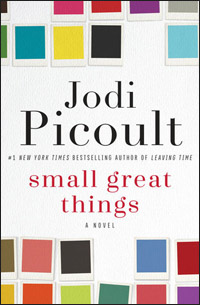
“Small Great Things” by Jodi Picoult

small-great-things

Jodi Picoult is a prolific novelist. She has written over 25 novels in a span of 24 years, many of which I have read. Her writing is not high literature by any means, the kind that would win prestigious awards, but her books are very entertaining, absorbing, and well-written, making her a highly successful writer whose books are extremely popular. She also typically touches upon some weighty issues in each of her novels, such as organ transplant (Change of Heart), a school shooting (Nineteen Minutes), religious belief (Keeping Faith), autism (House Rules), genetic engineering (My Sister’s Keeper, a riveting book that was also made into a movie), and many others.

In her new novel, Small Great Things, she takes on the hot-button issue of racism, which has emerged to the forefront in the U.S. in the last couple of years, with the shootings of black men, the Black Lives Matter movement, and of course, the 2016 Presidential election (which, at the time of writing this, is still 11 days away). The title of the novel comes from this quote by Dr. Martin Luther King, Jr.: “If I cannot do great things, I can do small things in a great way.” Almost all of Picoult’s novels revolve around a lengthy court case, where the issue at the heart of the novel is taken to court and ultimately settled—usually favorably—after the requisite back and forth between the prosecution and the defense, and Small Great Things is no different in this regard.

The story revolves around Ruth, a black woman (albeit lighter-skinned than the average African-American), who is a nurse in a the maternity ward of a hospital and has been doing this devotedly for 20 years—she is very good at her job and is widely respected as being the best there is. Her world turns upside down when a hate-filled white supremacist couple comes in to have a baby, and then after the baby is born, specifically ask that Ruth be taken off her nursing duties for their baby because she is black. The baby dies after a complication and Ruth was present in the room when the death happened, and before she knows it, she is slapped with a lawsuit by the parents accusing her of murdering their baby. If it seems preposterous, it really is, and I thought the weakest aspect of this book was in its premise—a white couple suing a black nurse for killing their baby. Really?

Once you get past this issue, however, the book is as well-crafted as any of Picoult’s other books. She has mastered the art of writing books with a certain style, and Great Small Things is no different. It is substantial, and comprises equally of internal dialog and external action. The story is told from the points of views of three different narrators—another quintessential Picoult approach. And as with her other books, a large part of this one takes place in court with witnesses, testimonies, cross-examinations, opening and closing statements, and other legal paraphernalia. There is also a twist at the end, which again usually happens in all Picoult’s novels. Thus, Small Great Things is quite formulaic, coming unmistakably from Picoult’s oeuvre. I would have known she had written it even if was published anonymously!

Where this book is different is that it does not just highlight racism—similar to how her other novels highlight different issues—but that it also digs a lot deeper and exposes the difference between overt racism—of the kind blatantly exhibited by white supremacists­—and implicit bias—which most white people have but are not aware of it. They take their place in the world for granted, the opportunities that they have, how they fit right into society, the common courtesies they receive, the professionalism they encounter in most places, and so on, without even being aware that it is different for black people, even if they are just like them in all other respects. The public defender who takes on Ruth’s case is a white woman, who would never think she was racist in any way; however, it is in the very act of not wanting to be racist, or not seeming to be racist, where the implicit bias comes in—the fact that you are conscious that the person is different so you need to behave in a certain way, be extra nice, or be extra polite. You would never feel like this if the person has the same skin color as you.

Picoult explains in an Afterword that she realized she had the same experience being a white woman and wanted to write about racism and bring this issue to the forefront. I think she has accomplished this very well. While the plot of the story in Small Great Things is far-fetched, the exploration of racism, both explicit and implicit, is very well done. In particular, the implicit bias will hit everyone hard because it applies to most people. To a certain extent, it is human nature to take your own privilege for granted, especially if it does not seem like one and most people around you are just like you. But it’s important to be reminded of it, as usually it is so subtle that we’re not even conscious about it. If not for anything else, Small Great Things should be read just for this.

Small Great Things
Author: Jodi Picoult
Publisher: Ballantine Books
Publication Date: October 2016

Contributor: Lachmi Khemlani runs a technology publication in the San Francisco Bay Area.
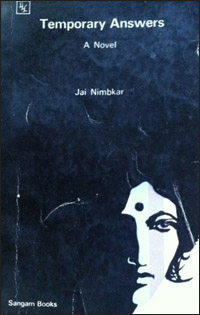
“Temporary Answers” by Jai Nimbkar

temporary-answers

I came upon this book at a second-hand bookstore when I growing up in India, at a time when I pretty much devoured any kind of book that seemed remotely interesting. While most of the books I read during that phase were eminently forgettable, I really liked Temporary Answers and have held on to my copy of it all these years. Given that the book was originally priced at Rs. 4 and I bought it second-hand for Rs. 2, and that I have held on it all these years, and the fact that it is no longer even available—it seems like an unprecedented bargain! Family members and friends who read the book on my recommendation also really liked it, and I recently read it again to re-discover what was it about this unknown book by a relatively unknown author that had made me hold on to it and actually bring it with me to the US when I moved here from India.

Temporary Answers is very much an Indian story with Indian sensibilities written by an Indian author. It tells the story of Vineeta, a woman in her late twenties, who comes back to live with her parents after the sudden death of her husband, as per the custom at that time—the story is set in the 1960s, when women were not as financially and emotionally independent as they are now. Yet, Vineeta is far from a docile widow and soon breaks free from the claustrophobic confines of her childhood home to get her own place and start on a career as a pediatrician, for which she was trained but never practiced while she was married. The book charts her gradual independence as she navigates her way through tricky situations and complicated relationships. Her mother is a non-nonsense, working woman, but she tends to be somewhat autocratic and also very traditional in the sense that she cares deeply about what society thinks; her father is non-confrontational but also quite spineless; her younger sister is not just uncommunicative, but seems to actively dislike her; her U.S.-returned childhood male friend, who had a crush on her when they were kids, would now like to marry her, giving her an easy way out; and she is strongly attracted to an older man, a professor and playwright, and gets involved with him, but he has his own demons to deal with. Along the way, there are also lots of issues stemming from her fledgling pediatric practice and her work in a non-profit for poor kids.

None of these problems really go away or are neatly resolved; what changes is Vineeta’s gradual realization that there are no permanent answers to her existential crisis—she first has to come to terms with her own feelings of insecurity and “find herself” before she can find comfort and support through others.

What I really liked about Temporary Answers is how authentic it is. All the characters, including the protagonist, are flawed human beings, like we all are, so we can readily identify with them. Vineeta herself is far from a conventional heroine—she often says or does the wrong things and is propelled by her baser instincts, by feelings that are far from elevated. At the same time, she is very introspective and we get a chance to step inside her mind and witness the conflicting feelings she has about so many things, her ruminations on marriage and love, the difficulties of being a doctor including not just the helplessness but also the guilt for not always feeling the sympathy and empathy people expect doctors to have. Not only is this internal dialogue in the protagonist’s head so fascinating, Temporary Answers also has a lot of philosophical discussions between its characters about the meaning of life and death, which is something you don’t find that often in books. In essence, this is really a cerebral book, focused more on what the protagonist feels rather than on what she does.

Given that the book is set in India—in the city of Pune, or Poona as it was called then—in the 60s, I found it surprisingly contemporary, with Vineeta eventually living by herself and being visited often by the man she is in a relationship with, who often spends the night. And while she does not flaunt the relationship, she makes no attempt to hide it either, which would not have been easy in those conservative times. Also, while Temporary Answers is, by and large, a serious book, I did appreciate some occasional bits of tongue-in-cheek humor, usually as part of a conversation between characters. For instance, when Vineeta asks her mother—who all but manages the family and holds the reins of the household—if her husband (Vineeta’s father) had ever beat or mistreated her, her mother replied, “He wouldn’t have had the nerve.” In the book, Vineeta burst out laughing, and when I read that, so did I.

Temporary Answers
Author: Jai Nimbkar
Publisher: Sangam Books (A Division of Orient Longman Ltd)
Publication Date: 1974

Contributor: Lachmi Khemlani runs a technology publication in the San Francisco Bay Area.
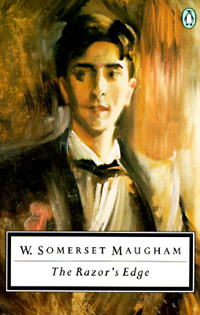
“The Razor’s Edge” by W. Somerset Maugham

the-razors-edge

Somerset Maugham has always been one of my most favorite authors. Growing up in India at a time when the British influence was still very strong, most of the books written in English were by British authors and they seemed very much a part of our culture. We grew up on adventure stories by Enid Blyton, murder mysteries by Agatha Christie, Victorian-era romances by Jane Austen and Charlotte Bronte, classics by Charles Dickens, and turn-of-the-century stories by Somerset Maugham. In fact, I still have my original copies of most of these books, and every once in a while, I go back and re-read them to find out if I still like them as much as I did before. One such book I just finished re-reading is The Razor’s Edge by Somerset Maugham. While this is not his most famous novel, it remains one of my enduring favorites, and re-reading it brought into sharper focus why I had liked it so much in the first place.

The Razor’s Edge is primarily the story of a young man, Larry, and his spiritual quest to find the meaning of life after his friend, a fellow fighter pilot, dies before his eyes during a flight mission they are on that goes awry during World War 1. Unlike his friends, and to the dismay of his socialite fiancée and her family, Larry does not want to settle down and work and lead a normal life after his return from the war. Instead, he wants to “loaf” – which, in his case, really means traveling around the world, working odd jobs, getting varied experiences, and reading extensively, often for over 10 hours at a stretch, all in an effort to understand life and make sense of what had happened to him. What made The Razor’s Edge especially appealing to those of us in India was that Larry’s quest ultimately drew him to India and that he found the answers to what he was looking for in an ashram there under the guidance of a guru. In fact, the name of the book comes from a verse in the Katha Upanishad which says “The sharp edge of a razor is difficult to pass over; thus the wise say the path to Salvation is hard.” For those of us who were not just looking at The Razor’s Edge as a work of fiction, the fact that Larry’s spiritual awakening came from the Vedantic philosophy of Hinduism was both an affirmation of it and gratification that it was being recognized and given voice to by one of the foremost novelists of that time.

Of course, the book is not just the story of Larry. Brilliantly woven in are other characters including Isabel, Larry’s childhood friend and fiancée, who ultimately could not give up her society life and join him in the alternate (simple but “rich in spirit”) life he had to offer: Gray, his best friend who ultimately ends up marrying Isabel; Sophie, another childhood friend, who, after a horrific tragedy of her own, becomes an alcoholic and nymphomaniac and finally cannot even be redeemed by Larry, despite his best efforts; Elliot, Isabel’s rich uncle who is a strong influence in her life; and finally, Maugham himself, Elliot’s friend who unwittingly becomes everyone’s confidant and is the narrator of the story.

What I like most about The Razor’s Edge, and all of Maugham’s books – even today – is how simple the telling of the story is and how it is riveting inspite of it. There are no literary gimmicks here, no examples of “stylistic” writing that critics could pick out and hold it up before us to justify what a great writer Maugham was. Instead, the focus is completely on the story, and the language is used entirely at the service of telling it. In short, the story is so brilliant that the writing is almost invisible!

The characters are also artfully captured, with all the foibles that make us human. In fact, I would say that in retrospect, the only trouble with The Razor’s Edge is that Larry seems to be too good to be true – he is portrayed with a little too much saintliness. (Also, some of the miracles he could perform after his return from India seemed to be playing to the stereotype and could have been avoided.)

Maugham died in 1965, and I really miss his books. They don’t write like this anymore.

The Razor’s Edge
Author: W. Somerset Maugham
Publisher: William Heinemann (Parent company: Penguin Random House)
Publication Date: 1944

Contributor: Lachmi Khemlani runs a technology publication in the San Francisco Bay Area.
“What Does It all Mean?” by Thomas Nagel

what-does-it-all-mean

This brief book, which intends to provide a very short introduction to philosophy, ends with a chapter on The Meaning of Life and concludes with the sentence, “Life may be not only meaningless but absurd.” This will surely be off-putting to most people, who just cannot imagine the possibility that life as a whole, and their lives in particular, might not have a meaning. If so, why bother to live? What’s the point? A possible answer to this, according to Nagel, is, “There’s no point. It wouldn’t matter if I didn’t exist at all, or if I didn’t care about anything at all. But I do. That’s all there is to it.”

At the outset, I must say that this book is not for anyone who is religious and believes that all philosophical questions are answered by God, that God provides meaning to our lives, that we have souls that are immortal, that there is a heaven to which souls go to after they leave their physical bodies, that we are just instruments in God’s hands, that he is looking out for us, and that our lives have a higher purpose which comes from God. This kind of faith can provide an enormous amount of emotional support throughout life’s trials and tribulations, and people who have this faith are to be envied, but sadly, you cannot force yourself to believe in God any more than you can force yourself to like something you don’t.

Having recently lost someone very dear to me, I skipped to the chapter on Death. So much of what Nagel captures in this chapter resonated with me, especially the idea that there really is no reason to be afraid of death since we did not exist before we were born and will similarly cease to exist after we are dead. So why is non-existence scary? I had prided myself on having this brilliant insight long before I read this book, and while my “delusions of grandeur” have been deflated, I am gratified to see that this idea has also been recognized by others, as was evidenced in this book. Nagel, in particular, captures it very eloquently. Of course, he is talking about how people feel about their own death rather than how people feel about the death of their loved ones. Grief is a part of human make-up, and it would have been helpful to understand what philosophy has to say about it.

I did not find all the chapters as brilliant and compelling as Death and The Meaning of Life. For instance, there is a chapter on Free Will which sort of drags on, is very abstract, does not have any specific conclusion, and on the whole was not particularly insightful. Others in the same vein were the earlier chapters in the book on subjects such as knowledge and knowing, what words mean, and the connection between the body and the mind. On the other hand, the chapter on Free Will provides a good segway into discussing moral questions of Right and Wrong and Justice. If there’s so much in our lives that we cannot control (and some would argue that our sense of controlling anything whatsoever is a complete illusion), does it make sense to talk about morality and punish those who are “immoral”? It’s an ethical dilemma society as a whole has to deal with. There are no easy answers to any of these questions.

What Does It All Mean? is definitely a book that makes us think, and if we are open, to make us question the many assumptions we have about life in general, and our lives in particular.

What Does It All Mean? A Very Short Introduction to Philosophy
Author: Thomas Nagel
Publisher: Oxford University Press
Publication Date: 1987

Contributor: Lachmi Khemlani runs a technology publication in the San Francisco Bay Area.
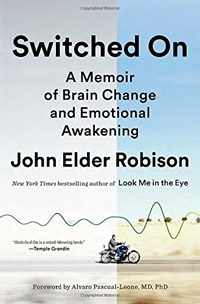
“Switched On: A Memoir of Brain Change and Emotional Awakening” by John Elder Robison

Switched On

How much of what we are, what we think and feel, and what we do is determined by the “wiring” of our brains? This question is at the heart of Switched On, a fascinating memoir of one man who was a participant in a TMS (transcranial magnetic stimulation) research study conducted at the Neurology Department of the Beth Israel Center, which is a teaching hospital of Harvard Medical School. TMS is a magnetic method used to stimulate small regions of the brain, allowing doctors to change brain activity without surgery or medication. It has been in research and development for over twenty years, which seems like a long time, but is actually quite short in the medical research field, which is why most of us have never even heard of it. I learnt of TMS during a Fresh Air broadcast featuring John Elder Robison, the author of Switched On, and the neurologist, Alvaro Pascual-Leone, who led the TMS study at Beth Israel and worked closely with Robison throughout the time he was receiving TMS. The main reason behind inviting Robison to be a participant in the study was that he has autism, and the researchers wanted to investigate whether a non-invasive technique like TMS could help in any way.

Much of the book is a methodically detailed log of the author’s day-to-day experience with the study, including how he met the researchers, how he was invited to participate, why he agreed, what he was hoping for, the buildup to every session, what happened at every session, and what were the effects that he experienced afterwards. He also shares details about his family, his work, his autism, and the impact that TMS had on different aspects of his life. These details, in and of themselves, are not especially riveting—after all, who wants to know about the mundane details of the day-to-day events in our lives?

What we do want to know, however, is—does it work? Does TMS change our brains and consequently, our emotions and our actions? And if so, are the effects temporary or long-term? And since Switched On is a first-person account of someone who has actually received TMS, we actually get to know the answers to some of these questions. Robison does a terrific job of describing both the short-term and long-terms effects that he experienced after each TMS session, including being much more open to people and experiences, the ability to “read” people a lot better and understand nuances which had earlier escaped him thanks to autism, and even the ability to be moved to tears by a sad story, even if it was just in the newspaper or told to him by someone he had just met. Fortunately, being so overcome with emotion that life becomes difficult was not a long-term effect of TMS. At the same time, having had the experience of empathy and connectedness—however short-lived—provided him with a “knowledge” of these emotions that is helping him to better understand “normal” (non-autistic) people on an ongoing basis.

Of course, Switched On is one person’s account of the effect of TMS, and it’s possible that other participants in the study experienced somewhat different reactions and effects. It would be good to know more, and I hope the TMS researchers can compile their findings not just into research papers for the academic community but also articles and books for the rest of us. It is fascinating to think that everything we think and do—including this thinking!—comes from our brain chemistry. Does this mean that at some point, we will be able to manipulate brains to create “designer thinkers,” similar to how we could potentially manipulate genes to create “designer babies?” Another interesting question, brought to the forefront by Switched On.

Switched On: A Memoir of Brain Change and Emotional Awakening
Author: John Elder Robison
Publisher: Spiegel & Grau
Publication Date: March 2016

Contributor: Lachmi Khemlani runs a technology publication in the San Francisco Bay Area.

“Harry Potter and the Cursed Child” — Play by J. K. Rowling, Jack Thorne, and John Tiffany

Harry Potter and the Cursed Child

I love the Harry Potter books and have them all—each of the seven books in the series. I discovered them in 2000 after the first three had already been published and was so hooked that I recall pre-ordering each of the subsequent books prior to its release and devouring it right away after it was delivered—which was typically the day before it was officially released. And while I was thrilled when my kids also started to read and love the books as they grew older, I made it clear that the books were mine. In time, after frequent re-reading by my kids, whenever one of my Harry Potter books started to wear down, I would order another copy— hardcover, of course—so I would still have the complete set in near-pristine condition. In fact, I was so possessive about the books that I used to discourage my kids from lending my cherished copies to their friends, and even bought extra (paperback) copies just for this purpose!

Given my love for the books and the magical world that J.K. Rowling has so brilliantly created—so rich, so vivid, so detailed, and so much fun—I was really disappointed when the series concluded in 2007 with the publication of the seventh book, Harry Potter and the Deathly Hallows. But I could appreciate why. After all, J.K. Rowling could not continue the series endlessly—not only was she so rich and famous that she didn’t need to write any more, but to what extent can you drag a story on and on? Also, one of the charms of the Harry Potter books was that you knew they would come to an end after Harry defeats Voldemort and is finished with school. It was a good, satisfying conclusion to the saga of “the boy who lived.”

Thus, when I heard of Harry Potter and the Cursed Child, it seemed intriguing, even though it was in the form of a script for a play and was not actually written by J.K. Rowling herself, but rather by a playwright based on a story by her, supposedly the eighth in the series. While the play itself debuted last month in London and seems to be doing very well, the book itself has received mixed reviews from Harry Potter fans. Thus, I bought it with some trepidation, not wanting to cast a shadow on my experience of the original series and ruin my love for it.

It turned out that I needn’t have worried. I really enjoyed the book and finished it in one sitting. Even though the plot is set several years after the first seven books—Harry is now middle aged with three kids, all of whom are in the same Hogwarts School that he attended—the book keeps transporting you to many of the same events that happened in those years through the clever use of a time traveling device, the Time Turner, that plays such a key role in the third book, Harry Potter and the Prisoner of Azkaban. While the protagonist of the book is now Harry’s middle son, Albus, who could be the “cursed child” of the book title, the book brings back all the characters who had key roles in the earlier books, including Hermoine, Ron, Malfoy, Snape, and even Dumbledore. In an unexpected but heart-warming twist, Albus’s best friend at Hogwarts is now Scorpius, the son of Draco Malfoy, who was Harry’s archenemy throughout his own time as a student at Hogwarts. And there are many hilarious situations caused by the ripple effects of going back in time and changing certain events, including one where Ron is married to Padma (a Hogwarts student who made a very brief appearance in the earlier books) and has a son called “Panju.” As an Indian, I’m still laughing at that one!

That said, I wish the story was in the more conventional form of a book than a script for a play, which, by its very nature, is forced to be somewhat choppy. I really liked the plot of this eighth story in the series and felt it would have been so much more substantial and enjoyable as a book. I have no interest in seeing the play just as I had little interest in the movies­—although, admittedly, they did a good job of capturing the “magic” of Harry Potter’s world. Of course, the books have spawned a huge and very successful franchise with the movies, theme parks, and merchandise, and it’s a wonder to me that J.K. Rowling is even motivated to continue the series at all. I’m thankful, however, that the creative genius in her continues to create, bringing joy to the millions of Harry Potter aficionados that are out there, including adults like me who may otherwise be somewhat jaded by the “realities” of life.

Such is the power of the world of Harry Potter created by J.K. Rowling that I was fighting with my daughter about who got to read Harry Potter and the Cursed Child first. I prevailed, of course, but only because of my childish and rather pathetic excuse that I had paid for the book and so I should get to read it first. When does this ever happen?

Harry Potter and the Cursed Child
Play written by Jack Thorne, based on an original new story by J.K. Rowling, Jack Thorne and John Tiffany.
Publisher: Little Brown UK
Publication Date: July 2016

Contributor: Lachmi Khemlani runs a technology publication in the San Francisco Bay Area.